
.
News You might have missed!
Use your browser or smartphone back arrow (<-) to return to this table for your next selection.
.
__________________________________________
Assorted human interest posts.
October 10, 2022
Crime, Food For Thought, Human Interest, Medical, missed News, Political, Science, Technical amazon, business, Business News, current-events, Future, Hotels, human-rights, medicine, mental-health, research, Science, Science News, technology, Technology News, travel, vacation Leave a comment
.
.
__________________________________________
October 9, 2022
Business, Food For Thought, Human Interest, Political, Science, Technical amazon, business, Business News, current-events, Future, Hotels, human-rights, medicine, mental-health, research, Science, Science News, technology, Technology News, travel, vacation Leave a comment

Click the link below the picture
.
All living cells power themselves by coaxing energetic electrons from one side of a membrane to the other. Membrane-based mechanisms for accomplishing this are, in a sense, as universal a feature of life as the genetic code. But unlike the genetic code, these mechanisms are not the same everywhere: The two simplest categories of cells, bacteria, and archaea have membranes and protein complexes for producing energy that are chemically and structurally dissimilar. Those differences make it hard to guess how the very first cells met their energy needs.
This mystery led Nick Lane, a professor of evolutionary biochemistry at University College London, to an unorthodox hypothesis about the origin of life. What if life arose in a geological environment where electrochemical gradients across tiny barriers occurred naturally, supporting a primitive form of metabolism while cells as we know them evolved? A place where this might be possible suggested itself: alkaline hydrothermal vents on the deep seafloor, inside highly porous rock formations that are almost like mineralized sponges.
Lane has explored this provocative idea in a variety of journal papers, and he has touched on it in some of his books, such as The Vital Question, where he wrote, “Carbon and energy metabolism are driven by proton gradients, exactly what the vents provided for free.” He describes the idea in more detail for the general public in his latest book, Transformer: The Deep Chemistry of Life and Death. In his view, metabolism is central to life, and genetic information emerges naturally from it rather than the other way around. Lane believes that the implications of this reversal touch almost every big mystery in biology, including the nature of cancer and aging.
.
 In contrast to many other researchers who study the origin of life, Nick Lane, a professor of evolutionary biochemistry at University College London, suggests that some form of primitive metabolism may have arisen in deep-sea hydrothermal vents before the appearance of genetic information. Philipp Ammon for Quanta Magazine
.
.
Click the link below for the article:
.
__________________________________________
October 9, 2022
Business, Food For Thought, Human Interest, Political, Science, Technical amazon, business, Business News, current-events, Future, Hotels, human-rights, medicine, mental-health, research, Science, Science News, technology, Technology News, travel, vacation Leave a comment
Some content on this page was disabled on April 15, 2025 as a result of a DMCA takedown notice from Guardian Media Group. You can learn more about the DMCA here:
October 8, 2022
Business, Food For Thought, Human Interest, Political, Science, Technical amazon, business, Business News, current-events, Future, Hotels, human-rights, medicine, mental-health, research, Science, Science News, technology, Technology News, travel, vacation Leave a comment

Click the link below the picture
.
For thousands of years, humans have pondered the meaning of our existence. From philosophers who debated whether their minds could be trusted to provide accurate interpretations of our reality to physicists who’ve attempted to interpret the weirder aspects of quantum physics and relativity, we’ve learned that some aspects of our Universe appear to be objectively true for everyone, while others are dependent on the actions and properties of the observer.
Although the scientific process, combined with our experiments and observations, have uncovered many of the fundamental physical laws and entities that govern our Universe, there’s still much that remains unknown. However, just as Descartes was able to reason, “I think, therefore I am,” the fact of our existence — the fact that “we are” — has inevitable physical consequences for the Universe as well. Here’s what the simple fact that we exist can teach us about the nature of our reality.
To start with, the Universe has a set of governing rules, and we’ve been able to make some sense of at least some of them. We understand how gravity works at a continuous, non-quantum level: by matter and energy curving spacetime and by that curved spacetime dictating how matter and energy move through it. We know a large portion of the particles that exist (from the Standard Model) and how they interact through the three other fundamental forces, including at the quantum level. And we know that we exist, composed of those very same particles and obeying those same laws of nature.
.
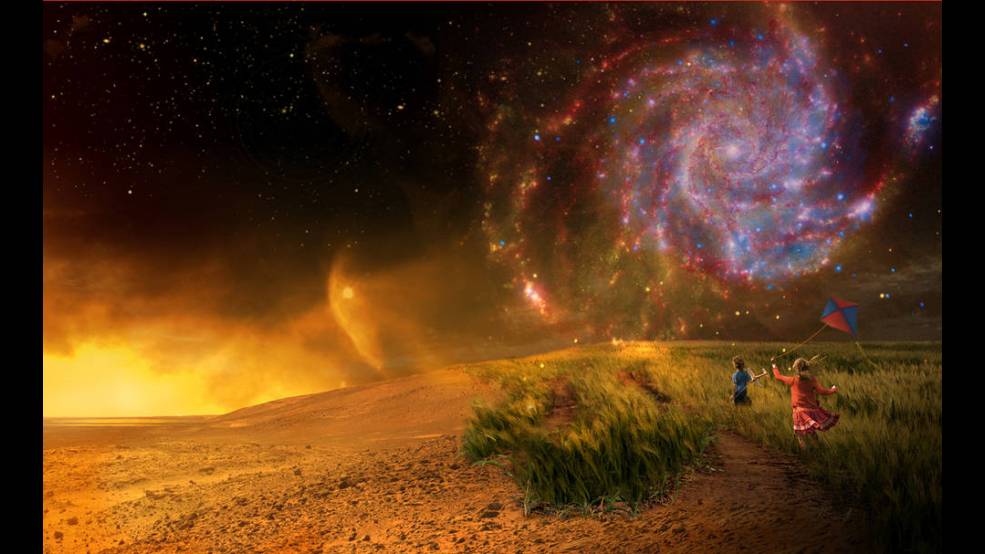 That the Universe exists and that we are here to observe it tells us a lot. It enables us to place constraints on various parameters, and to the infer the existence of states and reactions that present themselves as gaps in our present-day knowledge. But there are severe limits to what we can learn from this type of reasoning as well (Credit: NASA/NEXSS collaboration)
.
.
Click the link below for the article:
.
__________________________________________
October 8, 2022
Business, Food For Thought, Human Interest, Political, Science, Technical amazon, business, Business News, current-events, Future, Hotels, human-rights, medicine, mental-health, research, Science, Science News, technology, Technology News, travel, vacation Leave a comment

Click the link below the picture
.
How do I make more friends?
In a world where the word friend is associated by most people with superficial relationships formed on social media, true friendship is hard to come by. True friends are those who are there for you in good times and bad, who tell you what you need to hear, not just what you want to hear, and who help you be the best version of yourself–all of which can prove invaluable to entrepreneurs and business owners.
So, actually, you don’t necessarily want more friends. Rather, you want “true” friends. But to have true friends, you first need to be a friend.
But to have true friends, you first need to be a friend. How do you do that?
Emotional intelligence can help. Emotional intelligence is the ability to identify, understand, and manage emotions. This ability can help you not only understand others better but also strengthen your relationships with them.
Here are five simple rules of emotional intelligence that will help you make more and better friends, which can help you in business and life. (If you find value in these five rules, you might be interested in my free seven-day course, which delivers a rule to your inbox each day to teach you how to build emotional intelligence in yourself and your team.)
.

.
.
Click the link below for the article:
.
__________________________________________
October 8, 2022
Crime, Food For Thought, Human Interest, Medical, missed News, Political, Science, Technical amazon, business, Business News, current-events, Future, Hotels, human-rights, medicine, mental-health, research, Science, Science News, technology, Technology News, travel, vacation Leave a comment
.
Some news you might have missed!>Click Title of Item You Wish to Select< |
|
|---|---|
| NEWS | TED TALKS + |
| Pint? Anyone? The big problem men have with keeping friends | How diversity makes teams more innovative | Rocío Lorenzo |
| 12 habits of the calmest people I know | by Alex Mathers | How Great Leaders Innovate Responsibly | Ken Chenault |
| Your Daily AM Roundup | Bandits are losing interest in robbing banks, as some crimes no longer pay |
| ——————— | ——————— |
.
__________________________________________
October 7, 2022
Business, Food For Thought, Human Interest, Political, Science, Technical amazon, business, Business News, current-events, Future, Hotels, human-rights, medicine, mental-health, research, Science, Science News, technology, Technology News, travel, vacation Leave a comment

Click the link below the picture
.
Mark didn’t mean to cut the guy off. The man in the pickup truck honked repeatedly. Mark nodded at him: Sorry. But a few minutes later Mark accidentally cut the guy off again. And that’s when things went sideways…
The man raced his truck forward and blocked Mark’s car. With both vehicles now stopped, the guy got out. All six-foot-five and three hundred pounds of him. (If I was Mark I would have considered calling ahead to reserve one of the nicer rooms in the ICU.)
The guy started banging his fist on Mark’s door. Bellowing at him with rage. Inexplicably, Mark rolled down his window:
“Have you ever had such an awful day that you’re just hoping to meet someone who will pull out a gun, shoot you, and put you out of your misery? Are you that someone?”
The man’s jaw dropped. “What?”
“Yeah, I really mean it. I don’t usually cut people off, and I never cut someone off twice. I’m just having a day where no matter what I do or who I meet—including you!—I seem to mess everything up. Are you the person who is going to mercifully put an end to it?”
The man’s demeanor changed instantly. He became calm. Reassuring.
“Hey. C’mon, man. It’ll be okay. Really! Just relax, it’ll be okay. Everyone has days like this.”
They talked for a while. Nicely. The guy got back into his truck. He waved to Mark in the rearview mirror. And drove off.
.
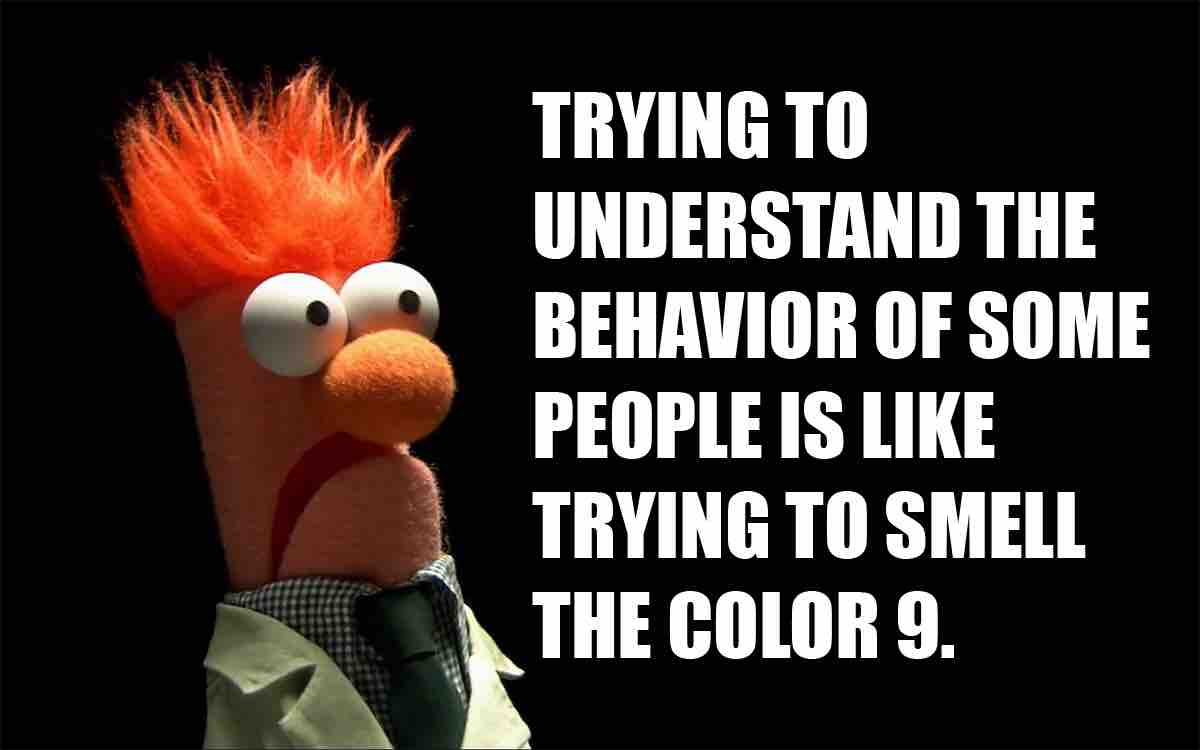 True
True
.
.
Click the link below for the article:
.
__________________________________________
October 7, 2022
Business, Food For Thought, Human Interest, Political, Science, Technical amazon, business, Business News, current-events, Future, Hotels, human-rights, medicine, mental-health, research, Science, Science News, technology, Technology News, travel, vacation Leave a comment
Some content on this page was disabled on April 15, 2025 as a result of a DMCA takedown notice from Guardian Media Group. You can learn more about the DMCA here:
October 6, 2022
Business, Food For Thought, Human Interest, Political, Science, Technical amazon, business, Business News, current-events, Future, Hotels, human-rights, medicine, mental-health, research, Science, Science News, technology, Technology News, travel, vacation Leave a comment

Click the link below the picture
.
Whether it’s Megan and Thomas Markle or Britney and her teen sons, celebrity family feuds are having a moment. Nevertheless, with roughly 10 percent of Americans estranged from a parent or child, you very likely know someone in your own life with parental problems.
Therapists and researchers believe that rifts in families are becoming more common, particularly with adult children stopping contact with one or both parents. A study in 1997 explored family relationships in later life and found that 7 percent of adult children had cut ties with their mother and 27 percent from their father. In 2020, research by sociologist Karl Pillemar showed that 1 in 4 Americans are estranged from their families—roughly 67 million people.
Simone Bose is a relationship therapist based in London. She deals with family issues every day in her practice, including estrangement, with her clients coming from a range of backgrounds and circumstances.
“It’s never an easy decision,” she told Newsweek. “It’s the hardest thing in the world to separate yourself from your parents.
“They were your everything as a child, and no matter what age they are your parents can be huge in your life.
.
 A stock photo of an adult daughter giving her mother the silent treatment, while her mother places her hand on her shoulder. Toxic and narcissistic behaviors are just one reason why adult children are distancing themselves from their parents. JackF/iStock/Getty Images Plus
.
.
Click the link below for the article:
.
__________________________________________
October 6, 2022
Business, Food For Thought, Human Interest, Political, Science, Technical amazon, business, Business News, current-events, Future, Hotels, human-rights, medicine, mental-health, research, Science, Science News, technology, Technology News, travel, vacation Leave a comment

Click the link below the picture
.
Since the first James Webb Space Telescope images were released in July, our feeds have been flooded with mind-bogglingly gorgeous photos of space – from insanely detailed images of Jupiter to the most distant known star.
Now, Webb has done it again, this time capturing an almost perfect Einstein ring whose light has traveled roughly 12 billion light-years to reach us. And we can’t stop staring.
You can see the colorized image, which was shared by astronomy grad student Spaceguy44 on Reddit, below.
As Spaceguy44 explains on Reddit, an Einstein ring occurs when a distant galaxy has been magnified and wrapped into an almost-perfect ring by a massive galaxy in front of it.
The galaxy in question is called SPT-S J041839-4751.8.
.
 Colorized image of a distant Einstein ring. (JWST/MAST; Spaceguy44/Reddit)
.
.
Click the link below for the article:
.
__________________________________________
Să facem glume, nu război
In the world, human beings are facing various problems. People who are full of greed, anger, and ignorance are seen to be fighting with each other in words and deeds. As the fighting continues, various problems such as civil wars, wars of aggression, and wars of aggression are occurring. As world peace is being destroyed, humans are facing unbearable problems. Innocent children and women are not getting the rights they deserve and deserve. I can't think of one thing every time. What is it? The United Nations. If we look at the responsibilities and duties of the United Nations, I think it is not suitable for solving the problems that are happening in the world today. In fact, the United Nations and the World Security Council, such an organization must rule the world, must be able to give orders, and must have various ways to obey orders. There must be no organization that can influence more than that organization. There should be experts from each country. They can even dominate the superpowers like the US, China, and Britain. Only then will global peace be achieved quickly. Now, if a country with power develops more militarily, economically, or socially than its own country, then powerful countries will jealously seek out enemies and wage war. Or they will attack with fighter jets. In this, innocent people are losing their lives. No one understands the value of a life. You should think about how to achieve global peace by controlling these. If the US continues to be the permanent president of the UN, world peace will never be achieved. If you think carefully, no one sees that they are working for the common good, but for their own benefit, for the benefit of their own country. The permanent president of the UN and the Security Council has rejected this, As a young Rohingya, I have come to realize that only by electing the president and secretary from among the countries in the world through a secret ballot system and governing the world fairly can we achieve global peace. The United Nations and the Security Council are organizations in which any country must govern, give orders, and make them obey their orders. For example, only when a defendant is tried in court can we hold the leaders of the countries in check and control them, can we achieve global peace smoothly. Otherwise, it will not be easy for powerful countries to use various excuses to end this war every year, every year, for the benefit of themselves and their countries. No country's leaders pay any attention to the words of the United Nations and the Security Council. If we look at it in practice, look at the Rohingya issue. Myanmar is a small country. Even that country has been under siege for 8 years. What action can be taken? Why is the UN and the Security Council Powerless? Without such Power, how can the organization bring about global peace? Everyone should think about it. Whether there is a veto or a strong one, all countries in the world can only achieve global peace if they are subject to the UN and the Security Council. Seek peace in the quiet embrace of nature. Peace is an indispensable need of the human race. It is not as if one person can kill another person, and it is as if one country can attack another country, but instead of trying to build peace, we must try to destroy the peace now, and the world is getting hotter and is on the verge of collapse. I especially appeal to all the world experts to urgently try to bring about peace in all parts of the world. Mr, Noor Muhamed Arkhan Rohingya Youth Myanmar
Publicație umoristică dedicată glumeților de pretutindeni
Faith saved us from the savages that we were, losing faith makes us savages again
Where Trends Meet Truth
https://www.tangietwoods
Freelance poetry writing
Zalai Betti
INOVATION BLOG PEOPLE AND NEWS
Németh György
Konsultan Lingkungan Hidup di Lombok - NTB
Lea Krasznai (LeaArt21) – Idezetek (Idézetek) WordPress (Budapest, Hungary)
Appunti, spunti e passioni in liberta'
Gyorgy Nemeth
تعنى بتقديم نصائح للمعلمين المبتدئين، والطلبة الممتحنين، ومشاركة الاخرين تجربة الادخار في المال، بترشيد الاستهلاك المنزلي، وترتيب البيت، والحفاظ على البيئة، وتشجيع السيارات صديقةالبيئة، والسياحة والاسفار، ونماء رؤوس الاموال، والطب البديل وتشجيع التعليم الرقمي والذكاء الاصطناعي، والعناية بالنحل وتربية الاسماك، والاسثمار في رؤوس الاموال، الزراعة العضوية، والعناية باسنان الرضع، و صحة الحوامل، وتفسير القران
apprendre pour évoluer
Thoughts on books, language, meaning, and the culture around it.
Outdoor Recreation & Adventure in the Great Lakes Region
News, Info, Bio, Articles, Reviews, Lyrics, Technology, Science, Inspiration, Motivation, Philosphy and many more...
Christian Lifestyle Blogger
CEO and president of The Mullins Companies
Two Cultures. One Life. Endless Stories
Real Estate Development Specialist
¡Bienvenido de vuelta viajero!
so looking to the sky ¡ sing and from my heart to YOU ¡ bring...
CEO and Founder of Nsight Health
Catholic News, Prayers, HD Images, Rosary, Music, Videos, Holy Mass, Homily, Saints, Lyrics, Novenas, Retreats, Talks, Devotionals and Many More
Decoding Power. Defying Narratives.
A creative collaboration introducing the art of nature and nature's art.
The Home Of Entertainment News, Reviews and Reactions
•Whenever you are confronted with an opponent, conquer him with love.(Gandhi)
Algotrader at TRADING-CLUBS.COM
Film and Writing Festival for Comedy. Showcasing best of comedy short films at the FEEDBACK Film Festival. Plus, showcasing best of comedy novels, short stories, poems, screenplays (TV, short, feature) at the festival performed by professional actors.
Peace. Tranquility. Insanity.
Take a ride on the wild side
Découvre des musiques prometteuses (principalement) dans la sphère musicale française.
No tiene que Ser una Pesadilla.
Life in Kana-text (er... CONtext)
Where feelings meet metaphors and make questionable choices.
Finding hope and peace through writing, art, photography, and faith in Jesus.
Eyasu
Eyasu The Wonderful

