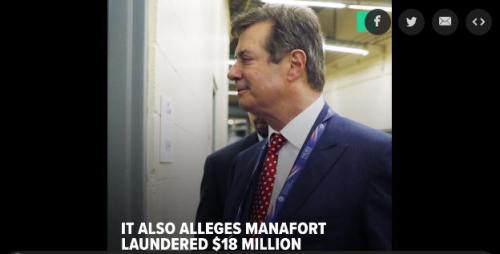
Paul Manafort, the former Trump campaign chairman who was indicted on federal conspiracy and money laundering charges Monday, has a long history of ties to pro-Putin groups in Ukraine. He also has a long history of connections to Donald Trump. According to leaked texts sent and received by his daughter, Andrea Manafort Shand, the two pals were “perfect allies.”
The Trump administration has been working overtime to downplay Manafort’s role in last year’s campaign.
“Paul Manafort was brought in to lead the delegate process, which he did, and was dismissed not too long after that,” White House press secretary Sarah Huckabee Sanders said Monday. “Paul was brought on sometime in June, and by the middle of August he was no longer with the campaign,” then-press secretary Sean Spicer said in March.
Spicer’s statement was untrue, and Sanders’ claim was misleading.
In Indianapolis, the director of the state’s largest organization helping people find Affordable Care Act insurance had to lay off nine of 13 staff members last month because the federal government had just taken away more than 80 percent of the grant that paid for their work.
In Atlanta, festivalgoers at the annual Pride weekend in mid-October were mystified that members of Insure Georgia had a table set up, because they thought President Trump had gotten rid of the health-care law.
And across Ohio, residents starting to phone a call center for appointments with coaches to renew their coverage are being told that the service no longer exists and that, for help, they should go to a website, a hotline, an insurance broker, a county health department or — if all else fails — their member of Congress.
.
The Affordable Care Act’s fifth enrollment season faces a multitude of challenges when it begins on Wednesday. (Healthcare.gov)
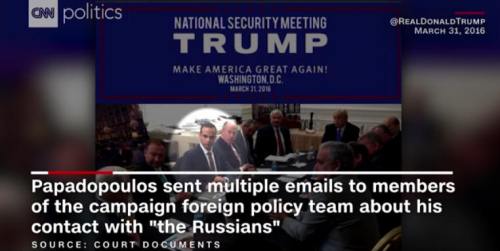
Even as President Trump was on Twitter insisting that the indictment of former campaign chairman Paul Manafort was meaningless because it involved activities unrelated to Trump or the campaign came news that former Trump foreign policy adviser George Papadopoulos had pled guilty to lying to the FBI about his contacts with, wait for it, Russia.
The Manafort news drew the bigger headlines Monday morning — understandable given his high-profile role at the top of the Trump campaign. But, the Papadopoulos guilty plea — and the fact that he has been cooperating with the special counsel investigation since his July arrest — strikes me as significantly more problematic for Trump and his White House in the medium-to-long term.
.
This paragraph from the FBI’s guilty plea agreement with Papadopoulos is incredible:
.
“In truth and in fact, however, and as set forth above, defendant PAPADOPOULOS met the Professor for the first time on or about March 14, 2016, after defendant PAPADOPOULOS had already learned he would be a foreign policy advisor for the Campaign; the Professor showed interest in defendant PAPADOPOULOS only after learning of his role on the Campaign; and the Professor told defendant PAPADOPOULOS about the Russians possessing” dirt” on then-candidate Clinton in late April 2016, more than a month after defendant PAPADOPOULOS had joined the Campaign.”
So, Papadopoulos copped to lying to the FBI about the timing of his contacts with Russians. In his initial interview in January 2017, Papadopoulos was insistent that he had reached out to his foreign contact “The Professor” (amazing!) before he had formally joined the Trump presidential campaign. He was arrested in July, pleaded guilty in October and appears to have been cooperating in between.
President Trump’s former campaign chairman, Paul Manafort, was indicted Monday on charges that he funneled millions of dollars through overseas shell companies and used the money to buy luxury cars, real estate, antiques and expensive suits.
The charges against Mr. Manafort and his longtime associate Rick Gates represent a significant escalation in a special counsel investigation that has cast a shadow over Mr. Trump’s first year in office.
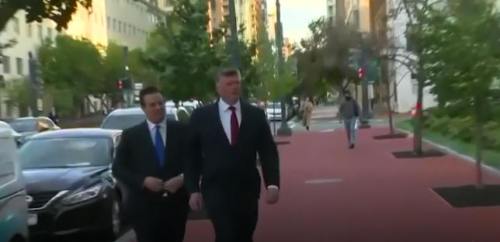
The two men appeared in the Federal District Court in Washington on Monday afternoon and pleaded not guilty to all charges.
.
Paul Manafort surrendered to federal authorities on Monday.Published OnCreditImage by Alex Brandon/Associated Press
A federal judge on Monday partially blocked enforcement of key provisions of President Donald Trump’s memorandum banning transgender people serving in the military.
Judge Colleen Kollar-Kotelly blocked provisions of the memorandum concerning the enlistment and retention of transgender military service members, holding that the plaintiffs “have established that they will be injured by these directives, due both to the inherent inequality they impose, and the risk of discharge and denial of accession that they engender. “
.
The judge also blasted Trump’s initial abrupt announcement via Twitter that came “without any of the formality or deliberative processes that generally accompany the development and announcement of major policy changes that will gravely affect the lives of many Americans.”
In partially granting a preliminary injunction pending appeal, the judge said the plaintiffs — current and aspiring service members who are transgender — are “likely to succeed” on their due process claims.
There have been so many horrifying stories about male predatory behavior since the Harvey Weinstein story broke earlier this month, but one quote has truly stood out.
In a damning memo about her boss, a Weinstein Co. employee named Lauren O’Connor neatly explained how the Hollywood producer could get away with sexually harassing so many women.
“The balance of power is me: 0, Harvey Weinstein: 10,” she reportedly wrote.
That one sentence sums up more than the situation with Weinstein, now accused of sexual harassing or assaulting more than 50 women. That same power imbalance exists in every corner of the country, in the White House, Congress, the media, police departments, academia, most big law firms, and nearly every major corporate boardroom, corner office and C-suite.
“Weinstein is the embodiment of the power differential that plays out all over the workplace in the United States,” said Teresa Boyer, the director of the Anne Welsh McNulty Institute for Women’s Leadership at Villanova University.
You won’t hear about her death from officials investigating the aftermath of Hurricane Maria, but you should know her name and her story.
She was Isabel Rivera González.
.
Rivera was 80. She loved to dance, and was known in this hilly enclave of Puerto Rico for her Saturday-night merengue moves. In family photos displayed at her funeral last week, she was shown laughing near a shoreline as flamingos tiptoed behind her. In a black-and-white image, she beamed as she held an infant, one of her five children. Those children described their mother as healthy and full of energy late into her years — a woman who lit up a room.
.
Rivera survived Hurricane Maria on September 20 huddled next to her boyfriend, Demencio Olmeda, 76. The storm’s winds tore out their curtains and windows, swirling debris in the sky, knocking out power and water service and killing, officially, 51 people.
In post-Charlottesville America, any large gathering of racists and fascists becomes both spectacle and specter. The threat of violence is omnipresent. Locals must “brace” themselves for “chaos and bloodshed.” Everyone dreads “another Charlottesville.” Dread is what Nazis want.
In two small cities near Nashville in Middle Tennessee, the fear was palpable ahead of two “White Lives Matter” rallies here on Saturday.
“So … what brings you to town?” a wary clerk asked guests as they checked into a hotel in Murfreesboro, home to Middle Tennessee State University and 132,000 residents, where one rally will be held Saturday afternoon outside the Rutherford County Courthouse. I heard some version of this question three times before I’d even found my room.
In nearby Shelbyville, a town of 21,000 south of Murfreesboro in Tennessee horse country, another rally ― organized by the same racists and fascists ― is scheduled for Saturday morning. Many Shelbyville residents will stay indoors or clear out altogether, according to local police.
.
Justin Ide/Reuters
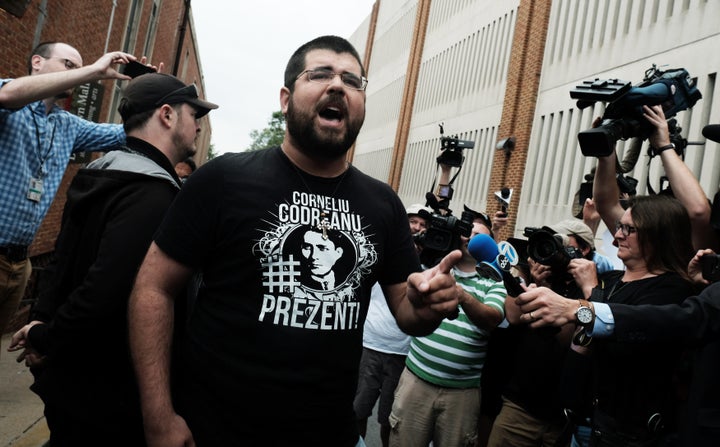
Matthew Heimbach, seen here after the white supremacist rally in Charlottesville, Virginia, is head of the Traditionalist Worker Party.
I have met Trump haters before, lots of them, the kind who seize upon every conspiracy theory and refuse to give him any benefit of any doubt. The four people I recently spent the morning with at Solly’s Tavern in D.C. (sans booze, don’t worry) were not Trump haters. They were, however, Trump quitters.
All of them, at some point over the course of the last nine months, had left their posts within the current administration, having decided that they could better serve their country from outside the government than from within. They weren’t happy about quitting, either. They were civil servants who wanted to remain civil servants, who, except for one, had worked under presidents of both parties. They had disagreed with superiors over the years, they had been fearful of new regulations and wary of political appointees, but they stayed on because that’s the nature of career work in government. This was different.
.
Four Quitters Walk Into a Bar…
To swap war stories from an administration they couldn’t serve for one more minute.
Film and Writing Festival for Comedy. Showcasing best of comedy short films at the FEEDBACK Film Festival. Plus, showcasing best of comedy novels, short stories, poems, screenplays (TV, short, feature) at the festival performed by professional actors.

 .
.


 .
.


 Puerto Rico’s uncounted hurricane deaths




 Four Quitters Walk Into a Bar…
 James' World 2