March 15, 2022
Mohenjo
Business, Food For Thought, Human Interest, Medical, Political, Science, Technical
amazon, business, Business News, current-events, Future, Hotels, human-rights, medicine, mental-health, research, Science, Science News, technology, Technology News, travel, vacation

Click the link below the picture
.
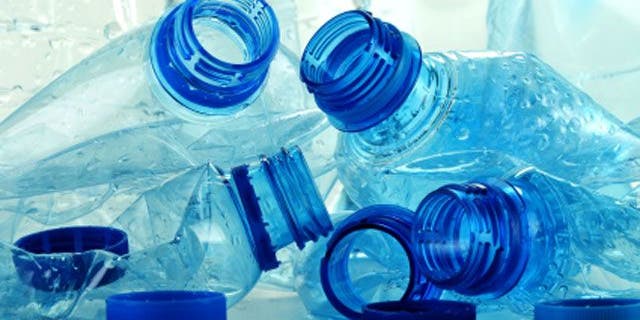
We are surrounded by toxic chemicals every day – around 80,000 worth, according to the Environmental Protection Agency (EPA). From the pesticides on the foods we eat to the latest tech gadgets and hottest new beauty products, chemicals are everywhere.
Unfortunately, these chemicals, such as bisphenol A (BPA), formaldehyde, phthalates, and toxic flame retardants, are easily absorbed into our bodies and have been linked to obesity, infertility, asthma, heart disease, and even cancer. Toxic chemicals are especially troubling for kids, as their bodies are much smaller and are still developing.
In fact, a recent study in the journal Environmental Health Perspectives found that exposure to chemicals like flame retardants found in furniture and stain-resistant items may cause breast cancer. What’s more, many of these chemicals have never been tested for their safety in humans, and experts agree strong legislation is needed.
.
.
.
Click the link below for the article:
.
__________________________________________
March 15, 2022
Mohenjo
Business, Food For Thought, Human Interest, Medical, Political, Science, Technical
amazon, business, Business News, current-events, Future, Hotels, human-rights, medicine, mental-health, research, Science, Science News, technology, Technology News, travel, vacation
Click the link below the picture
.
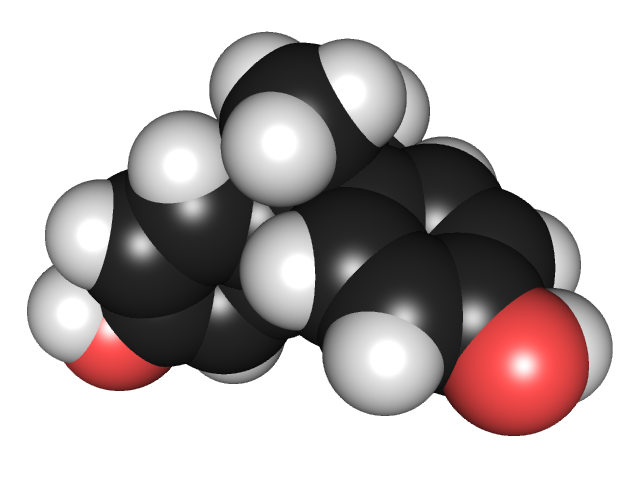
BPA stands for bisphenol A, an industrial chemical that has been used to make certain plastics and resins since the 1950s.
BPA is found in polycarbonate plastics and epoxy resins. Polycarbonate plastics are often used in containers that store food and beverages, such as water bottles. They may also be used in other consumer goods.
Epoxy resins are used to coat the inside of metal products, such as food cans, bottle tops, and water supply lines. Some dental sealants and composites also may contain BPA.
Some research has shown that BPA can seep into food or beverages from containers that are made with BPA. Exposure to BPA is a concern because of the possible health effects on the brain and prostate gland of fetuses, infants, and children. It can also affect children’s behavior. Additional research suggests a possible link between BPA and increased blood pressure, type 2 diabetes, and cardiovascular disease.
.
Bisphenol A

.
.
Click the link below for the article:
https://www.mayoclinic.org/healthy-lifestyle/nutrition-and-healthy-eating/expert-answers/bpa/faq-20058331
Addendum Wikipedia – Bisphenol A
Bisphenol A (BPA) is a chemical compound and one of the simplest and best-known bisphenols. It is produced by the condensation of phenol and acetone, with an estimated 4 million tonnes of produced worldwide in 2015. It is a colorless solid which is soluble in organic solvents, but poorly soluble in water (0.344 wt % at 83 °C).
BPA and its derivatives have many uses, most of which are centered around plastics. Its largest single application is as a co-monomer in the production of polycarbonates and, to a much lesser extent, polysulfones. Its epoxide derivative BADGE (also called DGEBA) is the starting material for most epoxy resins. Low levels of unpolymerised BPA and BADGE are also used in PVC plastisols, as an auxiliary antioxidant and acid scavenger respectively. A common, if minor, use is as a stabilizer in thermal paper. It is not a plasticizer, although it is often wrongly labeled as such.
BPA is a xenoestrogen, exhibiting estrogen-mimicking, hormone-like properties. Although the effect is very weak, the pervasiveness of BPA-containing materials raises concerns. Many of these materials are non-obvious but commonly encountered; such as coatings for the inside of food cans, clothing, shop receipts, and dental fillings. Since 2008, several governments have investigated its safety, which prompted some retailers to withdraw polycarbonate products. Since then, BPA-free plastics have been manufactured using alternative bisphenols such as bisphenol S and bisphenol F, but there is controversy around whether these are actually safer.
Bisphenol A was reported in 1891 by the Russian chemist Aleksandr Dianin.
In 1934 workers at I.G. Farbenindustrie reported the coupling of BPA and epichlorohydrin. Over the following decade, coatings and resins derived from similar materials were described by workers at the companies of DeTrey Freres in Switzerland and DeVoe and Raynolds in the US. This early work underpinned the development of epoxy resins, which in turn motivated production of BPA. The utilization of BPA further expanded with discoveries at Bayer and General Electric on polycarbonate plastics. These plastics first appeared in 1958, being produced by Mobay and General Electric, and Bayer.
Click the link below for the Wikipedia article If desired:
.
__________________________________________
March 15, 2022
Mohenjo
Crime, Food For Thought, Human Interest, Medical, missed News, Political, Science, sports, Technical
amazon, business, Business News, current-events, Future, Hotels, human-rights, medicine, mental-health, research, Science, Science News, technology, Technology News, travel, vacation

.
News You might have missed!
Use your browser or smartphone back arrow (<-) to return to this table for your next selection.
.
__________________________________________
March 14, 2022
Mohenjo
Arts, Food For Thought, Human Interest, Medical, missed News, Overlooked Past Article, Political, Science, Technical
amazon, business, Business News, current-events, Future, Hotels, human-rights, medicine, mental-health, research, Science, Science News, technology, Technology News, travel, vacation
.
News You might have missed!
Use your browser or smartphone back arrow (<-) to return to this table for your next selection.
.
__________________________________________
March 12, 2022
Mohenjo
Crime, Food For Thought, Human Interest, Medical, missed News, Political, Science, Technical
amazon, business, Business News, current-events, Future, Hotels, human-rights, medicine, mental-health, research, Science, Science News, technology, Technology News, travel, vacation
.
News You might have missed!
Use your browser or smartphone back arrow (<-) to return to this table for your next selection.
.
__________________________________________
March 11, 2022
Mohenjo
Business, Food For Thought, Human Interest, Medical, Overlooked Past Article, Political, Science, Technical
amazon, business, Business News, current-events, Future, Hotels, human-rights, medicine, mental-health, research, Science, Science News, technology, Technology News, travel, vacation

Click the link below the picture
.
“Given projected growth in consumption, in a business-as-usual scenario, by 2050 oceans are expected to contain more plastics than fish (by weight), and the entire plastics industry will consume 20% of total oil production, and 15% of the annual carbon budget,” the foundation wrote in a news release on the paper.
The total amount of plastic already in the world’s oceans is immense. A massive patch of plastic waste now sits in each of the world’s five oceans, though the vast majority of the plastic remains unaccounted for, and the material does not biodegrade like organic garbage.
Current theories on where the plastic is going include that it is washing back ashore, sinking, breaking down into undetectable pieces or being consumed by plankton and fauna, Vox reports.
Either way, much more of it is coming.
According to Popular Science, in 2015 researchers from the University of California, Santa Barbara, estimated that humans dump somewhere between 4.8 million and 12.7 million metric tons of plastic into the sea each and every year. Study co-author Roland Geyer told the magazine, “Using the average density of uncompacted plastic waste, 8 million metric tons — the midpoint of our estimate — would cover an area 34 times the size of Manhattan ankle-deep in plastic waste.”
.
 Plastic
.
.
Click the link below for the article:
.
__________________________________________
March 11, 2022
Mohenjo
Arts, Crime, Food For Thought, Human Interest, Medical, missed News, Overlooked Past Article, Political, Science, Technical
amazon, business, Business News, current-events, Future, Hotels, human-rights, medicine, mental-health, research, Science, Science News, technology, Technology News, travel, vacation
.
News You might have missed!
Use your browser or smartphone back arrow (<-) to return to this table for your next selection.
.
__________________________________________
March 11, 2022
Mohenjo
Business, Food For Thought, Human Interest, Political, Technical
amazon, business, Business News, current-events, Future, Hotels, human-rights, medicine, mental-health, research, Science, Science News, technology, Technology News, travel, vacation

.
Putin seems to be another Stalin, killing and starving his own people!
 .
.
__________________________________________
March 10, 2022
Mohenjo
Business, Food For Thought, Human Interest, Medical, Overlooked Past Article, Political, Science, Technical
amazon, business, Business News, current-events, Future, Hotels, human-rights, medicine, mental-health, research, Science, Science News, technology, Technology News, travel, vacation
Click the link below the picture
.
It’s no secret that breastfeeding is healthy — not just for babies, but for mothers too.
And yet for U.S. mothers, breastfeeding a baby is no easy feat. From the lack of paid maternity leave to the rampant stigma against women who breastfeed their babies in public, the breastmilk barriers are numerous.
We could be approaching a tipping point, thanks to a comprehensive two-part Lancet series on the enormous health benefits of breastfeeding. The new papers compiled data from more than 1,300 different breastfeeding studies, some commissioned for this series, according to CNN.
The studies yielded many compelling findings, including this stunning fact: If every mother in the world breastfed her child, more than 800,000 infant deaths could be prevented each year — or 13% of all deaths of children under age 5. Universal breastfeeding could also prevent 20,000 moms from dying of breast cancer each year.
Breastfeeding has a plethora of proven health benefits for babies and their moms. In babies, it’s been shown to promote healthy growth, as well as protect against illness such as asthma and lower respiratory infection. In mothers, it can prevent diabetes, heart disease, breast cancer, and ovarian cancer.
.

.
.
Click the link below for the article:
.
__________________________________________
March 10, 2022
Mohenjo
Crime, Food For Thought, Human Interest, Medical, missed News, Overlooked Past Article, Political, Science, Technical
amazon, business, Business News, current-events, Future, Hotels, human-rights, medicine, mental-health, research, Science, Science News, technology, Technology News, travel, vacation
.
News You might have missed!
Use your browser or smartphone back arrow (<-) to return to this table for your next selection.
.
__________________________________________
Older Entries
Newer Entries
 James' World 2