Lake Tana is the largest lake in Ethiopia and the source of the Blue Nile. Located in Amhara Region in the north-western Ethiopian highlands, the lake is approximately 84 kilometres (52 miles) long and 66 kilometres (41 miles) wide, with a maximum depth of 15 metres (49 feet),[1] and an elevation of 1,788 metres (5,866 feet).[2] Lake Tana is fed by the Gilgel Abay, Reb and Gumara rivers. Its surface area ranges from 3,000 to 3,500 square kilometres (1,200 to 1,400 square miles), depending on season and rainfall. The lake level has been regulated since the construction of the control weir where the lake discharges into the Blue Nile. This controls the flow to the Blue Nile Falls (Tis Abbai) and hydro-power station.
.
An image of Hippos at Lake Tana in Bahir Dar, Ethiopia
Spotting patterns, trends, and formulas make our work (and life) easier. But I never thought I’d see someone unlocking the formula for the hardest job of all: raising super-successful children.
Harvard professor Ronald Ferguson, author of “The Formula: Unlocking the Secrets to Raising Highly Successful Children,” recently told the Harvard Gazette he’s done exactly that.
Ferguson was fascinated with what parents did to shape his talented students. So he and co-author Tatsha Robertson comprehensively studied how different parenting styles shape children’s success. Test subjects included the youngest statewide elected official in the country and the mother of the CEOs of YouTube and the genetics company 23andMe.
.
The ‘early learning partner’ is the most important role of the eight. kali9/Getty Images
The studio audience showered me with hisses, “nuh-uh’s,” and boos as I answered questions about my parenting. I was on an episode of a nationally syndicated talk show that aired on March 3, 2020, just weeks before parenting became a fuller-time job for millions of American women.
My sin? I let my 10-year-old ride public transportation without me. I reassured those at the show’s taping that the regular drivers and riders of my daughter’s route would be there to help in an emergency that she and/or her travel companions — two other fifth-graders — couldn’t handle. Mel Robbins, the life-coach-turned-TV-personality who hosted the show, responded with a chilling judgment: “You’re outsourcing your parenting.”
This, I thought, as I burned with studio lighting and the insecure indignation of the accused, is why so many mothers I know are dependent on anti-anxiety meds, alcohol, and other substances. It’s also why colleges have instituted hand-holding measures that would have been unthinkable two decades ago, including text messages reminding students about professors’ office hours and even where to find food.
We’ve heard about rising rates of maternal anxiety. We’ve heard about rising rates of young adult anxiety. Screens often take the blame, and they may yet play a role (especially when considering their impact on sleep), but there’s another culprit driving these phenomena: this common take on parental “outsourcing.”
The rise of intensive parenting belief that children must be attended—or even attended to—at all times by their parents or a direct proxy came to dominate America’s child-rearing philosophy from the last decade of the 20th century forward. My style, which revolves around limiting kids’ independence only to the extent necessary to protect them from risks that are both serious and fairly likely to materialize, is now known as “free-range parenting” in the United States, despite the fact that much of the world—including the majority in countries like Germany, the Netherlands, Finland, France, and Israel—just calls it “parenting.”
Indianapolis, colloquially known as Indy, is the state capital and most populous city of the U.S. state of Indiana and the seat of Marion County.According to 2019 estimates from the U.S. Census Bureau, the consolidated population of Indianapolis and Marion County was 886,220. The “balance” population, which excludes semi-autonomous municipalities in Marion County, was 876,384. It is the 17th most populous city in the U.S., the third-most populous city in the Midwest, after Chicago, Illinois and Columbus, Ohio, and the fourth-most populous state capital after Phoenix, Arizona; Austin, Texas; and Columbus, Ohio. The Indianapolis metropolitan area is the 33rd most populous metropolitan statistical area in the U.S., with 2,048,703 residents. Its combined statistical area ranks 28th, with a population of 2,431,361. Indianapolis covers 368 square miles (950 km2), making it the 16th largest city by land area in the U.S.
He wasn’t even two years old; a tiny thing, really, hardly even a person. Alfred was the ninth son of King George III and Charlotte of Mecklenburg-Strelitz, their fourteenth child. But his numerous siblings didn’t make Alfred any less beloved. Portraits of the boy show him as rosy-cheeked and handsome, with light eyes, a pronounced Cupid’s bow, and soft folds of neck fat. His royal parents loved him dearly, and when he died on the 20th of August, 1782, Queen Charlotte was said to have “cried vastly.” The king, too, was bereft. Later, when he went mad, he reportedly held conversations with his lost little boy and his brother, Octavius, who’d also died as a child.
Often, upon losing a family member, 18th-century mourners would send the dead to their graves only after giving them one last haircut. They would harvest their locks to create elaborate weavings. Sometimes, the hair would be fashioned into floral wreaths. Sometimes, it would be made into jewelry. Frequently, the hair was plaited and pressed into lockets, which were then worn close to the heart. Prince Alfred didn’t have enough hair on his small blonde head for weaving, but a tress did make it into a locket — a single soft curl. It sits behind glass, in a gold and enamel frame that displays the dates of his birth and death. The other side of the locket, a delicate piece of jewelry shaped like an urn, is decorated with seed pearls and amethysts. It is now part of the Royal Collection Trust. “Due to his age, there was no official mourning period for Alfred,” notes scholar and collector Hayden Peters at The Art of Mourning. “But his death came at a time of the mourning industry being a necessary part of fashion and a self-sustaining one in its own right.”
Maps are reflections of our world—how it is organized, how we experience it—or at least that’s what they’re supposed to be. At their best, maps help you understand the space around you, but at their worst, they can warp reality, by stripping communities of their power or rights, for example. And you thought bad directions were the worst that could happen.
Maps are contentious in part because the land is so often tied to identity. Urban neighborhoods, as one of the more nebulous and amorphous spaces for cartography, often make for interesting, if low-stakes, confusion. And when the desire to name and label everything runs into data and algorithms, strange things can happen.
In summer 2018, Jeff Sisson, a 31-year-old software engineer, was a new arrival to Queens, the largest borough in New York City by some 40 square miles. Sisson was getting to know his new environs by foot and bike, and one day while surfing Google Maps, he noticed something strange. He saw a designation on the map for something he had never heard of before, a place called Haberman.
“After having to route myself into some areas that are near that particular place in Queens, it just sort of stood out to me,” he says. “The size of it was large enough that implied something very real, present, and visible, but it was not totally clear what it referred to.”
.
In this image looking southeast at the border between Queens and Brooklyn, the area briefly known as Haberman is at center-left, beside Newtown Creek. Photo credit: Joe Mabel / Wikimedia.
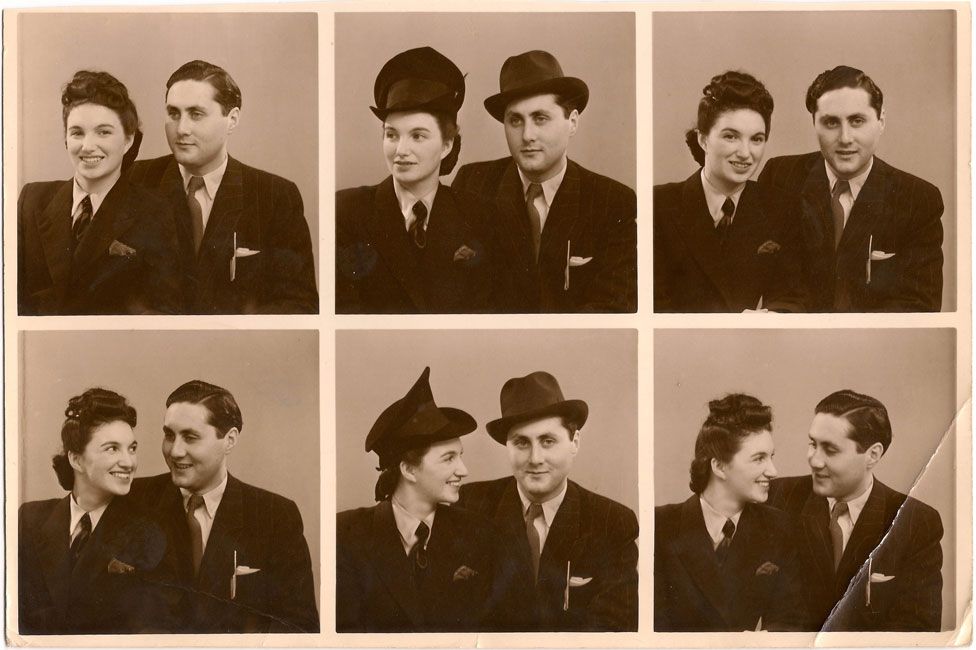
It was a cold October night 75 years ago when my grandparents, Fanny and Raphael Bodin, stood on the dock of a harbor on the east coast of Denmark with their 15-month-old daughter, Lis, in their arms.
I imagine they peered into the darkness, nervously awaiting the fisherman who would take them across the water to the safety of neutral Sweden. Until that point, the Jews of Denmark – unlike those in other parts of occupied Europe – had been free to go about their business. But now the order had been given to transport them to Germany “for processing”.
So my grandparents and aunt fled. As they boarded the fishing boat they handed the fisherman a substantial sum of money for the hour-long boat trip across the Oresund – the narrow stretch of water between Denmark and Sweden. Then it started to rain and my aunt began to cry. The fisherman, fearing the Germans would hear her cries, ordered my grandparents either to leave their child on the dock or get off the boat. They chose the latter and watched as the boat cast off for Sweden with their money and perhaps their last chance of escape.
When you think of Colonial America, soldiers marching to fife and drum and Benjamin Franklin flying a kite are probably what come to mind. But the Colonial Period—which stretched from roughly 1607 to 1776, starting when America was just a group of colonies on the east side of the continent and ending with the Revolutionary War and the signing of the Declaration of Independence—was a fascinating but complicated time in which settlers from England forged a proud new identity. These new settlers brought the English language with them when they came, and whenever English finds a new home, it often takes on a new life. America was no exception.
.
Photo from the Print Collector / Print Collector / Getty Images.
Film and Writing Festival for Comedy. Showcasing best of comedy short films at the FEEDBACK Film Festival. Plus, showcasing best of comedy novels, short stories, poems, screenplays (TV, short, feature) at the festival performed by professional actors.

 An image of Hippos at Lake Tana in Bahir Dar, Ethiopia

 Woman with Child on Leash (Getty Images)



 Saved
Saved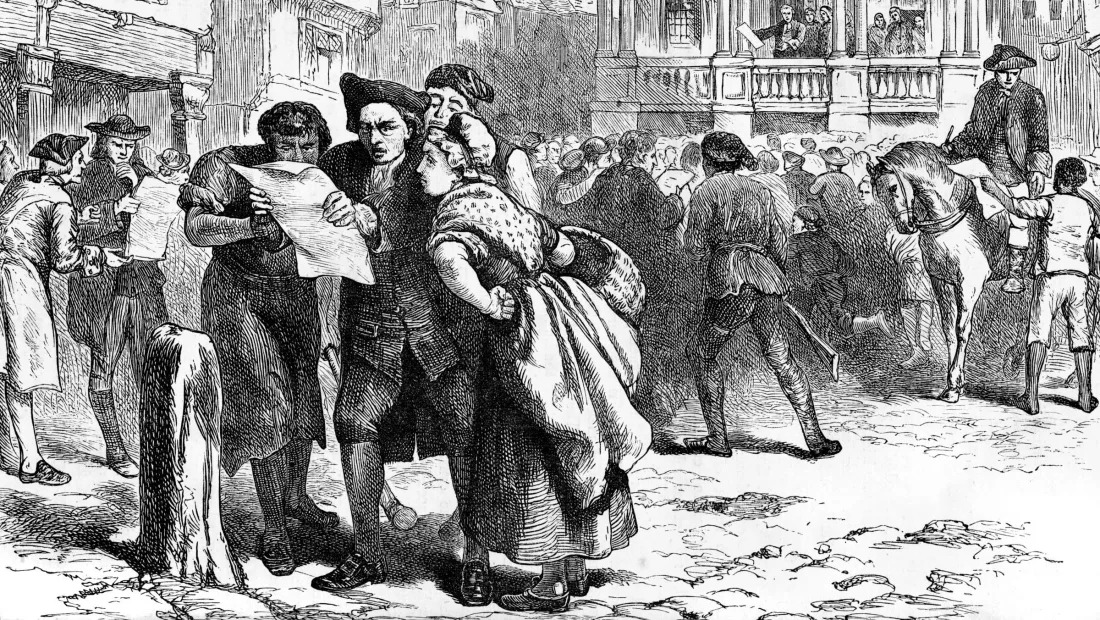
 James' World 2