
.
News You might have missed!
Use your browser or smartphone back arrow (<-) to return to this table for your next selection.
.
__________________________________________
Assorted human interest posts.
October 9, 2021
Arts, Food For Thought, Human Interest, missed News, Political, Science, sports, Technical amazon, business, Business News, current-events, Future, Hotels, human-rights, medicine, mental-health, research, Science, Science News, technology, Technology News, travel, vacation Leave a comment
.
.
__________________________________________
October 8, 2021
Business, Enthralling, Human Interest, Photographs amazon, business, Business News, current-events, Future, Hotels, human-rights, medicine, mental-health, research, Science, Science News, technology, Technology News, travel, vacation 3 Comments

Click the link below the picture
.
Calgary is a city in the western Canadian province of Alberta. With a population of 1,239,220, Calgary is the most populous city in Alberta, the third most populous city in Canada after Toronto and Montreal, and the most populous city in Western Canada. The Calgary Metropolitan Area had a population of roughly 1,581,000 in the beginning of 2021, making it the second-most-populous in western Canada, and the fourth-largest census metropolitan area (CMA) in Canada.
Calgary is situated at the confluence of the Bow River and the Elbow River in the south of the province, in the transitional area between the foothill and the prairie, about 80 km (50 mi) east of the front ranges of the Canadian Rockies, roughly 299 km (186 mi) south of the provincial capital of Edmonton and approximately 240 km (150 mi) north of the Canada–United States border. The city anchors the south end of the Statistics Canada-defined urban area, the Calgary–Edmonton Corridor.
Calgary’s economy includes activity in the energy, financial services, film and television, transportation and logistics, technology, manufacturing, aerospace, health and wellness, retail, and tourism sectors. The Calgary Metropolitan Region is home to Canada’s second-highest number of corporate head offices among the country’s 800 largest corporations. In 2015 Calgary had the highest number of millionaires per capita of any major Canadian city. In 1988 it became the first Canadian city to host the Winter Olympic Games.
The Economist Intelligence Unit ranked Calgary the most livable city in North America in both 2018 and 2019. Calgary has been a top 5 contender for this title for the last 10 years.
Calgary was named after Calgary on the Isle of Mull, Scotland, United Kingdom. In turn, the name originates from a compound of kald and gart, similar Old Norse words, meaning “cold” and “garden”, likely used when named by the Vikings who inhabited the Inner Hebrides. Alternatively, the name might be Gaelic Cala ghearraidh, meaning “beach of the meadow (pasture)”, or Gaelic for either “clear running water” or “bay farm”. Wikipedia
.
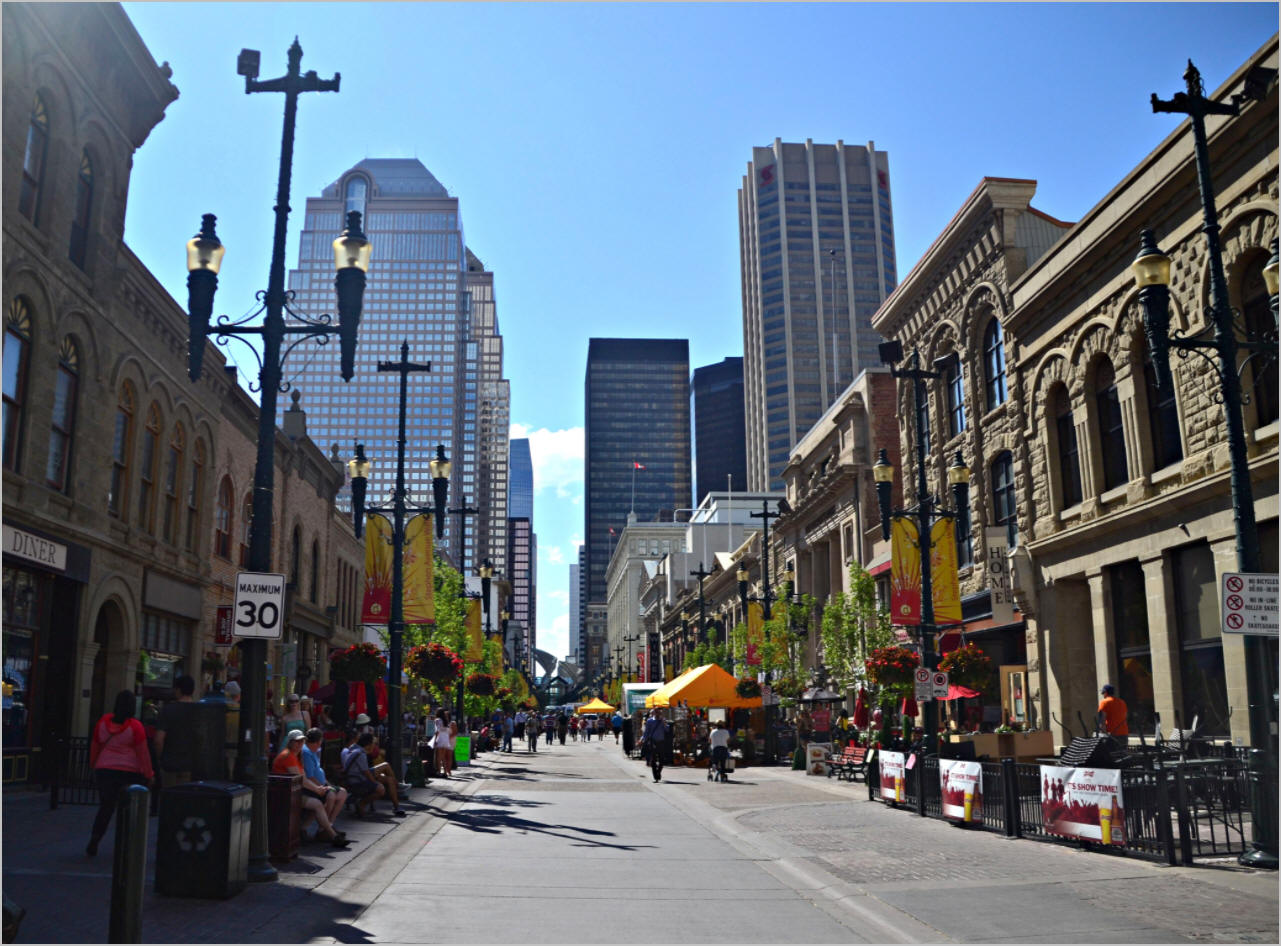 An image from Calgary, AB, Canada
.
.
Click the link below for images:
.
__________________________________________
October 8, 2021
Business, Human Interest amazon, business, Business News, current-events, Future, Hotels, human-rights, medicine, mental-health, research, Science, Science News, technology, Technology News, travel, vacation Leave a comment
Click the link below the picture
.
Many of us thought the Covid-19 pandemic would have led to financial market meltdowns, but we were so wrong. After a year of lockdowns, with nowhere to go and spend money, we saved and invested so much many might feel a step closer to retirement.
Let me be frank with you: That absolute figure in your 401(K) account is misleading. An inflation in asset prices will only propel a rise of the cost of living, especially in non-essential items. Restaurant bills will appear bigger, so are your summer car rentals and private school tuitions. Instead, we need to benchmark our portfolios against how others are doing — just to make sure our purchasing power isn’t eroding.
For those of us who aspire to financial independence, the picture is not pretty. Has your retirement account risen by 8.3%? That’s how much global wealth — including stocks, bonds, and real estate — grew in the last year, to a record $250 trillion, according to Boston Consulting Group Inc. And that 8.3% is just a minimal point of comparison. In 2020, the ultra-rich — defined by the consultancy as those with at least $100 million — saw their investable wealth soar 15.8% to $5.8 trillion in the U.S., and 26.5% to $3.6 trillion in mainland China. This exclusive club of 60,000 people have $22 trillion in investable wealth, representing 15% of the world’s total.
.

Some nest eggs are more golden than others. Photographer: erenmotion/iStockphoto
.
.
Click the link below for the article:
.
__________________________________________
October 8, 2021
Business, Food For Thought, Human Interest, Science, Technical amazon, business, Business News, current-events, Future, Hotels, human-rights, medicine, mental-health, research, Science, Science News, technology, Technology News, travel, vacation Leave a comment

Click the link below the picture
.
Going back to the office soon? As a speech trainer, one common source of anxiety I’ve been hearing from people is the social interaction they’ll once again have to make with colleagues.
But like any other form of public speaking — yes, elevator banter counts — small talk skills have nothing to do with your personality, and everything to do with learning to empathize with your audience.
If you want your skill and comfort levels to soar, avoid these seven conversational pitfalls:
.

.
.
Click the link below for the article:
.
__________________________________________
October 8, 2021
Crime, Finance, Food For Thought, Human Interest, Medical, missed News, Political, Science, Technical amazon, business, Business News, current-events, Future, Hotels, human-rights, medicine, mental-health, research, Science, Science News, technology, Technology News, travel, vacation Leave a comment
.
.
__________________________________________
October 7, 2021
Business, Enthralling, Human Interest, Photographs amazon, business, Business News, current-events, Future, Hotels, human-rights, medicine, mental-health, research, Science, Science News, technology, Technology News, travel, vacation 3 Comments
Click the link below the picture
.
Cappadocia is a historical region in Central Anatolia, largely in the Nevşehir, Kayseri, Aksaray, Kırşehir, Malatya, Sivas and Niğde provinces in Turkey.
Since the late 300s BC, the name Cappadocia came to be restricted to the inland province (sometimes called Great Cappadocia), Upper Cappadocia, which alone will be the focus of this article. Lower Cappadocia is focused to elsewhere.
According to Herodotus, in the time of the Ionian Revolt (499 BC), the Cappadocians were reported as occupying a region from Mount Taurus to the vicinity of the Euxine (Black Sea). Cappadocia, in this sense, was bounded in the south by the chain of the Taurus Mountains that separate it from Cilicia to the east by the upper Euphrates, to the north by Pontus, and to the west by Lycaonia and eastern Galatia.
The name, traditionally used in Christian sources throughout history, continues in use as an international tourism concept to define a region of exceptional natural wonders, in particular characterized by fairy chimneys and a unique historical and cultural heritage.
The earliest record of the name of Cappadocia dates from the late 6th century BC when it appears in the trilingual inscriptions of two early Achaemenid kings, Darius I and Xerxes, as one of the countries (Old Persian dahyu-) of the Persian Empire. In these lists of countries, the Old Persian name is Katpatuka. It was proposed that Kat-patuka came from the Luwian language, meaning “Low Country”. Subsequent research suggests that the adverb katta meaning ‘down, below is exclusively Hittite, while its Luwian equivalent is zanta. Therefore, the recent modification of this proposal operates with the Hittite katta peda-, literally “place below” as a starting point for the development of the toponym Cappadocia. The earlier derivation from Iranian Hu-aspa-dahyu ‘Land of good horses’ can hardly be reconciled with the phonetic shape of Kat-patuka. A number of other etymologies have also been offered in the past.
Herodotus tells us that the name of the Cappadocians was applied to them by the Persians, while they were termed by the Greeks “White Syrians” (Leucosyri), who were most probably descendants of the Hittites. One of the Cappadocian tribes he mentions is the Moschoi, associated by Flavius Josephus with the biblical figure Meshech, son of Japheth: “and the Mosocheni were founded by Mosoch; now they are Cappadocians”. Wikipedia
.
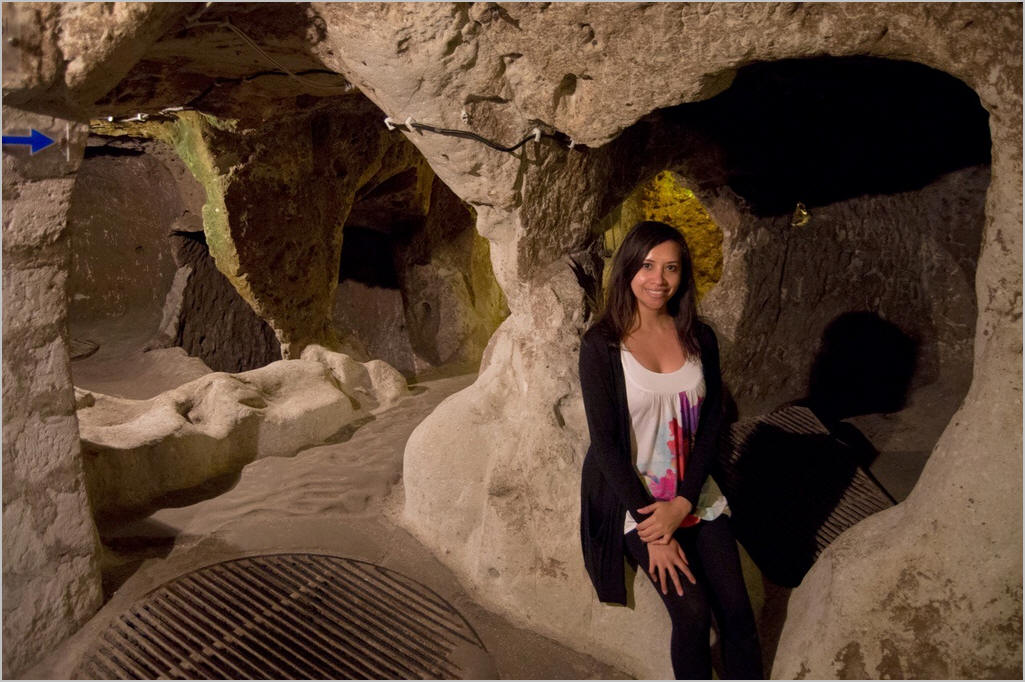 An image from Underground City Cappadocia Turkey
.
.
Click the link below for images:
.
__________________________________________
October 7, 2021
Business, Food For Thought, Human Interest, Science, Technical amazon, business, Business News, current-events, Future, Hotels, human-rights, medicine, mental-health, research, Science, Science News, technology, Technology News, travel, vacation Leave a comment

Click the link below the picture
.
Now that the World Health Organization has officially recognized the symptoms of ‘workplace burnout’, it’s clear that the mental health effects of too much work are a global concern. While it may feel tempting to walk away from work altogether, scientists warn that not working is also linked to mental health issues. As a paper published in Social Science & Medicine, there’s an “effective dose” of work we should be doing each week to reap the rewards — and it’s not that much.
“Indeed eight hours a week would be enough for the average worker.”
As part of the University of Cambridge’s “Employment Dosage” project, study co-authors Brendan Burchell Ph.D., and Daiga Kamerāde, Ph.D., spent a lot of time thinking about how to optimize work schedules to improve mental health. In this study, they wanted to answer one question: is there an ideal number of hours we should work per week to keep ourselves feeling emotionally fulfilled?
.

Photo by Chonlachai Panprommas / EyeEm / Getty Images.
.
.
Click the link below for the article:
.
__________________________________________
October 7, 2021
Business, Food For Thought, Human Interest, Science, Technical amazon, business, Business News, current-events, Future, Hotels, human-rights, medicine, mental-health, research, Science, Science News, technology, Technology News, travel, vacation Leave a comment
Some content on this page was disabled on April 15, 2025 as a result of a DMCA takedown notice from Guardian Media Group. You can learn more about the DMCA here:
October 7, 2021
Business, Crime, Food For Thought, Human Interest, missed News, Political, Science, Technical amazon, business, Business News, current-events, Future, Hotels, human-rights, medicine, mental-health, research, Science, Science News, technology, Technology News, travel, vacation Leave a comment
.
.
__________________________________________
October 6, 2021
Business, Enthralling, Human Interest, Photographs amazon, business, Business News, current-events, Future, Hotels, human-rights, medicine, mental-health, research, Science, Science News, technology, Technology News, travel, vacation Leave a comment
Click the link below the picture
.
Cancún is a city in southeast Mexico on the northeast coast of the Yucatán Peninsula in the Mexican state of Quintana Roo. It is a significant tourist destination in Mexico and the seat of the municipality of Benito Juárez. The city is on the Caribbean Sea and is one of Mexico’s easternmost points.
Cancún is just north of Mexico’s Caribbean coast resort area known as the Riviera Maya.
Cancún is derived from the Mayan name kàan kun, composed of kàan “snake” and the verb kum ~ kun “to swell, overfill”. Two translations have been suggested: the first is “nest of snakes” and the second, less accepted one is “place of the golden snake”.
The shield of the municipality of Benito Juárez, which represents the city of Cancún, was designed by the Mexican-American artist Joe Vera. It is divided into three parts: the color blue symbolizes the Caribbean Sea, the yellow the sand, and the red the sun with its rays.
In older English-language documents, the city’s name is sometimes spelled “Cancoon”, an attempt to convey the sound of the name. Wikipedia
.
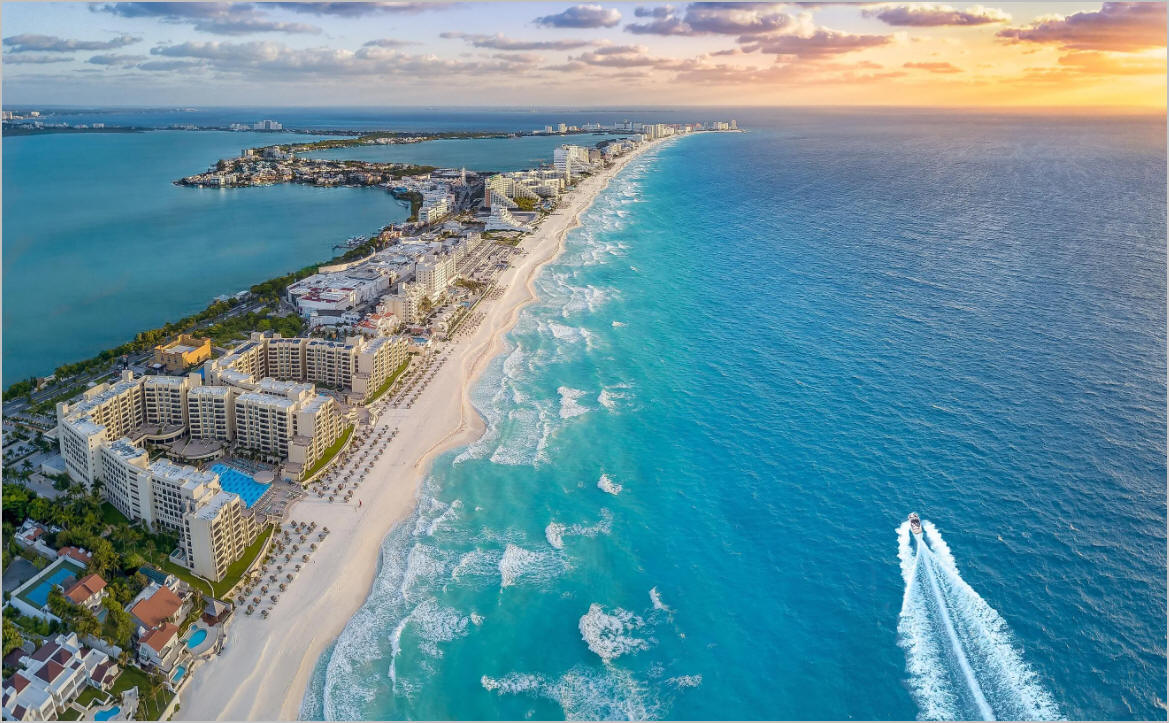 An image from Cancun, Quintana Roo, Mexico
.
.
Click the link below for images:
.
__________________________________________
Find the Best Forex Broker for Your Trading Success
AS HUMILDES OPINIÕES DE UMA MULHER DE CORAGEM QUE DIZ SIM À VIDA!
Să facem glume, nu război
In the world, human beings are facing various problems. People who are full of greed, anger, and ignorance are seen to be fighting with each other in words and deeds. As the fighting continues, various problems such as civil wars, wars of aggression, and wars of aggression are occurring. As world peace is being destroyed, humans are facing unbearable problems. Innocent children and women are not getting the rights they deserve and deserve. I can't think of one thing every time. What is it? The United Nations. If we look at the responsibilities and duties of the United Nations, I think it is not suitable for solving the problems that are happening in the world today. In fact, the United Nations and the World Security Council, such an organization must rule the world, must be able to give orders, and must have various ways to obey orders. There must be no organization that can influence more than that organization. There should be experts from each country. They can even dominate the superpowers like the US, China, and Britain. Only then will global peace be achieved quickly. Now, if a country with power develops more militarily, economically, or socially than its own country, then powerful countries will jealously seek out enemies and wage war. Or they will attack with fighter jets. In this, innocent people are losing their lives. No one understands the value of a life. You should think about how to achieve global peace by controlling these. If the US continues to be the permanent president of the UN, world peace will never be achieved. If you think carefully, no one sees that they are working for the common good, but for their own benefit, for the benefit of their own country. The permanent president of the UN and the Security Council has rejected this, As a young Rohingya, I have come to realize that only by electing the president and secretary from among the countries in the world through a secret ballot system and governing the world fairly can we achieve global peace. The United Nations and the Security Council are organizations in which any country must govern, give orders, and make them obey their orders. For example, only when a defendant is tried in court can we hold the leaders of the countries in check and control them, can we achieve global peace smoothly. Otherwise, it will not be easy for powerful countries to use various excuses to end this war every year, every year, for the benefit of themselves and their countries. No country's leaders pay any attention to the words of the United Nations and the Security Council. If we look at it in practice, look at the Rohingya issue. Myanmar is a small country. Even that country has been under siege for 8 years. What action can be taken? Why is the UN and the Security Council Powerless? Without such Power, how can the organization bring about global peace? Everyone should think about it. Whether there is a veto or a strong one, all countries in the world can only achieve global peace if they are subject to the UN and the Security Council. Seek peace in the quiet embrace of nature. Peace is an indispensable need of the human race. It is not as if one person can kill another person, and it is as if one country can attack another country, but instead of trying to build peace, we must try to destroy the peace now, and the world is getting hotter and is on the verge of collapse. I especially appeal to all the world experts to urgently try to bring about peace in all parts of the world. Mr, Noor Muhamed Arkhan Rohingya Youth Myanmar
Publicație umoristică dedicată glumeților de pretutindeni
Faith saved us from the savages that we were, losing faith makes us savages again
Where Trends Meet Truth
https://www.tangietwoods
Freelance poetry writing
Zalai Betti
INOVATION BLOG PEOPLE AND NEWS
Németh György
Konsultan Lingkungan Hidup di Lombok - NTB
Lea Krasznai (LeaArt21) – Idezetek (Idézetek) WordPress (Budapest, Hungary)
Appunti, spunti e passioni in liberta'
Gyorgy Nemeth
تعنى بتقديم نصائح للمعلمين المبتدئين، والطلبة الممتحنين، ومشاركة الاخرين تجربة الادخار في المال، بترشيد الاستهلاك المنزلي، وترتيب البيت، والحفاظ على البيئة، وتشجيع السيارات صديقةالبيئة، والسياحة والاسفار، ونماء رؤوس الاموال، والطب البديل وتشجيع التعليم الرقمي والذكاء الاصطناعي، والعناية بالنحل وتربية الاسماك، والاسثمار في رؤوس الاموال، الزراعة العضوية، والعناية باسنان الرضع، و صحة الحوامل، وتفسير القران
apprendre pour évoluer
Thoughts on books, language, meaning, and the culture around it.
Outdoor Recreation & Adventure in the Great Lakes Region
News, Info, Bio, Articles, Reviews, Lyrics, Technology, Science, Inspiration, Motivation, Philosphy and many more...
Christian Lifestyle Blogger
CEO and president of The Mullins Companies
Two Cultures. One Life. Endless Stories
Real Estate Development Specialist
¡Bienvenido de vuelta viajero!
so looking to the sky ¡ sing and from my heart to YOU ¡ bring...
CEO and Founder of Nsight Health
Catholic News, Prayers, HD Images, Rosary, Music, Videos, Holy Mass, Homily, Saints, Lyrics, Novenas, Retreats, Talks, Devotionals and Many More
Decoding Power. Defying Narratives.
A creative collaboration introducing the art of nature and nature's art.
The Home Of Entertainment News, Reviews and Reactions
•Whenever you are confronted with an opponent, conquer him with love.(Gandhi)
Algotrader at TRADING-CLUBS.COM
Film and Writing Festival for Comedy. Showcasing best of comedy short films at the FEEDBACK Film Festival. Plus, showcasing best of comedy novels, short stories, poems, screenplays (TV, short, feature) at the festival performed by professional actors.
Peace. Tranquility. Insanity.
Take a ride on the wild side
Découvre des musiques prometteuses (principalement) dans la sphère musicale française.
No tiene que Ser una Pesadilla.
Life in Kana-text (er... CONtext)
Where feelings meet metaphors and make questionable choices.
Finding hope and peace through writing, art, photography, and faith in Jesus.

