
.
News You might have missed!
Use your browser or smartphone back arrow (<-) to return to this table for your next selection.
.
__________________________________________
Assorted human interest posts.
October 30, 2021
Food For Thought, Human Interest, Medical, missed News, Political, Science, Technical amazon, business, Business News, current-events, Future, Hotels, human-rights, medicine, mental-health, research, Science, Science News, technology, Technology News, travel, vacation Leave a comment
.
.
__________________________________________
October 29, 2021
Business, Enthralling, Human Interest, Photographs amazon, business, Business News, current-events, Future, Hotels, human-rights, medicine, mental-health, research, Science, Science News, technology, Technology News, travel, vacation 3 Comments

Click the link below the picture
.
Eastbourne is a town and seaside resort in the non-metropolitan county of East Sussex on the south coast of England, 19 miles (31 km) east of Brighton and 54 miles (87 km) south of London. Eastbourne is immediately to the east of Beachy Head, the highest chalk sea cliff in Great Britain and part of the larger Eastbourne Downland Estate.
The seafront consists largely of Victorian hotels, a pier, a state-of-the-art theatre, a contemporary art gallery, and a Napoleonic era fort and military museum. Eastbourne was developed at the direction of the Duke of Devonshire from 1859 from four separate hamlets. Eastbourne boasts a newly-modernized town center, consisting of a large shopping center, ‘The Beacon’, and an extensive high street. It has a growing population, a broad economic base, and is home to companies in a wide range of industries.
Though Eastbourne is a relatively new town, there is evidence of human occupation in the area from the Stone Age. The town grew as a fashionable tourist resort largely thanks to prominent landowner, William Cavendish, later to become the Duke of Devonshire. Cavendish appointed architect Henry Currey to design a street plan for the town, but not before sending him to Europe to draw inspiration. The resulting mix of architecture is typically Victorian and remains a key feature of Eastbourne.
As a seaside resort, Eastbourne derives a large and increasing income from tourism, with revenue from traditional seaside attractions augmented by conferences, public events, and cultural sightseeing. The other main industries in Eastbourne include trade and retail, healthcare, education, construction, manufacturing, professional scientific, and the technical sector.
Eastbourne’s population is growing; between 2001 and 2011 it increased from 89,800 to 99,412. The 2011 census shows that the average age of residents has decreased as the town has attracted students, families, and those commuting to London and Brighton. In June 2019, the population of Eastbourne was estimated to be 104,042. Wikipedia
.
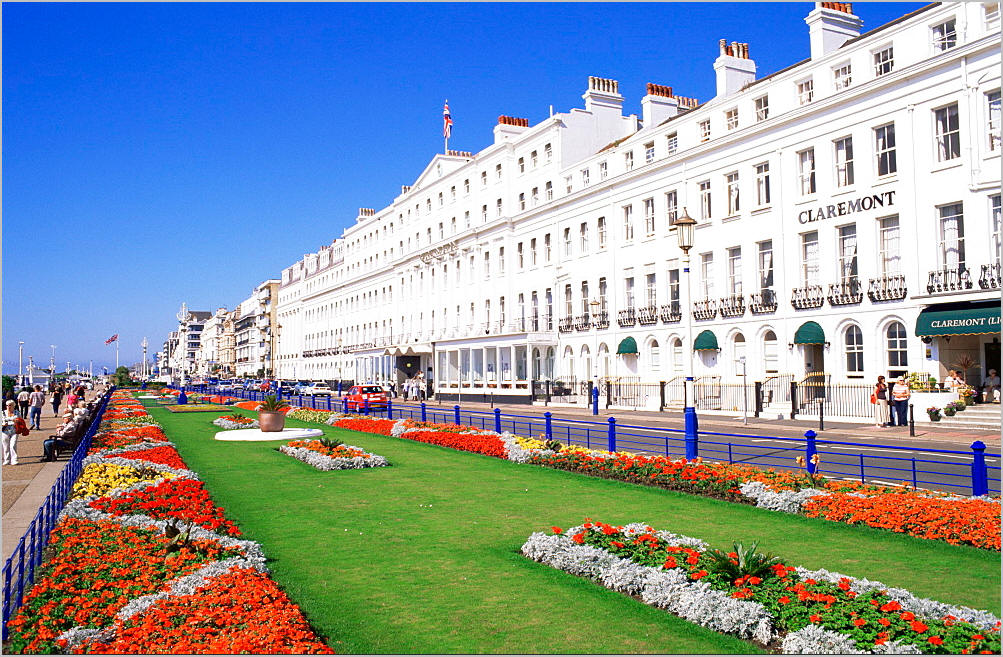 An image from Eastbourne, UK
.
.
Click the link below for images:
.
__________________________________________
October 29, 2021
Arts, Business, Food For Thought, Human Interest, Technical amazon, business, Business News, current-events, Future, Hotels, human-rights, medicine, mental-health, research, Science, Science News, technology, Technology News, travel, vacation Leave a comment

Click the link below the picture
.
It’s time to find something good to watch.
Maybe you didn’t have exactly the hot vaccinated summer we were all hoping for. While we can’t fix the big stuff, our critics do have good news about staying entertained — and challenged, and invigorated, and curious.
We’re back with a guide of what to watch this fall. Because the lines between movies and television are being rapidly blurred, we’ve included both. Plus, everything we’re recommending can be seen from the comfort of your couch. You can search by release date, genre, and, most importantly, wherein the heck you’re supposed to find it.
It’s not a complete listing by any means though, so take a look and then head to the Pop Culture Happy Hour Facebook page to let us know what you’ll be watching.
.

Clockwise from top left: Insecure, Impeachment: American Crime Story, Everybody’s Talking About Jamie, The Wonder Years, The Premise, and Star Wars: Visions. WarnerMedia, FX, Amazon Studios, ABC, FX, Disney+
.
.
Click the link below for article:
.
__________________________________________
October 29, 2021
Arts, Business, Food For Thought, Human Interest, Technical amazon, business, Business News, current-events, Future, Hotels, human-rights, medicine, mental-health, research, Science, Science News, technology, Technology News, travel, vacation Leave a comment
Click the link below the picture
.
Colette Maze welcomes me warmly into her apartment on the 14th floor of a building overlooking the Seine River. From her flowered balcony, she has a view of the Eiffel Tower. She offers me a whiskey or a cognac — along with a hearty laugh as it’s 10:30 in the morning.
It’s that humor, a sense of optimism, and her beloved piano that have buttressed and comforted this centenarian through an often difficult life. Maze has just released her sixth album at the age of 107.
While she lives alone, on this day her 71-year-old son, Fabrice, has joined us. Maze sits down to play her Steinway baby grand — one of two pianos she owns — with her gray tabby cat, Tigrou, stretched out on the carpet near her feet.
Across the room is the Pleyel piano she received on her 18th birthday. Maze began playing at the age of 5. Her grandmother played piano and her mother the violin. She remembers concerts at their grand Paris apartment when she was a child.
But Maze, born on June 16, 1914, says her mother was severe and unloving. So she turned to music for the affection she lacked at home.
.

Colette Maze, now 107, began playing the piano at age 5 and defied the social conventions of her day to embrace it as a profession rather than as a pastime. Her son first arranged for her performances to be recorded when she was in her 90s. She has just released her sixth album. Family photo; Eleanor Beardsley/NPR
.
.
Click the link below for the article:
.
__________________________________________
October 29, 2021
Arts, Business, Food For Thought, Human Interest, Medical, missed News, Political, Science, Technical amazon, business, Business News, current-events, Future, Hotels, human-rights, medicine, mental-health, research, Science, Science News, technology, Technology News, travel, vacation Leave a comment
.
.
__________________________________________
October 28, 2021
Business, Enthralling, Human Interest, Photographs amazon, business, Business News, current-events, Future, Hotels, human-rights, medicine, mental-health, research, Science, Science News, technology, Technology News, travel, vacation Leave a comment
Click the link below the picture
.
The Kosciuszko National Park is a 6,900-square-kilometre (2,700 sq mi) national park and contains mainland Australia’s highest peak, Mount Kosciuszko, for which it is named, and Cabramurra the highest town in Australia. Its borders contain a mix of rugged mountains and wilderness, characterized by an alpine climate, which makes it popular with recreational skiers and bushwalkers.
The park is located in the southeastern corner of New South Wales, 354 km (220 mi) southwest of Sydney, and is contiguous with the Alpine National Park in Victoria to the south, and the Namadgi National Park in the Australian Capital Territory to the northeast. The larger towns of Cooma, Tumut, and Jindabyne lie just outside and service the park.
The waters of the Snowy River, the Murray River, the Murrumbidgee River, and the Gungarlin River all rise in this park.
Other notable peaks in the park include Gungartan, Mount Jagungal, Bimberi Peak, and Mount Townsend.
On 7 November 2008, the Park was added to the Australian National Heritage List as one of eleven areas constituting the Australian Alps National Parks and Reserves.
Multiple Aboriginal groups in the southern part of NSW gathered in the Australian Alps Bioregion in the summer on an annual pilgrimage to the Bogong and Snowy Mountains. Here, the men participated in a feast of Bogong moths (Agrotis infusa) that were found on the rocky outcrops of the mountains.
The area was explored by Europeans in 1835, and in 1840, Edmund Strzelecki ascended Mount Kosciuszko and re-named it after a Polish patriot and military leader Tadeusz Kościuszko. High-country stockmen followed, using the Snowy Mountains for grazing during the summer months. Banjo Paterson’s famous poem The Man From Snowy River recalls this era. The cattle graziers have left a legacy of mountain huts scattered across the area. Today these huts are maintained by the National Parks and Wildlife Service or volunteer organizations like the Kosciuszko Huts Association. In the 19th century, gold was mined on the high plains near Kiandra. At its height, this community had a population of about 4,000 people and ran 14 hotels. It was here that Skiing in Australia commenced around 1861. Since the last resident left in 1974, Kiandra has become a ghost town of ruins and abandoned diggings. In the 20th century, the focus of Skiing in New South Wales shifted south closer to the Kosciuszko Main Range. Wikipedia
.
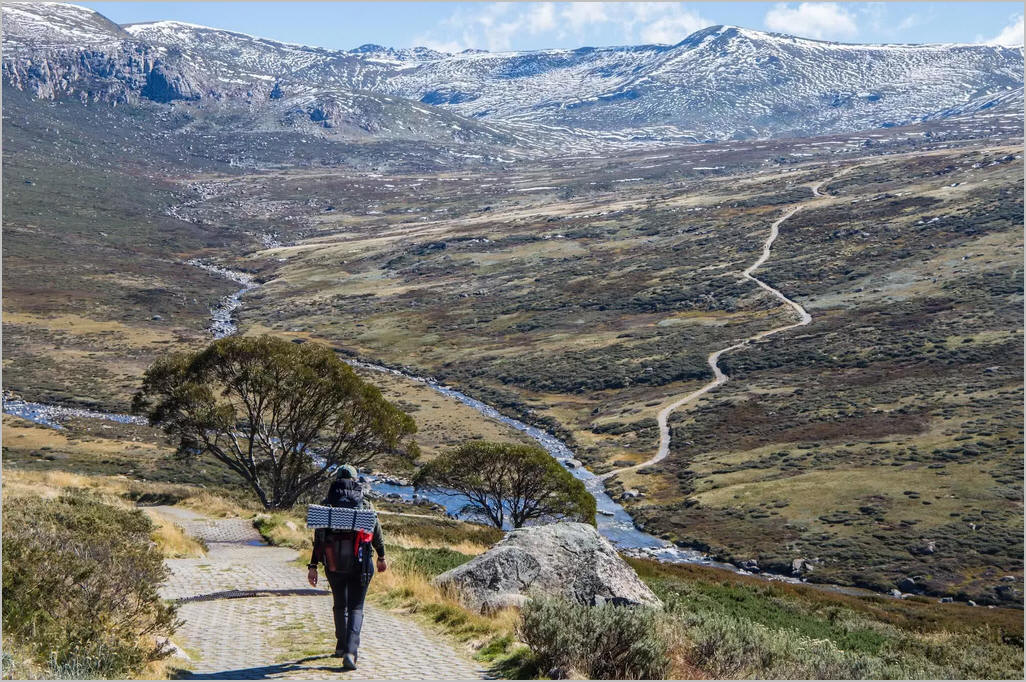 An image from Kosciuszko National Park
.
.
Click the link below for images:
.
__________________________________________
October 28, 2021
Arts, Business, Food For Thought, Human Interest, Technical amazon, business, Business News, current-events, Future, Hotels, human-rights, medicine, mental-health, research, Science, Science News, technology, Technology News, travel, vacation Leave a comment

Click the link below the picture
.
Before Daniel Craig arrived, James Bond hadn’t made sense for years. That’s not just because the character’s original conception — a borderline sadist who used and discarded women while eating elaborate meals, drinking to excess, and smoking constantly — felt increasingly out of time as the 20th century turned into the 21st. It’s because Bond fans could be driven to the brink of madness trying to connect one film to the next. A new actor would take over as Bond from time to time, but it was unclear whether or not the Bond of the moment and the Bonds of the past shared the same history. Why did some of the supporting cast remain consistent and others did not? Is it any wonder why a fan theory that “James Bond” was just a codename caught on in some corners?
The Craig films, which culminate this year with the fifth film in his cycle, No Time to Die, have treated both Bond’s retrograde personality and tangled continuity as problems that needed solving. They’ve addressed the former without making Bond fundamentally un-Bondian, emphasizing the toughness of his character and the emotional toil of the job rather than, say, his tendency to leer at every woman who crosses his path. And they’ve tried to smooth out the snarls of James Bond continuity while telling a multi-part story with a distinct beginning, middle, and seemingly definitive end.
It’s been a thoughtful overhaul filled with bold choices. But was it successful? Has Bond emerged from his turn-of-the-century transformation newly relevant? Did the attempt at making individual entries part of a bigger story work? To find answers here at the end involves first going back to the beginning.
When Casino Royale hit theaters in 2006, it earned comparisons to the then-fledgling Bourne franchise, and understandably so, given that it took cues from those films’ grittier approach to action — emphasizing tough, intense, sometimes bloody scenes of combat over effects-driven set pieces. The Bourne films were viewed at first as the anti-Bonds, an answer to the excesses—like, say, an ice palace or an invisible car—of the later Pierce Brosnan films.
.
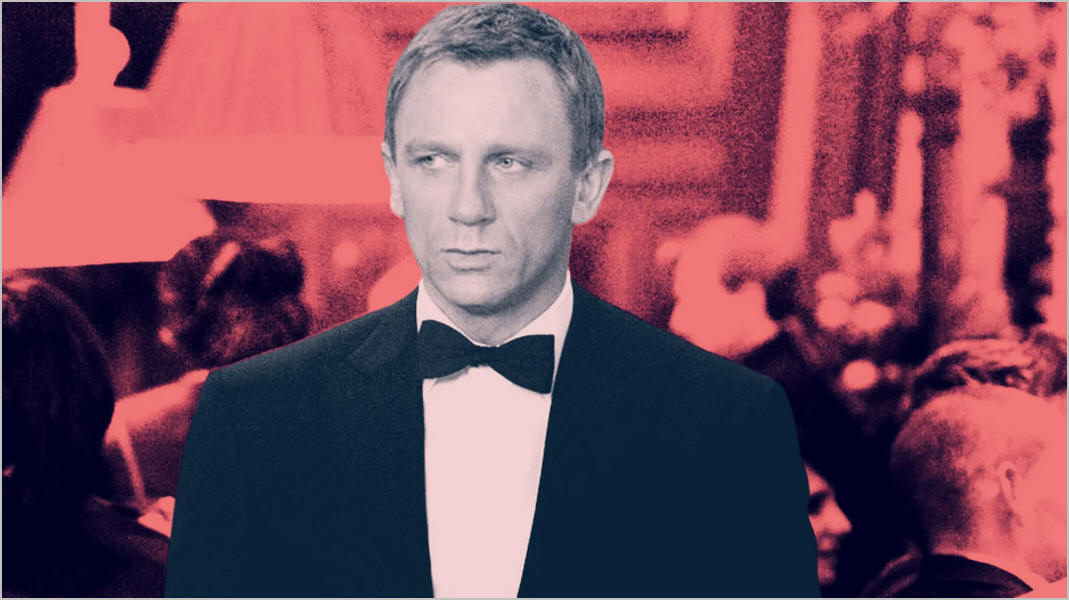 Photograph courtesy Everett Collection: Collage by Gabe Conte
.
.
Click the link below for the article:
.
__________________________________________
October 28, 2021
Business, Food For Thought, Human Interest, Science, Technical amazon, business, Business News, current-events, Future, Hotels, human-rights, medicine, mental-health, research, Science, Science News, technology, Technology News, travel, vacation Leave a comment

Click the link below the picture
.
Given that our first direct detections confirming the existence of black holes only took place in this century, humanity can be forgiven for not knowing a few things about these mysterious cosmic objects.
We don’t even know everything we don’t know – a fact that’s been made evident in a new discovery. While running equations for quantum gravity corrections for the entropy of a black hole, a pair of physicists found that black holes exert pressure on the space around them.
Not much pressure, to be sure – but it’s a finding that’s fascinatingly consistent with Stephen Hawking’s prediction that black holes emit radiation and therefore not only have a temperature but slowly shrink over time, in the absence of accretion.
“Our finding that Schwarzschild black holes have a pressure, as well as a temperature, is even more exciting given that it was a total surprise,” said physicist and astronomer Xavier Calmet of the University of Sussex in the UK.
“If you consider black holes within only general relativity, one can show that they have a singularity in their centers where the laws of physics as we know them must break down.
“It is hoped that when quantum field theory is incorporated into general relativity, we might be able to find a new description of black holes.”
.
 Artist’s impression of an active black hole. (Mark Garlick/Science Photo Library/Getty Images)
.
.
Click the link below for the article:
.
__________________________________________
October 28, 2021
Crime, Food For Thought, Human Interest, Made Me Laugh, missed News, Political, Science, Technical amazon, business, Business News, current-events, Future, Hotels, human-rights, medicine, mental-health, research, Science, Science News, technology, Technology News, travel, vacation Leave a comment
.
.
__________________________________________
October 27, 2021
Business, Enthralling, Human Interest, Photographs amazon, business, Business News, current-events, Future, Hotels, human-rights, medicine, mental-health, research, Science, Science News, technology, Technology News, travel, vacation Leave a comment
Click the link below the picture
.
Darjeeling is a city and a municipality in the Indian state of West Bengal. It is located in the Lesser Himalayas at an elevation of 2,000 meters (6,560 ft). It is noted for its tea industry, its views of the world’s third-highest mountain Kangchenjunga, and the Darjeeling Himalayan Railway, a UNESCO World Heritage Site. Darjeeling is the headquarters of the Darjeeling district which has a partially autonomous status called Gorkhaland Territorial Administration within the state of West Bengal. It is also a popular tourist destination in India.
The recorded history of the town starts from the early 19th century when the colonial administration under the British Raj set up a sanatorium and a military depot in the region. Subsequently, extensive tea plantations were established in the region and tea growers developed hybrids of black tea and created new fermentation techniques. The resultant distinctive Darjeeling tea is internationally recognized and ranks among the most popular black teas in the world. The Darjeeling Himalayan Railway connects the town with the plains and has some of the few steam locomotives still in service in India.
Darjeeling has several British-style private schools, which attract pupils from all over India and a few neighboring countries. The varied culture of the town reflects its diverse demographic milieu comprising Lepcha, Khampa, Gorkha, Kirati, Newar, Sherpa, Bhutia, Bengali, and other mainland Indian ethnolinguistic groups. Darjeeling, alongside its neighboring town of Kalimpong, was the center of the Gorkhaland social movement in the 1980s and summer of 2017. Wikipedia
.
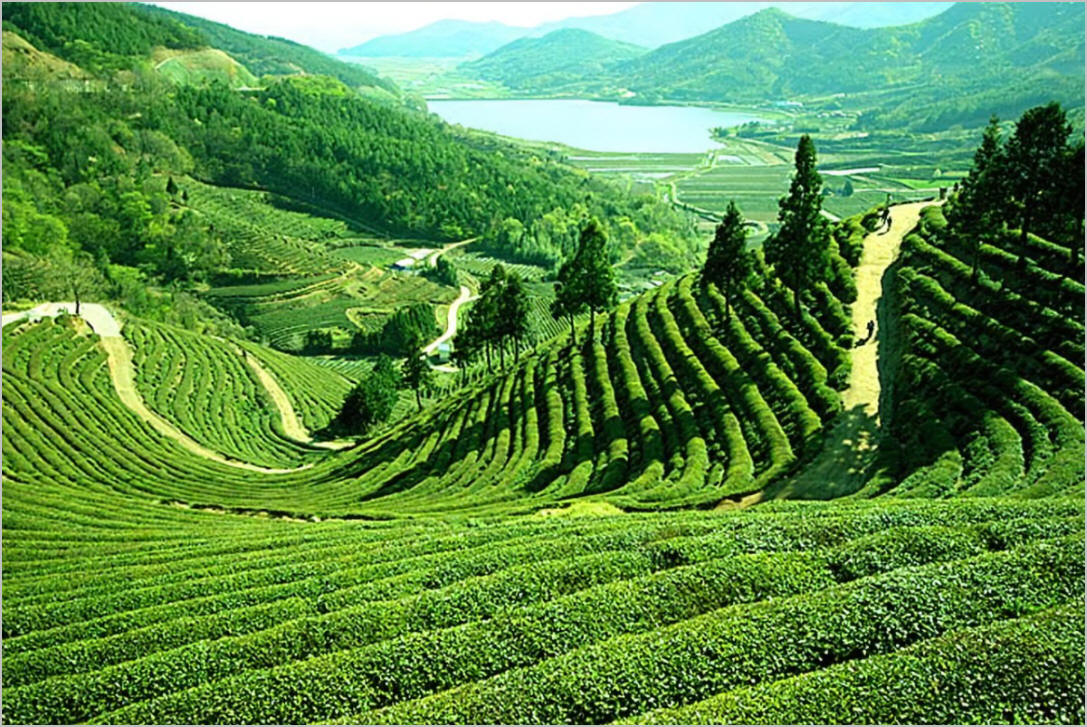 An image from Darjeeling, West Bengal, India
.
.
Click the link below for images:
.
__________________________________________
Find the Best Forex Broker for Your Trading Success
AS HUMILDES OPINIÕES DE UMA MULHER DE CORAGEM QUE DIZ SIM À VIDA!
Să facem glume, nu război
In the world, human beings are facing various problems. People who are full of greed, anger, and ignorance are seen to be fighting with each other in words and deeds. As the fighting continues, various problems such as civil wars, wars of aggression, and wars of aggression are occurring. As world peace is being destroyed, humans are facing unbearable problems. Innocent children and women are not getting the rights they deserve and deserve. I can't think of one thing every time. What is it? The United Nations. If we look at the responsibilities and duties of the United Nations, I think it is not suitable for solving the problems that are happening in the world today. In fact, the United Nations and the World Security Council, such an organization must rule the world, must be able to give orders, and must have various ways to obey orders. There must be no organization that can influence more than that organization. There should be experts from each country. They can even dominate the superpowers like the US, China, and Britain. Only then will global peace be achieved quickly. Now, if a country with power develops more militarily, economically, or socially than its own country, then powerful countries will jealously seek out enemies and wage war. Or they will attack with fighter jets. In this, innocent people are losing their lives. No one understands the value of a life. You should think about how to achieve global peace by controlling these. If the US continues to be the permanent president of the UN, world peace will never be achieved. If you think carefully, no one sees that they are working for the common good, but for their own benefit, for the benefit of their own country. The permanent president of the UN and the Security Council has rejected this, As a young Rohingya, I have come to realize that only by electing the president and secretary from among the countries in the world through a secret ballot system and governing the world fairly can we achieve global peace. The United Nations and the Security Council are organizations in which any country must govern, give orders, and make them obey their orders. For example, only when a defendant is tried in court can we hold the leaders of the countries in check and control them, can we achieve global peace smoothly. Otherwise, it will not be easy for powerful countries to use various excuses to end this war every year, every year, for the benefit of themselves and their countries. No country's leaders pay any attention to the words of the United Nations and the Security Council. If we look at it in practice, look at the Rohingya issue. Myanmar is a small country. Even that country has been under siege for 8 years. What action can be taken? Why is the UN and the Security Council Powerless? Without such Power, how can the organization bring about global peace? Everyone should think about it. Whether there is a veto or a strong one, all countries in the world can only achieve global peace if they are subject to the UN and the Security Council. Seek peace in the quiet embrace of nature. Peace is an indispensable need of the human race. It is not as if one person can kill another person, and it is as if one country can attack another country, but instead of trying to build peace, we must try to destroy the peace now, and the world is getting hotter and is on the verge of collapse. I especially appeal to all the world experts to urgently try to bring about peace in all parts of the world. Mr, Noor Muhamed Arkhan Rohingya Youth Myanmar
Publicație umoristică dedicată glumeților de pretutindeni
Faith saved us from the savages that we were, losing faith makes us savages again
Where Trends Meet Truth
https://www.tangietwoods
Freelance poetry writing
Zalai Betti
INOVATION BLOG PEOPLE AND NEWS
Németh György
Konsultan Lingkungan Hidup di Lombok - NTB
Lea Krasznai (LeaArt21) – Idezetek (Idézetek) WordPress (Budapest, Hungary)
Appunti, spunti e passioni in liberta'
Gyorgy Nemeth
تعنى بتقديم نصائح للمعلمين المبتدئين، والطلبة الممتحنين، ومشاركة الاخرين تجربة الادخار في المال، بترشيد الاستهلاك المنزلي، وترتيب البيت، والحفاظ على البيئة، وتشجيع السيارات صديقةالبيئة، والسياحة والاسفار، ونماء رؤوس الاموال، والطب البديل وتشجيع التعليم الرقمي والذكاء الاصطناعي، والعناية بالنحل وتربية الاسماك، والاسثمار في رؤوس الاموال، الزراعة العضوية، والعناية باسنان الرضع، و صحة الحوامل، وتفسير القران
apprendre pour évoluer
Thoughts on books, language, meaning, and the culture around it.
Outdoor Recreation & Adventure in the Great Lakes Region
News, Info, Bio, Articles, Reviews, Lyrics, Technology, Science, Inspiration, Motivation, Philosphy and many more...
Christian Lifestyle Blogger
CEO and president of The Mullins Companies
Two Cultures. One Life. Endless Stories
Real Estate Development Specialist
¡Bienvenido de vuelta viajero!
so looking to the sky ¡ sing and from my heart to YOU ¡ bring...
CEO and Founder of Nsight Health
Catholic News, Prayers, HD Images, Rosary, Music, Videos, Holy Mass, Homily, Saints, Lyrics, Novenas, Retreats, Talks, Devotionals and Many More
Decoding Power. Defying Narratives.
A creative collaboration introducing the art of nature and nature's art.
The Home Of Entertainment News, Reviews and Reactions
•Whenever you are confronted with an opponent, conquer him with love.(Gandhi)
Algotrader at TRADING-CLUBS.COM
Film and Writing Festival for Comedy. Showcasing best of comedy short films at the FEEDBACK Film Festival. Plus, showcasing best of comedy novels, short stories, poems, screenplays (TV, short, feature) at the festival performed by professional actors.
Peace. Tranquility. Insanity.
Take a ride on the wild side
Découvre des musiques prometteuses (principalement) dans la sphère musicale française.
No tiene que Ser una Pesadilla.
Life in Kana-text (er... CONtext)
Where feelings meet metaphors and make questionable choices.
Finding hope and peace through writing, art, photography, and faith in Jesus.

