
.
News You might have missed!
Use your browser or smartphone back arrow (<-) to return to this table for your next selection.
.
__________________________________________
Assorted human interest posts.
November 2, 2021
Business, Crime, Food For Thought, Human Interest, Medical, missed News, Political, Science, Technical amazon, business, Business News, current-events, Future, Hotels, human-rights, medicine, mental-health, research, Science, Science News, technology, Technology News, travel, vacation Leave a comment
.
.
__________________________________________
November 1, 2021
Business, Enthralling, Human Interest, Photographs amazon, business, Business News, current-events, Future, Hotels, human-rights, medicine, mental-health, research, Science, Science News, technology, Technology News, travel, vacation Leave a comment

Click the link below the picture
.
Eau Claire is a city in Eau Claire and Chippewa counties in the west-central part of the U.S. state of Wisconsin. Located almost entirely in Eau Claire County, for which it is the county seat, the city had an estimated population of 68,802 in 2019, making it the state’s eighth-largest city. Eau Claire is the principal city of the Eau Claire, Wisconsin Metropolitan Statistical Area, which is a part of the Eau Claire-Menomonie Combined Statistical Area.
Eau Claire took its name from Eau Claire County. “Eau Claire” is the singular form of the original French name, “Eaux Claires”, meaning “Clear Waters”, for the Eau Claire River. According to local legend, the river was so named because early French explorers journeying down the rain-muddied Chippewa River, came upon the confluence with the Eau Claire River, and excitedly exclaimed “Voici l’eau claire!” (“Here is the clear water!”) Now used as the city motto, this appears on the city seal. Wikipedia
.
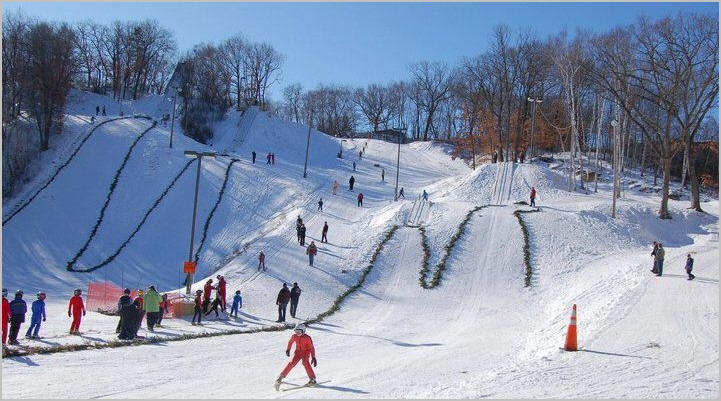 An image from Eau Claire, WI, USA
.
.
Click the link below for images:
.
__________________________________________
November 1, 2021
Business, Food For Thought, Human Interest, Medical, Science, Technical amazon, business, Business News, current-events, Future, Hotels, human-rights, medicine, mental-health, research, Science, Science News, technology, Technology News, travel, vacation Leave a comment

Click the link below the picture
.
Ivermectin is an antiparasitic drug and a very good one. If you are infected with the roundworms that cause river blindness or the parasitic mites that cause scabies, it is wonderfully effective. It is cheap; it is accessible, and its discoverers won the Nobel Prize in 2015. It has also been widely promoted as a coronavirus prophylactic and treatment.
This promotion has been broadly criticized as a fever dream conceived in the memetic bowels of the internet and as a convenient buttress for bad arguments against vaccination. This is not entirely fair. Perhaps 70 to 100 studies have been conducted on the use of ivermectin for treating or preventing COVID-19; several dozen of them support the hypothesis that the drug is a plague mitigant. Two meta-analyses, which looked at data aggregated across subsets of these studies, concluded that the drug has value in the fight against the pandemic.
.
 The Atlantic
.
.
Click the link below for the article:
.
__________________________________________
November 1, 2021
Business, Food For Thought, Human Interest, Science, Technical amazon, business, Business News, current-events, Future, Hotels, human-rights, medicine, mental-health, research, Science, Science News, technology, Technology News, travel, vacation Leave a comment

Click the link below the picture
.
In today’s topsy-turvy job market, a strange new thing is happening. Employers are increasingly grumbling about job seekers “ghosting” them. These job candidates just don’t show up for their scheduled interviews. And in some cases, new hires accept a job only to disappear.
Here’s some of what I’ve heard from managers:
I’m in the medical field and this is happening to us to for the past year 6–12 months. Being ghosted for interviews, people not responding. Five people scheduled to interview, but one shows up. We’ve even hired people who didn’t show up in the first day or didn’t return for the second. Nurses and front office positions. It’s unreal.
I went from working at a nonprofit to working for a vendor. … Part of my job is hiring, but I’m having a much harder time hiring now than I did at the nonprofit. The pay and benefits are better—we start people at more than the max rate at the nonprofit, hours are more consistent, and we offer good PTO, matching 401k, and insurance. I’ve sent out over 30 offers to interview. Nine agreed to interviews. Three didn’t show up, two failed background checks, two didn’t want to travel … and we’ve made offers to the other two but neither has responded to accept or reject. I’ve never had so many people just not respond or not show up. Is this the new normal? … I’m at a loss and feeling really discouraged.
.
 Photo illustration by Slate. Photos by Thinkstock and leolintang/iStock/Getty Images Plus.
.
.
Click the link below for the article:
.
__________________________________________
November 1, 2021
Crime, Food For Thought, Human Interest, Medical, missed News, Political, Science, Technical amazon, business, Business News, current-events, Future, Hotels, human-rights, medicine, mental-health, research, Science, Science News, technology, Technology News, travel, vacation Leave a comment
.
.
__________________________________________
October 31, 2021
Business, Food For Thought, Human Interest, Science, Technical amazon, business, Business News, current-events, Future, Hotels, human-rights, medicine, mental-health, research, Science, Science News, technology, Technology News, travel, vacation Leave a comment

Click the link below the picture
.
In the early afternoon of September 12, 1915, a British vessel set off from the western coast of England and freighted up the Irish Sea toward Scotland. It was a warm day, but most of the men aboard, confined to an airless chamber below deck, longed only to escape the sickening quarters. The passage was short: After traveling 70 miles, the SS Connaught docked at the Douglas breakwater on the Isle of Man. Immediately, the British guards overseeing the ship lowered a ramp and began shouting commands. Wearily, the men disembarked.
The scene was chaotic. “There was no law or order whatsoever,” a reporter for the Peel City Guardian wrote. Within minutes, men from the ship were confused with locals milling about the harbor, most of whom were Manx people native to the isle. Eventually, separated from the crowd, they marched along the South Quay and boarded a steam-powered train that weaved sluggishly into the heart of the isle. As the tin-gray sky turned starless black, the train stopped at St. John’s station. Another march followed, this time under the watch of the King’s Liverpool Regiment. For hours, they trudged through soil that sunk like clay, over streams, through cattle gates. In the distance, hundreds of bright lights flickered, a site rare in the customary blackness of wartime. “Almost like Paris,” one of the men thought.
.

For Joseph Pilates, confinement paradoxically offered a kind of liberation. Illustrations by Julie Benbassat
.
.
Click the link below for the article:
.
__________________________________________
October 31, 2021
Business, Food For Thought, Human Interest, Science, Technical amazon, business, Business News, current-events, Future, Hotels, human-rights, medicine, mental-health, research, Science, Science News, technology, Technology News, travel, vacation Leave a comment

Click the link below the picture
.
No matter how many years you’ve worked, starting a new job is often nerve-racking. There are so many unknowns to figure out, and one of the biggest question marks is your new boss. How can you set your relationship up for success?
One of the biggest things I learned in my coaching career is that helping people manage their bosses is arguably as important as helping them to manage themselves. This often means relearning what it means to adapt to an organization, as everything that may have made you effective with your previous manager may not necessarily help you with your new one. For example, I once went from working for a very sociable, hedonistic, and assertive boss to working for a very quiet, cautious, and serious boss — my personality stayed the same, but I was forced to learn new habits, adjust my behaviors, and relearn how to adapt.
.

.
.
Click the link below for the article:
.
__________________________________________
October 30, 2021
Business, Enthralling, Human Interest, Photographs amazon, business, Business News, current-events, Future, Hotels, human-rights, medicine, mental-health, research, Science, Science News, technology, Technology News, travel, vacation Leave a comment
Click the link below the picture
.
San Francisco Bay is a shallow estuary in the U.S. state of California. It is surrounded by a contiguous region known as the San Francisco Bay Area (often simply “the Bay Area”) and is dominated by the large cities of San Francisco, San Jose, and Oakland.
San Francisco Bay drains water from approximately 40 percent of California. Water from the Sacramento and San Joaquin rivers, and from the Sierra Nevada mountains, flow into Suisun Bay, which then travels through the Carquinez Strait to meet with the Napa River at the entrance to San Pablo Bay, which connects at its south end to San Francisco Bay. It then connects to the Pacific Ocean via the Golden Gate strait. However, this entire group of interconnected bays is often called the San Francisco Bay. The bay was designated a Ramsar Wetland of International Importance on February 2, 2017.
The bay covers somewhere between 400 and 1,600 square miles (1,000–4,000 km2), depending on which sub-bays (such as San Pablo Bay), estuaries, wetlands, and so on are included in the measurement. The main part of the bay measures three to twelve miles (5–19 km) wide east-to-west and somewhere between 48 miles (77 km)1 and 60 miles (97 km)2 north-to-south. It is the largest Pacific estuary in the Americas.
The bay was navigable as far south as San Jose until the 1850s when hydraulic mining released massive amounts of sediment from the rivers that settled in those parts of the bay that had little or no current. Later, wetlands and inlets were deliberately filled in, reducing the Bay’s size since the mid-19th century by as much as one-third. Recently, large areas of wetlands have been restored, further confusing the issue of the Bay’s size. Despite its value as a waterway and harbor, many thousands of acres of marshy wetlands at the edges of the bay were, for many years, considered wasted space. As a result, soil excavated for building projects or dredged from channels was often dumped onto the wetlands and other parts of the bay as landfill. Wikipedia
.
 An image from Sanfrancisco Bay
.
.
Click the link below for images:
.
__________________________________________
October 30, 2021
Business, Food For Thought, Human Interest, Science, Technical amazon, business, Business News, current-events, Future, Hotels, human-rights, medicine, mental-health, research, Science, Science News, technology, Technology News, travel, vacation Leave a comment

Click the link below the picture
.
Goodbye. Farewell. Adios. Sayonara. Workers have been giving their bosses an earful of such words as of late. Last week, the U.S. Bureau of Labor Statistics announced that 4.3 million Americans, or 2.9% of the entire workforce, quit their jobs in August. That was a record-breaking month, piggybacking on previous record months. “The Great Resignation” is real, and it can be seen across virtually all industries.
It’s common to see a surge in quitting when the job market is tight and there’s a cornucopia of open positions. But what’s happening now is unlike anything we’ve seen before. Economists and pollsters are still investigating what’s going on. Are generous government benefits encouraging people to quit? Maybe, but some evidence suggests not. Are people angling for a raise after decades of stagnant pay? Probably, yeah. The family pressures imposed by closed schools, the closing and reopening of businesses, the reshuffling of the population to different locations and industries, and the fear of the virus in face-to-face settings have all also almost certainly played a role. But the historic rise in quitting also seems to be about more than all of this.
.

.
.
Click the link below for the article:
.
__________________________________________
October 30, 2021
Arts, Business, Crime, Food For Thought, Human Interest, Technical amazon, business, Business News, current-events, Future, Hotels, human-rights, medicine, mental-health, research, Science, Science News, technology, Technology News, travel, vacation Leave a comment
Some content on this page was disabled on April 15, 2025 as a result of a DMCA takedown notice from Guardian Media Group. You can learn more about the DMCA here:
Find the Best Forex Broker for Your Trading Success
AS HUMILDES OPINIÕES DE UMA MULHER DE CORAGEM QUE DIZ SIM À VIDA!
Să facem glume, nu război
In the world, human beings are facing various problems. People who are full of greed, anger, and ignorance are seen to be fighting with each other in words and deeds. As the fighting continues, various problems such as civil wars, wars of aggression, and wars of aggression are occurring. As world peace is being destroyed, humans are facing unbearable problems. Innocent children and women are not getting the rights they deserve and deserve. I can't think of one thing every time. What is it? The United Nations. If we look at the responsibilities and duties of the United Nations, I think it is not suitable for solving the problems that are happening in the world today. In fact, the United Nations and the World Security Council, such an organization must rule the world, must be able to give orders, and must have various ways to obey orders. There must be no organization that can influence more than that organization. There should be experts from each country. They can even dominate the superpowers like the US, China, and Britain. Only then will global peace be achieved quickly. Now, if a country with power develops more militarily, economically, or socially than its own country, then powerful countries will jealously seek out enemies and wage war. Or they will attack with fighter jets. In this, innocent people are losing their lives. No one understands the value of a life. You should think about how to achieve global peace by controlling these. If the US continues to be the permanent president of the UN, world peace will never be achieved. If you think carefully, no one sees that they are working for the common good, but for their own benefit, for the benefit of their own country. The permanent president of the UN and the Security Council has rejected this, As a young Rohingya, I have come to realize that only by electing the president and secretary from among the countries in the world through a secret ballot system and governing the world fairly can we achieve global peace. The United Nations and the Security Council are organizations in which any country must govern, give orders, and make them obey their orders. For example, only when a defendant is tried in court can we hold the leaders of the countries in check and control them, can we achieve global peace smoothly. Otherwise, it will not be easy for powerful countries to use various excuses to end this war every year, every year, for the benefit of themselves and their countries. No country's leaders pay any attention to the words of the United Nations and the Security Council. If we look at it in practice, look at the Rohingya issue. Myanmar is a small country. Even that country has been under siege for 8 years. What action can be taken? Why is the UN and the Security Council Powerless? Without such Power, how can the organization bring about global peace? Everyone should think about it. Whether there is a veto or a strong one, all countries in the world can only achieve global peace if they are subject to the UN and the Security Council. Seek peace in the quiet embrace of nature. Peace is an indispensable need of the human race. It is not as if one person can kill another person, and it is as if one country can attack another country, but instead of trying to build peace, we must try to destroy the peace now, and the world is getting hotter and is on the verge of collapse. I especially appeal to all the world experts to urgently try to bring about peace in all parts of the world. Mr, Noor Muhamed Arkhan Rohingya Youth Myanmar
Publicație umoristică dedicată glumeților de pretutindeni
Faith saved us from the savages that we were, losing faith makes us savages again
Where Trends Meet Truth
https://www.tangietwoods
Freelance poetry writing
Zalai Betti
INOVATION BLOG PEOPLE AND NEWS
Németh György
Konsultan Lingkungan Hidup di Lombok - NTB
Lea Krasznai (LeaArt21) – Idezetek (Idézetek) WordPress (Budapest, Hungary)
Appunti, spunti e passioni in liberta'
Gyorgy Nemeth
تعنى بتقديم نصائح للمعلمين المبتدئين، والطلبة الممتحنين، ومشاركة الاخرين تجربة الادخار في المال، بترشيد الاستهلاك المنزلي، وترتيب البيت، والحفاظ على البيئة، وتشجيع السيارات صديقةالبيئة، والسياحة والاسفار، ونماء رؤوس الاموال، والطب البديل وتشجيع التعليم الرقمي والذكاء الاصطناعي، والعناية بالنحل وتربية الاسماك، والاسثمار في رؤوس الاموال، الزراعة العضوية، والعناية باسنان الرضع، و صحة الحوامل، وتفسير القران
apprendre pour évoluer
Thoughts on books, language, meaning, and the culture around it.
Outdoor Recreation & Adventure in the Great Lakes Region
News, Info, Bio, Articles, Reviews, Lyrics, Technology, Science, Inspiration, Motivation, Philosphy and many more...
Christian Lifestyle Blogger
CEO and president of The Mullins Companies
Two Cultures. One Life. Endless Stories
Real Estate Development Specialist
¡Bienvenido de vuelta viajero!
so looking to the sky ¡ sing and from my heart to YOU ¡ bring...
CEO and Founder of Nsight Health
Catholic News, Prayers, HD Images, Rosary, Music, Videos, Holy Mass, Homily, Saints, Lyrics, Novenas, Retreats, Talks, Devotionals and Many More
Decoding Power. Defying Narratives.
A creative collaboration introducing the art of nature and nature's art.
The Home Of Entertainment News, Reviews and Reactions
•Whenever you are confronted with an opponent, conquer him with love.(Gandhi)
Algotrader at TRADING-CLUBS.COM
Film and Writing Festival for Comedy. Showcasing best of comedy short films at the FEEDBACK Film Festival. Plus, showcasing best of comedy novels, short stories, poems, screenplays (TV, short, feature) at the festival performed by professional actors.
Peace. Tranquility. Insanity.
Take a ride on the wild side
Découvre des musiques prometteuses (principalement) dans la sphère musicale française.
No tiene que Ser una Pesadilla.
Life in Kana-text (er... CONtext)
Where feelings meet metaphors and make questionable choices.
Finding hope and peace through writing, art, photography, and faith in Jesus.

