July 14, 2022
Mohenjo
Business, Food For Thought, Human Interest, Political, Science, Technical
amazon, business, Business News, current-events, Future, Hotels, human-rights, medicine, mental-health, research, Science, Science News, technology, Technology News, travel, vacation

Click the link below the picture
.
After receiving a full-time job offer to become a vice president for a rapidly expanding auto group, Jordan eagerly accepted. The company was quickly acquiring dealerships, and Jordan believed that she’d be able to work closely with the C-suite on strategic development. The CEO promised Jordan autonomy to shape and implement the corporate direction, which she saw as a once-in-a-lifetime opportunity.
Jordan and her family jumped in with both feet — her husband quit his job and they moved cross-country with their infant daughter so that Jordan could start her new position. Yet just one year later, Jordan’s starry-eyed hopes had dissolved into disappointment. She resigned, and she and her family moved back to their original home. As her executive coach, Jordan shared with me that contrary to what she had expected, the CEO was almost entirely uninvolved and had no vision of what her role could be. “He thought he was giving me high autonomy, but I felt abandoned and uninvolved,” she said.
Jordan’s example of boomeranging back after taking a new job may seem extreme, yet statistics tell a different story. A Harris poll conducted for USA Today found that about one in five workers who quit their job wish they had remained in their old position, and only around a quarter of job switchers say they’re satisfied enough with their new position to stay. Similarly, a recent study from The Muse found that almost three-quarters of those surveyed reported that the new position or new company they quit their job for turned out to be “very different from what they were led to believe or thought it would be.” Nearly half of these workers said they would try to get their old job back thanks to an occurrence The Muse calls “shift shock.”
.

.
.
Click the link below for the article:
.
__________________________________________
July 14, 2022
Mohenjo
Business, Food For Thought, Human Interest, Medical, Science, Technical
amazon, business, Business News, current-events, Future, Hotels, human-rights, medicine, mental-health, research, Science, Science News, technology, Technology News, travel, vacation

Click the link below the picture
.
Careful what you say or type at work — because it could backfire.
As word and grammar experts, we asked dozens of managers what bothered them the most when they talk to employees and read emails or DMs from them. The most common complaint is? All the “junk” words and phrases!
Too many of us fill our conversations with useless, clunky, and pretentious words and phrases, especially ones that have duplicate meanings. In some cases, they aren’t technically incorrect, but it’s always best — and safer — to err on the side of caution and stick with the standard rules of business communication.
.

Belinda Howell | Getty
.
.
Click the link below for the article:
.
__________________________________________
July 14, 2022
Mohenjo
Crime, Food For Thought, Human Interest, Medical, missed News, Political, Science, Technical
amazon, business, Business News, current-events, Future, Hotels, human-rights, medicine, mental-health, research, Science, Science News, technology, Technology News, travel, vacation

.
News You might have missed!
Use your browser or smartphone back arrow (<-) to return to this table for your next selection.
.
__________________________________________
July 13, 2022
Mohenjo
Business, Enthralling, Human Interest, Photographs
amazon, business, Business News, current-events, Future, Hotels, human-rights, medicine, mental-health, research, Science, Science News, technology, Technology News, travel, vacation

Click the link below the picture
.
Uganda, officially the Republic of Uganda, is a landlocked country in East Africa. The country is bordered to the East by Kenya, to the North by South Sudan, to the west by the Democratic Republic of the Congo, to the southwest by Rwanda, and to the south by Tanzania. The Southern part of the country includes a substantial portion of Lake Victoria, shared with Kenya and Tanzania. Uganda is in the African Great Lakes region. Uganda also lies within the Nile basin and has a varied but generally a modified equatorial climate. It has a population of over 42 million, of which 8.5 million live in the capital and largest city of Kampala.
Uganda is named after the Buganda kingdom, which encompasses a large portion of the south of the country, including the capital Kampala and whose language Luganda is widely spoken throughout the country.
Beginning in 1894, the area was ruled as a protectorate by the United Kingdom, which established administrative law across the territory. Uganda gained independence from the UK on 9 October 1962. The period since then has been marked by violent conflicts, including an eight-year-long military dictatorship led by Idi Amin.
The official languages are English and Swahili, although the Constitution states that “any other language may be used as a medium of instruction in schools or other educational institutions or for legislative, administrative or judicial purposes as may be prescribed by law.” Luganda, a central region-based language, is widely spoken across the Central and South Eastern regions of the country, and several other languages are also spoken, including Ateso, Lango, Acholi, Runyoro, Runyankole, Rukiga, Luo, Rutooro, Samia, Jopadhola, and Lusoga.
Uganda’s current president is Yoweri Kaguta Museveni, who took power in January 1986 after a protracted six-year guerrilla war. Following constitutional amendments that removed term limits for the president, he was able to stand and was elected president of Uganda in the 2011, 2016, and in the 2021 general elections.
Much of Uganda was inhabited by Central sudanic and Kuliak-speaking farmers and herders before Bantu speakers arrived in the south and Nilotic speakers in the northeast 3,000 years ago in 1,000 BC. By 1500 AD, they were assimilated into Bantu-speaking cultures south of Mount Elgon, the Nile River, and Lake Kyoga.
According to oral tradition and archeological studies, the Empire of Kitara covered an important part of the great lakes area, from the northern lakes Albert and Kyoga to the southern lakes Victoria and Tanganyika. Bunyoro-Kitara is claimed as the antecedent of the Toro, Ankole, and Busoga kingdoms.
Some Luo invaded the area of Bunyoro and assimilated with the Bantu society there, establishing the Babiito dynasty of the current Omukama (ruler) of Bunyoro-Kitara. Wikipedia
.
 An image from Uganda Capital
.
.
Click the link below for images:
.
__________________________________________
July 13, 2022
Mohenjo
Business, Food For Thought, Human Interest, Science, Technical
amazon, business, Business News, current-events, Future, Hotels, human-rights, medicine, mental-health, research, Science, Science News, technology, Technology News, travel, vacation

Click the link below the picture
.
Small talk is often dismissed as being pointless and anxiety-producing. People either want to jump right into real conversation, or they want to go home. But some of the most important relationships begin with a casual conversation.
Making memorable small talk hardly requires ground-breaking style or creativity so much as sensitivity and understanding. As a public speaking coach, I always tell people to think about finding common ground. Your goal? Show emotional intelligence. Take a risk, but don’t be threatening.
.
 Mix And Match Studio | Getty Images
.
.
Click the link below for the article:
.
__________________________________________
July 13, 2022
Mohenjo
Business, Food For Thought, Human Interest, Political, Science, Technical
amazon, business, Business News, current-events, Future, Hotels, human-rights, medicine, mental-health, research, Science, Science News, technology, Technology News, travel, vacation

Click the link below the picture
.
I’ll admit I’m out of practice.
The last time I was being interviewed for a job was certainly when America was still sane.
Yet I never really prepared for particular questions to be asked. I merely feared that the first question would be: “Tell me a little about yourself.”
Because that told me the interviewer likely hadn’t read my resumé or, if they had, could not remember anything about it. And didn’t care.
Google’s stretching exercise
So when I saw that Google had released a new online tool to help you practice for job interviews, my mind was intrigued, and my soul prepared to be saddened.
Google’s Interview Warmup promises it’ll help you practice key questions, get insights about your answers, and get more comfortable interviewing.
Naturally, this is all achieved via glorious AI, which only wishes it could stare intently into your eyes. That’s because this tool doesn’t switch your camera on but merely activates your microphone.
At least, that’s what I thought.
.

I’ve come with my lawyer, just in case. Morsa Images/DigitalVision/Getty Images
.
.
Click the link below for the article:
.
__________________________________________
July 13, 2022
Mohenjo
Human Interest, missed News
amazon, business, Business News, current-events, Future, Hotels, human-rights, medicine, mental-health, research, Science, Science News, technology, Technology News, travel, vacation
.
News You might have missed!
Use your browser or smartphone back arrow (<-) to return to this table for your next selection.
.
__________________________________________
July 12, 2022
Mohenjo
Business, Enthralling, Human Interest, Photographs
amazon, business, Business News, current-events, Future, Hotels, human-rights, medicine, mental-health, research, Science, Science News, technology, Technology News, travel, vacation
Click the link below the picture
.
On private property close to Chapada dos Veadeiros National Park is an amazing and ancient place much like a water park created by nature with pools, natural water slides, and cascades. It’s called Vale da Lua or Valley of the Moon due to the smooth rocks formed by river and ancient lava flows. Still, others call it Moon Valley.
These rocks are very unusual and some consider them to look like lunar rocks. This Moon Valley is not well-known, not even among the people of Brazil. https: unusualplaces.org/vale-da-lua/
.
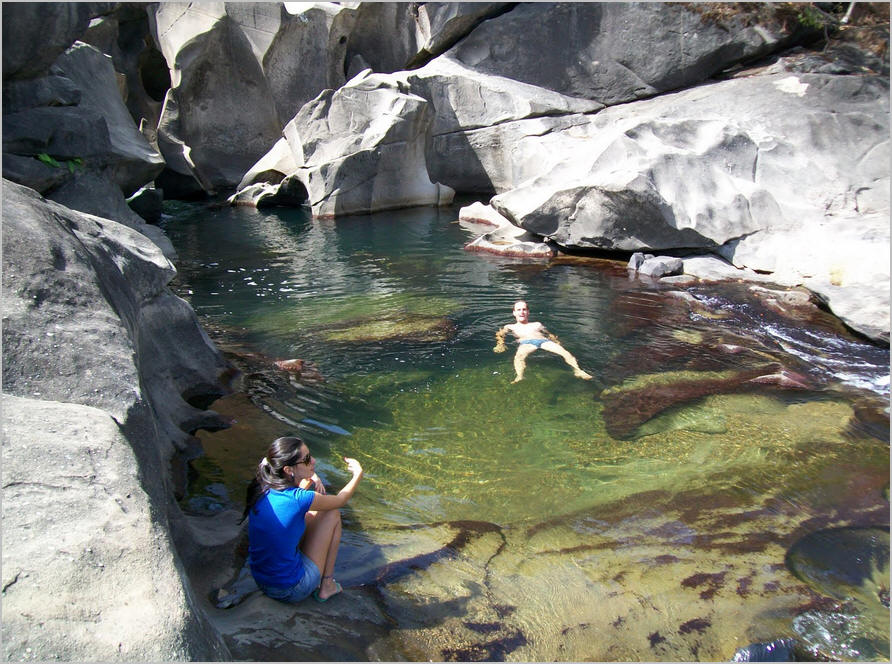 An image from Vale Da Lua Brazil
.
.
Click the link below for article:
.
__________________________________________
July 12, 2022
Mohenjo
Business, Food For Thought, Human Interest, Political, Science, Technical
amazon, business, Business News, current-events, Future, Hotels, human-rights, medicine, mental-health, research, Science, Science News, technology, Technology News, travel, vacation

Click the link below the picture
.
A college degree used to be the gold standard for finding a job, but increasing numbers of companies are eliminating or reducing their requirements for a degree as a condition for hiring. According to Glassdoor, graduating from an impressive college name is now less critical for landing a position you love—from jobs in tech (on Glassdoor this includes Google and Apple) and retail (Costco and Nordstrom) to banking (Bank of America) and publishing (Penguin Random House).
But great skills will always be critical, and perhaps even more important is a learning mindset which keeps your capabilities fresh and makes your potential evident. In fact, a 2021 study found the characteristic of curiosity and an orientation for learning were the hottest new skills, with 72% of leaders reporting they believe it’s a valuable trait and 51% who believe it has become more important over time. Leaders also believe it drives business impact (59%) and performance (51%).
A learning mindset is in demand
A learning orientation—and curiosity—are the desires to seek new information, inquire, explore and discover novel possibilities and experiences. According to the same study, LinkedIn posts mentioning curiosity are up 71% and job postings mentioning the need for curiosity are up 90% in the last couple years.
Watch on Netflix…Who we are – A Chronicle of Racism in America
.
 [Source illustration: Rudzhan Nagiev/Getty Images]
.
.
Click the link below for the article:
.
__________________________________________
July 12, 2022
Mohenjo
Business, Food For Thought, Human Interest, Political, Science, Technical
amazon, business, Business News, current-events, Future, Hotels, human-rights, medicine, mental-health, research, Science, Science News, technology, Technology News, travel, vacation

Click the link below the picture
.
With over four million people quitting their jobs each month during the first quarter of 2022 and 44% of workers currently looking for new jobs, it’s entirely possible that someone on your team could leave in the near term. And it may not be the person you thought it would be — or hoped it would be. It could come as a total surprise to you and be a key contributor on your team, someone with whom you really enjoy working and who has great potential in your organization. So, how do you respond when this person gives their notice?
While there are several things you should not do — like take it personally, belittle their new opportunity, or give them a guilt trip (among others) — there are six key elements to ensuring that you respond in a constructive and professional manner while processing the surprising news.
Take a beat
First, take a moment to digest the news. It’s okay to show you’re surprised or to say something like, “Wow, I wasn’t expecting that.” The last thing you want to do is react impulsively and say something you might regret that would leave the individual with a negative impression of you and the organization.
Watch on Netflix…Who we are – A Chronicle of Racism in America
.
 HBR Staff/shapecharge/Getty Images
.
.
Click the link below for the article:
.
__________________________________________
Older Entries
Newer Entries

