December 7, 2021
Mohenjo
Business, Enthralling, Human Interest, Photographs
amazon, business, Business News, current-events, Future, Hotels, human-rights, medicine, mental-health, research, Science, Science News, technology, Technology News, travel, vacation

Click the link below the picture
.
Aulanko has been a popular destination with visitors for more than a hundred years. Nowadays, there is a lot to see in Aulanko Nature Reserve, in addition to the beautiful scenery. The forest park of Aulanko, its sights, and the view from the scenic lookout tower of Aulangonvuori Hill over the national landscape attract more than 400 000 visitors every year. The area is best suitable for day trips.
The English-style park, which forms a part of the nature reserve, was constructed in 1883 – 1938, and, with its buildings and cultural history, it is a nationally valuable site. To maintain the spacious park landscape, the forest park is actively managed. The nature reserve also includes forest landscape in its natural state.
The forest park of Aulanko has had a significant impact on the Finnish park culture. Nowadays, Aulanko area belongs to the first National Urban Park in Finland (hameenlinna.fi).
.
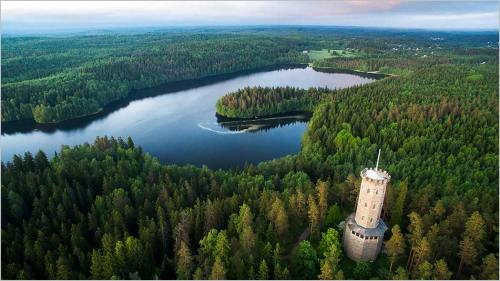 An image from Aulanko Nature Reserve
.
.
Click the link below for images:
.
__________________________________________
December 7, 2021
Mohenjo
Business, Human Interest
amazon, business, Business News, current-events, Future, Hotels, human-rights, medicine, mental-health, research, Science, Science News, technology, Technology News, travel, vacation

Click the link below the picture
.
Bob Dole, the longtime lawmaker who overcame life-threatening injuries during World War II to become a shepherd of the Republican Party, died in his sleep Sunday at the age of 98.
Dole’s death was confirmed by the Elizabeth Dole Foundation in a statement Sunday.
“It is with heavy hearts we announce that Senator Robert Joseph Dole died early this morning in his sleep,” the foundation said. “At his death, at age 98, he had served the United States of America faithfully for 79 years.”
His family also released a statement about Dole’s death Sunday, saying that they have lost their rock, adding that they shared Dole with Americans “from every walk of life” over the decades.
“Bob Dole never forgot where he came from. He embodied the integrity, humor, compassion, and unbounded work ethic of the wide-open plains of his youth,” the statement said. “He was a powerful voice for pragmatic conservatism, and it was that unique Kansan combination of attributes and values that made him such a giant of the Senate.”
.
 Sen. Bob Dole, R-Kan., appears in Colorado for his presidential campaign in 1996. (Ira Wyman / Sygma via Getty Images file)
.
.
Click the link below for the article:
.
__________________________________________
December 7, 2021
Mohenjo
Business, Food For Thought, Human Interest, Medical, Political
amazon, business, Business News, current-events, Future, Hotels, human-rights, medicine, mental-health, research, Science, Science News, technology, Technology News, travel, vacation

Click the link below the picture
.
Republicans and Democrats in Congress sent an outpouring of tributes and condolences Sunday following the news of the death of Bob Dole, the onetime GOP presidential candidate, and World War II hero. He was 98.
“It is with heavy hearts we announce that Senator Robert Joseph Dole died early this morning in his sleep,” the Elizabeth Dole Foundation said in a statement. “At his death, at age 98, he had served the United States of America.”
House Speaker Nancy Pelosi, D-Calif., ordered flags to be flown at half-staff at the Capitol.
President Joe Biden described Dole as a man with “an unerring sense of integrity and honor” in a statement Sunday afternoon.
The two spent years on opposite sides of the Senate, but Biden noted that despite their policy disagreements, Dole never hesitated to work with Democrats on important bipartisan efforts.
.
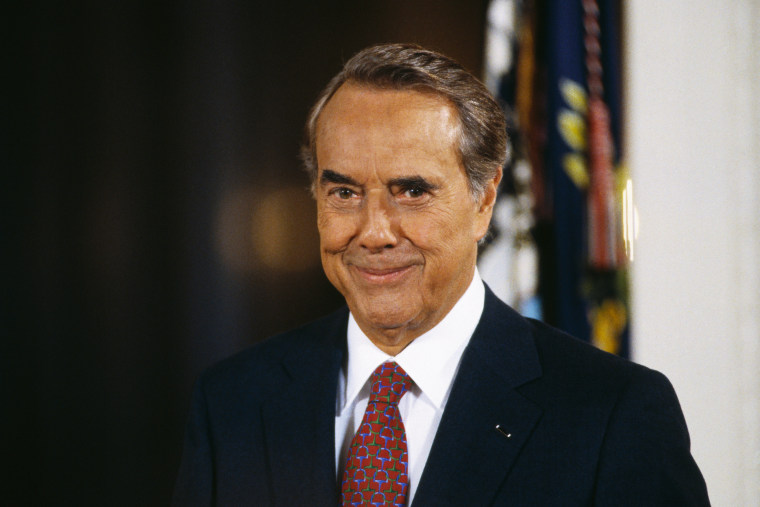 Sen. Bob Dole, R-Kan., smiles before he receives the Presidential Medal of Freedom in 1997.Wally McNamee / Corbis via Getty Images file
.
.
Click the link below for the article:
.
__________________________________________
December 7, 2021
Mohenjo
Business, Food For Thought, Human Interest, Medical, Science, Technical
amazon, business, Business News, current-events, Future, Hotels, human-rights, medicine, mental-health, research, Science, Science News, technology, Technology News, travel, vacation

Click the link below the picture
.
Just a few years ago, I was opposed to vaccines. I felt that the risks of measles were being exaggerated when periodic outbreaks would occur. I refused to get my tetanus, diphtheria, and pertussis booster when my doctor offered it, and I declined the flu shot every year. I particularly regret the decision regarding the flu shot. As a hospital employee at the time, even though I worked in an area where I did not come into contact with patients, if I had caught the flu during that time, I could have spread it, putting others at risk.
The measles outbreak underway in Clark County, Wash., and the cases that have been reported in nine other states this year are a reminder for me of just how far my views have shifted. In previous years when I rejected vaccination, I would have thought that I didn’t have to worry about measles because I lived a healthy lifestyle, or that the news was just being used to scare people into vaccinating unnecessarily. I can’t help but think back to my old beliefs and how much of my reasoning was based on misleading or false information. But my experience is also a reminder that education and compassion can be valuable tools in the fight against anti-vaccination sentiment.
My reasons for being against vaccines stemmed mostly from misunderstanding the ingredients in the vaccines and how they worked. People who tried to persuade me not to vaccinate told me about the many ingredients in vaccines, such as aluminum salts, polysorbate 80, and formaldehyde, but they did not explain the purpose of those ingredients. They advised me to read the vaccine package inserts without giving me an understanding of how to correctly interpret the information. I had also become convinced that many vaccine reactions were overlooked for various reasons and that they occurred much more frequently than documentation on vaccine safety showed.
.
 A child receives a vaccine in a hospital in Belgrade, Serbia, on Sept. 3, 2018. (Marko Djurica/Reuters)
.
.
Click the link below for the article:
.
__________________________________________
December 7, 2021
Mohenjo
Business, Human Interest
amazon, business, Business News, current-events, Future, Hotels, human-rights, medicine, mental-health, research, Science, Science News, technology, Technology News, travel, vacation

Click the link below the picture
.
The center of the Milky Way may be even more bizarre than astronomers thought, according to a new study.
For the study, a team of researchers from the Chinese Academy of Sciences in Nanjing investigated a map of radioactive gamma-rays — the highest-energy form of light in the universe, which can arise when extremely high-speed particles called cosmic rays crash into ordinary matter — blasting in and around the center of our galaxy.
The map revealed that something near the center of the galaxy appears to be accelerating particles to mind-blowing speeds — very near the speed of light — and creating an abundance of cosmic rays and gamma-rays just outside the galactic center. However, even as the galactic center blows a constant storm of high-energy radiation into space, something near the Milky Way‘s core prevents a large portion of cosmic rays from other parts of the universe from entering, the team reported Nov. 9 in the journal Nature Communications.
.
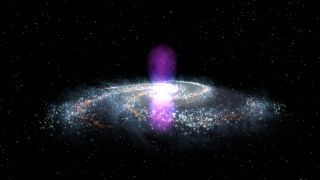 An artist’s impression of the Milky Way’s center, using data from the Fermi Gamma-Ray Space Telescope. (Image credit: NASA Goddard)
.
.
Click the link below for the article:
.
__________________________________________
December 6, 2021
Mohenjo
Business, Enthralling, Human Interest, Photographs
amazon, business, Business News, current-events, Future, Hotels, human-rights, medicine, mental-health, research, Science, Science News, technology, Technology News, travel, vacation
Click the link below the picture
.
Lancaster is a city in South Central Pennsylvania, that serves as the seat of Pennsylvania’s Lancaster County and is one of the oldest inland towns in the United States. With a population at the 2010 census of 59,322, it ranks eighth in population among Pennsylvania’s cities. The Lancaster metropolitan area population is 507,766, making it the 104th-largest metropolitan area in the U.S. and second-largest in the South Central Pennsylvania area.
The city’s primary industries include healthcare, tourism, public administration, manufacturing, and both professional and semi-professional services. Lancaster is best known for being the hub of Pennsylvania’s Amish Country.
Originally called Hickory Town, the city was renamed after the English city of Lancaster by native John Wright. Its symbol, the red rose, is from the House of Lancaster. Lancaster was part of the 1681 Penn’s Woods Charter of William Penn and was laid out by James Hamilton in 1734. It was incorporated as a borough in 1742 and incorporated as a city in 1818.
During the American Revolution, Lancaster was the capital of the United States for one day at the Court House (built 1739, destroyed by fire 1784 and rebuilt before relocating to current Lancaster County Courthouse in 1852; original site is now the Soldiers & Sailors Monument at Penn Square c. 1874), on September 27, 1777, after the Continental Congress fled Philadelphia, which had been captured by the British. The revolutionary government then moved still farther away to York, Pennsylvania.
Lancaster was capital of Pennsylvania from 1799 to 1812 with State Capital meeting at the Court House (built 1784 and demolished 1852 and now site of Soldiers & Sailors Monument at Penn Square), after which the capital was moved to Harrisburg. Wikipedia
.
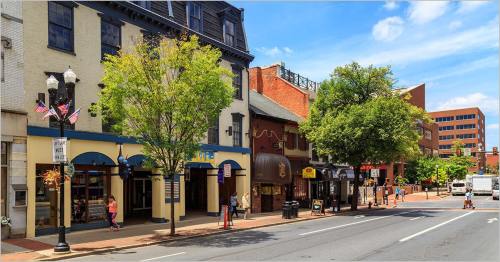 An image from Lancaster, PA, USA
.
.
Click the link below for images:
.
__________________________________________
December 6, 2021
Mohenjo
Business, Food For Thought, Human Interest, Science, Technical
amazon, business, Business News, current-events, Future, Hotels, human-rights, medicine, mental-health, research, Science, Science News, technology, Technology News, travel, vacation

Click the link below the picture
.
The Beresheet crash-landed on Earth’s Moon in 2019. Part of the ill-fated Israeli lunar lander’s payload was a bunch of tardigrades, or “water bears.” These organisms are under a millimeter long and can survive extreme cold and radiation by expelling nearly all their moisture before entering a nearly death-like state. The Beresheet tardigrades may have survived the crash and could, potentially, be resurrected by being reintroduced to water.
The tardigrades—sometimes called moss piglets—are safely asleep and probably not running amok on the surface of the Moon. But, in general, scientists, governments, and space agencies around the world agree that bringing Earth’s life to extraterrestrial locales, or vice versa, isn’t great.
A new paper builds on the growing body of literature about this cosmic no-no and draws on the burgeoning field of invasion science—the research of how, on Earth, non-native species spread to and alter new locations. The zebra mussel’s spread across North America through its ability to outcompete native species is a classic example.
Right now, when it comes to other celestial bodies, humans are more likely to find or introduce microorganisms rather than filter-feeders (or anything big). “The ecosystem concept is a very general concept. It doesn’t just apply to lakes or forests,” Anthony Ricciardi—a McGill University biologist and one of the authors of the paper—told Ars.
.
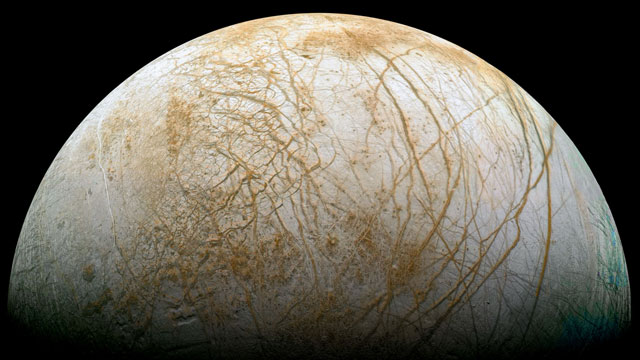 Europa could harbor complex life, and we’ll have to take care to avoid any cross-contamination.
.
.
Click the link below for the article:
.
__________________________________________
December 6, 2021
Mohenjo
Business, Food For Thought, Human Interest, Science, Technical
amazon, business, Business News, current-events, Future, Hotels, human-rights, medicine, mental-health, research, Science, Science News, technology, Technology News, travel, vacation

Click the link below the picture
.
Electric vehicles have the potential to substantially reduce carbon emissions, but car companies are running out of materials to make batteries. One crucial component, nickel, is projected to cause supply shortages as early as the end of this year. Scientists recently discovered four new materials that could potentially help—and what may be even more intriguing is how they found these materials: the researchers relied on artificial intelligence to pick out useful chemicals from a list of more than 300 options. And they are not the only humans turning to A.I. for scientific inspiration.
Creating hypotheses has long been a purely human domain. Now, though, scientists are beginning to ask machine learning to produce original insights. They are designing neural networks (a type of machine-learning set up with a structure inspired by the human brain) that suggest new hypotheses based on patterns the networks find in data instead of relying on human assumptions. Many fields may soon turn to the muse of machine learning in an attempt to speed up the scientific process and reduce human biases.
.
 Machine learning techniques can help researchers develop novel hypotheses. Credit: Getty Images
.
.
Click the link below for the article:
.
__________________________________________
December 5, 2021
Mohenjo
Business, Food For Thought, Human Interest, Science, Technical
amazon, business, Business News, current-events, Future, Hotels, human-rights, medicine, mental-health, research, Science, Science News, technology, Technology News, travel, vacation

Click the link below the picture
.
After spending 1,909 Martian sols on the Red Planet, NASA’s Curiosity rover was suffering from a slight malfunction.
The robot’s drill stopped working while Curiosity was on Mars’ Vera Rubin ridge at the base of Mount Sharp. The rover had collected a sample of Martian dirt, and the team behind the mission decided to go a different route.
Instead of dropping the sample into one of the cups in the sample carousel, they dropped it into a cup pre-filled with a chemical mixture. The molecules released from the cup were then trapped and analyzed, revealing organic molecules on Mars that no space agency had previously detected.
The scientists detailed their discovery in a study published Monday in the journal Nature Astronomy.
Maëva Millan, a postdoctoral fellow at NASA’s Goddard Spaceflight Center and lead author of the new study, explains that the initial motivation behind the experiment was to have a reference for future chemistry experiments conducted on Mars samples.
“This experiment was definitely successful,” Millan tells Inverse. “While we haven’t found what we were looking for, biosignatures, we showed that this technique is really promising.”
.
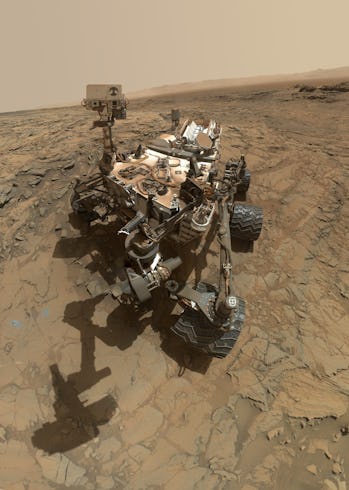 The Curiosity rover was recently joined by NASA’s Perseverance rover which landed on Mars on February 18.NASA
.
.
Click the link below for the article:
.
__________________________________________
December 5, 2021
Mohenjo
Business, Human Interest
amazon, business, Business News, current-events, Future, Hotels, human-rights, medicine, mental-health, research, Science, Science News, technology, Technology News, travel, vacation

Click the link below the picture
.
If there’s one rule that most people know about the Universe, it’s that there’s an ultimate speed limit that nothing can exceed: the speed of light in a vacuum. If you’re a massive particle, not only can’t you exceed that speed, but you’ll never reach it; you can only approach the speed of light. If you’re massless, you have no choice; you can only move at one speed through spacetime: the speed of light if you’re in a vacuum, or some slower speed if you’re in a medium. The faster your motion through space, the slower your motion through time, and vice versa. There’s no way around these facts, as they’re the fundamental principle on which relativity is based.
And yet, when we look out at distant objects in the Universe, they seem to defy our common-sense approach to logic. Through a series of precise observations, we’re confident that the Universe is precisely 13.8 billion years old. The most distant galaxy we’ve seen so far is presently 32 billion light-years away; the most distant light we see corresponds to a point presently 46.1 billion light-years away; and galaxies beyond about 18 billion light-years away can never be reached by us, even if we sent a signal at the speed of light today.
Still, none of this breaks the speed of light or the laws of relativity; it only breaks our intuitive notions of how things ought to behave. Here’s what everyone should know about the expanding Universe and the speed of light.
.
 A visual history of the expanding Universe includes the hot, dense state known as the Big Bang and the growth and formation of structure subsequently. The full suite of data, including the observations of the light elements and the cosmic microwave background, leaves only the Big Bang as a valid explanation for all we see. (Credit: NASA/CXC/M. Weiss)
.
.
Click the link below for the article:
.
__________________________________________
Older Entries
Newer Entries

