July 7, 2022
Mohenjo
Business, Enthralling, Human Interest, Photographs
amazon, business, Business News, current-events, Future, Hotels, human-rights, medicine, mental-health, research, Science, Science News, technology, Technology News, travel, vacation

Click the link below the picture
.
The Czech Republic, also known as Czechia is a landlocked country in Central Europe. Historically known as Bohemia, it is bordered by Austria to the south, Germany to the west, Poland to the northeast, and Slovakia to the southeast. The Czech Republic has a hilly landscape that covers an area of 78,871 square kilometers (30,452 sq mi) with a mostly temperate continental and oceanic climate. The capital and largest city is Prague; other major cities and urban areas include Brno, Ostrava, Plzeň, and Liberec.
The Duchy of Bohemia was founded in the late 9th century under Great Moravia. It was formally recognized as an Imperial State of the Holy Roman Empire in 1002 and became a kingdom in 1198. Following the Battle of Mohács in 1526, the whole Crown of Bohemia was gradually integrated into the Habsburg monarchy. The Protestant Bohemian Revolt led to the Thirty Years’ War. After the Battle of the White Mountain, the Habsburgs consolidated their rule. With the dissolution of the Holy Empire in 1806, the Crown lands became part of the Austrian Empire.
In the 19th century, the Czech lands became more industrialized, and in 1918 most of it became part of the First Czechoslovak Republic following the collapse of Austria-Hungary after World War I. Czechoslovakia was the only country in Central and Eastern Europe to remain a parliamentary democracy during the entirety of the interwar period. After the Munich Agreement in 1938, Nazi Germany systematically took control over the Czech lands. Czechoslovakia was restored in 1945 and became an Eastern Bloc communist state following a coup d’état in 1948. Attempts to liberalize the government and economy were suppressed by a Soviet-led invasion of the country during the Prague Spring in 1968. In November 1989, the Velvet Revolution ended communist rule in the country, and on 1 January 1993, Czechoslovakia was dissolved, with its constituent states becoming the independent states of the Czech Republic and Slovakia.
The Czech Republic is a unitary parliamentary republic and developed country with an advanced, high-income social market economy. It is a welfare state with a European social model, universal health care, and free-tuition university education. It ranks 12th in the UN inequality-adjusted human development and 24th in the World Bank Human Capital Index. It ranks as the 9th safest and most peaceful country and 31st in democratic governance. The Czech Republic is a member of NATO, the European Union, OECD, OSCE, and the Council of Europe. Wikipedia
.
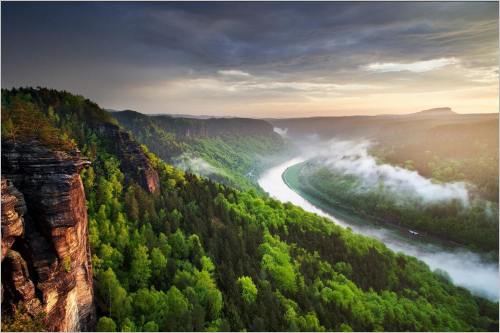 An image from Czech Republic Nature
.
.
Click the link below for images:
.
__________________________________________
July 7, 2022
Mohenjo
Business, Food For Thought, Human Interest, Political, Science, Technical
amazon, business, Business News, current-events, Future, Hotels, human-rights, medicine, mental-health, research, Science, Science News, technology, Technology News, travel, vacation

Click the link below the picture
.
A toxic work culture is the biggest reason why people quit, and it’s 10 times even more important than pay, according to research published in the MIT Sloan Management Review. But what exactly does a toxic workplace actually look like?
Researchers analyzed 1.4 million Glassdoor reviews from nearly 600 major U.S. companies and found employees describe toxic workplaces in five main ways: non-inclusive, disrespectful, unethical, cutthroat, and abusive.
“Employees can have hundreds of different criticisms about their organization that they discuss on Glassdoor,” from IT problems to clueless management, says Charlie Sull, a researcher on the analysis. “Most won’t have a powerful emotive effect on their assessment of the organization, but we’re looking at a small sample of topics that do have a large effect on a company’s Glassdoor rating.” Those same factors can cost companies billions of dollars in employees quitting.
.
 Monkeybusinessimages | Istock | Getty Images
.
.
Click the link below for the article:
.
__________________________________________
July 7, 2022
Mohenjo
Business, Food For Thought, Human Interest, Science, Technical
amazon, business, Business News, current-events, Future, Hotels, human-rights, medicine, mental-health, research, Science, Science News, technology, Technology News, travel, vacation

Click the link below the picture
.
Never mind reading generic guides or practicing with friends — Google is betting that algorithms can get you ready for a job interview. The company has launched an Interview Warmup tool that uses AI to help you prepare for interviews across various roles. The site asks typical questions (such as the classic “tell me a bit about yourself”) and analyzes your voiced or typed responses for areas of improvement. You’ll know when you overuse certain words, for instance, or if you need to spend more time talking about a given subject.
Interview Warmup is aimed at Google Career Certificates users hoping to land work, and most of its role-specific questions reflect this. There are general interview questions, though, and Google plans to expand the tool to help more candidates. The feature is currently only available in the US.
.
 AndreyPopov via Getty Images
.
.
Click the link below for the article:
.
__________________________________________
July 6, 2022
Mohenjo
Business, Enthralling, Human Interest, Photographs
amazon, business, Business News, current-events, Future, Hotels, human-rights, medicine, mental-health, research, Science, Science News, technology, Technology News, travel, vacation
Click the link below the picture
.
Chengdu is a sub-provincial city which serves as the capital of the Chinese province of Sichuan. It is traditionally the hub in Southwest China. Chengdu is considered a “Beta + (global second-tier)” city classification (together with Barcelona and Washington, D.C.) according to the Globalization and World Cities Research Network. Chengdu is a leading financial center in the Asia-Pacific region and ranks 35th globally the 2021 Global Financial Centres Index.
Chengdu is located in central Sichuan. The surrounding Chengdu Plain is known as the “Country of Heaven” (Chinese: 天府之国; pinyin: Tiānfǔ zhi Guó) and the “Land of Abundance”. Its prehistoric settlers included the Sanxingdui culture. The site of Dujiangyan, an ancient irrigation system, is designated as a World Heritage Site. The Jin River flows through the city.
Founded by the state of Shu prior to its incorporation into China, Chengdu is unique as a major Chinese settlement that has maintained its name mostly unchanged throughout the imperial, republican, and communist eras. It was the capital of Liu Bei’s Shu Han during the Three Kingdoms Era, as well as several other local kingdoms during the Middle Ages. During World War II, refugees from eastern China fleeing from the Japanese settled in Chengdu. After the war, Chengdu’s importance as a link between Eastern and Western China expanded, with railways built to Chongqing in 1952, and Kunming and Tibet afterwards. In the 1960s, Chengdu became an important center of China’s national defense industry.
Chengdu is now one of the most important economic, financial, commercial, cultural, transportation, and communication centers in China. Its economy is diverse, characterized by the machinery, automobile, medicine, food, and information technology industries. Chengdu Shuangliu International Airport, a hub of Air China and Sichuan Airlines, is one of the 30 busiest airports in the world, and the Chengdu railway station is one of the six biggest in China. Chengdu also hosts many international companies and more than 16 consulates; more than 270 Fortune 500 companies have established branches in Chengdu. Chengdu is the seat of the Western Theatre Command region of the People’s Liberation Army. Chengdu hosted the FISU Summer World University Games, an international multi-sport event. It is considered one of the most livable cities in China.
Chengdu’s culture largely reflects that of its province, Sichuan; in 2011, it was recognized by UNESCO as a city of gastronomy. It is associated with the giant panda, a Chinese national symbol, which inhabits the area of Sichuan; the city is home to the Chengdu Research Base of Giant Panda Breeding.
Chengdu is one of the world’s top 40 cities by scientific research output, and home to the greatest number of universities and research institutes in Southwestern China, notably Sichuan University, University of Electronic Science and Technology of China, Southwestern University of Finance and Economics, Southwest Jiaotong University, Chengdu University of Technology, Sichuan Normal University, and Xihua University. Wikipedia
.
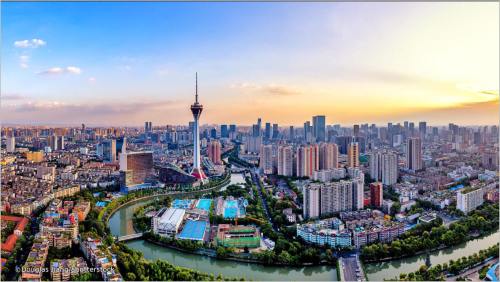 An image from Chengdu, China
.
.
Click the link below for images:
.
__________________________________________
July 6, 2022
Mohenjo
Business, Food For Thought, Human Interest, Political, Science, Technical
amazon, business, Business News, current-events, Future, Hotels, human-rights, medicine, mental-health, research, Science, Science News, technology, Technology News, travel, vacation

Click the link below the picture
.
A few years ago at a company picnic, I joined a handful of colleagues helping to haul boxes of sandwiches and soft drinks through the park. All of us had signed up for this manual labor a few days prior, back at the office. And all of us, it turned out, were women.
The gender imbalance of the picnic crew felt representative of a larger dynamic that I’d seen play out throughout my career. When a request for volunteers went out, women often seemed to be the ones who shuffled their schedules accordingly.
Out of sheer curiosity, I asked a couple of male co-workers why they hadn’t helped carry items for the picnic or responded to some other recent calls for volunteers. None of them had anything against the idea of helping in theory, they said. They’d just thought, I’m too busy.
I’m too busy. It’s a seemingly innocuous thought that can wind up having major consequences for equality in the workplace, as a report from the nonprofit Center for Talent Innovation shows.
.
 The good news is that a lot of white men support DEI efforts. Photo by Reuters/Andrew Winning
.
.
Click the link below for the article:
.
__________________________________________
July 6, 2022
Mohenjo
Business, Food For Thought, Human Interest, Political, Science, Technical
amazon, business, Business News, current-events, Future, Hotels, human-rights, medicine, mental-health, research, Science, Science News, technology, Technology News, travel, vacation

Click the link below the picture
.
It can be such a deer-in-headlights, panic-inducing moment. You’ve spent weeks scrolling through job listings, (ruling out most of them), selecting a few that fit your background and career path, tailored and tweaked your cover letter ten times, and finally gotten a bite from a hiring manager at a company you’d love to work for. Not five minutes into the nebulously-named “introductory conversation” (which is really just a screening call) they nail you to the wall with, “And what are your salary requirements?”
It’s a tricky spot—we must find a diplomatic reply that keeps us in the running without shooting ourselves in the foot with a low number. As a job seeker, it pays to be prepared with a savvy answer that keeps you in contention for the position while still securing the highest number possible.
How to research what a position pays
First, as annoying and backwards as it is, you must research the market and salary ranges for your position. Companies want to see that you’ve done your homework, and you’re generally aware of what the position will pay. As the HR consulting firm Robert Half recommends: “Check out reputable sources, such as the U.S. Bureau of Labor Statistics for federal data on wages in your industry. Also, review the 2022 Salary Guide From Robert Half to get the average national salary for the position you’re seeking.”
.
 Photo: Shutterstock (Shutterstock)
.
.
Click the link below for the article:
.
__________________________________________
July 5, 2022
Mohenjo
Business, Enthralling, Human Interest, Photographs
amazon, business, Business News, current-events, Future, Hotels, human-rights, medicine, mental-health, research, Science, Science News, technology, Technology News, travel, vacation
Click the link below the picture
.
Isla Incahuasi, Inkawasi or Inka Wasi, Inca wasi house, “Inca house”) is a hilly and rocky outcrop of land and former island in Bolivia situated in the middle of Salar de Uyuni, the world’s largest salt flat, at an elevation of 3,656 meters (11,995 feet). It is located in the Potosí Department, Daniel Campos Province, Tahua Municipality, Yonza Canton.
Incahuasi has a total area of 24.62 hectares (61 acres) and hosts gigantic cacti (Trichocereus pasacana) and a tourist center. There are unusual and fragile coral-like structures and deposits that often consist of fossils and algae. The place is the top of the remains of an ancient volcano, which was submerged when the area was part of a giant prehistoric lake, roughly 40,000 years ago.
.
 An image from Isla Incahuasi
.
.
Click the link below for images:
.
__________________________________________
July 5, 2022
Mohenjo
Business, Food For Thought, Human Interest, Political, Science, Technical
amazon, business, Business News, current-events, Future, Hotels, human-rights, medicine, mental-health, research, Science, Science News, technology, Technology News, travel, vacation
Click the link below the picture
.
Job interviews are a two-way process — you’re interviewing your potential boss and employer as much as they’re interviewing you. After all, you don’t just want any job — you want the right job. According to a CareerBuilder survey, two-thirds of workers say they’ve accepted a job only to realize it was not a good fit, with half of them quitting in the first six months. There are several reasons this could happen, including feeling like you’ve been sold a false bill of goods or a realizing that the culture is not consistent with your values or even toxic.
The saying “caveat emptor” — buyer beware — applies when interviewing for a job. This isn’t to suggest that you should go into the interview process overly skeptical or suspicious, but rather to encourage you to be attuned to potential red flags in the interview process that warrant your attention, as they can indicate larger issues with your potential boss, team, or the organization as a whole.
.
 Peter Dazeley/Getty Images
.
.
Click the link below for the article:
.
__________________________________________
July 5, 2022
Mohenjo
Business, Food For Thought, Human Interest, Political, Science, Technical
amazon, business, Business News, current-events, Future, Hotels, human-rights, medicine, mental-health, research, Science, Science News, technology, Technology News, travel, vacation

Click the link below the picture
.
Not long ago, I explained why Google greatly prefers applicants whose resumes use the X-Y-Z formula to describe their experiences — and why job seekers who don’t use that formula greatly diminish their chances of getting an offer.
However, it’s clear that there’s an even more fundamental problem before we even get to the formula. It also makes it much harder for top companies to identify great candidates from among the millions (literally, millions) who apply.
Writing for Business Insider, Rachel Premack interviewed Amazon’s recruiting manager for university programs, Celeste Joy Diaz, about what she thinks is the single biggest mistake that Amazon applicants make.
It turns out Diaz agrees with the top Google recruiters, along with many others at top companies. It all comes down to a basic misconception about what a resume is supposed to do, and therefore what successful applicants choose to include.
.
 Photo by zhazhin_sergey/Getty Images
.
.
Click the link below for the article:
.
__________________________________________
July 4, 2022
Mohenjo
Business, Enthralling, Human Interest, Photographs
amazon, business, Business News, current-events, Future, Hotels, human-rights, medicine, mental-health, research, Science, Science News, technology, Technology News, travel, vacation
Click the link below the picture
.
Zimbabwe, officially the Republic of Zimbabwe, is a landlocked country located in Southeast Africa, between the Zambezi and Limpopo Rivers, bordered by South Africa to the south, Botswana to the south-west, Zambia to the north, and Mozambique to the east. The capital and largest city is Harare. The second-largest city is Bulawayo. A country of roughly 15 million people, Zimbabwe has 16 official languages, with English, Shona, and Ndebele the most common. It was once known as the “Jewel of Africa” for its great prosperity.
Zimbabwe first became a major trade route in the 11th century. Beginning in the 9th century, during its late iron age, the Gokomere, the Bantu people who would become the ethnic Shona, built the city-state of Great Zimbabwe, which was one of the major African trade centers, controlling the gold, ivory, and copper trades with the Swahili coast, which were connected to Arab and Indian states. By the mid-15th century, the city-state had been abandoned. From there, the Kingdom of Zimbabwe was established, followed by the Rozvi and Mutapa empires.
The British South Africa Company of Cecil Rhodes first demarcated the present territory during 1890 when they conquered Mashonaland and later in 1893 Matabeleland after a fierce resistance by Matabele people known as the First Matabele War. Company rule ended in 1923 with the establishment of Southern Rhodesia as a self-governing British colony. In 1965, the conservative white minority government unilaterally declared independence as Rhodesia. The state endured international isolation and a 15-year guerrilla war with black nationalist forces; this culminated in a peace agreement that established universal enfranchisement and de jure sovereignty as Zimbabwe in April 1980. Zimbabwe then joined the Commonwealth of Nations, from which it was suspended in 2002 for breaches of international law by its then-government under Robert Mugabe, and from which it withdrew in December 2003.
Robert Mugabe became Prime Minister of Zimbabwe in 1980 when his ZANU–PF party won the elections following the end of white minority rule; he was the President of Zimbabwe from 1987 until his resignation in 2017. Under Mugabe’s authoritarian regime, the state security apparatus dominated the country and was responsible for widespread human rights violations. From 2000 to 2009 the economy experienced decline and hyperinflation before rebounding after the use of currencies other than the Zimbabwean dollar was permitted, though growth has since faltered. On 15 November 2017, in the wake of over a year of protests against his government as well as Zimbabwe’s rapidly declining economy, Mugabe was placed under house arrest by the country’s national army in a coup d’état and eventually resigned six days later. Emmerson Mnangagwa has since served as Zimbabwe’s president.
Zimbabwe is a member of the United Nations, the Southern African Development Community (SADC), the African Union (AU), and the Common Market for Eastern and Southern Africa (COMESA). Wikipedia
.
 An image from Zimbabwe
.
.
Click the link below for images:
.
__________________________________________
Older Entries
Newer Entries

