
Home

How Wild Turkeys Made a Comeback from Near Extinction

Leave a comment

Click the link below the picture

.

Kendra Pierre-Louis: For Scientific American’s Science Quickly, I’m Kendra Pierre-Louis, in for Rachel Feltman.

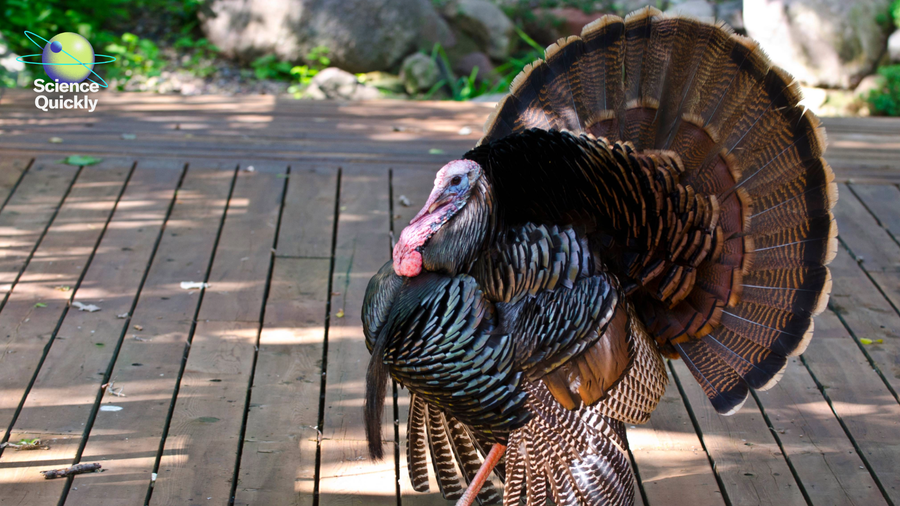
For millions of Americans, Thanksgiving is simply not Thanksgiving without turkey. The bird is native to North America. And yet by the middle of last century, the most likely place to find one was on the dinner table.

A combination of deforestation, agricultural expansion, and overhunting almost brought America’s favorite gobblers to the brink of extinction in the wild. But these days, across the U.S., there are more than six million wild turkeys, up from a low in the 1930s that some observers estimated to be as few as roughly 30,000 birds.

Here to tell us more about the species conservation success story is Michael Chamberlain, National Wild Turkey Federation Distinguished Professor at the University of Georgia.

Thanks for taking the time to chat with me today, Michael.

Michael Chamberlain: Glad to talk to you.

Pierre-Louis: So I think when people think about charismatic critters, they think of bears or coyotes or wolves, and if they think about birds at all, they might think of eagles and hawks; they probably don’t necessarily think of the turkey. Why have you dedicated your career to sort of studying the humble gobbler?

Chamberlain: Yeah, so I got an opportunity in graduate school to kind of pick the research project that I was working on, and one of the options was to work with wild turkeys, and I grew up, as a young person, hunting turkeys in the fall. And so I was really interested in them from that standpoint, but then, when I started doing field research involving turkeys, I became really fascinated with their behavior and how they function as a bird, and the rest is history—I’ve been studying turkeys ever since.

Pierre-Louis: You said you got really fascinated by their behavior. What are some of the fascinating things that they do that, you know, maybe most people don’t know about or don’t even really think about?

Chamberlain: Turkeys have a really complex social system. So when you see a group of turkeys—let’s say there are 10 …

Pierre-Louis: Mm-hmm.

Chamberlain: There’s a very structured order to those 10 birds: there’s a dominant bird, and then there’s a No. 2 bird and a No. 3 bird and a No. 4 bird, and so on and so forth. So those are called dominance hierarchies. And that group of birds, their entire lives are dictated by that dominance structure.

And so that’s why you constantly see turkeys kind of bickering with each other, they’re chasing one another, because they’re constantly testing those dominance hierarchies. And I think a lot of people don’t realize how structured a turkey’s life is, from—literally, from the day they hatch. They’re constantly trying to one up each other and become the dominant bird.

Pierre-Louis: Are there perks to being the dominant bird?

Chamberlain: For sure. There’s preferred access to foraging resources, so the dominant birds are going to—are going to, basically, push off subordinate birds and access food. The dominant birds are going to breed first and more often. So if you’re a male and you’re dominant, you’re going to breed with more females than a subordinate bird.

And if you’re a female, you’re going to reproduce first, you’re going to nest first because you’re the dominant bird, and there’s perks to that because the early bird gets the worm, so to speak. In the turkey world, if you produce a nest early, you’re much more likely to be successful. And if you are successful, your poults, which are the young turkeys that hatch, they’re much more likely to survive if they’re hatched earlier.

So there are definitely perks to being dominant.

Pierre-Louis: So I used to live in the Boston area for a while, and in that area wild turkeys are kind of famously menaces, you know? You see them, like, on the street [Laughs] …

Chamberlain: [Laughs.] Yeah.

Pierre-Louis: Attacking the city bus, holding up traffic. But there was a time when turkeys, despite being from North America, weren’t quite so ubiquitous. Can you talk a little bit about the bird’s decline and then their resurgence?

Chamberlain: So basically, turkeys have gone through this kind of full-circle recovery, if you will. So as the U.S. continent was settled, colonization occurred, turkey populations were really decimated by overharvest—in many ways, for subsistence, right? I mean, humans were trying to put food on the table. And at the same time, we were clear-cutting a lot of the eastern forest of North America as colonization was occurring. And so you saw turkey populations really plummet until around the 1950s and ’60s.

At that point you saw a shift where conservationists, wildlife agencies, nonprofits, they started focusing attention on restoring wild turkeys to their former, you know, range, and so what you saw was the trap and transfer of wild birds. Basically, people like me went into remaining populations of turkeys, we used nets to capture those wild birds, and then we translocated them to places where they had been extirpated, and turkey populations exploded in the 1960s, ’70s, ’80s and ’90s.

And now what you’ve kind of seen is a lot of populations, particularly in the Southeast and the Midwest, have declined over the last few decades, and, and there’s a lot of reasons for that, and those reasons are quite complex, which is why I have a job.

They include everything from habitat loss to habitat degradation and fragmentation. We know there are disease issues with turkeys that are very complex. Predator populations, things that eat turkeys and their eggs, appear to be at apex levels now. Predators like coyotes and bobcats, and raccoons, birds of prey, that were persecuted many decades ago, those populations have flourished now.

And so the factors that are influencing turkey populations are very different now than they were 40 or 50 years ago, and we’ve seen predictable declines because of that.

Pierre-Louis: I was reading something where—I think it was Massachusetts, in the 1950s, said that the bird was functionally extinct in the state at that point …

Chamberlain: Uh-huh. That’s right.

.
https://static.scientificamerican.com/dam/m/4484cd04ad3205d0/original/2511_SQ_WED_WILD_TURKEYS.png?m=1764009203.966&w=900Education Images/Contributor/Getty Images

.

.

Click the link below for the complete article:

https://www.scientificamerican.com/podcast/episode/the-conservation-success-that-saved-wild-turkeys-across-the-country/?_gl=1*1wbflo5*_up*MQ..*_ga*MTY3MzIzMDQ5My4xNzY0Mjk4OTYx*_ga_0P6ZGEWQVE*czE3NjQyOTg5NjAkbzEkZzAkdDE3NjQyOTg5NjAkajYwJGwwJGgw

.

__________________________________________

Leave a Reply

This site uses Akismet to reduce spam. Learn how your comment data is processed.

Moara de Vânt

Să facem glume, nu război

🇲🇲Dear all peace-loving people around the world🇲🇲

In the world, human beings are facing various problems. People who are full of greed, anger, and ignorance are seen to be fighting with each other in words and deeds. As the fighting continues, various problems such as civil wars, wars of aggression, and wars of aggression are occurring. As world peace is being destroyed, humans are facing unbearable problems. Innocent children and women are not getting the rights they deserve and deserve. I can't think of one thing every time. What is it? The United Nations. If we look at the responsibilities and duties of the United Nations, I think it is not suitable for solving the problems that are happening in the world today. In fact, the United Nations and the World Security Council, such an organization must rule the world, must be able to give orders, and must have various ways to obey orders. There must be no organization that can influence more than that organization. There should be experts from each country. They can even dominate the superpowers like the US, China, and Britain. Only then will global peace be achieved quickly. Now, if a country with power develops more militarily, economically, or socially than its own country, then powerful countries will jealously seek out enemies and wage war. Or they will attack with fighter jets. In this, innocent people are losing their lives. No one understands the value of a life. You should think about how to achieve global peace by controlling these. If the US continues to be the permanent president of the UN, world peace will never be achieved. If you think carefully, no one sees that they are working for the common good, but for their own benefit, for the benefit of their own country. The permanent president of the UN and the Security Council has rejected this, As a young Rohingya, I have come to realize that only by electing the president and secretary from among the countries in the world through a secret ballot system and governing the world fairly can we achieve global peace. The United Nations and the Security Council are organizations in which any country must govern, give orders, and make them obey their orders. For example, only when a defendant is tried in court can we hold the leaders of the countries in check and control them, can we achieve global peace smoothly. Otherwise, it will not be easy for powerful countries to use various excuses to end this war every year, every year, for the benefit of themselves and their countries. No country's leaders pay any attention to the words of the United Nations and the Security Council. If we look at it in practice, look at the Rohingya issue. Myanmar is a small country. Even that country has been under siege for 8 years. What action can be taken? Why is the UN and the Security Council Powerless? Without such Power, how can the organization bring about global peace? Everyone should think about it. Whether there is a veto or a strong one, all countries in the world can only achieve global peace if they are subject to the UN and the Security Council. Seek peace in the quiet embrace of nature. Peace is an indispensable need of the human race. It is not as if one person can kill another person, and it is as if one country can attack another country, but instead of trying to build peace, we must try to destroy the peace now, and the world is getting hotter and is on the verge of collapse. I especially appeal to all the world experts to urgently try to bring about peace in all parts of the world. Mr, Noor Muhamed Arkhan Rohingya Youth Myanmar

Gazeta cuiburilor de cuc

Publicație umoristică dedicată glumeților de pretutindeni

JaZzArt en València

Faith saved us from the savages that we were, losing faith makes us savages again

PeopleTalky

Where Trends Meet Truth

MRS. T’S CORNER

https://www.tangietwoods

Srikanth’s poetry

Freelance poetry writing

MediaNegy

Zalai Betti

INOVATION BLOG AND NEWS

INOVATION BLOG PEOPLE AND NEWS

szigetingy | budapest

Németh György

PT. LPPL Lombok

Konsultan Lingkungan Hidup di Lombok - NTB

Idézetek – LeaArt21

Lea Krasznai (LeaArt21) – Idezetek (Idézetek) WordPress (Budapest, Hungary)

danielecolleoni

Appunti, spunti e passioni in liberta'

تعلم وعلم، ادخر،سافر واستجمم .

تعنى بتقديم نصائح للمعلمين المبتدئين، والطلبة الممتحنين، ومشاركة الاخرين تجربة الادخار في المال، بترشيد الاستهلاك المنزلي، وترتيب البيت، والحفاظ على البيئة، وتشجيع السيارات صديقةالبيئة، والسياحة والاسفار، ونماء رؤوس الاموال، والطب البديل وتشجيع التعليم الرقمي والذكاء الاصطناعي، والعناية بالنحل وتربية الاسماك، والاسثمار في رؤوس الاموال، الزراعة العضوية، والعناية باسنان الرضع، و صحة الحوامل، وتفسير القران

scientifique

apprendre pour évoluer

In Between the Lines

Thoughts on books, language, meaning, and the culture around it.

Great Lakes Mindset

Outdoor Recreation & Adventure in the Great Lakes Region

Nelsapy

News, Info, Bio, Articles, Reviews, Lyrics, Technology, Science, Inspiration, Motivation, Philosphy and many more...

Becoming HIS Tapestry

Christian Lifestyle Blogger

Joe Mullins Commissioner

CEO and president of The Mullins Companies

The Luttie Board

Two Cultures. One Life. Endless Stories

Charles Maxwell DeCook

Real Estate Development Specialist

amorentreestrellas.wordpress.com/

¡Bienvenido de vuelta viajero!

Heart of Loia `'.,°~

so looking to the sky ¡ sing and from my heart to YOU ¡ bring...

Michael Ciullo

CEO and Founder of Nsight Health

Nelson MCBS

Catholic News, Prayers, HD Images, Rosary, Music, Videos, Holy Mass, Homily, Saints, Lyrics, Novenas, Retreats, Talks, Devotionals and Many More

global geopolitics

Decoding Power. Defying Narratives.

Talk Photo

A creative collaboration introducing the art of nature and nature's art.

Movie Burner Entertainment

The Home Of Entertainment News, Reviews and Reactions

C r i s t i a n a' s Fine Arts ⛄️

•Whenever you are confronted with an opponent, conquer him with love.(Gandhi)

TradingClubsMan

Algotrader at TRADING-CLUBS.COM

Comedy FESTIVAL

Film and Writing Festival for Comedy. Showcasing best of comedy short films at the FEEDBACK Film Festival. Plus, showcasing best of comedy novels, short stories, poems, screenplays (TV, short, feature) at the festival performed by professional actors.

Bonnywood Manor

Peace. Tranquility. Insanity.

Warum ich Rad fahre

Take a ride on the wild side

Madame-Radio

Découvre des musiques prometteuses (principalement) dans la sphère musicale française.

Ir de Compras Online

No tiene que Ser una Pesadilla.

Kana's Chronicles

Life in Kana-text (er... CONtext)

Jam Writes

Where feelings meet metaphors and make questionable choices.

emotionalpeace

Finding hope and peace through writing, art, photography, and faith in Jesus.

Essu Center

Eyasu The Wonderful