Iran has a drinking water crisis. And the war with the U.S. is making matters worse for Iran—and the entire Gulf region. That’s in part because of threats not only to water infrastructure, including dams and reservoirs, but also to desalination facilities, which millions in the broader region depend on for their drinking water.
For years, Iran’s reserves of potable water have been dwindling, thanks to a combination of climate change, mismanagement, and infrastructure problems. But the war has also put desalination—something that most of Iran isn’t reliant on—in the spotlight.
In March, Iran accused the U.S. of an attack on an Iranian desalination plant on Qeshm Island in the Strait of Hormuz. The U.S. denied responsibility for the strike, and just a day later, officials in Bahrain, a key U.S. ally in the Middle East, accused Iran of damaging one of Bahrain’s desalination plants. By April, at least two desalination plants in Kuwait, another U.S. ally, had also been attacked.
Desalination plants are a critical resource—they convert seawater to drinking water. Around 70 to 90 percent of the population in most countries in the Persian Gulf region relies on desalination for drinking water, says Chris Low, director of the Middle East Center at the University of Utah and author of the forthcoming book Saltwater Kingdoms. Targeting desalination plants is likely a war crime under international law because they are civilian infrastructure, he adds.
Direct attacks aren’t the only threat to the region’s drinking water, however. Hits to energy infrastructure by U.S.-Israeli and Iranian forces have sent untold amounts of oil into the Persian Gulf—enough for the spills to be visible from space—which risks clogging up desalination pipes and fouling filters, Low says. Radioactive waste from damaged nuclear facilities could further contaminate the water, too.
Smaller countries in the region, such as Qatar, Bahrain, and Kuwait, are “exquisitely vulnerable,” Low says. “They only have a few days to a week, let’s say, of reserve capacity. There’s not much slack in the system.”
To understand how the war is affecting the region’s drinking water, Scientific American spoke with Low about how the conflict could spiral into a “long-term ecological disaster.”
How many people are dependent on desalination in the Persian Gulf region?
If we think about the Gulf as a relatively cohesive region, [there are] 60-million-plus people who are dependent in some way, shape or form on desalination.
If you break out desalination dependency for drinking water by country, you get Qatar somewhere around 99 percent—it’s completely dependent. Kuwait and Bahrain: 90-plus percent. Oman: 86 percent. Saudi Arabia: 70 percent. United Arab Emirates, the number comes in at 42 percent.
If we were to turn off the tap of the Jebel Ali plant in Dubai, [UAE], Dubai would not fare well. If we were to turn off access to the Al Taweelah plant in Abu Dhabi—it’s deeply dependent.
All of those major population centers—those skyscraper, glittering cities, they all are attached to very significant desalination facilities.
What about Iran? Is it reliant upon desalination?
No—that’s a key difference. Its desalination capacity only accounts for 3 percent of its water needs.
If you looked outside my window [in Salt Lake City] and see snowcapped mountains, that looks like Tehran. It’s a very similar kind of landscape. Snowmelt, rivers, dams, lakes—these are things that are not present in the Gulf. Iran has a much different ecological landscape as opposed to Gulf nations.
Now, Iran, of course, is acutely vulnerable to water risks. In 2025, President [Masoud] Pezeshkian announced that Iran was considering moving its administrative capital from Tehran to the southern coast, the Makran region, in part because the water is running out.
Have desalination plants come under attack in previous conflicts?
In the 1980s, when Iran and Iraq were at war, there emerged something called the tanker war. They basically started to fire on oil and commercial vessels with flags related to the other country.
The second, and I think most severe, issue related to desalination was Saddam Hussein’s invasion of Kuwait in 1990–91. When Saddam Hussein and Iraq occupied Kuwait, and the U.S. and coalition forces came in, what Hussein did was basically unfurl a kind of program of ecological terror.
They sabotaged power plants, desalination plants. They set the oil wells—some 700-plus oil wells—on fire, and they intentionally spilled oil into the Gulf. They basically just wrecked Kuwait’s environment, not just in the short term but for many, many years into the future.
It took weeks, if not months, to get water supply back on. In the interim, you had water tankers and water trucks coming from Saudi Arabia, bottled water from as far away as Turkey, [and] U.S. and European support for mobile diesel units and generators.
.
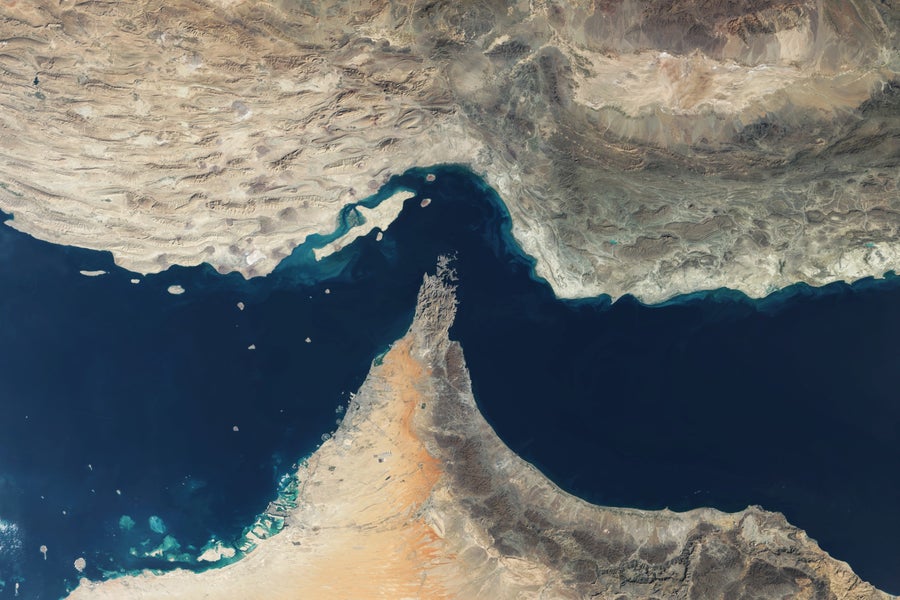
A satellite view of the Strait of Hormuz, a strategic waterway between Iran and Oman that links the Persian Gulf to the Arabian Sea. Gallo Images/Orbital Horizon/Copernicus Sentinel Data 2025
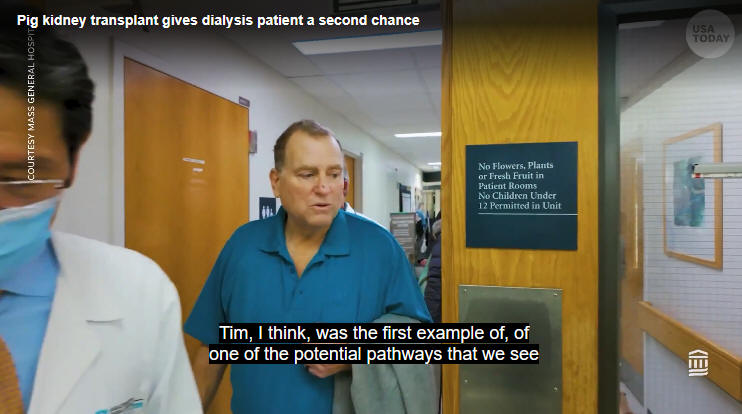
Tim Andrews was so close to death, he was ready to risk what little life he might have left.
The retired grocery store manager was told he would have to wait five years before reaching the top of the transplant list and qualifying for a new, life-saving kidney. He knew he wasn’t going to make it. Already, he could no longer walk or hold down food.
So last year, he volunteered for an experimental surgery at the leading edge of scientific research: He agreed to get a pig kidney to replace his own failing organ.
Tim Andrews, a 66-year-old resident of Concord, New Hampshire, is now the fourth person to ever have a genetically modified pig kidney transplant. Andrews previously underwent more than two years of dialysis due to advanced kidney disease, and getting a human kidney transplant would take considerably longer due to his O-group blood type. The pig kidney bought him the time he needed to wait for a human kidney to replace it.
.
“I’m gonna die anyways, why wouldn’t I do something for all these [other people with kidney disease] that are suffering?” said Andrews, of Concord, New Hampshire.
“I don’t care if I die the next day as long as you learn something,” he told his doctor.
One pig- and one human-kidney transplant later, Andrews, 68, says he is now thinking of his future in terms of decades instead of days.
“I’m laughing again,” Andrews chuckled, remembering his time as a self-proclaimed “pig man.”
In the process, Andrews has become an example of how far transplantation has come and what it could look like in the future when there are enough organs for everyone in need and when the medication that enables a transplant’s success doesn’t threaten a recipient’s long-term survival. Andrews’ success as a transplant patient represents a decades-long American journey, one of many USA TODAY is profiling as part of its coverage of the United States’ 250th anniversary year.
The first-ever successful organ transplant took place in 1954, just a few miles from where Andrews received his own. The distance the field has traveled since −and has yet to go − represents a remarkable and very American medical journey, characterized by big ideas, big risks, perseverance, and issues of fairness and eye-popping prices.
The result: Andrews is alive and much healthier than he was two years ago.
“Oh my God, I’m in a science-fiction movie!” said Andrews, chuckling again, and adding that he’s always been a sci-fi buff. “How did I end up here?”
The wait for an organ
More than 100,000 Americans now sit on an organ transplant list, and most of them are waiting for a kidney. Like Andrews, they worry they won’t last long enough to get the ultimate gift.
For kidneys and some liver transplants, live donation is possible ‒ that is, someone can donate one of their two kidneys or a part of their liver and live out the rest of their lives normally. But not everyone can find a living match among friends, relatives or total strangers.
Andrews, like many, eventually benefited from a deceased organ donor. Only about three in 1,000 people die in a way that allows them to donate an organ like a kidney, lungs, or heart.
The science is getting better, enabling more organs to be used from patients who die older, sicker, or further from a hospital.
“We’re expanding the pool by using what we used to call ‘marginal’ organs,” said Dr. Nahel Elias, surgical director for kidney transplantation at Massachusetts General Hospital, where Andrews had his surgeries. “But at the end of the day, dead people are dead for a reason. Young, healthy people don’t just drop dead.”
And there simply aren’t enough organs for the people who need them, Elias and other experts said.
That’s where the idea of using pig organs comes in. For decades, researchers have been working toward the goal of using animal organs to save people. Some view the trade as unethical, but Americans already eat more than 130 million pigs every year, and pig, cow, and even shark tissue have long been used in medical settings.
Pig organs are similar enough in size and function to humans’, but transplanting entire organs was completely out of reach until about a decade ago, when scientists began mastering gene editing well enough to breed pigs whose organs are less likely to be rejected by the human immune system.
Tim Andrews undergoes a xenotransplant procedure on Jan. 25, 2025, at Massachusetts General Hospital. Andrews received a genetically-edited pig kidney. A closeup shows the kidney in its jar before surgery. Andrews lived 271 days with the pig organ before receiving a human kidney transplant.
.
But xenotransplantation, as it is known, is still very much a work in progress, with just 10 Americans, including Andrews, having undergone a transplant. Only six are still alive. Andrews holds the record as of this writing. He lived 271 days with a pig organ.
Clinical trials started in 2026 to test pig organs in more people. The goal, doctors say, is to count their survival in years, not days.
When Warner Bros. Discovery investors approved Paramount’s $111 billion acquisition offer last month, it seemed like the latest chapter in a story of corporate consolidation in Hollywood and the American media that’s been in full force since the 1980s. This chapter includes the potential end of one of the great movie studios, as well as putting CNN under the same roof as the now imperiled CBS News. But despite appearances, the end of this story hasn’t been written. This time, there’s real opposition to this kind of corporate consolidation — and a blueprint for how to win.
In 2023, the two of us, one a Hollywood actor and the other an antimonopoly policy analyst, met on a Zoom call during the Writers Guild strike. We came together because we recognized the root cause of the strike: A handful of corporations were swallowing an entire industry and leaving those who work in it worse off. Netflix, Amazon, and Disney were accumulating power, combining their production capacity with their enormous distribution platforms to form what could quickly become the kind of oligopolistic entities not seen in Hollywood in decades.
On that Zoom call, we talked about the consequences of consolidation for the people who make movies and TV, as well as for audiences. Mark had starred in “I Know This Much Is True,” a 2020 mini-series about how America treats mental illness, and we both wondered: Would a show like that still be made if an entity like HBO, which will come under Paramount’s control as part of this merger, were no longer free to take these kinds of creative risks?
The same question applies to “Spotlight,” the Oscar-winning movie about corruption and pedophilia in the Catholic Church, which was produced by an independent studio. Competition and opportunities for brave storytelling are intrinsically related, and we both knew that having lots of competitive outlets to produce art and lots of paths to distribute it helps to ensure that riskier, more controversial films and TV shows keep getting made.
When we spoke, Mark, like a good organizer, kept asking, “What’s the plan?” At the time, there wasn’t one. Now there is.
It is straightforward: Convince state attorneys general to do what President Trump’s antitrust enforcers likely will not, and block the merger of Paramount and Warner Bros. on antitrust grounds.
After that? Go on the offensive and work to break up the studio streaming system that is stultifying Hollywood.
This plan is already in motion. Within weeks of Paramount winning the bidding war for Warner Bros., we helped bring together a loose coalition of civil society groups, unions, and actors, and this coalition enlisted over 1,000 artists to sign an open letter indicating our support of state attorneys general efforts to block the takeover. Many more subsequently added their voices, and the letter now has nearly 5,000 signatories.
But the most revealing thing about that letter wasn’t the people who signed. It was the people who didn’t. Not because they disagreed — because they were afraid.
There are many reasons to block this deal, but we now believe the most fundamental one is what we encountered when asking artists to use their voices: fear. A deep, ugly, and pervasive fear of speaking out.
We heard time and time again from artists, when asked to sign this letter, that they supported it but were afraid of retribution. Their fear is not unjustified. When the editorial director of The Ankler, one of the last independent trade magazines, who also founded the publication and serves as one of its columnists, was seen at an event carrying a bag of “Block the Merger” buttons, Paramount reportedly pulled its advertising in response. (The editorial director, Richard Rushfield, was among the letter’s signatories, but said he was not handing out the buttons.) One of us, Mr. Ruffalo, was suggested as a guest for a CNN discussion of the merger, but a producer later said that the network had decided to pass on the segment, and reportedly told the organizers behind the letter, “It’s a delicate subject for us at CNN given Warner Bros. Discovery is our parent company, and there are legal considerations around what we can and cannot cover or say while the merger is ongoing.” (A CNN spokesperson later said that “no one advised any editorial employee at CNN not to pursue this story.”) This merger will cause many harms in Hollywood, but one is already in effect: People are afraid to say what they think about their own industry.
While this particular merger involves Hollywood, this fear of speaking out is something many in America already know. In 2019, Representative David Cicilline, then leading an investigation into Big Tech, noted that smaller firms’ reliance on the giants for access to consumers “makes them concerned about raising their voice, raising concerns about the monopoly power of these platforms.” The most notorious monopoly in America, Live Nation, which owns Ticketmaster, has a track record of alleged coercion.
David Ellison, the leader of Paramount, has said that if this merger is allowed, he will provide artists with more avenues for work. But we should know better than to trust promises by the ultrarich. After Disney bought Fox in 2019, the combined entity released far fewer movies than it did before the companies merged. Time Warner has been sold twice in just the last 10 years — once to AT&T and once to Discovery — and each deal was followed by layoffs and price hikes. If this deal goes through, the consequences for the entertainment industry could be catastrophic, with thousands more workers laid off. Employment in film and TV in Los Angeles has already dropped by 30 percent over the past four years.
Hollywood has long put out important truth-telling films, from “All the President’s Men” to the documentary “Citizenfour.” Some of the most celebrated films and TV shows — such as “The Godfather,” “All in the Family” and “M*A*S*H” — explored daring, controversial themes. Much of this content was created when film and TV functioned through open markets involving separate studios, exhibitors, and distributors. After the industry allowed widespread consolidation, streaming companies began to take over. If a studio like Warner Bros. ceases to exist as an independent entity, we will lose yet another company to fund, produce and distribute that kind of art.
There’s good news, though. It comes in the form of a word that reliably counteracts fear: solidarity.
When over 4,000 artists are willing to sign a letter encouraging state attorneys general to block the merger — and more are signing every day — that matters. When elected leaders, from the California attorney general Rob Bonta to Senator Cory Booker of New Jersey and Mayor Zohran Mamdani of New York, start speaking out, holding hearings, and starting investigations, that matters, too.
Consistency is the absolute key to unlocking any real power in this world. Motivation is a cheap thrill that fades the second you face heavy friction, but a relentless daily grind remains completely unbreakable. Whether you are forging a powerful physique or building a solid empire from scratch, showing up every single day is what […]
Rachel Feltman: For Scientific American’s Science Quickly, I’m Rachel Feltman.
The abstract concepts and complex equations found in the study of physics can feel as esoteric as they do intimidating. But today’s guest believes that physics can actually be deeply poetic, philosophical and even political.
Theoretical physicist Chanda Prescod-Weinstein’s new book, The Edge of Space-Time: Particles, Poetry, and the Cosmic Dream Boogie, weaves together cosmology, quantum mechanics, history, queer theory and pop culture—from Star Trek to Missy Elliott—to bring readers on a mind-altering journey to the boundaries of the universe. By exploring the edges of what we know about spacetime, she argues, we can gain a new perspective on the limitless possibilities of our own existence.
On supporting science journalism
If you’re enjoying this article, consider supporting our award-winning journalism by subscribing. By purchasing a subscription, you are helping to ensure the future of impactful stories about the discoveries and ideas shaping our world today.
Chanda recently came by the office to chat with SciAm associate books editor Bri Kane. Here’s their conversation.
Bri Kane: I am so excited to talk to you about all of my biggest and weirdest physics questions today [Laughs], but I wanted to start off with the poetry that you talk about in this book. You say that when physics is at its best, it’s very poetic. How is physics poetic to you?
Chanda Prescod-Weinstein: I mean, I think the universe is poetic. There’s something really beautiful and elegant, particularly for me, as a theoretical physicist, how all the pieces come together. There’s a poetry to that. There’s a rhythm to it and—rhythm and patterns, right? So I think what we do in physics is look for patterns and try and establish patterns. And poetry is often very pattern-based, whether you’re talking about meter or the structure of the poem on the page. So I see a lot of links.
Kane: Yeah, I mean, this book really connects a lot of different subjects in science and then brings them all to the center in physics. But one that I thought was really interesting is there’s a lot of history in this book and a lot of history that I didn’t know about. [Laughs.] There’s a lot of people that you talk about as being the first in their field or newly realized as the first in their field. And so I wanted to ask you about Mozi from the Zhou kingdom.
Prescod-Weinstein: So I should start by saying I didn’t come into the book thinking, “I’m gonna write about Zhou kingdom philosophers from, you know, before China was established,” and so even figuring out, “How do I talk about this?” because the reference point is going to be—this is stuff that’s written in ancient Chinese.
And as I was writing about Newton’s laws and trying to figure out, “How do I make Newton’s laws interesting to me?” ’cause I actually hated frosh physics. I did not enjoy it. It wasn’t my jam. I was someone who was, like, really hype about quantum mechanics, quantum physics, general relativity, that kind of thing. And in doing some research, I saw a little note somewhere that actually this philosopher from the Zhou kingdom, Mozi, had come up with one of Newton’s laws, like, a millennium before Newton had.
And so I chased this down, and it was a real moment of synergy of understanding how much we in the sciences depend on the humanities because someone had taken the time to do the translation. And it just opened this whole world to me of people asking these questions about “How do I explain the difference between extent in space and duration in time?” and the different ways that these people who lived very close to the land and in a different way were trying to have these conversations with themselves about the difference between space and time, or maybe the lack of difference between space and time.
Kane: Yeah, I mean, as you say in the book, we have been looking to the stars since there were stars, since we were able to look at them. I mean, it’s something that has always inspired us and also helped us reflect on ourselves, which I thought was really interesting ’cause physics can be kind of intimidating to people as a field, but it’s also very philosophical and poetic, as you’re saying, and it can be really exciting. It can also be pretty funny. I mean, I laughed out loud at a few lines in this book, and, and physics does not normally
.
Pantheon/Scientific American Illustrations
.
.
Click the link belowfor the complete article (sound on to listen):
Lawyers for Leon Black, the billionaire investor who has been accused in a civil lawsuit of raping a teenage girl inside Jeffrey Epstein’s New York townhouse in 2002, reached out to a powerful federal judge in 2024 to raise doubts about the alleged victim’s claims, a Guardian investigation has found.
The move set off a months-long court proceeding, which was conducted outside public view and led the US district judge Jed Rakoff to reverse a $2.5m award that had been granted to the alleged victim in a separate Epstein-related class action lawsuit, according to court records. She was later given a much smaller settlement in the class action case.
Jane Doe, as she is known in court filings, has claimed she was trafficked by Epstein and raped by Black when she was a teenager more than two decades ago.
The Guardian’s investigation is revealing new details about the private communications in Black’s legal campaign, which undermined Doe in her civil lawsuit against the Wall Street billionaire.
In a recent court order, Doe faced a significant setback when Jessica Clarke – the federal judge presiding over her civil lawsuit against Black – sanctioned Doe and her former lawyer for “serious, sanctionable misconduct in this case”. Judge Clarke said Doe’s former lawyer had “repeatedly lied to the court and opposing counsel”, and directed her client to destroy a social media account. Doe was sanctioned for having “falsified” some sonogram images that appeared in personal journals, which were submitted to the court as evidence of her abuse by Epstein.
However, it was not a complete victory for Black, as the judge also ruled that the high-stakes lawsuit could proceed.
Black, the 74-year-old former Apollo Global Management CEO, paid Epstein $170m, according to an investigation by the Senate finance committee, which he says was for tax and estate planning. Black has denied allegations that he raped or ever met Doe, who is now 40 years old. He has never been charged with any crimes in connection to Epstein or otherwise.
The Epstein scandal has prompted questions about why the accused sex trafficker’s elite circle of friends and associates has not faced greater scrutiny. That may change. Black is due to testify before the House oversight committee on 26 June, according to a person familiar with the matter, as part of the committee’s investigation into, among other things, Epstein’s sex-trafficking rings. He is also facing questions from the Democratic senator Ron Wyden, who claimed in a recent letter to Black that the Epstein files released by the Department of Justice “remove any lingering doubt” as to whether Black was “connected to women in Epstein’s network” and alleged that “powerful associates in the US and abroad were surveilling and paying off women on [Black’s] behalf”.
Black’s attorney, Susan Estrich, called Wyden’s assertions “outrageous and false” in an emailed statement, and characterized the senator’s comments as a “politically motivated attack”.
The Guardian’s investigation, based on access to extensive court records, many of which are still under seal but are due to be unsealed soon, reveals how Black and his legal team’s private pleas to a federal judge led to a legal battle involving extensive written submissions and multiple hearings in a case in which he was not a party.
It included an extraordinary personal appeal from Black to Judge Rakoff, a well-known and respected jurist based in the southern district of New York. The written message, which was obtained by the Guardian, portrayed Black as a victim, invoking the death of Black’s father, disputing Doe’s credibility and citing the damage the allegations have done to Black’s reputation. It was submitted by the billionaire’s lawyers days before Rakoff denied the $2.5m award that Doe was due to receive in the Epstein-related class action lawsuit.
In another twist, Black’s legal effort was bolstered by a high-profile lawyer who is publicly heralded as an advocate for Epstein’s victims.
All these communications occurred outside public view.
In an exclusive statement to the Guardian in which Doe described her feelings about what has transpired, she said: “We are often taught that the justice system is there to protect victims and correct wrongs. My experience has shown me that it is far more complicated than that. Justice is not always blind. It is often shaped by power, access, and who is able to withstand the process. I am still here. And I am not done.”
Jane Doe takes Leon Black to court
In July 2023, Jane Doe alleged in a legal complaint filed against Leon Black in the southern district of New York that Jeffrey Epstein introduced her to Black at Epstein’s townhouse in late spring of 2002. She was 16 years old.
Black, who is worth an estimated $14bn, was the chair and chief executive officer of Apollo Global Management, a private equity firm he co-founded and led until he stepped down in March 2021, in the wake of revelations he had paid tens of millions of dollars to Epstein. Black has said the payments were for legitimate financial advice and that he was “completely unaware” of misconduct by Epstein, who in emails released earlier this year by the Department of Justice sometimes referred to Black as “Mr Big”.
Apollo announced in January 2021 that an internal review by the Dechert LLP law firm, which Apollo’s board commissioned to investigate Black’s “previous professional relationship” with Epstein, found Black’s payments to Epstein were for “bona fide” financial services. The report found there was “no evidence” that Black was involved in Epstein’s criminal activities. That review has since faced scrutiny, however, including by Senator Wyden, who claimed his staff uncovered evidence that money paid by Black to Epstein “was used to finance Epstein’s sex-trafficking operations”. Black’s lawyer called Wyden’s “attack” on the Dechert report “completely baseless”.
In her legal complaint, Doe alleged that Epstein told her that Black was his “special friend” and that because she was Epstein’s “special girl”, he had chosen her to give Black the same kind of “massage treatment” that she gave to him. Doe understood, according to her legal complaint, this meant that she was expected to strip naked and have sex. But when Doe and Black went up to a third-floor massage room, she alleged in her complaint, Black threw her down on the massage table and then abused her vaginally and anally with sex toys. He then bit her vagina, she alleged, causing bleeding and extreme pain. Reflexively, the complaint says, Doe kicked him. In response, the complaint alleges, he became enraged, then raped her.
Doe alleged in her complaint that the internal abrasions she suffered from the alleged attack that day continued to cause her pain more than 20 years later. The complaint describes Doe as having autism. While she has an above-average IQ, the complaint alleges, her neurodivergence makes her “extremely trusting”.
.
Illustration: Guardian Design/Patrick T. Fallon/Bloomberg via Getty Images
On the campaign trail in Florida farm country, a long-shot Republican candidate for governor is selling $40 T-shirts that say “No American should die for Israel.”
A few hours west, Laura Loomer, the far-right media figure, is preparing a pitch to donors to help fund a new outlet: a weekly newsletter taking on the right-wing podcasters critical of Israel.
Rarely is foreign policy a major political issue in a midterm election year. But the war in Iran has helped turn the U.S. relationship with Israel into a marquee topic among Republicans, pushing allies of President Trump like Ms. Loomer to escalate their attacks on conservative critics of the relationship and creating new fault lines on America’s far right.
“It’s like a psychosis. It’s literally a psychosis,” Ms. Loomer said in an interview last week, referring to the turn against Israel among some conservatives. “It really is Israel derangement syndrome.”
Ms. Loomer, who gained prominence last year after pushing Mr. Trump to fire White House officials she deemed disloyal, is emerging as one of the president’s most aggressive, pro-Israel enforcers. Her attacks on what used to be her fellow allies of Mr. Trump are evidence of the urgency that some in the president’s camp — and supporters of a close relationship with Israel — see in seeking to blunt the influence of right-wing critics of the Jewish state.
On her X account with nearly two million followers, Ms. Loomer refers to Israel as “our greatest ally” and discloses purported personal details about prominent critics of Israel and Mr. Trump.
Ms. Loomer said she has been honing her pitch to donors as she has prepared to roll out her newsletter, The Loomer Rumor, which she said was meant to showcase her “opposition research” while targeting right-wing figures critical of Israel — a group that she calls the “Woke Reich.” Its best-known voice is Tucker Carlson, who has broken with Mr. Trump over the war in Iran. Mr. Carlson has accused Israel of pushing Mr. Trump into war, which he says makes the president a “slave” to foreign interests.
The war has added to a tectonic shift in public opinion on American foreign policy that began with the Gaza war — a bipartisan swing away from Israel. It is a change that has already divided Democrats and is now penetrating a Republican Party whose leaders, buoyed by Evangelical voters, long positioned it as pro-Israel. And it is palpable even in Florida, where Ms. Loomer lives, and support for Israel runs so deep that the legislature last year lifted credit-rating limits to allow local governments to buy more Israeli bonds.
“It’s been very shocking,” said Chase Tramont, a Republican member of the Florida House of Representatives. “You have so many younger folks on the right that are actually singing the same tune that the radical left is singing.”
Mr. Tramont, a pastor, described U.S. support for Israel as “grounded in historical precedent, biblical values and America First policies.” He introduced a bill last year to require Florida schools and state agencies to refer to the Israeli-occupied West Bank as “Judea and Samaria,” the biblical names for the region that are widely used in Israel.
But staunchly pro-Israel politicians like Mr. Tramont, 46, are starting to seem like a minority among younger Republicans. A Pew Research Center survey in March found that 57 percent of Republicans under 50 have an unfavorable view of Israel, up from 50 percent last year and 35 percent in 2022, and about the same share as Americans overall. Among Republicans 50 and older, 75 percent still support Israel, a figure that has barely budged since 2022.
The result is a contrast between the Trump administration’s Israel-aligned foreign policy and the trajectory of public opinion on the right. The five-week bombing of Iran this year was the first time the United States and Israel launched and fought a war side by side. And yet in the podcast “manosphere” that widely endorsed Mr. Trump in 2024, the loudest voices are critics of Israel like Mr. Carlson.
“The great irony in this is that you have the U.S. and Israel jointly conducting a war,” said Eliot A. Cohen, a senior State Department official in the George W. Bush administration and a longtime proponent of a close relationship with Israel. “The thing that’s bizarre here is that the administration is not actually setting the tone in some ways.”
Mr. Cohen is among those who see the shift against Israel as driven, in part, by ingrained antisemitism. “There always was an anti-Israel and also antisemitic part of the Republican Party,” he said.
Mr. Carlson said on his show last week that for American politicians, “love for Israel is accompanied by contempt for the United States, maybe even hatred for the United States.” He rejects accusations of antisemitism, arguing that his critique of Israel is driven by his view of U.S. interests. In Florida, he has praised James Fishback, 31, as a Republican contender in the state governor’s race.
At a campaign stop last Wednesday in the small farming town of Monticello, outside Tallahassee, Mr. Fishback railed against gun laws and foreign workers. He said Americans should accept “several mass shootings a year” as the cost of their gun rights, and called the H-1B skilled worker visa program a “scam” that he would seek to end.
But the T-shirt he hawked at a coffee shop was the one saying that no American should die for Israel. Sean Lozano, the deputy campaign manager, said it was their best seller.
“It does very well with the younger crowd,” he said.
Mr. Fishback is in the single digits in primary polls and has faced accusations, which he denies, from a former fiancée who has said their relationship began while she was still a minor. But his ability to generate buzz among young people has shown how Israel has the potential to emerge as a campaign issue, especially amid evidence that Prime Minister Benjamin Netanyahu of Israel helped pull Mr. Trump into the unpopular war on Iran.
In Monticello, Mr. Fishback drew applause when he promised to pardon a Florida International University student arrested after what her supporters said was a joke about Mr. Netanyahu bombing a university event. Answering a question about traffic cameras, Mr. Fishback ended with warning of a future in which government surveillance “has flagged you for making an antisemitic remark in the park.” He said Florida should divest from its Israeli bonds because taxpayer money should not “be sent to any foreign country.”
“That’s not antisemitism,” Mr. Fishback said. “That is just calling it as it is.”
Several older people in the audience, who all declined to give their full names, said they were put off by Mr. Fishback’s fixation on Israel. One 70-year-old woman, who described herself as a born-again Christian, said that she loved Mr. Netanyahu and that the United States needed to walk hand in hand with Israel.
But many of the younger attendees, mostly men, said they had come to see Mr. Fishback because of his views on Israel and his opposition to the Iran war. A university student, Garrett Wilson, 20, said he broke with Mr. Trump’s foreign policy after the assassination of Charlie Kirk and referred to the false conspiracy theories that Israel may have had something to do with his death. (Mr. Fishback said those accusations were “unsubstantiated by the evidence.”)
“We thought it was going to be America First,” said Chris Lahey, 39, a nurse paramedic. “He turned on everybody; he turned on his voters” in favor of a “foreign power.”
.
Laura Loomer, the far-right media figure, has emerged as one of the president’s most aggressive, pro-Israel enforcers. Credit…Annie Flanagan for The New York Times
In the world, human beings are facing various problems. People who are full of greed, anger, and ignorance are seen to be fighting with each other in words and deeds. As the fighting continues, various problems such as civil wars, wars of aggression, and wars of aggression are occurring. As world peace is being destroyed, humans are facing unbearable problems. Innocent children and women are not getting the rights they deserve and deserve. I can't think of one thing every time. What is it? The United Nations. If we look at the responsibilities and duties of the United Nations, I think it is not suitable for solving the problems that are happening in the world today. In fact, the United Nations and the World Security Council, such an organization must rule the world, must be able to give orders, and must have various ways to obey orders. There must be no organization that can influence more than that organization. There should be experts from each country. They can even dominate the superpowers like the US, China, and Britain. Only then will global peace be achieved quickly. Now, if a country with power develops more militarily, economically, or socially than its own country, then powerful countries will jealously seek out enemies and wage war. Or they will attack with fighter jets. In this, innocent people are losing their lives. No one understands the value of a life. You should think about how to achieve global peace by controlling these. If the US continues to be the permanent president of the UN, world peace will never be achieved. If you think carefully, no one sees that they are working for the common good, but for their own benefit, for the benefit of their own country. The permanent president of the UN and the Security Council has rejected this, As a young Rohingya, I have come to realize that only by electing the president and secretary from among the countries in the world through a secret ballot system and governing the world fairly can we achieve global peace. The United Nations and the Security Council are organizations in which any country must govern, give orders, and make them obey their orders. For example, only when a defendant is tried in court can we hold the leaders of the countries in check and control them, can we achieve global peace smoothly. Otherwise, it will not be easy for powerful countries to use various excuses to end this war every year, every year, for the benefit of themselves and their countries. No country's leaders pay any attention to the words of the United Nations and the Security Council. If we look at it in practice, look at the Rohingya issue. Myanmar is a small country. Even that country has been under siege for 8 years. What action can be taken? Why is the UN and the Security Council Powerless? Without such Power, how can the organization bring about global peace? Everyone should think about it. Whether there is a veto or a strong one, all countries in the world can only achieve global peace if they are subject to the UN and the Security Council. Seek peace in the quiet embrace of nature. Peace is an indispensable need of the human race. It is not as if one person can kill another person, and it is as if one country can attack another country, but instead of trying to build peace, we must try to destroy the peace now, and the world is getting hotter and is on the verge of collapse. I especially appeal to all the world experts to urgently try to bring about peace in all parts of the world. Mr, Noor Muhamed Arkhan Rohingya Youth Myanmar
Film and Writing Festival for Comedy. Showcasing best of comedy short films at the FEEDBACK Film Festival. Plus, showcasing best of comedy novels, short stories, poems, screenplays (TV, short, feature) at the festival performed by professional actors.




 Félix Decombat
 Pantheon/Scientific American Illustrations
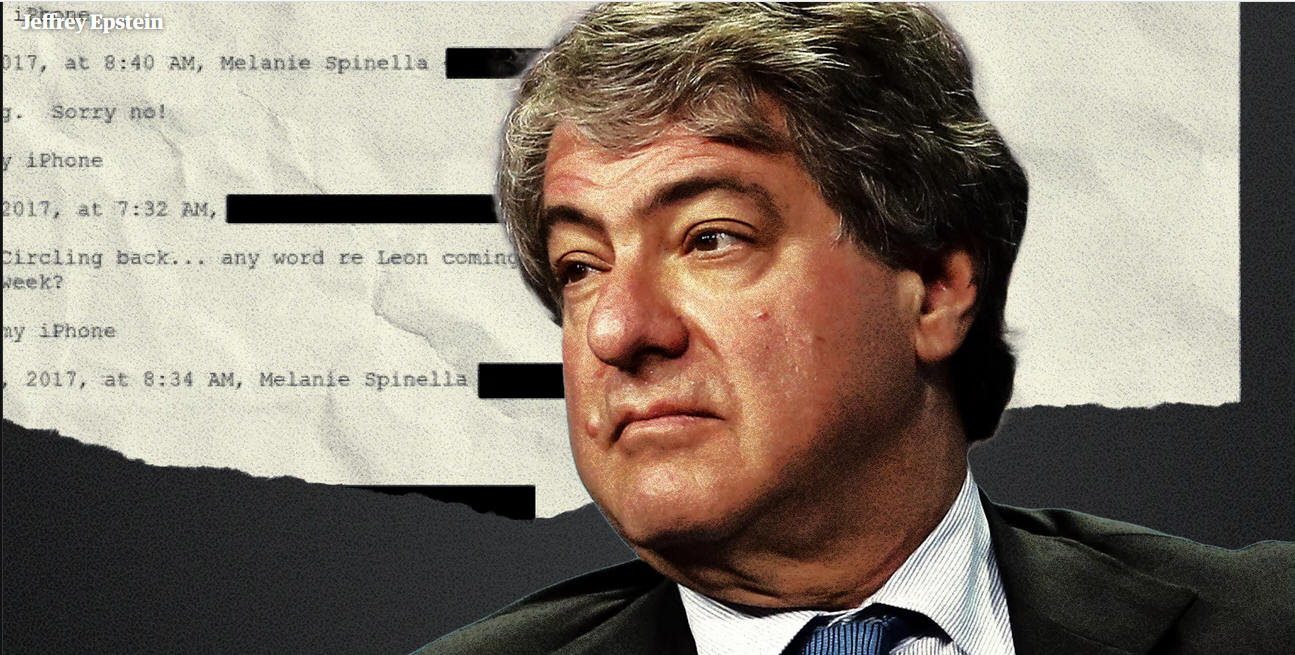 Illustration: Guardian Design/Patrick T. Fallon/Bloomberg via Getty Images
 Laura Loomer, the far-right media figure, has emerged as one of the president’s most aggressive, pro-Israel enforcers. Credit…Annie Flanagan for The New York Times


