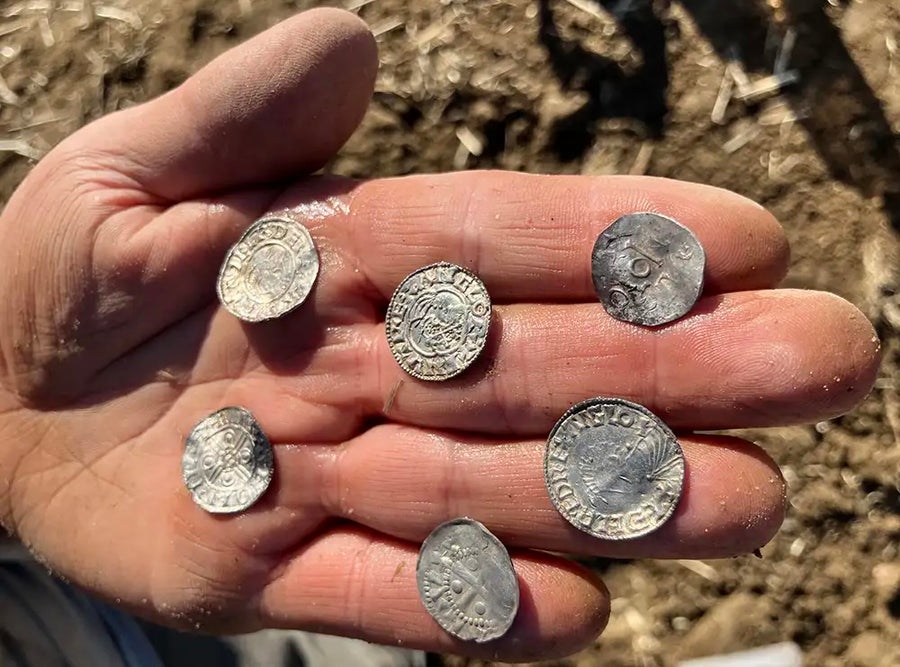
Archaeologists are hailing the discovery of a “spectacular” hoard of roughly 3,000 Viking coins found in a field in eastern Norway. More could yet be uncovered—the search is ongoing.
“This is a historic find. The fact that it is also from the Viking Age makes it even more spectacular,” said Andreas Bjelland Eriksen, the country’s minister of climate and environment, in a statement.
The coins were initially discovered by two metal detectorists in a field near the Norwegian city of Rena in the region of Østerdalen, according to the Norwegian Directorate for Cultural Heritage. On April 10, the pair uncovered 19 silver coins; they immediately informed local officials.
The hoard includes specimens from the 980s to the 1040s C.E.—the height of the Viking Age. Notably, many of the coins were foreign-made, originating from England and Germany and including elements of coins from Denmark and Norway. The Vikings dominated much of what is now Scandinavia, but they ventured by sea to many other regions, including Britain, Iceland, and even the Americas.
“Foreign coinage dominates the circulation of money in Norway up until Harald Hardrada (1046–1066) established a national coinage,” said Svein Gullbekk, an archaeologist at the University of Oslo, in a statement from the university’s Museum of Cultural History. Hardrada, also known as Harald III, served as king of Norway from 1046 to 1066. During his tenure, the king’s mint replaced most of the foreign currency in circulation, according to Gullbekk. “The hoard was deposited right at the beginning of this development,” he said.
It’s possible that the coins are related to iron works in the area, said archaeologist Jostein Bergstøl of the Museum of Cultural History in the same statement.
“From the 900s until the late 1200s, there was an enormous iron production in this area. Ore was extracted from the bogs, and the processed iron was exported to Europe,” he said.
Archaeologists are still probing the site because they hope to gain more insight into what the extent of the treasure is and why it has lain there for so long.
“This is a truly unique discovery of the kind one might only experience once in an entire career. To be present when something like this comes to light is simply a great experience, both professionally and personally,” said local archaeologist May-Tove Smiseth in the same statement. The last time a large stash of Viking coins was discovered in Norway was in 1950, according to the Museum of Cultural History’s statement.
You’re at the playground, making small talk with another mom while your kids dig in the sandbox. The conversation follows a predictable script: sleep schedules, daycare waitlists, whether your toddler will eat anything green. It’s pleasant enough, but you’ll forget about it by the time you pile your kids into the car for nap time.
But what you really wanted to ask is: What’s something about birth and postpartum that surprised you? What do you wish your partner understood? How did becoming a mother change your marriage?
Those are the conversations that actually matter, because they deepen relationships and allow mothers to pass their wisdom to one another. But they feel impossible to start without seeming intense or intrusive.
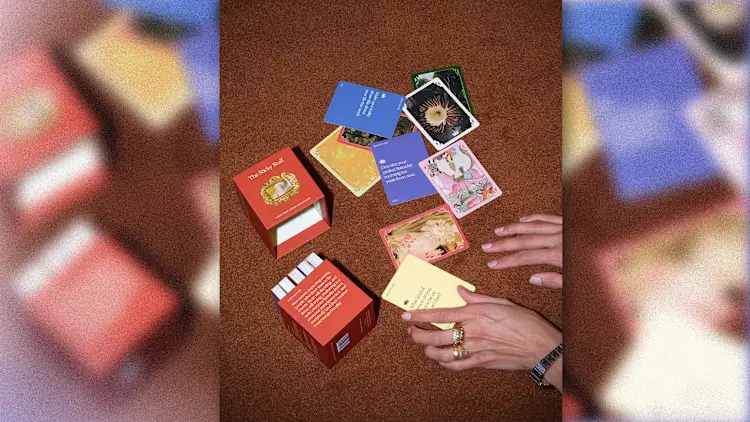
Spread the Jelly, an 18-month-old media platform, wants to help. It has just launched a deck of cards called The Sticky Stuff, meant to prompt mothers to have deeper conversations faster. “Everything we’ve been doing is about like breaking people open, allowing people to be their messiest or their happiest selves at the same time,” says Amrit Tietz, who founded the company with Lauren Levinger in late 2024.
The Sticky Stuff, which is available on the Spread the Jelly website for $45, joins a growing number of conversation cards that have entered the market, including therapist Esther Perel’s Where Should We Begin? cards that launched in 2021, Tales, which facilitates conversations with kids, and even the fast food chains Chick-fil-A, which gives out cards meant to prompt conversations around the meals.
“The popularity of the cards highlights how we desperately want to talk about deep issues,” says Nicholas Epley, a professor at the University of Chicago Booth School of Business who has been studying conversation for two decades.
Modern Motherhood
The idea for Spread the Jelly’s conversation cards didn’t start with market research or a business plan. It started with two women in Los Angeles who desperately needed someone to talk to. Lauren Levinger had recently had her son when Amrit Tietz, pregnant and without mom friends in her life, reached out via social media. “From social media, you look like you’re doing motherhood pretty well,” Tietz wrote to her. “Can we connect?”
When they finally sat down together months later, they were surprised by how good it felt to have an honest conversation. They quickly began to discuss the things that nobody talks about, from how lonely it can be to spend your days with a non-verbal human, to postpartum sexuality. “We realized how starved we were for community,” says Levinger.
This prompted them to launch Spread The Jelly, as an online magazine for radical honesty about modern motherhood. The conversation cards came later, as a natural extension of that mission. Tietz and Levinger began to build out a deck of questions, and tested them out with their partners, families, and friends. They ended up encompassing four different categories: foundation, identity, belonging, and intimacy. They included prompts like, “Describe your childhood in one sentence;” “Describe a moment you’re not proud of,” and “How do you show up for your loved ones?”
Levinger points out that everyday conversations at the dinner table have a way of becoming stagnant. The cards suddenly unlocked a way to venture into new territory with the people in our lives.
In mid-March, Babak, a 49-year-old Iranian product designer at a tech company in Tehran, was called into his boss’s office and told that his position was being eliminated.
Iran’s government had shut down the internet two weeks earlier, at the outset of U.S.-Israeli war on the country, throwing the country’s tech industry into chaos and making Babak’s job impossible.
“Throughout my career, I have worked hard, continuously learned, and tried to grow,” said Babak, who sent voice messages to The New York Times, and asked to be identified only by his first name to avoid government reprisal. “Yet at this stage of my life, I find myself in an uncertain and ambiguous position,” he said.
Babak’s experience has become increasingly common throughout Iran as companies have instituted round after round of layoffs in recent weeks, according to interviews with businesses and employees and Iranian news reports.
A man pulling a cart filled with boxes at an intersection near a wholesale market in Tehran on Saturday..
For the Trump administration, Iran’s severe economic struggles are part of a strategy to pressure the country into submission. “I hope it fails,” President Trump told reporters this month, of Iran’s economy. “You know why? Because I want to win.”
Iranian officials insist that pressure will not work and that the country will not surrender.
Many of those companies are buckling under wartime pressures. During the war, the U.S. and Israel hit Iranian industrial sites that produce key raw materials, as well as key infrastructure. And a U.S.-imposed blockade on Iran’s ports, in place since a cease-fire last month, has cut off much of its oil exports and disrupted imports of other goods.
An Iranian government official, Gholamhossein Mohammadi, estimated that the war has caused the loss of one million jobs, “and the direct and indirect unemployment of two million people,” in comments reported by the news outlet Tasnim.
On April 25, an Iranian job search platform reported a record 318,000 resumes submitted in a single day, a figure that was 50 percent higher than the previous record, according to the news site Asr Iran.
Even before the war, Iran’s economy had been struggling from years of sanctions, entrenched corruption and mismanagement, while a spiraling currency has eroded Iranians’ purchasing power.
Image
People at a wholesale shop in Tehran on Saturday..
“A strange and overwhelming vortex of economic problems has emerged, and it continues to grow more complex,” Amir Hossein Khaleghi, an economist in Isfahan, said in an interview. Before the war, Iran was “already in a very poor economic situation, facing a set of mega-crises,” he said.
The private sector’s latest struggles portend a deepening crisis for Iran’s government. Its proposed budget for the year, put forward before the war, already represented a sharp reduction in public spending when factored for inflation, and depended more on taxation than in the past. Now, tax revenues from the private sector are likely to drop significantly.
.
Crowds inside the sprawling Grand Bazaar in Tehran on Saturday. Imports of goods have been affected by the war.
242nd story First published: Feb.27.2025 Two thieves entered the house of a rich person. The older thief, Jack, opened the safe box very easily. There was a lot of cash inside the safe. Jack took the money out. He spread it on a nearby table and sat in a chair. Then, he asked Tom: “Take […]
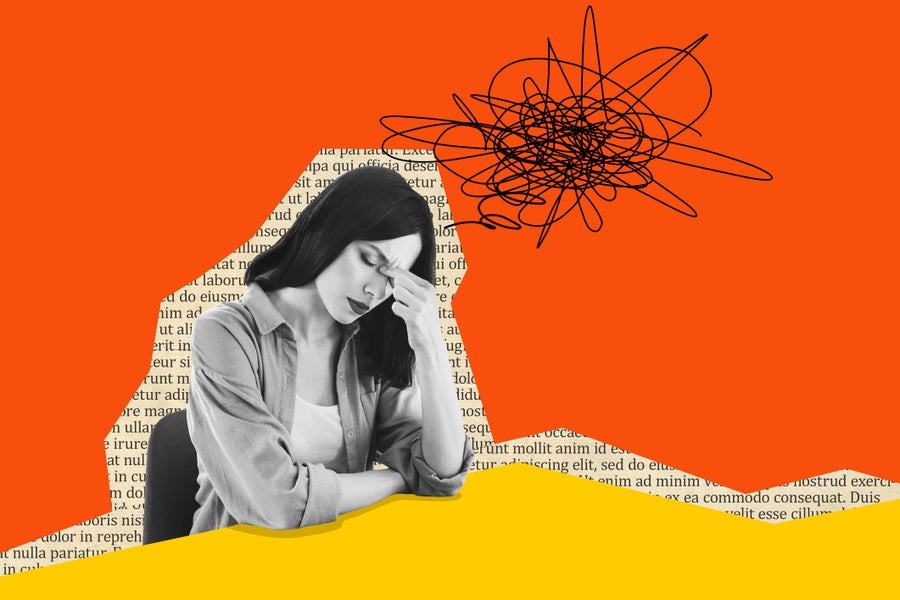
Are you tired? If so, you aren’t alone. An alarming number of the country’s adults are tired most days, according to a new report from the U.S. Centers for Disease Control and Prevention. And that could have significant implications for public health.
In 2024, the year the data were collected, nearly a third of all U.S. adults slept fewer than the recommended seven hours per night on average. Only a little more than half of U.S. adults said they woke up feeling “well-rested” on most days.
It’s hard to overstate how important sleep is for your health: Research shows that getting enough rest can reduce your risk of cardiovascular disease, help regulate hormones, and keep blood sugar under control, and that it may even help fight dementia. It can also affect your mood and mental health.
That is why health experts are worried that so many adults seem to be missing out on those z’s. “Our need for sleep parallels our need for air and water,” said Michael Grandner, director of the Sleep and Health Research Program at the University of Arizona, in an interview about the report with MedPage Today.
According to the report, around 40 percent of Black adults are getting fewer than seven hours of sleep per night on average and are less likely to wake up feeling well-rested than their Asian, white, and Hispanic peers. Asian adults were the most likely to report feeling well-rested—about 62 percent. The report is part of the National Health Interview Survey, a poll involving thousands of U.S. adults.
Men and women reported about the same rates of undersleeping, but men tended to say that they woke up feeling well-rested more often than women did. Women were also more likely than men to say that they found it hard to fall asleep at night—with the experience reported by about 19 percent of women versus about 12 percent of men.
Broken down by age, adults aged 65 and older reported that they woke up feeling well-rested on at least most days, with the impressive frequency of about 64 percent of the time. Adults aged 18 to 34, on the other hand, had the hardest time falling asleep of any age group.
If you are struggling to fall asleep, experts recommend techniques such as getting out of bed to do a calming activity, such as reading or breathing exercises, avoiding phone scrolling and snacking, and seeing a doctor if the problem persists.
A New York judge has released what is alleged to be a suicide note written by convicted sex offender Jeffrey Epstein. The document was previously sealed as part of criminal investigations into the billionaire’s former cellmate.
The note was reportedly discovered by the cellmate, Nicholas Tartaglione, at the Metropolitan Correctional Center in New York in July 2019 after Epstein first attempted suicide weeks before his death.
“They investigated me for month[s] — found nothing!” the note reads. “It is a treat to be able to choose one’s time to say goodbye.”
The note continues: “Watcha want me to do — burst out cryin! No fun – not worth it.”
The words “no fun” were also included in a separate note obtained by CBS from Epstein’s cell after his death. In both notes, the words are underlined. Epstein also appears to have used the phrase “watcha want me to do- burst out cryin” in an email from 2016, released by the Justice Department.
Epstein’s first apparent suicide attempt
The note has no signature. TIME has been unable to independently verify if it was written by Epstein, and has reached out to the Justice Department for comment.
Records released by the Justice Department show that on July 23, 2019, Epstein was found “unresponsive” in his cell, and that Epstein claimed later that same day that Tartaglione, who was awaiting trial in a quadruple murder case, had assaulted him. The sex offender was then put on suicide watch.
The document then shows that Tartaglione appears to have found the note in the days that followed. Epstein was later moved to a separate cell following the alleged assault, where he was later found dead on August 10, 2019. A medical examiner later determined that the cause of death was suicide.
Tartaglione was sentenced to four consecutive life sentences in June 2024, one for each murder he carried out.
The push to unseal the document
Judge Kenneth M. Karas of Federal District Court in White Plains, New York, released the note on Wednesday, after a request from the New York Times for it to be released was sent on April 30.
Democrat Rep. Raja Krishnamoorthi of Illinois also requested for the release of the note, writing to the Justice Department on May 4 calling for it to be unsealed.
“The survivors of Jeffrey Epstein deserve a full and transparent accounting of all pertinent information,” Krishnamoorthi wrote.
Speaking to the Times, Tartaglione said he found the note tucked into a graphic novel after Epstein was transferred from the cell. He said he then gave the note to his lawyers.
The former cellmate of Epstein had already mentioned the note, speaking on a podcast with Jessica Reed Kraus in July of last year.
Tartaglione previously discussed the alleged note
Tartaglione claims on the podcast that the note read along the lines that the FBI had investigated Epstein “for months and found nothing” and “what do you want me to do – cry about it?”
Over the last year, questions about alleged relationships between Epstein and prominent global figures have emerged, including with President Donald Trump.
The Justice Department has released several batches of the so-called ‘Epstein files’, most recently in January, when more than 3 million documents were published.
First Lady Melania Trump is the latest prominent figure to address allegations of association with Epstein. In early April, the First Lady said in an address that “lies” tying her to Epstein and his associate Ghislaine Maxwell “must end.”
“To be clear, I never had a relationship with Epstein or his accomplice, Maxwell,” Melania said. “My polite reply to her email doesn’t amount to anything more than a trivial note,” she added in reference to a message sent to Maxwell in 2002, released by the Justice Department.
Scrutiny over Epstein associations continues
Since January’s release, several high-profile names have resigned from positions following questions about alleged association with Epstein.
In the United Kingdom, Prime Minister Keir Starmer has faced continued scrutiny over his decision to appoint Peter Mandelson as ambassador to the U.S., despite being aware of continued correspondence between Mandelson and Epstein.
The former ambassador was arrested on suspicion of misconduct in public office in February, though he maintains no wrongdoing.
Andrew Mountbatten Windsor, formerly Prince Andrew, has also been put in the spotlight in recent months after the Justice Department files appeared to show alleged communication between Epstein and the brother of King Charles.
Mountbatten Windsor was arrested on suspicion of misconduct in public office in February, and he has also continuously denied any wrongdoing.
.
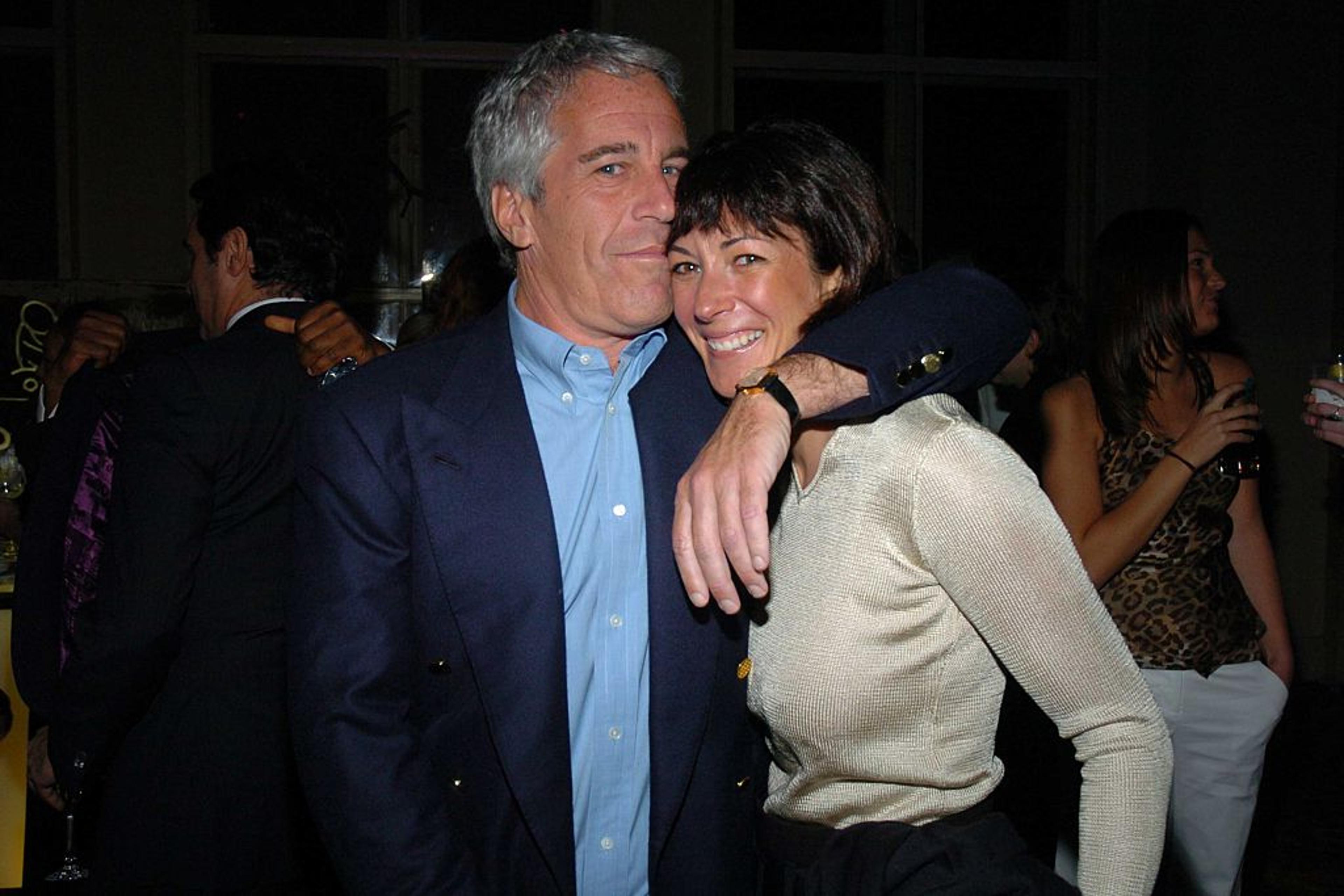
Jeffrey Epstein with Ghislaine Maxwell at the Wall Street Concert Series in New York City on March 15, 2005.
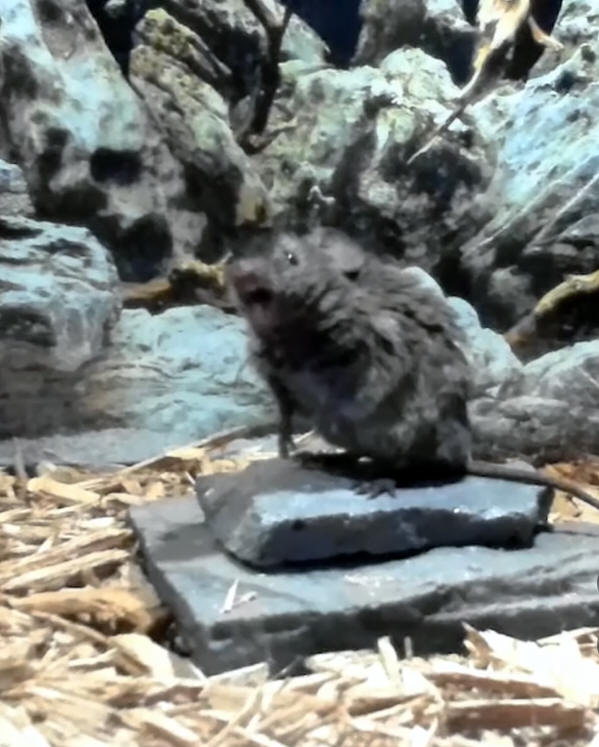
In the balmy cloud forests of Central America, the operatic calls of Alston’s singing mouse, a small, short-tailed rodent famous for its courteous communication, can often be heard echoing through the trees.
These minuscule mice, each of which weighs less than a lightbulb, sing unique, chirp-filled songs to one another that can last as long as 16 seconds. Both sonic and ultrasonic sounds flow from the mouse’s mouth, creating a song reminiscent of the buzzing of a cicada. What’s more, the mice never interrupt each other; they hold their tiny tongues until their conversational partner is done singing.
Scientists have long wondered what enables these mice to have such uncannily complex conversations without the help of human brains. But as it turns out, our brains may not be so different.
In a new study published Wednesday in the journal Nature, researchers found that a simple expansion of existing neural pathways allowed these mice to broaden their vocal repertoire — the same mutation believed to have paved the way for the development of human language.
By studying the brains of Alston’s singing mice and their non-singing (but closely related) lab mouse cousins, researchers at the Cold Spring Harbor Laboratory on Long Island were able to determine what evolutionary changes in the brain had given rise to the singing mouse’s cordial and symphonic songs. Now, scientists are wondering if the same method can be used to figure out the neurological basis for other animal behaviors.
“This is relevant far beyond singing mice,” said Mirjam Knörnschild, a behavioral ecologist who studies bioacoustics at the Museum of Natural History Berlin. Dr. Knörnschild, who was not involved with the study, said it could “inform work on vocal turn-taking, vocal learning and vocal flexibility in other mammals, including bats, primates and humans.”
In 2019, Arkarup Banerjee, a biologist at Cold Spring Harbor Laboratory, and his colleagues discovered that the back-and-forth serenades of Alston’s singing mice sound strikingly similar to our conversations. But at the time, he couldn’t make sense of it. Dr. Banerjee had examined the brains of Alston’s singing mice and non-singing lab mice, and they seemed more or less identical.
Scientists once believed that complex behaviors, such as tool use and peer-to-peer communication, required specialized neural circuitry. But when Dr. Banerjee went looking for such dedicated neural hardware in Alston’s singing mice, he didn’t find any.
“It didn’t seem like things were that different,” Dr. Banerjee recalls.
This prompted Dr. Banerjee and colleagues to set out in search of what gave these singing mice their vocal prowess. In their effort to find out, the researchers used a technique called Multiplexed Analysis of Projections by Sequencing, or MAPseq. This method allows scientists to map thousands of individual neurons by infecting them with a virus that delivers unique RNA bar codes into each cell. When scientists genetically sequence tissue from across the brain, the bar codes reveal a detailed map of where each neuron connects throughout the brain.
When the researchers used MAPseq on the brains of dozens of mice from both species, the differences became clear. The singing mice had approximately three times the number of neurons sending signals from the motor cortex to two specific downstream regions of the brain. While that may sound like a stark difference, the scientists say it’s more akin to “a relatively subtle change in brain wiring,” said Anthony Zador, a neuroscientist at Cold Spring Harbor Laboratory and co-author of the study.
According to Dr. Zador, the fact that such subtle neural changes can result in the development of a whole new vocal behavior “raises interesting questions about how much rewiring was involved in the evolution of human language.”
In addition to challenging our understanding of the evolution of our most novel behavior, the findings of this study may help scientists learn more about the neurological basis for many animal behaviors.
“This work hits on an important unanswered question in neuroscience: What gives some animals exceptional abilities that others don’t have?” said David Schneider, a professor of neuroscience at New York University who was not involved with the study.
Before this study, scientists had never used MAPseq to compare the brains of two closely related species with remarkably different behavior. Experts say their success in doing so has opened up a world of scientific possibilities.
“This study gives us a road map for how to think about and quantitatively test ideas about the evolution of brain structure,” said Steven Phelps, a professor of integrative biology at the University of Texas, Austin, who was not involved with the study.
As the study came to a close, Dr. Banerjee said he couldn’t get a quote from Charles Darwin’s 1871 book “The Descent of Man” out of his head: “The difference in mind between man and the higher animals, great as it is, certainly is one of degree and not of kind.”
“There’s increasing evidence that there may be some profound truth to this idea,” Dr. Banerjee said. As his study has demonstrated, even tiny changes in the brain can have profound impacts on behavior. When you keep that in mind, he said, “suddenly the development of things like language in humans doesn’t seem that mysterious.”
Explore the Animal Kingdom
A selection of quirky, intriguing, and surprising discoveries about animal life.
Birds of a Feather Learn Together: In a study, Australian cockatoos figured out that a new food was OK to consume by observing one another, a vivid example of “social learning” in animals.
Swimming With Orcas: Only two places in the world allow tourists to enter the water with the ocean’s apex predator. But the safety of both species is a growing concern.
Legal Protection for Snails?: Scientists are debating the classification of threatened mollusks that an Indigenous community in Mexico relies on for their way of life.
Salmon High on Cocaine: Scientists in Sweden made an unexpected discovery when they exposed the fish to the illegal drug as well as another substance.
Bruce the Parrot: In 2021, a disabled parrot made headlines worldwide for creating his own prosthetic beak. Now, he has become the alpha male of his group by learning to joust.
Female Anglerfish: The deep-sea fish ended up with glowing lures not just to snag meals, but also to attract mates, a new study finds.
.
Scientists at the Cold Spring Harbor Laboratory on Long Island mapped the neurons of two species of mice to better understand how their brain wiring helps them vocalize. CreditCredit…Isko et al., Nature 2026
In the world, human beings are facing various problems. People who are full of greed, anger, and ignorance are seen to be fighting with each other in words and deeds. As the fighting continues, various problems such as civil wars, wars of aggression, and wars of aggression are occurring. As world peace is being destroyed, humans are facing unbearable problems. Innocent children and women are not getting the rights they deserve and deserve. I can't think of one thing every time. What is it? The United Nations. If we look at the responsibilities and duties of the United Nations, I think it is not suitable for solving the problems that are happening in the world today. In fact, the United Nations and the World Security Council, such an organization must rule the world, must be able to give orders, and must have various ways to obey orders. There must be no organization that can influence more than that organization. There should be experts from each country. They can even dominate the superpowers like the US, China, and Britain. Only then will global peace be achieved quickly. Now, if a country with power develops more militarily, economically, or socially than its own country, then powerful countries will jealously seek out enemies and wage war. Or they will attack with fighter jets. In this, innocent people are losing their lives. No one understands the value of a life. You should think about how to achieve global peace by controlling these. If the US continues to be the permanent president of the UN, world peace will never be achieved. If you think carefully, no one sees that they are working for the common good, but for their own benefit, for the benefit of their own country. The permanent president of the UN and the Security Council has rejected this, As a young Rohingya, I have come to realize that only by electing the president and secretary from among the countries in the world through a secret ballot system and governing the world fairly can we achieve global peace. The United Nations and the Security Council are organizations in which any country must govern, give orders, and make them obey their orders. For example, only when a defendant is tried in court can we hold the leaders of the countries in check and control them, can we achieve global peace smoothly. Otherwise, it will not be easy for powerful countries to use various excuses to end this war every year, every year, for the benefit of themselves and their countries. No country's leaders pay any attention to the words of the United Nations and the Security Council. If we look at it in practice, look at the Rohingya issue. Myanmar is a small country. Even that country has been under siege for 8 years. What action can be taken? Why is the UN and the Security Council Powerless? Without such Power, how can the organization bring about global peace? Everyone should think about it. Whether there is a veto or a strong one, all countries in the world can only achieve global peace if they are subject to the UN and the Security Council. Seek peace in the quiet embrace of nature. Peace is an indispensable need of the human race. It is not as if one person can kill another person, and it is as if one country can attack another country, but instead of trying to build peace, we must try to destroy the peace now, and the world is getting hotter and is on the verge of collapse. I especially appeal to all the world experts to urgently try to bring about peace in all parts of the world. Mr, Noor Muhamed Arkhan Rohingya Youth Myanmar
Film and Writing Festival for Comedy. Showcasing best of comedy short films at the FEEDBACK Film Festival. Plus, showcasing best of comedy novels, short stories, poems, screenplays (TV, short, feature) at the festival performed by professional actors.


 Innlandet County Authority
 [Photo: Spread the Jelly]
 Crowds inside the sprawling Grand Bazaar in Tehran on Saturday. Imports of goods have been affected by the war.
 Deagreez/Getty Images

 Scientists at the Cold Spring Harbor Laboratory on Long Island mapped the neurons of two species of mice to better understand how their brain wiring helps them vocalize. CreditCredit…Isko et al., Nature 2026


