Home

Fear in Nature and Politics!

Leave a comment

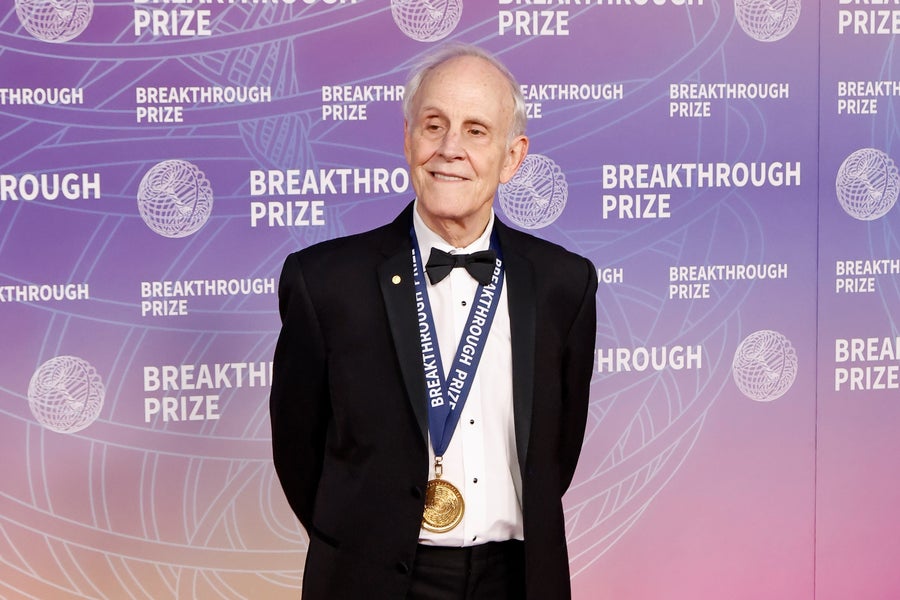
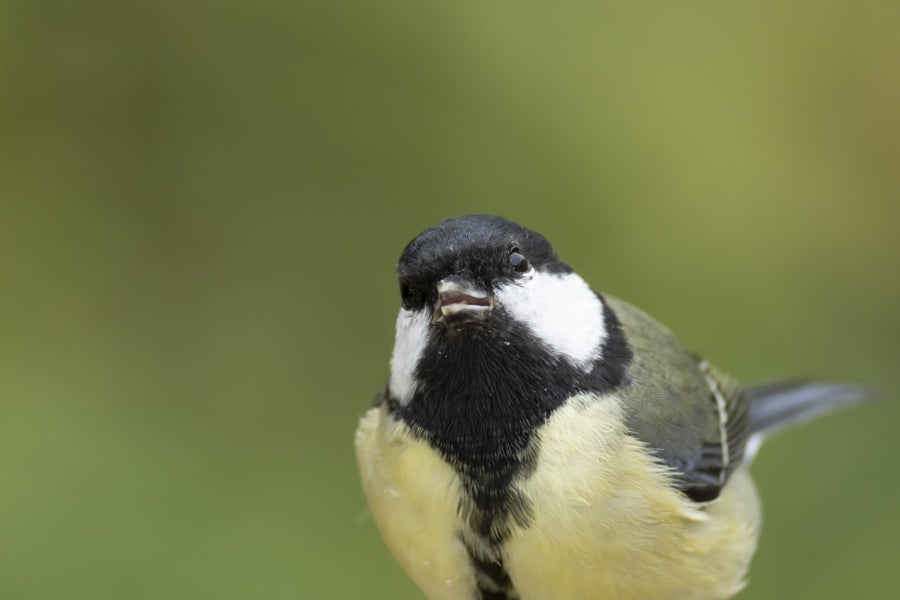
Hmmmm … Is this what fear in politics looks like inside? Do sycophants live in fear?

.

In nature, fear is detected through a combination of physiological responses, behavioral cues, and environmental signals, often by predators or other animals who sense vulnerability in their prey or competitors. Here’s how various mechanisms work:
.
1. Predator Sensory Systems:
Sight: Many predators can detect the body language and movements of prey that indicate fear. For example, fearful animals may freeze, run erratically, or display signs of stress, such as rapid breathing or dilated pupils.
Smell: Predators like wolves, big cats, and even scavengers can detect fear through changes in scent. Fear can trigger the release of certain hormones, such as adrenaline, which are detectable in the sweat or pheromones of the prey.
Hearing: Some animals can hear the increased heartbeat or even distress calls of prey, which can signal fear. For example, some species of bats can use echolocation to detect changes in the sounds of prey as they flee or struggle.
.
2. Chemical Signals and Pheromones:
Many animals release pheromones when stressed or scared. These chemical signals can be picked up by others in the area, alerting them to potential danger or an emotional state. For example, certain species of ants release alarm pheromones when they feel threatened, prompting other ants to come to their aid or take defensive actions.
Humans and many mammals also release stress-related pheromones, which might be detected by others of the same species. For example, dogs can sense when humans are anxious or fearful through scent.
.
3. Body Language and Behavioral Cues:
Fear often alters posture and behavior. Animals in fear might exhibit “flight” responses (running away), “freeze” responses (immobility), or even “fight” responses (aggression or defensive behavior). These visible changes in body language, such as crouching, wide eyes, or a lowered head, can be easily detected by other animals, alerting them to the animal’s emotional state.
In some species, fear can lead to a specific vocalization (like a distress call), which can be heard by others and cause them to take action.
.
4. Environmental Changes:
Animals are very sensitive to environmental changes caused by fear. For instance, if an animal senses an approaching predator, the environment might shift as animals in the area scatter or hide. This creates a ripple effect where nearby prey species will detect this shift and react accordingly.
Prey species often detect fear in their environment through the absence or presence of specific signals. For example, if they hear a predator’s growl or see another animal running, it can serve as a warning that danger is near.
.
5. Empathy in Social Animals:
In some highly social species, such as primates, elephants, and dolphins, fear can be communicated through empathy. These animals may recognize fear in others, and their response can range from group flight behavior to protective actions for vulnerable individuals.
For example, elephants are known to respond to the fear of others by gathering together for protection or even altering their own behavior to comfort or protect a distressed group member.
.
6. Evolutionary Adaptations:
Over evolutionary time, species that could detect and react to fear in their environment were more likely to survive. For example, the ability to detect fear signals—whether visual, auditory, or chemical—would enhance an animal’s chances of avoiding predators or other threats.
Some prey species, such as deer, can detect the scent of predators (like wolves or humans) and instantly become alert, which could give them enough time to escape.
.
In short, fear is often detected through a combination of sensory inputs and behavioral signals that trigger instinctive responses, allowing animals to avoid danger or react to it. Whether it’s a predator tracking the signs of fear or prey detecting environmental cues, nature has developed multiple ways to recognize and respond to fear.
.

 Sycophants:

.
A sycophant’s behavior is often driven by fear, but it’s not always the fear of physical harm. More typically, a sycophant is afraid of losing favor, status, or position with those they seek to please. They might be fearful of rejection, of not being seen as valuable or important, or of being out of the loop in certain power dynamics. This fear leads them to excessively flatter or serve someone in a way that feels insincere or manipulative.
So, while it might not be the classic, primal fear of danger, it’s a type of anxiety or insecurity rooted in social standing and the desire for approval or protection.

.

__________________________________________

Trump Announces New European Tariffs in Greenland Standoff; Allies Outraged

Leave a comment

Click the link below the picture

.

The president escalated his drive to take charge of the Danish territory, targeting Denmark and seven other European countries with a 10 percent rate.

President Trump announced in a social media post on Saturday morning his latest strategy to get control of Greenland: He is slapping new tariffs on a bloc of European nations until they come to the negotiating table to sell Greenland.

Greenland is a territory of Denmark, which will be hit with a 10 percent tariff on all goods sent to the United States beginning on Feb. 1, Mr. Trump wrote in a social media post. Norway, Sweden, France, Germany, Britain, the Netherlands, and Finland, fellow NATO members that have expressed solidarity with Denmark in its refusal to yield to Mr. Trump’s demands, will also be subject to the 10 percent tariff. If those nations do not relent, he added, the rate will increase to 25 percent on June 1, “until such time as a Deal is reached for the Complete and Total purchase of Greenland.”

The leaders of Europe reacted Saturday with unified outrage to Mr. Trump’s latest coercions on the massive island in the North Atlantic. So, too, did lawmakers in Washington, including some members of the president’s own party. And the abrupt announcement of new tariffs seemed to throw a trade deal Mr. Trump had struck with the European Union into serious doubt.

In his post, Mr. Trump argued that the United States needed to control Greenland as a bulwark against Chinese and Russian ambitions in the Arctic, although the United States already has the right to expand its military presence in Greenland under a 1951 agreement with Denmark.

The president’s new threat comes as the Supreme Court weighs overturning the legal authority that the president would probably use to impose these tariffs. The court is set to rule in the coming weeks on Mr. Trump’s use of an emergency law, the International Emergency Economic Powers Act, which the president has used to threaten tariffs at a whim against numerous countries over the past year.

If the court rules against Mr. Trump, he may not be able to impose tariffs like this.

The United States currently charges a 10 percent tariff on British imports and a 15 percent tariff on imports from the European Union, after striking limited trade deals with both governments last year. The new tariffs would presumably be imposed on top of that, and it remains to be seen how other trading partners would respond. Tariffs are paid by importers, not by the products’ country of origin, with the costs often passed on to American consumers.

Just one day ago, during a health care event at the White House, Mr. Trump mused publicly about doing something like this. “I may put a tariff on countries if they don’t go along with Greenland,” he said, almost parenthetically.

A day later, the 445-word post he put up was striking in its language about American allies. It reiterated the worldview Mr. Trump has espoused for decades, which holds that the United States has been getting ripped off and that payback has been a long time coming.

“We have subsidized Denmark, and all of the Countries of the European Union, and others, for many years by not charging them Tariffs, or any other forms of remuneration,” he wrote. “Now, after Centuries, it is time for Denmark to give back — World Peace is at stake!”

He wrote about “all that we have done for them, including maximum protection, over so many decades.”

The post and its threat of new tariffs were a marked escalation in Mr. Trump’s pressure campaign, and European leaders reacted swiftly on Saturday.

President Emmanuel Macron of France wrote on social media, “No intimidation or threat will influence us — neither in Ukraine, nor in Greenland, nor anywhere else in the world when we are confronted with such situations.”

He added that “tariff threats are unacceptable” and that “Europeans will respond in a united and coordinated manner should they be confirmed. We will ensure that European sovereignty is upheld.”

The Swedish prime minister weighed in with a furious response, saying, “We won’t allow ourselves to be blackmailed. Denmark and Greenland alone decide questions that affect Denmark and Greenland.”

Prime Minister Keir Starmer of Britain said in a statement that “applying tariffs on allies for pursuing the collective security of NATO allies is completely wrong,” adding, “We will of course be pursuing this directly with the US administration.”

The leaders of Britain’s main opposition parties were unanimous in their condemnation of Saturday’s announcement. The Conservative Party leader, Kemi Badenoch, said that Mr. Trump was “completely wrong” and that the tariffs were a “terrible idea” for both the United States and Britain.

Nigel Farage, an ally of Mr. Trump whose populist right-wing Reform U.K. party leads Britain’s political polls, made a rare statement in opposition to the president’s policies on social media.

“We don’t always agree with the US government, and in this case, we certainly don’t. These tariffs will hurt us,” he wrote.

Lukas A. Lausen, the director of global trade at the Danish Confederation of Industry, said the tariffs would increase prices and cost jobs on both sides of the Atlantic.

Earlier this week, a delegation from Denmark and Greenland came to Washington to meet with officials from the Trump administration, including Vice President JD Vance and Secretary of State Marco Rubio. Little was achieved.

The Danish foreign minister, Lars Lokke Rasmussen, said in a statement on Saturday that President Trump’s social media post “comes as a surprise” and that Denmark was in “close contact with the European Commission and our other partners on the issue.”

Mr. Trump’s post startled even Republicans in Washington, some of whom reacted publicly on Saturday.

Representative Don Bacon, Republican of Nebraska, said in a social media post that the move was “foolish policy” and he likened it to something President Vladimir V. Putin of Russia would do. He added in an interview with CNN, “I feel like it’s incumbent on folks like me to speak up and say these threats and bullying of an ally are wrong.”

.

.

.

Click the link below for the complete article:

https://www.nytimes.com/2026/01/17/us/politics/trump-eu-tariffs-greenland.html

.

__________________________________________

Charles Gaines on “Hanging Tree” at EJI’s Legacy Sites, YouTube video

Leave a comment

Charles Gaines on “Hanging Tree” at EJI’s Legacy Sites, YouTube video

Horses Can Smell Your Fear, Bizarre Sweat Study Finds

Leave a comment

Click the link below the picture

.

Horses can smell human fear—and it changes their behavior.

That’s the takeaway of a rather unusual experiment that involved making horses smell material soaked in human sweat and observing what they did next. The findings were published today in PLOS One.

Horses exposed to samples of sweat from people who had had a scary experience appeared more afraid themselves: the animals were easily startled, hesitated to come up to the researchers, and became less likely to interact with unknown objects.

“Our emotions are central when interacting with horses,” says Plotine Jardat, lead author of the study and a horse behavior and welfare researcher at France’s National Research Institute for Agriculture, Food and Environment. “If your horse does not cooperate on an exercise you are proposing, maybe trying it another day when you feel differently can be a game changer.”

Researchers already knew that horses can respond to humans’ emotional cues, including facial expressions and tones of voice. But the new study went further by investigating whether horses could smell different emotions emanating from humans without those visual or oral cues.

In the experiment, a group of people with cotton pads under their armpits watched movie clips geared to produce a sense of joy; these included the dance scene in the film Singin’ in the Rain and the song “We Go Together” from the movie Grease. The researchers then asked the participants—armed with new cotton pads—to watch 20 minutes from the horror film Sinister to stimulate fear.

The sweat samples were then stapled into a custom muzzle for the horses to wear. To limit the stress on each test horse, an “audience horse” served as a witness to the behavior tests.

The researchers first measured how often a test horse would interact with the experimenter, depending on what it was smelling, both while it was being groomed and while the experimenter stood slightly apart from the animal. Horses that smelled the fear samples touched the experimenter less than those in a control group or those that smelled joyful sweat samples.

The team then tested the horses’ reactivity by opening an umbrella near a bucket of food. Once again, horses that smelled the fear sweat showed a different reaction than those that smelled anything else. Their physical reactions to being startled were stronger, and their heart rates were higher.

The last test involved presenting the horses with a novel object—a sculpture of sorts, made of linoleum, plastic and string. The researchers recorded how often a horse gazed at the object and how often the animal touched it. The horses in the fear group touched the novel object less often and stared at it from a distance more than their peers did.

Taken together, the horses’ reactions indicate they can sense fear from odor alone, the researchers conclude. What the study doesn’t answer is why horses can apparently do this: the ability could be a result of domestication, or it could stem from some underlying mammalian characteristic. But regardless, perhaps don’t go up to a horse immediately after watching a horror film.

.

https://static.scientificamerican.com/dam/m/1b57543c8015dda6/original/horse-fear.jpg?m=1768419207.752&w=900Camille Loiseau/500px via Getty Images

.

.

Click the link below for the complete article:

https://www.scientificamerican.com/article/horses-can-smell-your-fear-bizarre-sweat-study-finds/

.

__________________________________________

Nasa readies its most powerful rocket for round-the-moon flight

Leave a comment

Click the link below the picture

.

Nasa is preparing to roll out its most powerful rocket yet before a mission to send astronauts around the moon and back again for the first time in more than 50 years.

The Artemis II mission is scheduled to launch from Kennedy Space Center in Florida as early as 6 February, taking its crew on a 685,000-mile round trip that will end about 10 days later with a splashdown in the Pacific Ocean.

The flight will mark only the second test of Nasa’s Space Launch System (SLS) rocket and the first with a crew onboard. The four astronauts will live and work in the Orion capsule, testing life support and communications systems and practising docking manoeuvres.

Jared Isaacman, the billionaire private astronaut sworn in as Nasa’s administrator in December, said on Thursday the mission was “probably one of the most important human spaceflight missions in the last half-century”.

It will be the second time in space for three Nasa astronauts, Reid Wiseman, Victor Glover and Christina Koch, and the first for Jeremy Hansen, a Canadian astronaut. Koch will become the first woman, and Glover the first person of colour, to travel beyond low Earth orbit.

The astronauts will not land on the moon or enter lunar orbit, but will be the first to travel around the moon since Apollo 17 in 1972. The mission follows an uncrewed test flight in 2022 and paves the way for Artemis III, which aims to land astronauts near the lunar south pole as early as next year.

“These are the kinds of days that we live for,” John Honeycutt, the chair of the Artemis II mission management team, told a press briefing on Friday. “It really doesn’t get much better than this: we are making history.”

“It’s a big deal,” said David Parker, the former head of the UK Space Agency and a visiting professor at the University of Southampton. “It is a step towards what we in the space world always dreamed of: the sustained human and robotic exploration of the moon and, one day, on to Mars.”

Some paint the return to the moon as a second space race, with the US competing against China, which hopes to put its own boots on the moon by 2030. “I’ll be damned if the Chinese beat Nasa or beat America back to the moon,” Sean Duffy, Nasa’s former acting administrator, said in September. “We’re going to win.”

The SLS rocket and Orion capsule stand nearly 100 metres tall, with the rocket carrying more than enough liquid propellant to fill an Olympic-sized swimming pool. When burned through the rocket’s engines, it produces sufficient thrust to fly to the moon at speeds of up to 24,500mph.

But first, the rollout. As early as Saturday morning, Nasa’s crawler-transporter 2, an enormous tracked vehicle, will start lugging the 5,000-tonne rocket and spacecraft from the vehicle assembly building to the launchpad. The four-mile journey can take up to 12 hours.

Nasa will then work through a preflight checklist. If all goes to plan, engineers will move on to a wet dress rehearsal, loading the rocket with more than 700,000 gallons of propellant, conducting a trial countdown and demonstrating that they can remove the propellant safely.

Any substantial problems would require the rocket to be rolled back to the vehicle assembly building for repairs. In recent days, technicians have been working on a bent cable in the rocket’s flight termination system, a faulty valve used to pressurise the Orion capsule, and leaks in equipment that pumps oxygen into the spacecraft.

The entire process must go smoothly for the mission to launch on 6 February. If technical problems or bad weather intervene, Nasa has identified 14 other dates to launch before mid-April. “We’re going to fly when we are ready,” said Honeycutt. “From launch through the mission days to follow, the crew’s safety is going to be our number one priority.”

After liftoff, the crew will loop twice around the Earth. Before heading to the moon, the Orion capsule will separate from the rocket’s upper stage. The astronauts will then fly the spacecraft manually, using cameras and the view outside the window, to approach and retreat from the jettisoned stage. This will give Nasa a sense of how Orion handles for future Artemis missions where crews will dock and undock in lunar orbit.

For all Nasa’s preparations and the astronauts’ extensive training, the mission could still throw up some surprises. “This is a test flight, and there are things that are going to be unexpected,” said Jeff Radigan, Artemis II’s lead flight director.

A final push from Orion’s European service module will send the crew to the moon. The astronauts will travel more than 230,000 miles from Earth, passing around the far side of the moon, before looping back in a giant figure-of-eight trajectory. During the voyage, the crew will practise emergency procedures and test Orion’s radiation shelter, designed to protect them from harmful solar flares.

More than 50 years after humans went to the moon, it is time to get excited again – and perhaps a little nervous. “Every rocket launch is a nail-biter,” Parker said. “We’re putting astronauts on a rocket, and it’s flown only once before, so of course it’s a nail-biter. But I’m confident Nasa will only launch when they are ready.”

.

Artemis II crew members stand in front of the Orion capsuleThe Artemis II crew members, from left, Jeremy Hansen, Victor Glover, Reid Wiseman, and Christina Koch, stand in front of the Orion capsule. Photograph: Kim Shiflett/AP

.

.

Click the link below for the complete article:

https://www.theguardian.com/science/2026/jan/17/nasa-readies-most-powerful-rocket-round-moon-flight

.

__________________________________________

Judge Restricts Immigration Agents’ Actions Toward Minnesota Protesters

Leave a comment

Click the link below the picture

.

A federal judge in Minnesota imposed restrictions on the actions of immigration agents toward protesters in the state on Friday, a decision that comes after weeks of mounting tension between demonstrators and federal officers.

Judge Kate M. Menendez ordered agents not to retaliate against people “engaging in peaceful and unobstructive protest activity,” and not to use pepper spray or other “crowd dispersal tools” in retaliation for protected speech. The judge also said agents could not stop or detain protesters in vehicles who were not “forcibly obstructing or interfering with” agents.

The ruling, which granted a preliminary injunction, stems from a lawsuit brought by activists who said agents had violated their rights. The suit was filed before an immigration agent shot and killed Renee Good in Minneapolis on Jan. 7.

Ms. Good, 37, had partially blocked a roadway where agents were working and did not follow commands to get out of her S.U.V. As she began to drive, an agent near the front of her car opened fire.

Tricia McLaughlin, a spokeswoman for the Department of Homeland Security, said in a statement responding to the injunction that “D.H.S. is taking appropriate and constitutional measures to uphold the rule of law and protect our officers and the public from dangerous rioters.”

She said agents had faced assaults, had fireworks launched at them, and had the tires of their vehicles slashed. She added that despite “grave threats,” agents had “followed their training and used the minimum amount of force necessary to protect themselves, the public and federal property.”

Ms. McLaughlin did not say whether the department planned to appeal the ruling.

Minnesota residents have clashed with federal agents since late 2025, when the federal government began an immigration enforcement campaign that it named Operation Metro Surge. Judge Menendez’s order applies only to federal agents in Minnesota who are participating in that campaign.

Judge Menendez, who was nominated to the U.S. District Court for the District of Minnesota by President Joseph R. Biden Jr., clarified in her order that “the court’s injunction does nothing to prevent defendants from continuing to enforce immigration laws.” The injunction did not include explicit protections for recording of agents or other provisions sought by the plaintiffs.

The case is the latest in a series of legal challenges across the country, including in California, Illinois, and Washington, D.C., where civil and immigrant rights organizations have sought to curb the tactics of federal agents.

In Illinois, where immigration agents amassed for several weeks last year, a federal judge issued a sweeping injunction that placed several limits on how agents could use force and interact with protesters. An appellate court later blocked that ruling, calling it too broad and too prescriptive.

Tensions have been especially high in Minnesota since the killing of Ms. Good last week and the shooting of another man, who was injured, by an agent this week. Federal officials have accused Ms. Good of trying to ram the agent who shot her with her car. Minnesota officials have disputed that notion, and a New York Times video analysis suggests that Ms. Good, a U.S. citizen, was steering away from the agent when he opened fire. In the most recent shooting, officials said that the man, whom they described as being in the country illegally, was resisting arrest and had assaulted an agent with a shovel or a broom.

In recent weeks, protesters have been gathering in small groups and in large crowds, yelling at agents to leave Minnesota. In the lawsuit, filed by the American Civil Liberties Union of Minnesota and law firms on behalf of activists, the plaintiffs claimed that federal agents had violated their constitutional rights by using excessive force. They said agents had intimidated, harassed, or arrested protesters who had not interfered with agents.

Lawyers for the Trump administration pushed back against those claims in court and have repeatedly described protesters in Minnesota as violent and unruly. They also argued against the injunction, saying that it “would place this court in the business of micromanaging D.H.S. officers’ conduct throughout Minnesota.” Federal officials have said their surge of immigration agents in Minnesota, a state led by Democrats, is necessary to crack down on illegal immigration and root out fraud in social service programs.

A separate lawsuit filed by the state and the cities of Minneapolis and St. Paul seeks to have a judge find the surge to be unconstitutional and order a stop to the campaign. No ruling has been reached in that case.

On Friday, the Trump administration was said to have opened a criminal investigation into Gov. Tim Walz of Minnesota and Mayor Jacob Frey of Minneapolis, and whether they had conspired to impede federal agents. Mr. Walz and Mr. Frey both described the inquiry as a weaponized use of law enforcement power.

.

https://static01.nyt.com/images/2026/01/16/multimedia/16nat-minn-injunction-wpqz/16nat-minn-injunction-wpqz-jumbo.jpg?quality=75&auto=webpMinnesota residents have clashed with federal agents since late 2025, when the federal government began an immigration enforcement campaign that it named Operation Metro Surge. Credit…David Guttenfelder/The New York Times

.

.

Click the link below for the complete article:

https://www.nytimes.com/2026/01/16/us/minnesota-ice-immigration-agents-protests.html

.

__________________________________________

Vivian Ayers Allen, first African American faculty member at Rice University

Leave a comment

Vivian Ayers Allen, first African American faculty member at Rice University

IS THIS THING ON? (2025) – My rating: 8/10

Leave a comment

Is This Thing On? is a comedy of remarriage directed by Bradley Cooper, from a screenplay he co-wrote with Will Arnett and Mark Chappell. It is loosely inspired by the life of British comedian John Bishop. The film premiered as the closing film of the 2025 New York Film Festival in October. There’s been Oscar […]

IS THIS THING ON? (2025) – My rating: 8/10

True me.. Tap-2377..

2 Comments

We are all sculpting ourselves, whether we realize it or not. If you chip away randomly at the stone, you end up with a mess of rubble. You need a clear image in your mind of the statue you want to reveal. That vision directs your chisel. Every strike of the hammer is a choice […]

True me.. Tap-2377..

Astronauts Return to Earth in First ISS Medical Evacuation

Leave a comment

Click the link below the picture

.

One of the most notable chapters in the history of NASA is coming to something like a close: after calling for an unprecedented medical evacuation of four astronauts onboard the International Space Station (ISS), these space farers are safely home. The episode has left myriad unanswered questions about what exactly happened to prompt the stunning decision to end their mission early—a first in the history of the ISS.

When asked at a Thursday press conference if NASA planned to release further information about the medical situation that prompted the evacuation, agency chief Jared Isaacman said it is “very committed to being transparent.”

“There are some medical privacy considerations here. That said, to the extent that we are in a position to share more information publicly and have the necessary consent, we would do so,” he said.

“Obviously, we took this action because it was a serious medical condition,” Isaacman said. “The astronaut in question is fine right now, in good spirits and going through the proper medical checkouts.”

Crew-11 splashed down in a SpaceX Crew Dragon capsule off the coast of California at approximately 3:41 A.M. EST. The evacuating Crew-11 includes NASA astronauts Mike Fincke and Zena Cardman, Japanese Aerospace Exploration Agency astronaut Kimiya Yui, and Russian cosmonaut Oleg Platonov. NASA has not identified which of these astronauts experienced the medical issue. “The crew member of concern is doing fine. We will share updates on their health as soon as it’s appropriate to do so,” Isaacman said on Thursday.

The crew is undergoing medical evaluation on a receiver ship and is headed to a hospital in San Diego, Calif., for further investigation and care, said Joel Montalbano, deputy associate administrator of NASA’s Space Operations Missions Directorate, at the same conference.

Whatever happened to Crew-11 could influence how the agency prepares for future human spaceflight missions, including the upcoming Artemis II moon flyby. NASA will conduct a full debrief and review of the Crew-11 mission, Isaacman said.

“When we go through the debrief on this, we’re going to learn a lot about the things we got right and did it very well and make sure we apply that in other applications going forward,” Isaacman said.

The ISS is equipped with an array of medical equipment, drugs, and diagnostic tools—all of which the station’s crew know how to use. That means most minor ailments can be dealt with onboard: wounds can be sutured, blood can be taken and ultrasounds can be done. But NASA evidently decided that whatever occurred was serious enough that the ISS was not the place to keep the ailing astronaut. The agency plans for these contingencies on every mission, Isaacman said.

“There are early return options on Artemis II. There are options to bring astronauts back from the space station in hours, not days. So I think that the fact that we did take some extra time here does speak to the stability of the situation,” he said.

.

https://static.scientificamerican.com/dam/m/12f459e7ed095431/original/Crew-11-landed.jpeg?m=1768476629.897&w=900NASA/Bill Ingalls

.

.

Click the link below for the complete article:

https://www.scientificamerican.com/article/evacuated-iss-astronauts-return-to-earth-as-nasa-prepares-for-artemis-moon/

.

__________________________________________

Older Entries Newer Entries

Becoming HIS Tapestry

Christian Lifestyle Blogger

Finanzalibera.com

Finanzalibera.com per una libertà finanziaria

MRS. T’S CORNER

https://www.tangietwoods

Joe Mullins Commissioner

CEO and president of The Mullins Companies

The Luttie Board

Two Cultures. One Life. Endless Stories

Charles Maxwell DeCook

Real Estate Development Specialist

Amor Entre Estrellas

¡Bienvenido de vuelta viajero!

Heart of Loia `'.,°~

so looking to the sky ¡ will sing and from my heart to YOU ¡ bring...

Michael Ciullo

CEO and Founder of Nsight Health

Nelson MCBS

Catholic News, Prayers, HD Images, Rosary, Music, Videos, Holy Mass, Homily, Saints, Lyrics, Novenas, Retreats, Talks, Devotionals and Many More

Global geopolitics

Decoding Power. Defying Narratives.

Talk Photo

A creative collaboration introducing the art of nature and nature's art.

Movie Burner Entertainment

The Home Of Entertainment News, Reviews and Reactions

C r i s t i a n a' s Fine Arts ⛄️

•Whenever you are confronted with an opponent, conquer him with love.(Gandhi)

TradingClubsMan

Algotrader at TRADING-CLUBS.COM

Comedy FESTIVAL

Film and Writing Festival for Comedy. Showcasing best of comedy short films at the FEEDBACK Film Festival. Plus, showcasing best of comedy novels, short stories, poems, screenplays (TV, short, feature) at the festival performed by professional actors.

Bonnywood Manor

Peace. Tranquility. Insanity.

Warum ich Rad fahre

Take a ride on the wild side

Madame-Radio

Découvre des musiques prometteuses (principalement) dans la sphère musicale française.

Ir de Compras Online

No tiene que Ser una Pesadilla.

Kana's Chronicles

Life in Kana-text (er... CONtext)

Jam Writes

Where feelings meet metaphors and make questionable choices.

emotionalpeace

Finding hope and peace through writing, art, photography, and faith in Jesus.

Essu Center

Essu Center TV

Wearing2Gowns.Com

Because He lived..

...

love each other like you're the lyric to their music

Luca nel laboratorio di Dexter

Comprendere il mondo per cambiarlo.

Tales from a Mid-Lifer

Mid-Life Ponderings

Creative

Travel,Tourism, Life style "Now in hundreds of languages for you."

freedomdailywriting

I speak the honest truth. I share my honest opinions. I share my thoughts. A platform to grow and get surprised.

The Green Stars Project

User-generated ratings for ethical consumerism

Cherryl's Blog

Travel and Lifestyle Blog

Sogni e poesie di una donna qualunque

Questo è un piccolo angolo di poesie, canzoni, immagini, video che raccontano le nostre emozioni

My Awesome Blog

“Log your journey to success.” “Where goals turn into progress.”

pierobarbato.com

scrivo per dare forma ai silenzi e anima alle storie che il mondo dimentica | Sito Gratuito No-Profit

Thinkbigwithbukonla

“Dream deeper. Believe bolder. Live transformed.”

Vichar Darshanam

Vichar, Motivation, Kadwi Baat ( विचार दर्शनम्)

Komfort bad heizung

Traum zur Realität