Since the first cases of hantavirus on the MV Hondius cruise ship were reported to the World Health Organization (WHO) on May 2, misinformation has rapidly flooded the Internet.
Much of it is familiar, echoing the conspiracies of the COVID pandemic, such as false claims about the drug ivermectin being known to effectively treat the infection and vaccines causing the outbreak. Hantavirus-related misinformation is “operating not like isolated rumors but more like a standing online ecosystem,” says Katrine Wallace, an epidemiologist at the University of Illinois Chicago. This kind of thinking is “ready to plug and play and rapidly attach itself to any kind of emerging health threat within hours,” she says.
But not all faulty information online is being spread in bad faith. Though public health officials have said the hantavirus outbreak poses a low risk to the public, fear is its own kind of contagion. “We’re still recovering from the collective trauma of going through COVID-19. People are still carrying that residual fear, exhaustion, and distrust,” says Monica Wang, a public health researcher at Boston University, who specializes in health misinformation.
In an environment where misinformation and fear are amplified by social media algorithms, it is hard to know what to listen to and what to tune out. The key strategy for staying informed is to focus on what we know and not fill in uncertainties with worst-case scenarios. The goal is “not to dismiss concern but to calibrate concern appropriately based on evidence,” Wang says.
Recalibrating Risk
The Andes type of hantavirus at the center of this outbreak isn’t new to scientists, but outbreaks like this one are scarce. The novelty of a rare disease outbreak can result in disproportionate media attention, Wang says. And understandably, “people are responding to this uncertainty and this unfamiliarity with the familiarity of what happens when we do have a pandemic,” she says.
Many of the lessons we learned from the COVID pandemic can, perhaps surprisingly, lead us astray if we try to apply them to the current hantavirus outbreak. The two situations are very different. First, this strain of hantavirus has been previously studied by epidemiologists; SARS-CoV-2, the virus that causes COVID, was entirely new to science. Second, Andes hantavirus is harder to spread from person to person and usually requires close contact to do so, although airborne spread can’t be ruled out. Third, the hantavirus outbreak is considered contained, unlike the early spread of COVID; the people most at risk of hantavirus are quarantining and being monitored. Fourth, epidemiologists suspect that hantavirus is most contagious when an infected person is showing symptoms, whereas SARS-CoV-2 can readily be transmitted by seemingly healthy people.
“It’s very hard [for people] to grasp the science of a new disease,” Wallace says. This helps to explain why COVID-era conspiracies and distrust in medical authorities have made a forceful comeback despite the differences between SARS-CoV-2 and hantavirus. When something about the current outbreak doesn’t seem to make sense, it’s easy to fall back on preexisting narratives to explain the discrepancy, such as the belief that authorities are withholding key information or that ivermectin is a cure-all. (There is no evidence that ivermectin, an antiparasitic medication, can treat hantavirus.) These false theories become especially powerful when they are amplified by people with large platforms, such as former congressional representative of Georgia, Marjorie Taylor Greene, and popular health influencers.
Threat Bias
The trauma of COVID can also highjack our reasoning by priming us to pay special attention to unfamiliar viral outbreaks and treat them as potentially devastating threats. “Humans aren’t wired for happiness. They’re wired for survival,” Wang says. If there is a potential threat in our environment, we will try to find out as much information as we can. “We pay attention when something triggers fear, surprise, or disgust,” she says, “because we’re constantly seeking [to know] ‘Is my physical safety, or my social or emotional safety, under threat?’”
Psychologists call this phenomenon negativity bias or, more specifically, threat bias. And it means that social media posts that stoke fear and uncertainty about a virus will almost always receive more attention than those that are more measured or even reassuring. Although most social media apps try to remove particularly harmful misinformation, algorithms use attention to determine what content to spread. “These social media platforms, they reward engagement, not facts,” Wallace says: if you’re seeing a video on your feed, it is likely because it is engaging, not necessarily because it’s accurate.
Red Flags
According to a Pew Research Center survey released last week, 40 percent of adults in the U.S. get health and wellness information from social media and podcasts. Some of this is inevitable: if you spend time on algorithmic social media feeds, posts about health will eventually find you. That’s especially true now that the hantavirus outbreak is dominating the news cycle.
So how can you tell who to listen to? Wallace advises being suspicious of posts that project absolute certainty or confidence. “People who speak in certainties” likely won’t be trustworthy sources, she says; responsible doctors and scientists will be clear about what we don’t know.
“People that spread misinformation can do it for many different reasons,” Wallace says. Sometimes they do so because they stand to make money by selling a product via a link in their profile’s bio or by monetizing your attention; other times, they’re just seeking clout. Right now, she advises being suspicious of people telling you to panic.
Wallace is particularly troubled by how quickly hantavirus was incorporated into the COVID-era health conspiracies and the distrust in public health authorities that still thrive in certain online ecosystems. For this disease outbreak and for future ones, “because of the way social media works,” she says, “[misinformation will] spread faster than the actual evidence-based information can reach people.”
“I worry that this represents sort of a pattern of conspiratorial framing that people are now just applying to whatever health threat comes up,” Wallace says.
.
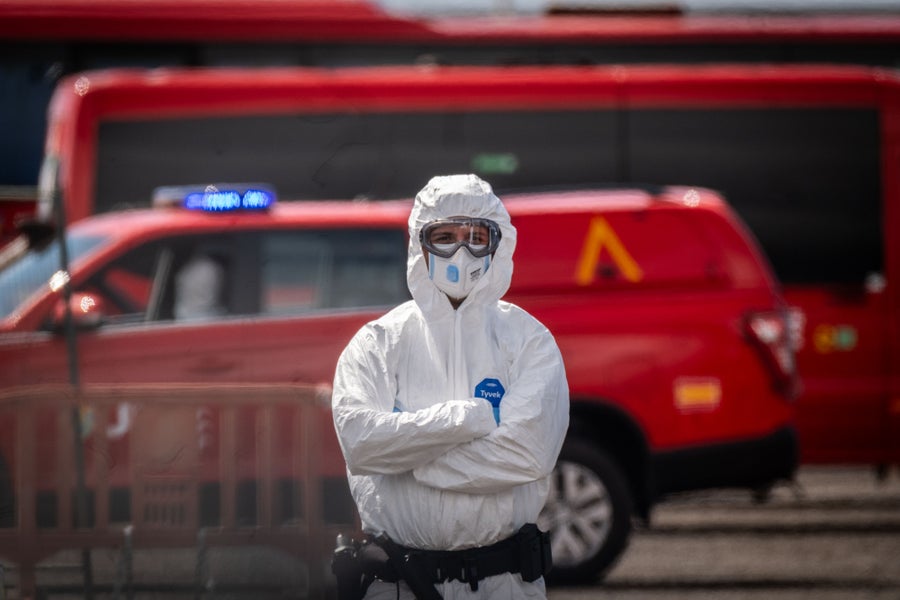
The first passengers from the MV Hondius depart for Tenerife Airport on May 10, 2026. Anadolu/Getty Images
Keeping your vision in good shape is just as important as taking care of your body. There are many things you can do to protect your eyes as you age that don’t require too much effort, but can make a big difference. For example, you can wear sunglasses when you step outside to keep your eyes safe from UV rays. Making these small changes can prevent certain eye conditions that often accompany aging. Below are some of the habits you can add to your daily routine to keep your eyes healthy.
1. Wear sunglasses outside
Exposing your eyes to ultraviolet rays may cause damage over time. According to the American Academy of Ophthalmology, wearing sunglasses can block harmful UV light, lowering your risk of eye diseases like cataracts, sunburn, eye cancer, and growths around the eye. Polarized glasses with smoke or gray lenses may offer the best protection against the sun’s rays and reduce glare.
2. Use the 20-20-20 screen break rule
Prolonged screen time can cause dry eyes, pain in the neck and shoulders, blurred vision, headaches and digital eye strain, or computer vision syndrome. The American Optometric Association recommends using the 20-20-20 rule to prevent computer vision syndrome. Every 20 minutes, look at something at least 20 feet away for 20 seconds.
3. Take a break from books, too
Screen time isn’t the only way to strain your eyes. You probably hold a book up close for long periods when you read it. Both activities can lead to nearsightedness, or myopia, which means faraway objects are blurry, while up-close objects are clear. Just like you should use the 20-20-20 rule to take screen breaks, you should also use this rule for book breaks. If you find yourself engrossed in what you’re reading or doing on the computer, set an alarm so you don’t miss your breaks.
4. Get your body moving with regular exercise
Regular exercise can provide eye health benefits, such as promoting healthy blood vessels and lowering your risk of developing glaucoma and diabetic retinopathy, the American Academy of Ophthalmology reports. The CDC recommends at least 150 minutes of moderate aerobic activity every week, plus two days of strength training for your muscles. You can also practice eye exercises to reduce tension and eye strain while sitting at your desk.
5. Enjoy the outdoors
Children and adults need to get outside often, even if they get their recommended exercise indoors. Research shows that children who spend time outdoors have a lower risk of developing nearsightedness in adolescence and as adults. Playing with your kids at the local playground, walking through the woods, or even playing in the backyard can help the whole family stay healthy and active. Be sure to use your sunglasses.
.
Boosting your eye health involves more than simply protecting them from the sun. Anastassiya Bezhekeneva/Getty Images
The Supreme Court on Friday rejected an emergency request by Democratic officials in Virginia to use a newly approved congressional district map in the midterms that would give their party an edge.
Instead, the justices declined to overturn a recent decision by the Virginia Supreme Court striking down the map, a ruling that dealt a major blow to Democrats in the nationwide redistricting fight.
The one-sentence emergency order by the justices did not give a vote count or provide reasoning for the decision, which is typical in such rulings. No dissents were noted.
The Supreme Court’s ruling blocking the map wipes out four newly drawn Democratic-leaning House districts in Virginia, and was the latest in a string of election-related decisions that the justices have weighed in on in recent months.
The Supreme Court does not ordinarily review rulings by state supreme courts interpreting state constitutions.
The fight over the Virginia map stems from a redistricting push that began last summer when President Trump pressured Republican-led states to redraw their district maps ahead of the midterms in hopes of maintaining the party’s razor-thin majority in the House.
First, Texas officials redrew their lines to give Republicans an advantage. Then, California responded by crafting a new map to help Democrats. Similar efforts have followed in other states throughout the country.
In the fall, Virginia lawmakers voted to amend their state constitution to clear the way for Democrats to redraw the map, a process that required two votes of the state’s General Assembly, with an election in between.
The timing of that fall vote is crucial for understanding what followed. Lawmakers authorized the amendment just days before the fall’s legislative election, while early voting was already underway. More than a million voters had already cast their ballots.
After another vote of the assembly, Virginians approved the map in a statewide referendum in April. The move was widely seen as a victory for the party that put it on equal footing with Republican redistricting efforts nationwide, or even might give Democrats a narrow advantage.
But Republicans swiftly challenged the new map, arguing that Democrats had violated the procedural guidelines required to pass the redistricting amendment by beginning the process once an election was underway.
Democrats countered that they had voted in time, since they acted before Election Day. They also argued that the state Supreme Court should not undercut the will of the voters who took part in the spring referendum.
On May 8, the Virginia Supreme Court sided with the Republicans, deciding 4 to 3 that the Democratic lawmakers had violated the state’s constitution by taking up the matter after early voting was underway.
Three days later, Jay Jones, Virginia’s Democratic attorney general, filed an emergency petition asking the Supreme Court to temporarily block the Virginia Supreme Court’s ruling and clear the way for the new map to be used in the midterm elections.
Democratic leaders cited two arguments for why the justices should intervene.
.
The Supreme Court’s ruling blocking the map wipes out four newly drawn Democratic-leaning House districts in Virginia. Credit…Eric Lee for The New York Times
A century before social-media bans and advice to disable device notifications, the inventor and science-fiction writer Hugo Gernsback proposed a more extreme way to avoid distraction: an isolating wooden helmet. Outside influences, he said, were “the greatest difficulty that the human mind has to contend with.” Gernsback’s isolator device — part diving suit, part monastic cell — did help him to work, he said, but it came with a risk of suffocation. He later installed an air supply.
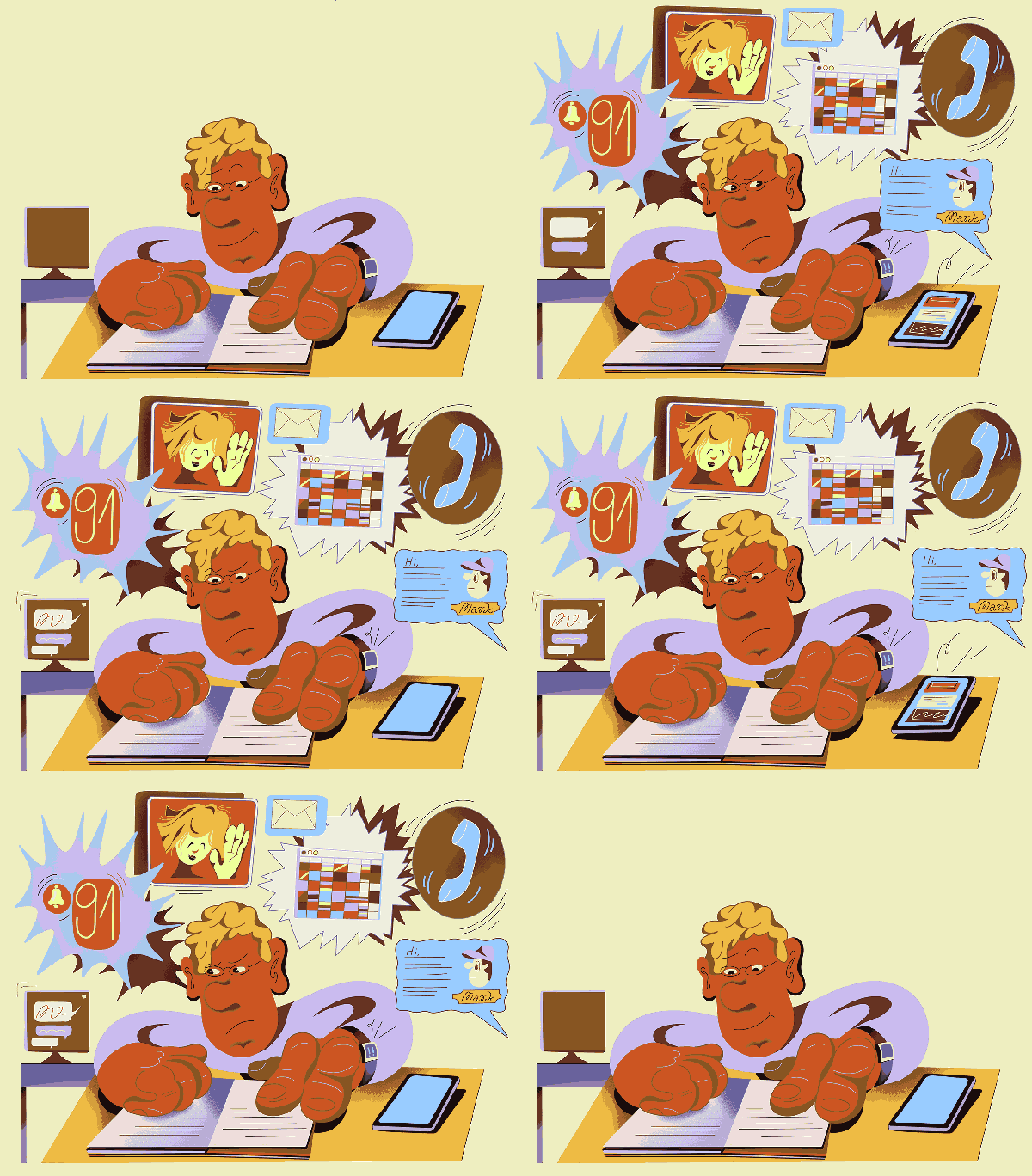
Concerns that sustained thought is under assault have become even more acute in the digital era. Smartphones buzz, Internet tabs multiply, and television episodes carry regular reminders to help people keep track of the plot. Surveys suggest that we feel less able to concentrate, teachers report distracted students, and headlines declare that our attention spans are shrinking.
Research across psychology and neuroscience, however, has built up a more nuanced picture of what is happening to our attention spans. The results suggest that people do flit from one task to another more frequently than they did in previous decades, and that this switching is often detrimental to performance. But there is little evidence that the brain’s fundamental ability to concentrate has been impaired. This suggests that if we can shut down the distractions of our environment, it is possible to recover focus.
Inventor Hugo Gernsback wearing his ‘isolator’ wooden helmet. Bettmann/Getty Images
.
“I think there’s a huge disconnect between what we feel like is happening and what is actually happening,” says Monica Rosenberg, a psychologist at the University of Chicago in Illinois.
The attention-span confusion
“There is a whole flurry of people reporting that they feel like they can’t pay attention,” says Nilli Lavie, a cognitive neuroscientist at University College London. “They say they are constantly distracted, their attention jumps from one thing to another, and they can’t concentrate.”
In a 2021 survey of more than 2,000 UK adults, almost half said they felt their attention span was shorter than it used to be. And two-thirds thought that the attention span of young people has declined. Teachers and schools around the world have responded to this perception with modular lessons that break topics into digestible pieces. Some students now study literary extracts rather than full novels. When the novelist Elif Shafak questioned why TED talks were becoming shorter, she said last year she was told that it was because “the world’s average attention span has shrunk.”
The idea of an average attention span carries intuitive appeal. But the way it’s discussed can tangle distinct concepts. Researchers distinguish between people’s capacity to pay attention, that is, their underlying ability to concentrate on a particular task, and their real-world behaviour, or what people actually focus on from moment to moment.
What’s more, the capacity to pay attention is the result of several processes in the brain. These include sustained attention, the ability to stay engaged with a task over time; selective attention, the ability to prioritize some information and ignore the rest; and executive control, the ability to steer attention in line with a goal rather than whatever happens to be more tempting.
Attention in the laboratory
Capacity is measured under controlled laboratory conditions that test performance on a task — often a tedious one — over time. To test sustained attention, volunteers might monitor a screen showing streams of letters and shapes and identify specific changes. The ‘d2’ task, for instance, displays rows of letters, such as d and p, sometimes with dashes drawn above or below them, and asks people to mark the letter d only if it has two lines underneath.
Many lab studies have shown how performance on such tasks declines in about ten minutes, although the pattern of decline is not smooth: even apparently strong attention naturally fluctuates between bursts of good performance, lapses, and recovery.
Further tests demonstrate how providing a distracting environment, such as playing sounds of babies crying and dogs barking, worsens people’s performance on cognitive tasks. This provides a basis for understanding distractions in the real world. Analyses have demonstrated that, for instance, traffic accidents are more likely to occur if drivers are talking on their phones.
The lab studies haven’t shown evidence that — when free of distractions — people’s underlying capacity to pay attention has changed. But there are differences in how people perform. Those who say they frequently juggle several streams of media at once tend to perform worse on tests of selective attention, for example, showing greater difficulty filtering out irrelevant information. They also show differences in tests related to working memory and executive control.
You’ve worked hard and spent decades building something significant, and, naturally, you want it to have a lasting impact for your family.
Earning, saving, and investing have been your focus over the years, and you’ve probably also taken most or all of the typical estate planning steps.
Last year at Catalyst Advisory, we surveyed 1,000 American adults and found that 90% hope to have something to leave behind for future generations. It’s clear that legacy matters to most of us.
Unfortunately, 70% of wealthy families lose that wealth by the second generation, and 90% of it by the third. Those who successfully maintain family wealth are in the minority.
The myth: ‘A good estate plan is enough.’
.
As a wealth transfer adviser, my work is all about helping families protect and preserve their wealth. And before I started my firm, I spent seven years in a family office role, working with ultra-wealthy families.
If you have a will, life insurance, beneficiary designations, and an asset inventory, and followed other typical estate planning advice, you might feel like you’re all set. But families who successfully preserve their wealth do a few specific things most people never consider.
Three things families that preserve their wealth do differently
.
While these lessons were learned by observing ultra-wealthy families, you don’t need a massive fortune to apply these principles. Families with much more modest wealth will also benefit by taking these proactive steps.
1. They write a family constitution
A family constitution is a living document that defines the family’s shared values, the purpose of the wealth, and guidelines for how future generations should steward that wealth. It is not a legal document and doesn’t replace a will or trust.
There’s nothing legally binding about a family constitution, and yet it’s incredibly effective for alignment. Without a shared understanding of why the wealth exists, heirs often default to spending it or using it in ways the previous generation wouldn’t have wanted.
Family constitutions usually include a family mission statement, clear expectations about work ethic, guidelines for decision-making and an overview of succession principles.
Since it’s an unofficial document, the family constitution can include whatever is important to you, such as philanthropy and guiding principles for giving.
Creating the family constitution is the first step, but it’s not a document that you create once and file away for your heirs to read after you’re gone. For it to be effective, the family constitution should be a living document that’s reviewed, discussed, and updated if necessary.
Get your kids or heirs involved as early as possible to increase buy-in. Many families have occasional meetings to discuss their values and go over the details covered in the family constitution. The more the next generation is involved in the process, the more effective it will be
2. They play defense before offense
When it comes to retirement planning and building a portfolio, investing and growth are usually the focus. High returns are the goal.
But families who successfully preserve their wealth typically spend more time and energy on tax strategy and protecting their wealth than selecting the right investments. It’s a completely different mindset.
In estate planning, what you pass on is far more important than what you accumulate. Taxes at death, capital gains on inherited assets, and estate settlement costs can quickly gut a family’s wealth before the heirs ever see it.
Here are a few strategies that benefit many families.
Irrevocable trusts. When structured properly, irrevocable trusts remove assets from your taxable estate, meaning your heirs will receive more. The trade-off is that you give up some control.
They’re not right for everyone, but irrevocable trusts can be effective if you hold illiquid assets or if your portfolio will grow quickly (so the future growth occurs outside of the estate).
Life insurance as a wealth transfer tool. Life insurance can offer much more than just a death benefit. A permanent life policy held in an irrevocable life insurance trust (ILIT) can give your heirs a tax-free lump sum outside of your estate. It provides excellent liquidity so your heirs can pay taxes without selling assets (very important if you own a business or a real estate portfolio).
Harvest tax advantages while you’re alive. Annual gifting within exclusion limits, Roth conversions during lower-income years and charitable remainder trusts can significantly reduce your taxable estate over time.
These efforts typically compound, so the more attention you give them now, the more money your heirs will have later.
3. They consolidate rather than divide
Estate planning typically involves splitting everything evenly among the heirs, so they can do with their inheritance as they please. While that seems fair, it actually may not be in their best interest.
Dividing assets, especially illiquid ones like real estate and businesses, often forces a sale. Fire sales usually result in family conflict and erosion of the estate.
Families who successfully preserve generational wealth often use structures designed to keep the capital in one place. This may involve a family LLC, a trust, or shared governance of family assets. Heirs can benefit equally from a pool of assets without dividing and splitting everything apart, which often results in lost value.
The legacy isn’t the money
.
Families who preserve generational wealth aren’t successful because they have more to begin with. They maintain their wealth because of their intentional approach. You don’t need tens or hundreds of millions of dollars to benefit from the same mindset and actions.
Family constitutions, a defensive-oriented mindset, and consolidated structures aren’t just for the ultra-wealthy. You may have never considered these strategies, but they could make a difference that lasts for generations.
President Trump and China’s leader, Xi Jinping, emphasized stability on Friday as they concluded a high-stakes summit in Beijing, albeit without announcing any clear resolutions on trade, Taiwan, the war in Iran or other major points of contention.
Sitting beside Mr. Xi during a meeting at Zhongnanhai, the walled headquarters for China’s ruling Communist Party, Mr. Trump said that the Chinese leader had “become really a friend” and that they felt similarly about the war.
When asked whether China had agreed to buy Boeing jets, a Chinese Ministry of Foreign Affairs spokesman said at the ministry’s daily briefing on Friday only that China-U.S. economic ties were mutually beneficial.
On agriculture, however, he said that China is ready to work on important economic understandings reached by Xi and Trump.
Trump, greeted by flag-waving students at the airport, wasted no time as he climbed the stairs of Air Force One, turned for a quick wave, and hopped aboard. Staff scrambled aboard, doors closed, and at 2:41 pm Beijing time, we rolled down the runway. Next stop: Alaska, for refueling.
When Jensen Huang, Nvidia’s chief executive, joined the group of American business leaders traveling with President Trump to Beijing at the last minute this week, many took it as a sign that progress was in store for the company’s long-stalled sales in China.
But as the summit between Mr. Trump and Xi Jinping, China’s top leader, wrapped up on Friday, the fate of Nvidia’s artificial intelligence chips in China was no clearer than it had been before.
Xi again linked Trump’s Make America Great Again movement to his signature domestic vision, which he calls the “great rejuvenation of the Chinese nation,” during talks between the two leaders at Zhongnanhai. “Through strengthened cooperation, both China and the United States can promote their respective development and revitalization,” Xi said.
President Trump said on Thursday that China had agreed to order 200 Boeing jets, potentially lifting the fortunes of the American jet manufacturer in one of the world’s largest aviation markets.
In an interview with Fox News, Mr. Trump hailed what he termed as successes from the first day of meetings with Xi Jinping, China’s top leader. He said Mr. Xi told him that an order would be placed for the American planes.
On this day in 1944 a young George Walton Lucas Jr. was born in Modesto, California. Like so many of us, he grew up loving comic books and science fiction, having a special affection for the Flash Gordon serials. And while he aspired to be a racecar driver, a near fatal accident changed his mind. […]
In the world, human beings are facing various problems. People who are full of greed, anger, and ignorance are seen to be fighting with each other in words and deeds. As the fighting continues, various problems such as civil wars, wars of aggression, and wars of aggression are occurring. As world peace is being destroyed, humans are facing unbearable problems. Innocent children and women are not getting the rights they deserve and deserve. I can't think of one thing every time. What is it? The United Nations. If we look at the responsibilities and duties of the United Nations, I think it is not suitable for solving the problems that are happening in the world today. In fact, the United Nations and the World Security Council, such an organization must rule the world, must be able to give orders, and must have various ways to obey orders. There must be no organization that can influence more than that organization. There should be experts from each country. They can even dominate the superpowers like the US, China, and Britain. Only then will global peace be achieved quickly. Now, if a country with power develops more militarily, economically, or socially than its own country, then powerful countries will jealously seek out enemies and wage war. Or they will attack with fighter jets. In this, innocent people are losing their lives. No one understands the value of a life. You should think about how to achieve global peace by controlling these. If the US continues to be the permanent president of the UN, world peace will never be achieved. If you think carefully, no one sees that they are working for the common good, but for their own benefit, for the benefit of their own country. The permanent president of the UN and the Security Council has rejected this, As a young Rohingya, I have come to realize that only by electing the president and secretary from among the countries in the world through a secret ballot system and governing the world fairly can we achieve global peace. The United Nations and the Security Council are organizations in which any country must govern, give orders, and make them obey their orders. For example, only when a defendant is tried in court can we hold the leaders of the countries in check and control them, can we achieve global peace smoothly. Otherwise, it will not be easy for powerful countries to use various excuses to end this war every year, every year, for the benefit of themselves and their countries. No country's leaders pay any attention to the words of the United Nations and the Security Council. If we look at it in practice, look at the Rohingya issue. Myanmar is a small country. Even that country has been under siege for 8 years. What action can be taken? Why is the UN and the Security Council Powerless? Without such Power, how can the organization bring about global peace? Everyone should think about it. Whether there is a veto or a strong one, all countries in the world can only achieve global peace if they are subject to the UN and the Security Council. Seek peace in the quiet embrace of nature. Peace is an indispensable need of the human race. It is not as if one person can kill another person, and it is as if one country can attack another country, but instead of trying to build peace, we must try to destroy the peace now, and the world is getting hotter and is on the verge of collapse. I especially appeal to all the world experts to urgently try to bring about peace in all parts of the world. Mr, Noor Muhamed Arkhan Rohingya Youth Myanmar
Film and Writing Festival for Comedy. Showcasing best of comedy short films at the FEEDBACK Film Festival. Plus, showcasing best of comedy novels, short stories, poems, screenplays (TV, short, feature) at the festival performed by professional actors.





 The Supreme Court’s ruling blocking the map wipes out four newly drawn Democratic-leaning House districts in Virginia. Credit…Eric Lee for The New York Times
 Karol Banach
 (Image credit: Getty Images)
 Xi and Trump on Friday