
Click the link below the picture
.
Since the first cases of hantavirus on the MV Hondius cruise ship were reported to the World Health Organization (WHO) on May 2, misinformation has rapidly flooded the Internet.
Much of it is familiar, echoing the conspiracies of the COVID pandemic, such as false claims about the drug ivermectin being known to effectively treat the infection and vaccines causing the outbreak. Hantavirus-related misinformation is “operating not like isolated rumors but more like a standing online ecosystem,” says Katrine Wallace, an epidemiologist at the University of Illinois Chicago. This kind of thinking is “ready to plug and play and rapidly attach itself to any kind of emerging health threat within hours,” she says.
But not all faulty information online is being spread in bad faith. Though public health officials have said the hantavirus outbreak poses a low risk to the public, fear is its own kind of contagion. “We’re still recovering from the collective trauma of going through COVID-19. People are still carrying that residual fear, exhaustion, and distrust,” says Monica Wang, a public health researcher at Boston University, who specializes in health misinformation.
In an environment where misinformation and fear are amplified by social media algorithms, it is hard to know what to listen to and what to tune out. The key strategy for staying informed is to focus on what we know and not fill in uncertainties with worst-case scenarios. The goal is “not to dismiss concern but to calibrate concern appropriately based on evidence,” Wang says.
Recalibrating Risk
The Andes type of hantavirus at the center of this outbreak isn’t new to scientists, but outbreaks like this one are scarce. The novelty of a rare disease outbreak can result in disproportionate media attention, Wang says. And understandably, “people are responding to this uncertainty and this unfamiliarity with the familiarity of what happens when we do have a pandemic,” she says.
Many of the lessons we learned from the COVID pandemic can, perhaps surprisingly, lead us astray if we try to apply them to the current hantavirus outbreak. The two situations are very different. First, this strain of hantavirus has been previously studied by epidemiologists; SARS-CoV-2, the virus that causes COVID, was entirely new to science. Second, Andes hantavirus is harder to spread from person to person and usually requires close contact to do so, although airborne spread can’t be ruled out. Third, the hantavirus outbreak is considered contained, unlike the early spread of COVID; the people most at risk of hantavirus are quarantining and being monitored. Fourth, epidemiologists suspect that hantavirus is most contagious when an infected person is showing symptoms, whereas SARS-CoV-2 can readily be transmitted by seemingly healthy people.
“It’s very hard [for people] to grasp the science of a new disease,” Wallace says. This helps to explain why COVID-era conspiracies and distrust in medical authorities have made a forceful comeback despite the differences between SARS-CoV-2 and hantavirus. When something about the current outbreak doesn’t seem to make sense, it’s easy to fall back on preexisting narratives to explain the discrepancy, such as the belief that authorities are withholding key information or that ivermectin is a cure-all. (There is no evidence that ivermectin, an antiparasitic medication, can treat hantavirus.) These false theories become especially powerful when they are amplified by people with large platforms, such as former congressional representative of Georgia, Marjorie Taylor Greene, and popular health influencers.
Threat Bias
The trauma of COVID can also highjack our reasoning by priming us to pay special attention to unfamiliar viral outbreaks and treat them as potentially devastating threats. “Humans aren’t wired for happiness. They’re wired for survival,” Wang says. If there is a potential threat in our environment, we will try to find out as much information as we can. “We pay attention when something triggers fear, surprise, or disgust,” she says, “because we’re constantly seeking [to know] ‘Is my physical safety, or my social or emotional safety, under threat?’”
Psychologists call this phenomenon negativity bias or, more specifically, threat bias. And it means that social media posts that stoke fear and uncertainty about a virus will almost always receive more attention than those that are more measured or even reassuring. Although most social media apps try to remove particularly harmful misinformation, algorithms use attention to determine what content to spread. “These social media platforms, they reward engagement, not facts,” Wallace says: if you’re seeing a video on your feed, it is likely because it is engaging, not necessarily because it’s accurate.
Red Flags
According to a Pew Research Center survey released last week, 40 percent of adults in the U.S. get health and wellness information from social media and podcasts. Some of this is inevitable: if you spend time on algorithmic social media feeds, posts about health will eventually find you. That’s especially true now that the hantavirus outbreak is dominating the news cycle.
So how can you tell who to listen to? Wallace advises being suspicious of posts that project absolute certainty or confidence. “People who speak in certainties” likely won’t be trustworthy sources, she says; responsible doctors and scientists will be clear about what we don’t know.
“People that spread misinformation can do it for many different reasons,” Wallace says. Sometimes they do so because they stand to make money by selling a product via a link in their profile’s bio or by monetizing your attention; other times, they’re just seeking clout. Right now, she advises being suspicious of people telling you to panic.
Wallace is particularly troubled by how quickly hantavirus was incorporated into the COVID-era health conspiracies and the distrust in public health authorities that still thrive in certain online ecosystems. For this disease outbreak and for future ones, “because of the way social media works,” she says, “[misinformation will] spread faster than the actual evidence-based information can reach people.”
“I worry that this represents sort of a pattern of conspiratorial framing that people are now just applying to whatever health threat comes up,” Wallace says.
.
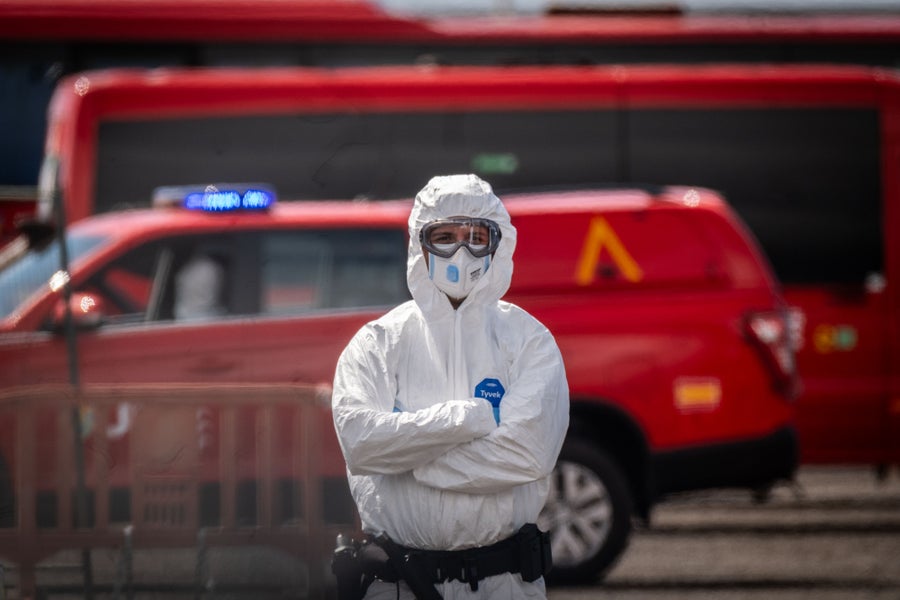
The first passengers from the MV Hondius depart for Tenerife Airport on May 10, 2026. Anadolu/Getty Images
.
.
Click the link below for the complete article:
.
__________________________________________


Leave a comment