Apex is a survival action thriller directed by Baltasar Kormákur and written by Jeremy Robbins. It tells the story of a rock climber and kayaker who finds herself being hunted in the wilds of Australia. Apex was released on Netflix on April 24, 2026. The trailer looked entertaining and promised an exciting journey, so I […]
Your character shows exactly who you are when the heavy friction hits. Anyone can talk a big game when life is easy and the money is flowing. But the raw truth is revealed the moment you face serious adversity. Your true identity is not found in cheap words or flashy aesthetics; it is entirely forged […]
When “marine snow” made of dead plankton’s shells, fish poop, dust particles, and other debris descends to the ocean floor, it carries atmospheric carbon the plankton used to make their calcite shells. It’s one of the ways the ocean stores carbon, helping to keep greenhouse gases from turning the planet into an oversize toaster oven. Yet scientists realized that something has been dissolving those calcite shells and releasing carbon dioxide, reducing the ocean’s carbon-trapping capacity. A study published in the Proceedings of the National Academy of Sciences USA identified the culprit: dense microbe “cities” living inside the marine snow.
The individual cities are microscopic, but collectively they have powerful effects on Earth’s climate because the ocean is home to an inconceivable number of microbes. A shot glass full of seawater can contain millions of bacterial cells. “If you were to take every bacterial cell in the ocean and string them end to end like a chain of pearls, it would stretch 50 times around the Milky Way,” says study co-author Andrew Babbin, an oceanographer at the Massachusetts Institute of Technology.
To study the microbial cities, “we brought the ocean into the laboratory,” says Benedict Borer, lead study author and a biogeochemist at Rutgers University. The scientists introduced microbes to a microfluidic chip designed to mimic marine-snow particles and added fluorescent molecules whose glow changed with oxygen levels and acidity. (The system was so sensitive that at first, people breathing in the lab were affecting measurements.)
The researchers found that the cities’ chemical microenvironments increase calcite dissolution. Many oxygen-breathing microbes feed on carbon, then release carbon dioxide, which turns into carbonic acid in seawater. The sheer number of microbes breathing in such tight quarters creates concentrated pockets of carbonic acid in and around the marine-snow particles, which dissolve the snow’s calcite.
As marine-snow particles dissolve and get lighter, they also sink more slowly, the researchers say, giving carbon extra time to escape before it can reach long-term storage in the deep ocean and potentially increasing its release back into the environment. More research is needed to calculate microbial cities’ full influence on ocean acidity because dissolved calcite can counteract the carbonic acid to an extent.
“Large-scale biogeochemical processes often depend on very small-scale interactions,” says Hongjie Wang, an oceanographer at the University of Rhode Island, who was not involved in the study. Babbin agrees: “Ultimately everything that’s happening at these microscales—that’s really what’s terraforming our planet.”
Once the last stars have walked the red (or green) carpet, the livestream has ended, and most of the cameras have stopped snapping at the Met Gala 2026, the real fun begins. This year, guests explored the museum’s new Condé M. Nast Galleries, where the spring exhibition, “Costume Art,” was held; sat for a garden-inspired dinner at the Temple of Dendur; and took in musical performances by Sabrina Carpenter and Stevie Knicks.
And aside from the rare, forbidden bathroom selfie, photos from inside the event are hard to come by. Luckily, Vogue had photographer Francesc Planes on the scene, capturing all the candid moments you won’t see anywhere else. The Paris-based photographer, who has shot many a fashion week and whose work spans documentary and fashion photography, turned his lens toward attendees as they enjoyed the evening.
Below, see Planes’s point of view on the night through film photos.
Photographed by Francesc Planes 1/28
Beyoncé
.
Click the link below the following photo for the complete collection of Planes Photos
In 1950, Robert Doisneau photographed a kiss you’ve surely seen. The man and woman seem to have been stopped by ardor amid the midday rush, in front of the Hôtel de Ville, Paris. Though staged, it became, nearly immediately, one of the most iconic images of the 20th century.
Surely unknown to Mr. Doisneau, nine years earlier, there was another kiss captured on film in Paris that was much more spontaneous, just as passionate — far more desperate — between two Jews about to be separated by Vichy police. This kiss, found on a contact sheet of Nazi propaganda images in a Reims flea market six years ago, is now at the heart of a new exhibition of 98 Nazi propaganda photos at the Shoah Memorial in Paris, curated by Lior Lalieu and me. This kiss, perhaps destined to become just as iconic, reveals a very different midcentury Parisian moment.
The photos provide a detailed visual account — almost minute by minute — of the very first, and little-known, roundup of Jews in France on May 14, 1941. That day, some 3,700 foreign-born Jews obeyed a summons by Paris police with a notice, printed on light green paper (it became known as the “green ticket roundup”), for what they believed would merely be a check of their immigration and identity papers. The operation was organized by a man named Theodor Dannecker, the envoy of Adolf Eichmann in Paris. A photographer with the Nazi propaganda unit in the city was on hand to observe.
What gives these newly discovered photographs their singular power is not only what they show but the fact that they survived at all. They remind us that the past is never entirely buried, and that images can unexpectedly return to challenge the void of memory and representation. They function today not as propaganda, the purpose for which they were originally produced, but as fragments of truth — painful, incomplete, and indispensable — that allow us to better understand the way the roundup was organized and conducted and also to get a glimpse of the victims’ shock, fear, and pain.
There are only a few hundred photographs of roundups or murders of Jews from the 1930s and 1940s, a disparity of mass proportion considering the extent of the genocide. Some were taken by victims as acts of resistance, some by bystanders, and others, like this collection, were by an authorized photographer for the Nazi propaganda machine. From time to time, grandchildren of Nazi perpetrators find these images in attics and boxes when the older generation passes away.
This particular group of photographs was meant to document a Nazi success story. They begin with the trap: Jewish men and their spouses were summoned to over 60 locations in Paris: police offices, various administrations, and a sports facility in the 11th Arrondissement. Women, we know from eyewitness testimony, were asked to return home to gather items; a list was provided. When they returned, as the images we now have on hand show, they were barred from reuniting with their male relatives. The doors were closed and guarded by French policemen. We can see the women’s pain, their bewilderment, many with bundles in their arms. We see couples as they part from each other.
Credit…via Mémorial de la Shoah.
Other photos document the departure of guarded buses, commandeered from the Paris bus company, filled with the captured men. We see the arrival of the internees at Paris’s Austerlitz train station. The same photographer captures the imprisonment of these Jews a few days later at the French internment camps, Pithiviers and Beaune-la-Rolande. Some 700 of those Jewish men were later liberated, or escaped, after the green ticket roundup. About 3,000 of those taken that day were later deported to Auschwitz-Birkenau; of that group, just a scant few returned.
Taken months before the decision to annihilate the Jews of Europe was made, these 98 photos do not show extermination camps, gas chambers, shootings, or even starvation. What they do show is the careful, methodical beginnings of racially motivated separation that later enabled the mass murder. The noted historian Raul Hilberg called this phase of the Nazi genocide “concentration.” There is no sign of outright violence; indeed, the despair of the ensnared Jews and their bewildered spouses is shown with a strange sensitivity by the German photographer.
At first, the photos were kept on file by the German Propaganda Unit in Paris. After the war, six of the 98 photos were found in the archives of the N.I.O.D. Institute for War, Holocaust and Genocide Studies in Amsterdam, an indication that they were shared among the various propaganda units across Western Europe. A few others circulated among archives. But the vast majority were languishing, unseen, on contact sheets, until 2020, when two amateur collectors came upon them at a flea market. They brought the sheets to Ms. Lalieu, the director of photo collections at the Shoah Memorial in Paris, who analyzed the images in an effort to identify as many people as possible. Ms. Lalieu also identified the photographer as Harry Croner, a man from Berlin, who had gone on to have a stellar career in postwar West Berlin, as a famous cinema and opera photographer. ((Half Jewish himself, he spent the end of the war in a labor camp.)
A start-up’s plan to run drug experiments and even develop pharmaceuticals in orbit is taking shape. If it works, it could mark a step toward developing new medicines and, ultimately, a burgeoning space-based manufacturing industry.
The start-up in question is Varda Space Industries. This week, Varda announced a partnership with United Therapeutics, a biotech company that is known for its treatments targeting rare respiratory diseases and for organ transplants.
For the past few years, the Los Angeles County–based Varda has been sending capsules into space to develop its technology for performing automated experiments that it says can only be done in microgravity. These include the manipulation of certain kinds of small molecules—the backbone of many different types of medicines, from antibiotics to corticosteroids. “Surprisingly, it’s very economical for things like small molecules, where you’re able to create novel crystal seeds in space, and then bring them back down to Earth,” says Michael Reilly, Varda’s chief strategy officer.
United Therapeutics will primarily test its small molecule drugs with Varda’s in-orbit technologies, Reilly says. But he believes that applications will expand beyond United Therapeutics’ drugs to a range of biotechnologies, such as monoclonal antibodies, which, he believes, could eventually transform from primarily intravenously administered treatments to subcutaneous shots.
Varda’s goal is to provide an in-orbit environment to develop crystals for drugs under conditions that can never be achieved on Earth. “In space, you can get bigger crystals, more perfect crystals, and they can be more uniform,” says Anne Wilson, a Butler University chemist, who has designed experiments for the International Space Station (ISS) and collaborated with Redwire Space, a space infrastructure company. Crystals with unique physical structures can also be spawned in orbit, she says. Because of such advantages, one could fashion crystals with particularly valuable properties—for example, to make a drug become more soluble and require fewer doses, thereby reducing costs, Wilson says.
The potential is there, but it is currently a risky business, says Gerard Capellades, a chemical engineer at Rowan University, who has also worked with Redwire. For one, there’s the challenge of scale, he says: researchers will have to try to use the crystals grown in space as seeds that they can multiply on the ground or will need to focus on growing single, high-value crystals for applications outside the pharmaceutical sector. It’s also exceedingly difficult to control the experimental environment in such a way that guarantees the precise crystal structure needed in a timely and cost-efficient manner. Capellades describes the approach as a game of chance: “For the same environment, sometimes it can take minutes to form a crystal, and sometimes it can take weeks or longer,” he says. But he thinks that costs will eventually drop and that it’s worth pursuing.
Varda’s orbital lab, nicknamed “Winnebago,” consists of a 300-kilogram (about 660-pound) satellite bus. After being deposited in orbit by a launch vehicle, Winnebago uses its own propulsion to maneuver into the right attitude. The satellite houses the capsule in which the experiments are done. Once the work is complete, the capsule reenters the atmosphere at some 18,000 miles per hour, parachuting down with a bump in the Australian outback. (An early prototype’s return to Earth, with planned landing zone in a desert in Utah, was delayed in 2024 because the company was initially denied a reentry license by the Federal Aviation Administration.)
In addition to drug experiments, Varda also brings various defense experiment payloads on its spaceflights for the Pentagon to help defray the cost, Reilly says. While launch costs per pound of cargo have dropped over the past decade, thanks especially to SpaceX’s reusable rockets, they’re still not cheap. So Varda and other space companies keep looking for new customers.
Still, the drug industry may be one of the most enthusiastic about making the space economy work for it. “First, it’s a giant market,” says Matthew Weinzierl, a Harvard Business School researcher, who studies the private space sector. “It’s also because the mass of some of the key ingredients in pharmaceuticals is relatively small.” For years, academic and commercial researchers have sent experiments to both the ISS and China’s space station, Tiangong. But according to Reilly, Varda and SpaceX are currently the only companies capable of launching experiments into orbit that don’t need to be operated by astronauts.
New opportunities could also emerge in the coming commercial space station era, planned for the 2030s, when new orbital outposts launch to replace the aging ISS. For example, the companies Space Tango and Voyager Technologies (formerly Nanoracks) have already begun providing plug-and-play research support services in space, and Voyager Technologies is working on a commercial station concept, called Starlab. That proposal and others have the pharma industry at their center, Weinzierl says. Meanwhile, Varda is planning for more partnerships and a faster launch cadence, eventually moving from a launch per quarter to every other month.
Weinzierl hopes that Varda’s partnership with United Therapeutics turns into a successful proof of concept that could then be replicated. Short of that result, it could set off a domino effect, he argues, with more pharma space company alliances on the horizon. “It would be fantastic if this partnership yielded a couple or even one blockbuster product or drug that really started opening up profitable business models for pharma in space at scale,” he says.
.
One of Varda’s capsules. John Krauss, Varda Space Industries
Hmmmm … A billion Dollars could feed billions of starving children!
Click the link below the picture
.
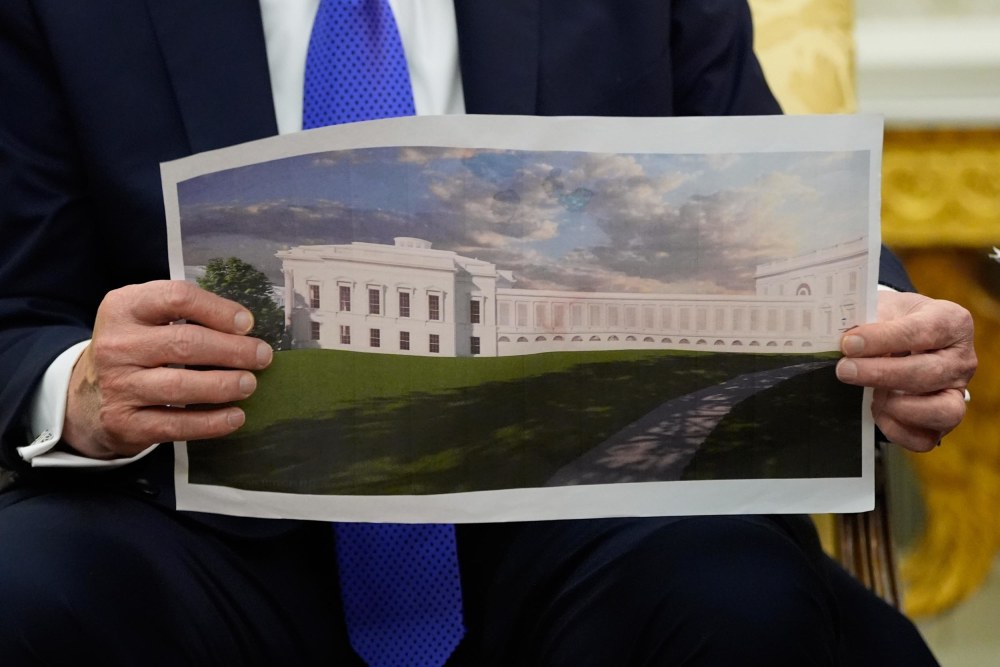
A GOP bill seeking $1 billion for the Secret Service to help finance President Donald Trump’s White House ballroom is in jeopardy as it faces pushback from a top Senate official.
The Senate parliamentarian, Elizabeth MacDonough, said Saturday that the budget bill, which aims to fund ICE and Border Patrol alongside $1 billion to help fund the ballroom, needs to be rewritten to account for jurisdictional issues.
“A project as complex and large in scale as Trump’s proposed ballroom necessarily involves the coordination of many government agencies which span the jurisdiction of many Senate committees,” MacDonough told Senate offices Saturday. “As drafted, the provision inappropriately funds activities outside the jurisdiction of the Judiciary Committee.”
The parliamentarian wrote that the bill would be subject to a 60-vote threshold to pass, meaning it can’t move forward with a simple majority, unlike similar bills advanced using budget reconciliation.
Budget reconciliation is a parliamentary tool used to get around the Senate’s 60-vote filibuster threshold, but it comes with restrictions on what provisions can be included.
The development is a blow to the Republican bill, but it is not the end of efforts to include ballroom funding. Senate Republicans had already been redrafting the provision’s language before Saturday’s ruling based on feedback from Senate officials, a GOP leadership aide told NBC News.
A spokesperson for Senate Judiciary Committee Republicans also told NBC News that “conversations and revisions are continuing, as they have been for days.”
It’s not clear if Republicans can rewrite the provision in a way that would fully resolve the parliamentarian’s issues. The budget resolution detailing what can be included in the bill only allows language to originate from the Senate Judiciary Committee and the Senate Homeland Security and Governmental Affairs Committee.
If Senate officials again find the ballroom project falls under the jurisdiction of a committee other than those two, Republicans may be forced to leave that funding out of the bill, as they likley won’t find the 60 votes needed to overrule the parliamentarian.
Senate Budget Committee Ranking Member Jeff Merkley, D-Ore., said in a statement Saturday that “the American people shouldn’t spend a single dime on Trump’s gold-plated ballroom boondoggle.”
“While we expect Republicans to change this bill to appease Trump, Democrats are prepared to challenge any change to this bill,” Merkley said. “We cannot let Republicans waste our national treasure on a mission of chaos and corruption while turning a blind eye to the needs of the American people.”
Ryan Wrasse, a spokesman for Senate Majority Leader John Thune, downplayed the setback for the GOP bill Saturday.
.
The parliamentarian wrote that the bill would be subject to a 60-vote threshold to pass, meaning it can’t move forward with a simple majority as similar bills advanced using budget reconciliation. Alex Brandon / AP
The lack of concrete agreements with Beijing shows the risks of President Trump’s personality-driven foreign policy, which rests on the belief that he can defend U.S. interests through charm and force of will.
There was a vague agreement that China would purchase Boeing jets and more American soybeans. There was discussion about Iran and opening the Strait of Hormuz, and a nod to other issues, like cracking down on chemicals used to make fentanyl.
But President Trump departed Beijing on Friday with almost nothing concrete to show for his two-day summit with President Xi Jinping of China. After months of buildup and a delay necessitated by Mr. Trump’s difficulty in extricating the United States from the war with Iran, the summit ended with no major public progress on the Middle East, trade, Taiwan, nuclear proliferation, artificial intelligence or any of the other myriad issues that are sources of friction between the world’s two superpowers.
Instead, Mr. Trump seemed intent on a different kind of diplomacy, forging a personal bond with a Chinese leader who appeared far more focused on advancing his own nation’s strategic agenda.
Mr. Trump toasted Mr. Xi as “my friend” at their banquet in Beijing on Thursday and said he had “become really a friend” when they sat down before the cameras on Friday.
A Chinese Foreign Ministry spokesman, asked at a briefing during the summit whether Mr. Xi considered Mr. Trump a friend, responded with boilerplate: “the two sides exchanged views on major issues.”
Mr. Trump has hailed the summit in Beijing as a major success, highlighting the personal bond he says he has built with China’s longtime leader. But the feeling is not necessarily mutual, as evidenced by Mr. Xi’s more measured tone and the lack of clarity about any major agreements.
Orville Schell, vice president of the Center on U.S.-China Relations at the Asia Society in New York, called the summit “quite insubstantial and aspirational.”
“We have Trump dreaming out loud,” he said.
The mismatch shows the risks in Mr. Trump’s personality-driven foreign policy, his bet that he can solve the world’s problems and defend American interests by his charm and force of will. In Mr. Xi, the U.S. president faced a counterpart this week well versed in Mr. Trump’s desire for praise and pomp, and with an apparent strategy for how to exploit it.
The result, analysts said, was a summit that illustrated the growing confidence of China on the world stage alongside a strategically muddled U.S. foreign policy under Mr. Trump.
The summit might yet come to be seen as the start of a shift toward a more stable relationship between the United States and China. But few of even the limited accomplishments that Mr. Trump spoke about were confirmed by China, while Mr. Xi set the tone with an assertive posture over Taiwan.
Experts say there is no question that personal chemistry between leaders is crucial, especially when authoritarian, centralized countries like China are involved.
.
President Trump and China’s leader, Xi Jinping, at the state banquet in Beijing on Thursday. Credit…Kenny Holston/The New York Times
In the world, human beings are facing various problems. People who are full of greed, anger, and ignorance are seen to be fighting with each other in words and deeds. As the fighting continues, various problems such as civil wars, wars of aggression, and wars of aggression are occurring. As world peace is being destroyed, humans are facing unbearable problems. Innocent children and women are not getting the rights they deserve and deserve. I can't think of one thing every time. What is it? The United Nations. If we look at the responsibilities and duties of the United Nations, I think it is not suitable for solving the problems that are happening in the world today. In fact, the United Nations and the World Security Council, such an organization must rule the world, must be able to give orders, and must have various ways to obey orders. There must be no organization that can influence more than that organization. There should be experts from each country. They can even dominate the superpowers like the US, China, and Britain. Only then will global peace be achieved quickly. Now, if a country with power develops more militarily, economically, or socially than its own country, then powerful countries will jealously seek out enemies and wage war. Or they will attack with fighter jets. In this, innocent people are losing their lives. No one understands the value of a life. You should think about how to achieve global peace by controlling these. If the US continues to be the permanent president of the UN, world peace will never be achieved. If you think carefully, no one sees that they are working for the common good, but for their own benefit, for the benefit of their own country. The permanent president of the UN and the Security Council has rejected this, As a young Rohingya, I have come to realize that only by electing the president and secretary from among the countries in the world through a secret ballot system and governing the world fairly can we achieve global peace. The United Nations and the Security Council are organizations in which any country must govern, give orders, and make them obey their orders. For example, only when a defendant is tried in court can we hold the leaders of the countries in check and control them, can we achieve global peace smoothly. Otherwise, it will not be easy for powerful countries to use various excuses to end this war every year, every year, for the benefit of themselves and their countries. No country's leaders pay any attention to the words of the United Nations and the Security Council. If we look at it in practice, look at the Rohingya issue. Myanmar is a small country. Even that country has been under siege for 8 years. What action can be taken? Why is the UN and the Security Council Powerless? Without such Power, how can the organization bring about global peace? Everyone should think about it. Whether there is a veto or a strong one, all countries in the world can only achieve global peace if they are subject to the UN and the Security Council. Seek peace in the quiet embrace of nature. Peace is an indispensable need of the human race. It is not as if one person can kill another person, and it is as if one country can attack another country, but instead of trying to build peace, we must try to destroy the peace now, and the world is getting hotter and is on the verge of collapse. I especially appeal to all the world experts to urgently try to bring about peace in all parts of the world. Mr, Noor Muhamed Arkhan Rohingya Youth Myanmar
Film and Writing Festival for Comedy. Showcasing best of comedy short films at the FEEDBACK Film Festival. Plus, showcasing best of comedy novels, short stories, poems, screenplays (TV, short, feature) at the festival performed by professional actors.



 Thomas Fuchs
 Photographed by Francesc Planes
 via Mémorial de la Shoah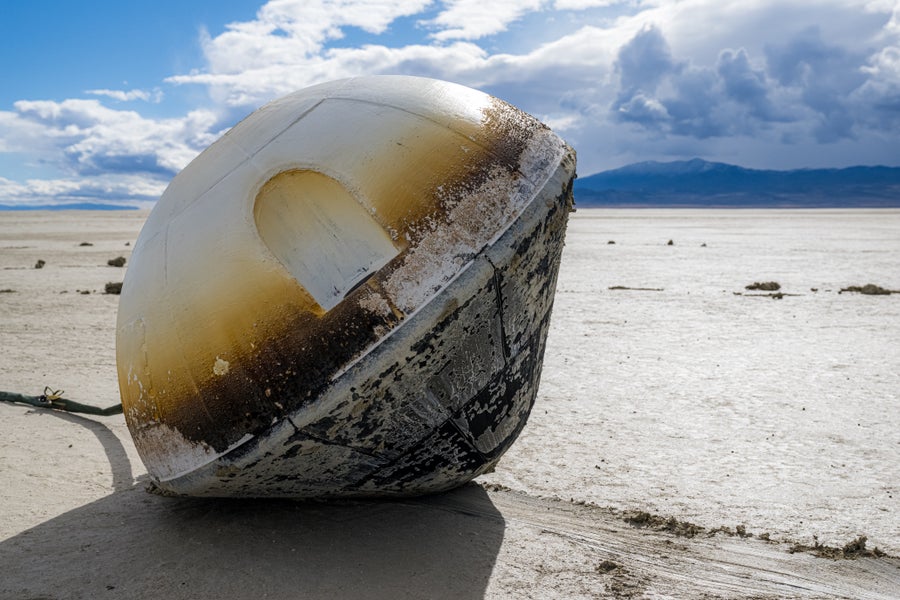

 The parliamentarian wrote that the bill would be subject to a 60-vote threshold to pass, meaning it can’t move forward with a simple majority as similar bills advanced using budget reconciliation. Alex Brandon / AP
 President Trump and China’s leader, Xi Jinping, at the state banquet in Beijing on Thursday. Credit…Kenny Holston/The New York Times


