Hmmmm … It is time to launch Space Jnk LLC. Watch Space Junk (2023)
Click the link below the bottom picture
.
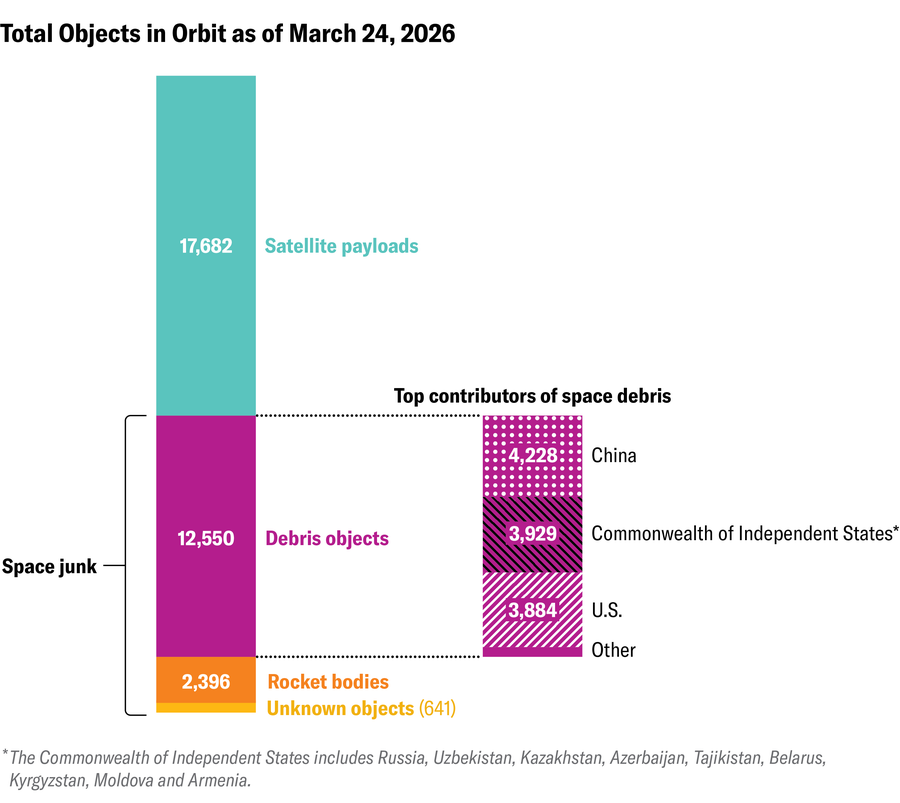
Almost half the stuff in orbit around Earth can be classified as space junk, and the problem is only going to get worse as launches and orbital infrastructure increase.
Using data from the U.S. Space Force’s Space-Track.org, engineering component supply company Accu determined there are currently 33,269 trackable objects in orbit. Of those, 17,682 are satellites. The rest are some form of junk, ranging from expended rocket bodies to debris to objects that could not be identified.
“This means that nearly 47 percent of tracked objects are space junk,” the company wrote in a new report. “However, with many satellites no longer operational, it means the true proportion of inactive or uncontrollable objects is even higher.”
Amanda Montañez; Source: The Space Debris Report, Accu
.
Space junk has been accumulating since the first satellite, Sputnik 1, was launched in 1957. Yet the problem has grown sharply over the past decade as the cost of launches has dropped and the cadence of space flights has increased. The amount of trackable objects in orbit rose by around 10,000 between 2020 and 2025 alone.
The scale of the issue may be grossly underestimated. Accu notes that there may be millions of objects that are too tiny to track, such as paint flecks and other debris that came loose from rockets and other spacecraft. That poses a major risk: Most objects in orbit are traveling at upward of 17,000 miles per hour—at that speed, even the tiniest mote could inflict significant damage on orbiting infrastructure. In 2024, astronauts onboard the International Space Station had to take shelter after a decommissioned Russian satellite broke into numerous fragments. That incident prompted the launch of a U.S. governmental program aimed at finding and monitoring low-Earth orbit’s tiniest pieces of garbage. And in 2025, several Chinese taikonauts became stranded on the Tiangong space station after a suspected piece of space junk cracked the window of their return capsule.
While there’s a chance an orbiting piece of junk could hurt or kill an astronaut, Accu’s analysis suggests that the greatest danger is to satellites, with seven tracked pieces of junk for every 10 satellites.
Despite being a problem that’s literally around the globe, the causes are not global. The report estimates that China is responsible for 65 percent of the debris in orbit, while the U.S. and the Commonwealth of Independent States—comprised of Russia and eight smaller countries—account for an estimated 40 percent and 23 percent, respectively.
Space agencies, such as NASA, the Japan Aerospace Exploration Agency, the U.K. Space Agency, and the European Space Agency, are working on ways to clean up lower-Earth orbit. Several private companies have also begun marketing their services as space garbage collectors. But until large amounts of junk are removed, Accu has called on spacecraft designers to take the threat more seriously.
“For the engineers shaping the spacecraft of tomorrow, they must keep space debris in mind from the start,” the report’s authors write. “Every component, from its precision, durability, and material, has to be chosen carefully to survive potential impacts. Space debris is a key challenge of the modern space age, but how it is tackled will drive innovation and define the future of space exploration.”
Earlier this spring, a mysterious explosion blew up a car carrying an alleged cartel operative in broad daylight on one of Mexico’s busiest highways just outside of its capital city.
Francisco Beltran was killed instantly along with his driver, their bodies found slumped over in their seats after the concentrated blast. Video and pictures of the attack on March 28 show a quick burst of flames with the car continuing to roll forward, drifting off the highway.
Known as “El Payin,” Beltran was accused of being a mid-level member of the Sinaloa Cartel, one of Mexico’s most notorious drug trafficking syndicates, Mexican security analysts and sources familiar with his activities said.
Mexican authorities have maintained extreme secrecy around the explosion, but multiple sources tell CNN that the attack was a targeted assassination, facilitated by CIA operations officers. An explosive device had been hidden inside the vehicle, the State of Mexico’s Attorney General told CNN.
The Beltran operation was part of an expanded, and previously unreported, CIA campaign inside Mexico — spearheaded by the agency’s elite and secretive Ground Branch — to dismantle the entrenched cartel networks, those sources, as well as two additional people familiar with the campaign, told CNN. President Donald Trump has designated several of those groups foreign terrorist organizations and deemed them to be at war with the United States.
Since last year, CIA operatives inside Mexico have directly participated in deadly attacks on several, mostly mid-level cartel members, the sources said. “The lethality of their operations has been seriously ramped up,” said one of the people briefed on the operations. “It’s a significant expansion of the kind of thing the CIA has been willing to do inside Mexico.”
The level of CIA involvement with operations has varied, according to the sources, from more passive intelligence sharing and providing general support to direct participation in assassination operations.
Prior to publication of this story, CNN presented the CIA with details of its reporting. The CIA declined to comment. After publication, CIA spokesperson Liz Lyons released a statement to CNN saying, “This is false and salacious reporting that serves as nothing more than a PR campaign for the cartels and puts American lives at risk,” without specifying what aspect of the reporting is false.
The attack on Beltran was brazen even by the standards of typical Mexican cartel violence, and Mexican analysts debated in the days afterward whether it could signal a worrying, sophisticated new dimension of cartel-on-cartel warfare.
“We have been living in anarchic war for many months in Sinaloa,” Mexican journalist Jose Cardenas said on his television show broadcast by Grupo Fórmula in the days after the attack. “But attacks like this, if confirmed, in an area near the country’s capital, well, I have never heard of anything similar.”
A former CIA paramilitary officer told CNN that knowing how the agency operates, ‘They definitely wanted this incident to create the question in everyone’s mind of, ‘Who did this?’”
The CIA’s involvement in recent operations targeting high-profile cartel figures, like Nemesio “El Mencho” Oseguera Cervantes, has been well-documented, though much of that activity has publicly been described as intelligence sharing.
Newspapers hang on display for sale in Mexico City on February 23, a day after the Mexican army killed Jalisco New Generation Cartel leader Nemesio Oseguera Cervantes, known as “El Mencho.”
Jon Orbach/AP
.
But the agency’s covert activity inside Mexico goes far beyond those few cases that attracted international attention and involves much more direct participation, sources told CNN.
The strategy, the sources said, is to dismantle entire cartel networks, which involves not only removing those at the very top but also identifying vulnerabilities throughout the organization and systematically targeting lower-tier players who serve as key cogs in the trafficking enterprise.
Those operations often attract little attention outside of Mexico, or in some cases, beyond even the specific region where they take place because the targets are not as well known. That has typically allowed the CIA’s involvement to remain a secret. The playbook is not much different than counterterrorism missions designed to destroy groups in the Middle East and elsewhere around the world, current and former US national security officials told CNN.
The operations may also be illegal under Mexican law — without the express permission of the federal government, foreign agents are barred from participating in law enforcement operations under the Mexican Constitution.
“It’s not at all clear that all of their missions are coordinated with the [Mexican] government,” said one of the sources.
CNN contacted the office of the Presidency of Mexico and the Secretariat of Foreign Affairs but did not receive comment before publication.
.
This still taken from video shows a car exploding on a highway in Tecámac, Mexico, killing Francisco “El Payin” Beltran, a mid-level member of the Sinaloa Cartel, and his driver. From X
President Trump and China’s leader, Xi Jinping, are expected to discuss trade, Taiwan, and the war in Iran at a summit in Beijing. The meeting could determine whether the U.S.-China détente will continue.
Here’s the latest.
President Trump and China’s leader, Xi Jinping, were meeting in Beijing on Thursday, beginning a high-stakes summit that will focus on trade, Iran, Taiwan and other points of contention.
The meeting, the first U.S. presidential visit to China in nearly a decade, could determine whether a détente that has prevailed between the superpowers will continue — and what concessions, if any, either side is willing to make.
Trump has left the Great Hall and arrived at the Temple of Heaven.
Beijing has approved export licenses for several hundred American slaughterhouses to ship beef to China, according to data on the website of China’s General Administration of Customs. China had allowed the licenses to expire in March 2025 after President Trump imposed his initial tariffs.
Xi warned Trump during their meeting that the issue of Taiwan, which Beijing claims as part of its territory, could bring the two countries into conflict, according to a readout from Xinhua, China’s official news agency. “Handled well, the two countries can maintain stability. If handled poorly, the two countries will collide or even clash, putting the entire U.S.-China relationship in an extremely dangerous situation,” he said.
Xi is seeking a delay or reduction in U.S. arms sales to the self-governed island. The Trump administration delayed announcing a $13 billion package of arms sales to Taiwan to avoid angering Xi before the summit. In February, Xi urged Trump in a phone call to handle arms sales to Taiwan with “extreme caution.”
Chinese state media on Thursday emphasized how world leaders have come to Beijing in recent months to meet with Xi and other senior officials. “When our guests come, the door is open,” said one reporter for state broadcaster CGTN. China experts noted that Trump’s visit this week, the first from an American president in nearly nine years, may already be a “win” for China as it seeks to bolster its image on the world stage.
A broader trade bargain between the U.S. and China may remain uncertain, but members of the American business delegation emerged upbeat after the first Trump-Xi meeting.
“Wonderful!” Elon Musk shouted to reporters as he left the Great Hall of the People. Asked what was accomplished, he said, “Many good things.” Tim Cook, Apple’s chief executive, flashed a peace sign. Jensen Huang, Nvidia’s chief executive, gave a thumbs up and said that Xi and Trump “were incredible.”
You must build yourself to be absolutely powerful, yet remain completely peaceful. There is zero honor in being harmless; that is just being incredibly weak. True masculine strength means forging a dangerous, unbreakable core through the relentless daily pursuit, but having the solid discipline to keep that power perfectly sheathed. A weak guy reacts to […]
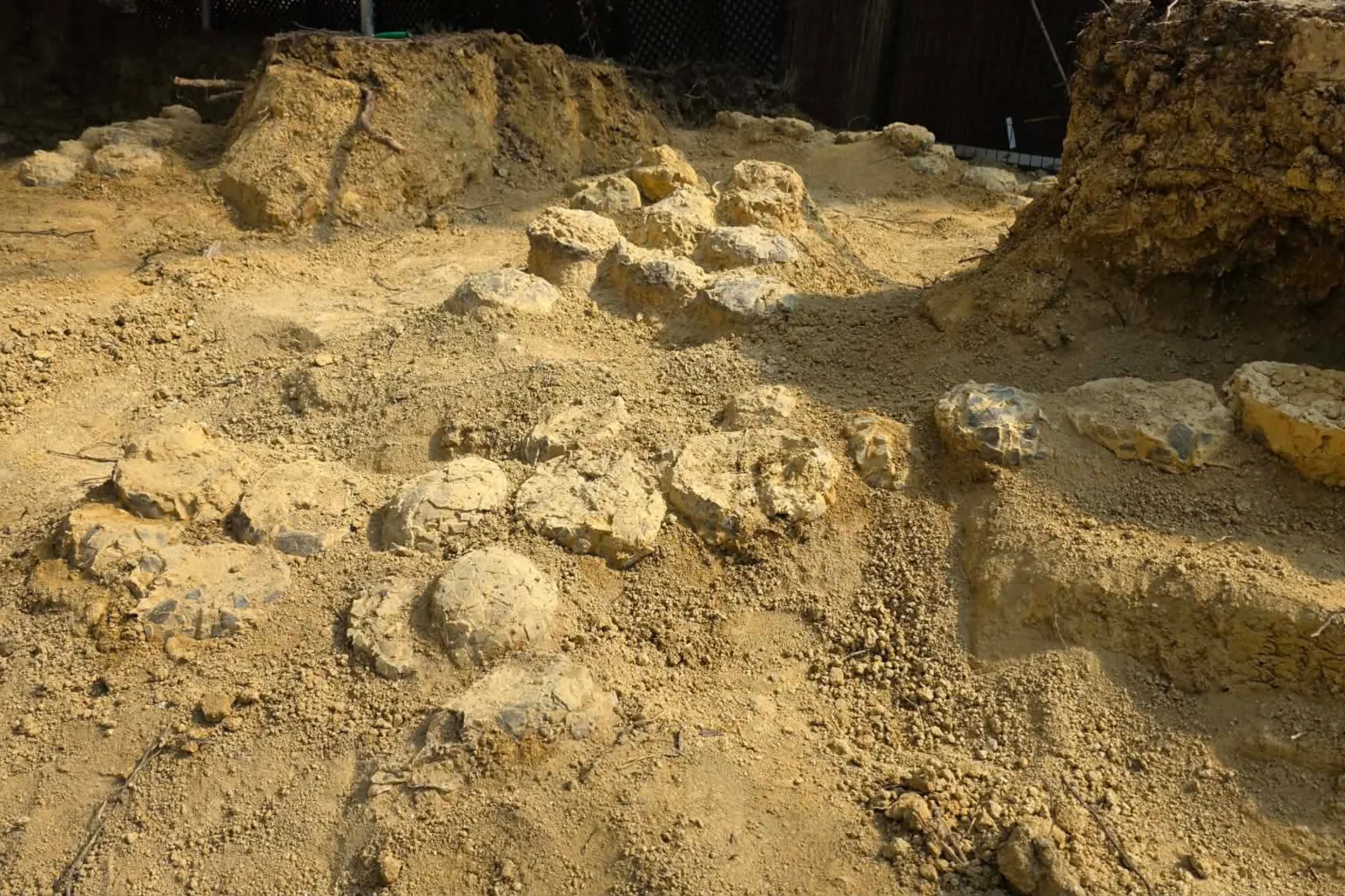
This is so cool! Check it out, readers! Hundreds of Dinosaur Eggs Discovered, Some Intact After 72 Million Years Published Mar 30, 2026 at 10:54 AM EDT updated Mar 31, 2026 at 11:03 AM EDT By Daniella Gray A major paleontology discovery in southern France has revealed an unusually dense dinosaur nesting ground containing hundreds of fossilized eggs. The find was […]
A psychedelic trip—on “magic mushrooms,” to be precise—may cause physical changes to the brain, a new imaging study finds. The results could one day help explain why people who take psilocybin—a psychoactive ingredient in such mushrooms—can feel a multitude of effects, from bliss and euphoria to anxiety, discomfort, and hallucinations, as well as long-term effects of the drug.
“No one has ever properly tested whether and how the brain changes when someone takes psychedelics for the first time,” says Robin Carhart-Harris, a professor of neurology at the University of California, San Francisco. Users often describe the first time taking magic mushrooms as a significant experience, he says. But understanding what’s going on at the biological level has so far eluded scientists.
Now, in the new study, Carhart-Harris and his colleagues may have taken a step closer to answering that question. The team gave 28 healthy people who’d never tried a psychedelic 25 milligrams of psilocybin—the equivalent of a “heroic” dose of magic mushrooms, Carhart-Harris says—and looked at their brain using a variety of scanning techniques, including electroencephalography (EEG), magnetic resonance imaging (MRI), and diffusion tensor imaging (DTI).
The researchers scanned the brains of the participants brains before and after the dose using both MRI and DTI to track any possible changes to the organs’ activity and wiring, Carhart-Harris says. The team also monitored the participants’ brain using EEG during the trip and asked them about their well-being before and after they took the psilocybin.
After a single dose, the team detected changes in brain activity that correlated with well-being as much as a month after the participants took the drug. When participants’ brain activity was “richer” and less predictable (a measurement that Carhart-Harris and his team refer to as greater “entropy”), they tended to report having increased “psychological insight”—new ways of thinking about themselves, their problems, their past, and more—shortly after the trip.
“We know what’s going on in your brain when you’re under the influence—when you’re experiencing the ‘magic’—and we know what it will translate to soon after in terms of psychological insight,” Carhart-Harris says. Greater psychological insight also tracked with reports of higher mental well-being a month after the dose.
The team also found changes to the brain’s wiring. After taking psilocybin, “tracts” in the brain that run from the prefrontal cortex to the middle of the organ appeared to be “less diffuse” along their length, meaning they could have become more compact or thinner, Carhart-Harris says. Whether that alteration is beneficial or not is unclear.
The study is “exciting,” says Alan Davis, director of the Center for Psychedelic Drug Research and Education at the Ohio State University, who was not involved in the new research. “Importantly, it demonstrates the importance of acute and enduring psychological insights or realizations in predicting outcomes of psilocybin experiences.” And the research provides some “clarity” on the mechanisms of how psychedelics may eventually help patients with mental health challenges, he says.
The findings are preliminary and perhaps raise more questions than they answer. For instance, how long do these brain changes last? The study only followed people for a month. And while the participants’ well-being outcomes may have been positive, it’s not clear whether any noted changes to the brain may have unexpected or even negative effects down the line. A recent policy shift at the federal level could help expedite this work. In April President Donald Trump signed an executive order aimed at expanding research on psychedelics. That effort could help answer some of the big questions in the field, Carhart-Harris says, including the enduring or long-term effects of psychedelics on neurobiology. His research team plans to explore using psilocybin to treat conditions such as chronic pain disorders, anorexia nervosa, and more to try to tease out more answers about how the drug changes the brain.
“The honest answer is: we don’t know [how psilocybin changes the brain]. We don’t have enough information,” Carhart-Harris says. There’s “a lot to do” to understand “some major questions in this space.”
The findings were published on Tuesday in the journal Nature Communications.
Israel is concerned that US President Donald Trump may strike an agreement with Iran before addressing some of the key issues that drove the two countries to launch the war in the first place, multiple Israeli sources have told CNN.
A deal that leaves Tehran’s nuclear program partially intact while bypassing issues such as ballistic missiles and support for regional proxies would lead to Israel viewing the war as incomplete, the sources said.
“The primary concern is that Trump will grow tired of talks and cut a deal – any deal – with last-minute concessions,” one Israeli source said. While US officials have reassured Israel that the issue of Iran’s stockpile of highly enriched uranium will be addressed, the source said the apparent exclusion of ballistic missiles and Tehran’s proxy network from the talks “is a big deal.”
Iran fired over 1,000 ballistic missiles at Israel and Gulf Arab states during the war, as well as barrages of drones.
A partial deal that fails to address some of Iran’s key capabilities while easing economic pressure on the country could also stabilize the regime and provide it with an influx of cash, the officials said. The concerns highlight a gap between Trump, who appears reluctant to resume the war, and Netanyahu, who fears it will end without achieving all of its initial aims.
A White House spokeswoman said that Iran “knows full well their current reality is not sustainable,” insisting that Trump “holds all the cards” in negotiations.
“Their ballistic missiles are destroyed, their production facilities are dismantled, their navy is sunk, and their proxies are weakened,” Olivia Wales said in a statement to CNN. “Now, they are being strangled economically by Operation Economic Fury and losing $500 million per day thanks to the United States Military’s successful blockade of Iranian ports.”
An agreement between the US and Iran to end the war is far from certain, with significant gaps remaining in the two sides’ positions on reopening the Strait of Hormuz and the future of Tehran’s nuclear program, and Israel is preparing for the possibility that the fighting resumes. But the Trump administration has still pushed for a diplomatic path forward, seemingly unwilling to restart a conflict that has sent gas prices in the US soaring.
Israeli Prime Minister Benjamin Netanyahu speaks during a press conference in Jerusalem on March 19.
Ronen Zvulun/AFP/Getty Images/File
.
Narrowing goals
Early in the war, Trump suggested the US wanted to destroy Iran’s ballistic missile program, end its support for regional proxies, and shut down its nuclear facilities so that it can never develop a bomb. But 10 weeks in, negotiations have focused on uranium – specifically its enrichment to weapons-grade levels – and reopening the Strait of Hormuz.
The narrowing of goals has been visible in Israeli Prime Minister Benjamin Netanyahu’s own public statements. In a February speech in Jerusalem, ahead of the Iran war, he laid out five conditions for an acceptable deal: removal of all enriched uranium, dismantling of enrichment capabilities, addressing ballistic missiles, dismantling Iran’s regional proxy network, and robust nuclear inspections.
By last week, in a video address before a meeting of the Israeli Security Cabinet, he narrowed that list to one. “The most important objective is the removal of enriched material from Iran – all of the enriched material – and the dismantling of Iran’s enrichment capabilities,” he said, with no mention of ballistic missiles or support for proxies, such as Hezbollah in Lebanon or Hamas in Gaza.
One source familiar with the discussions said that Israel understands the missiles and the proxies “are probably off the table,” as they do not appear to be included in early diplomatic drafts, and that is why Netanyahu is prioritizing uranium as the most immediate threat.
The prime minister relies on his direct communications with Trump, one of the Israeli sources said, as he does not fully trust Trump envoy Steve Witkoff and the president’s son-in-law Jared Kushner, who have been leading negotiations with Iran. Netanyahu has been piecing together backchannel diplomacy with Iran through intelligence gathered from Pakistan, Qatar and Iran.
“There is real concern that Trump will reach a bad deal. Israel is trying to influence it as much as it can,” another Israeli official told CNN. But Netanyahu is cautious of how much pressure to exert, wary of being perceived as leading Trump back to war.
The White House told CNN that Witkoff and Kushner have “the total confidence” of Trump, pointing to what it described as a “record of successes,” including ending the war in Gaza.
Israeli officials fear that lifting economic pressure – even partially – could stabilize the Iranian regime at a moment of weakness. Netanyahu’s former national security adviser, Meir Ben Shabbat, wrote over the weekend in Israeli newspaper Makor Rishon that any agreement must avoid allowing the regime to recover, pointing instead to Trump’s recent remark that “perhaps we are better off with no deal at all” as a preferable outcome to an agreement that doesn’t meet Israel’s objectives.
The Israeli security establishment is specifically concerned about an interim deal that would extend the ceasefire, reopen the Strait of Hormuz, and ease economic pressure on Iran without touching the nuclear file altogether.
Iran has insisted that a preliminary agreement cover only sanctions relief and the strait, with the nuclear matter being relegated to later stages.
.
President Donald Trump arrives for a “Rose Garden Club” dinner at the White House in Washington, DC, on Monday. Kent Nishimura/AFP/Getty Images
Secret new assessments say Iran has operational access to 30 of its 33 missile sites along the Strait of Hormuz, suggesting that its military remains far stronger than President Trump has asserted.
The Trump administration’s public portrayal of a shattered Iranian military is sharply at odds with what U.S. intelligence agencies are telling policymakers behind closed doors, according to classified assessments from early this month that show Iran has regained access to most of its missile sites, launchers, and underground facilities.
Most alarming to some senior officials is evidence that Iran has restored operational access to 30 of the 33 missile sites it maintains along the Strait of Hormuz, which could threaten American warships and oil tankers transiting the narrow waterway.
People with knowledge of the assessments said they show — to varying degrees, depending on the level of damage incurred at the different sites — that the Iranians can use mobile launchers that are inside the sites to move missiles to other locations. In some cases, they can launch missiles directly from launchpads that are part of the facilities. Only three of the missile sites along the strait remain totally inaccessible, according to the assessments.
Iran still fields about 70 percent of its mobile launchers across the country and has retained roughly 70 percent of its prewar missile stockpile, according to the assessments. That stockpile encompasses both ballistic missiles, which can target other nations in the region, and a smaller supply of cruise missiles, which can be used against shorter-range targets on land or at sea.
Military intelligence agencies have also reported, based on information from multiple collection streams including satellite imagery and other surveillance technologies, that Iran has regained access to roughly 90 percent of its underground missile storage and launch facilities nationwide, which are now assessed to be “partially or fully operational,” the people with knowledge of the assessments said.
The findings undercut months of public assurances from President Trump and Defense Secretary Pete Hegseth, who have told Americans that the Iranian military was “decimated” and “no longer” a threat.
On March 9, 10 days into the war, Mr. Trump told CBS News that Iran’s “missiles are down to a scatter” and the country had “nothing left in a military sense.” Mr. Hegseth declared at a Pentagon news conference on April 8 that Operation Epic Fury — the joint U.S.-Israel campaign launched on Feb. 28 — had “decimated Iran’s military and rendered it combat-ineffective for years to come.”
The intelligence describing Iran’s remaining military capacity is dated less than a month after that news conference.
Asked about the intelligence assessments, a White House spokeswoman, Olivia Wales, repeated Mr. Trump’s previous assertions that Iran’s military had been “crushed.” She said that Iran’s government knows that its “current reality is not sustainable” and that anyone who “thinks Iran has reconstituted its military is either delusional or a mouthpiece” for Iran’s Islamic Revolutionary Guards Corps.
Ms. Wales pointed to a social media post from Mr. Trump on Tuesday declaring that it was “virtual treason” to suggest that Iran’s military was doing well.
Joel Valdez, the acting Pentagon press secretary, responded to questions about the intelligence by criticizing news coverage of the war. “It is so disgraceful that The New York Times and others are acting as public relations agents for the Iranian regime in order to paint Operation Epic Fury as anything other than a historic accomplishment,” he said in a statement.
The new intelligence assessments suggest that Mr. Trump and his military advisers overestimated the damage that the U.S. military could inflict on Iranian missile sites, and underestimated Iran’s resilience and ability to bounce back. The New York Times reported last month that U.S. officials believed that Iran could regain as much as 70 percent of its prewar missile arsenal. The Washington Post reported last week on U.S. intelligence showing that Iran retained about 75 percent of its mobile missile launchers and about 70 percent of its prewar missile stockpile.
The findings underscore the dilemma Mr. Trump would face if the fragile month-old cease-fire in the conflict collapses and full-scale fighting resumes. The U.S. military has already depleted its stocks of many critical munitions, including Tomahawk cruise missiles, Patriot interceptor missiles, and Precision Strike and ATACMS ground-based missiles, and yet the intelligence suggests that Iran retains considerable military capability, including around the vital Strait of Hormuz.
The passageway carries roughly a fifth of the world’s daily oil consumption, and the U.S. Navy now maintains a near-continuous presence transiting and patrolling it. The U.S. military’s Central Command said in a social media post on Sunday that more than 20 American warships were enforcing the blockade against Iran.
If Mr. Trump ordered commanders to launch more strikes to take out or diminish those Iranian capabilities, then the U.S. military would have to dig even deeper into stocks of critical munitions. Doing so would further undercut U.S. stockpiles at a time when the Pentagon and the major arms makers are already struggling to find the industrial capacity to replenish American reserves.
Mr. Trump and his advisers have repeatedly denied that U.S. munitions stocks have been drained to dangerously low levels. In private, Pentagon officials have offered similar assurances to anxious European allies. Those allies have purchased billions of dollars of munitions from the United States on behalf of Ukraine, and they are concerned that those munitions will not be delivered because the U.S. military will need them to replenish its own stocks — a worry that would only intensify if the president orders a return to hostilities with Iran.
.
Missile displays in Tehran in 2024. According to classified U.S. intelligence assessments, Iran retains roughly 70 percent of its prewar missile stockpile. Credit…Arash Khamooshi for The New York Times
In the world, human beings are facing various problems. People who are full of greed, anger, and ignorance are seen to be fighting with each other in words and deeds. As the fighting continues, various problems such as civil wars, wars of aggression, and wars of aggression are occurring. As world peace is being destroyed, humans are facing unbearable problems. Innocent children and women are not getting the rights they deserve and deserve. I can't think of one thing every time. What is it? The United Nations. If we look at the responsibilities and duties of the United Nations, I think it is not suitable for solving the problems that are happening in the world today. In fact, the United Nations and the World Security Council, such an organization must rule the world, must be able to give orders, and must have various ways to obey orders. There must be no organization that can influence more than that organization. There should be experts from each country. They can even dominate the superpowers like the US, China, and Britain. Only then will global peace be achieved quickly. Now, if a country with power develops more militarily, economically, or socially than its own country, then powerful countries will jealously seek out enemies and wage war. Or they will attack with fighter jets. In this, innocent people are losing their lives. No one understands the value of a life. You should think about how to achieve global peace by controlling these. If the US continues to be the permanent president of the UN, world peace will never be achieved. If you think carefully, no one sees that they are working for the common good, but for their own benefit, for the benefit of their own country. The permanent president of the UN and the Security Council has rejected this, As a young Rohingya, I have come to realize that only by electing the president and secretary from among the countries in the world through a secret ballot system and governing the world fairly can we achieve global peace. The United Nations and the Security Council are organizations in which any country must govern, give orders, and make them obey their orders. For example, only when a defendant is tried in court can we hold the leaders of the countries in check and control them, can we achieve global peace smoothly. Otherwise, it will not be easy for powerful countries to use various excuses to end this war every year, every year, for the benefit of themselves and their countries. No country's leaders pay any attention to the words of the United Nations and the Security Council. If we look at it in practice, look at the Rohingya issue. Myanmar is a small country. Even that country has been under siege for 8 years. What action can be taken? Why is the UN and the Security Council Powerless? Without such Power, how can the organization bring about global peace? Everyone should think about it. Whether there is a veto or a strong one, all countries in the world can only achieve global peace if they are subject to the UN and the Security Council. Seek peace in the quiet embrace of nature. Peace is an indispensable need of the human race. It is not as if one person can kill another person, and it is as if one country can attack another country, but instead of trying to build peace, we must try to destroy the peace now, and the world is getting hotter and is on the verge of collapse. I especially appeal to all the world experts to urgently try to bring about peace in all parts of the world. Mr, Noor Muhamed Arkhan Rohingya Youth Myanmar
Film and Writing Festival for Comedy. Showcasing best of comedy short films at the FEEDBACK Film Festival. Plus, showcasing best of comedy novels, short stories, poems, screenplays (TV, short, feature) at the festival performed by professional actors.


World Map Courtesy of NASA/Getty Images



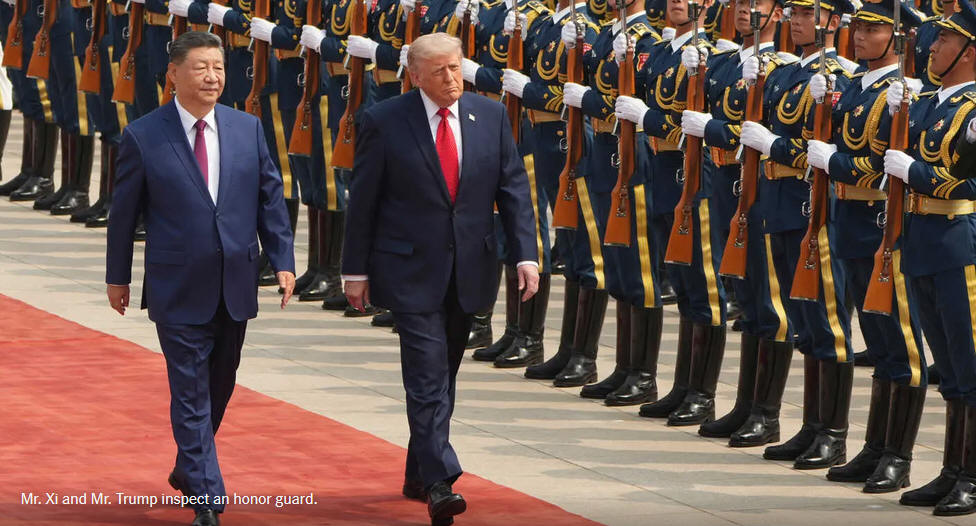 Xi and Trump
 Yana Iskayeva/Getty Images
 Missile displays in Tehran in 2024. According to classified U.S. intelligence assessments, Iran retains roughly 70 percent of its prewar missile stockpile. Credit…Arash Khamooshi for The New York Times