A judge sentenced Aiden Fucci – the Florida teenager convicted of first-degree murder for stabbing a 13-year-old over 100 times in 2021 – to life in prison on Friday.
Fucci, 16, entered his guilty plea in February 2023 at a hearing intended to get jury selection for his trial underway, according to CNN’s previous reporting. Fucci was 14 years old when he brutally killed classmate Tristyn Bailey in the woods in St. Johns County in northeastern Florida. He was charged as an adult.
During Friday’s sentencing, Circuit Judge R. Lee Smith said he took into account several factors when making his decision, including Fucci’s young age, the “heightened level” of premeditation, and that he was the “sole participant” who was not pressured by anyone to commit the “devastating crime.” He noted that Fucci was considered of “average maturity” by his peers and that he understood the consequences of his actions.
Bailey “suffered a painful and horrifying death from someone she trusted,” said Smith before announcing the sentence Friday.
He described the victim as an “energetic, happy child.”
“The loss which you have clearly suffered is unimaginable,” the judge said to Bailey’s family and friends. “Sometimes family members hope or expect that whatever the sentence is, that somehow or another that’s going to heal or provide closure.”
“I cannot provide a closure to this,” he went on. “It may close a chapter, but … I cannot bring her back.”
.
Aiden Fucci, a Florida teenager convicted of first-degree murder for stabbing a 13-year-old over 100 times in 2021, was sentenced to life in prison on Friday.
Our go-to, well-meaning replies to layoff news is usually something along the lines of “Please let me know how I can help,” but how many times have you said that to someone and not heard back from them again? When you’re going through a layoff, it can be hard to know what you need—and even harder to ask for it. But there are still a ton of things you can do to offer some relevant resources and encouragement to a friend who’s been laid off, even if you’re not an expert.
Proactively offer your professional network
Whether we like it or not, networking and referrals are two of the most impactful tools a job-seeker can take advantage of. With hundreds of applications coming in for every open job, the best way for your friend to be noticed is talking to someone inside the company; and even if you and your friend have the same friend group, you probably still know some people they don’t.
Out there in the Universe, size definitely matters. An evolved red giant star, our Sun, and a white dwarf can all have the same mass, but the size difference between these three classes of objects is tremendous. While there might be some quantum effects that play a role for objects that are very small — in their energy, position, lifetime, etc. — there are some properties that remain the same regardless of any uncertainties. Objects that are stable, both microscopically and macroscopically, are described by measurable properties such as mass, volume, electric charge, and spin/angular momentum.
But “size” is a bit of a tricky one, particularly if your object is extremely small. The most extreme objects in terms of density are black holes, but for them, size isn’t necessarily a well-defined property. After all, if all the mass and energy that goes into making a black hole inevitably collapses to a central singularity, then what does the concept of “size” even mean? As it turns out, there’s actually more than one definition for a black hole’s size, and they all have their uses. From the outside in, let’s take a look at what a black hole’s size can tell us.
.
Instead of an empty, blank, three-dimensional grid, putting a mass down causes what would have been ‘straight’ lines to instead become curved by a specific amount. The curvature of space beyond a certain distance, outside of a large mass, remains unchanged even as you vary the volume the interior mass occupies. (Credit: Christopher Vitale of Networkologies and the Pratt Institute)
Mercury, Venus, and Mars are all uni-plate planets, and may always have been. Here’s what’s known about why Earth, uniquely, has plate tectonics.
Terrestrially, plate tectonics are a vital part of Earth’s evolution.
.
This map of Earth shows, in black, the more than 300,000 earthquake epicenters identified from 1964-present. The earthquake locations clearly trace out a number of “lines” on the map, which correspond to a number of boundaries between tectonic plates here on our planet. (Credit: A. El-Aziz Khairy Ebd el-aal, Egyptian National Seismological Network, 2011)
If you found the last three years exhausting to the point of feeling emotionally tapped out, you are not alone. Millions of people had mental health issues before Covid-19 arrived on the world stage in 2020, but the pandemic exacerbated these problems and brought new mental health challenges to the fore for many more. But there is a silver lining: The stigma around talking about one’s mental health is lessening. And people are increasingly asking for support.
More often than not, people know what will help their mental health, but struggle with how to do it, Fallon Goodman, an assistant professor of psychology at George Washington University, explains to Inverse.
For some, traditional mental health services like therapy and support groups are helpful. But there are other lower-lift, overlooked, and accessible actions you can take that can boost your well-being now, enabling you to take that first step along your mental health journey or support yourself through more specialized treatment.
This is where habit-building comes into play, Goodman says. The more we commit to daily habits built around small actions, the more likely we are to see the payoffs, she says.
“You can’t exactly buy happiness, but you can build it,” says Goodman.
.
The more we commit to daily habits for small actions, the more likely we are to see the payoffs.
When thinking of grief, it’s common to picture people crying and feeling sadness or despair. But emotions aren’t the full extent of how grief manifests. For many, there are physical, and bodily symptoms as well.
“The body and mind work together, so it is not unusual for grief to be experienced physically,” said Nicole Raines, a licensed marriage and family therapist based in Los Angeles. “Stress hormones may be released during the grief process, and these have an impact on our body.”
People who suffer a misfortune — whether it’s the death of a loved one or some other loss — will feel grief in different ways, so its physical expressions can vary from person to person as well.
“Grieving impacts the entire mind-body system for most people,” said Becky Stuempfig, a Southern California-based therapist who specializes in grief. “Some people experience a wide array of physical symptoms … while others only experience one or two.”
They may have digestive system issues, muscle tension, or both at once. And different individuals can have those muscle aches and pains in a range of places throughout the body.
.
Angelica Alzona for HuffPost Grief can manifest physically in a variety of places.
Thanks to the early accomplishments of Williams, who has been called the first woman of color producer, we have female directors and producers like Oprah, Ava DuVernay, and Shonda Rhimes. Williams’s 1923 film The Flames of Wrath had a team of all people of color, and beyond that, the former Kansas City teacher was an activist and writer […]
In February, a 23-year-old Tanzanian fisherman suddenly fell ill, having just returned from a busy trading outpost in the middle of Lake Victoria. Back at home in Bukoba, a district in northwestern Tanzania, he was hit by bouts of vomiting and diarrhea. He developed a fever and began bleeding from his body openings. On March 1, he died.
His family and community conducted a routine burial—not knowing this gathering would be the beginning of a deadly outbreak. Soon, some of those present began to fall ill. On March 16, Tanzania’s chief medical officer announced that an unknown, “possibly contagious” illness had been detected and deployed a rapid response team to Bukoba. Finally, five days later, PCR testing at Tanzania’s National Public Health Laboratory revealed the cause: Marburg virus.
This wasn’t the first appearance of Marburg this year. On February 13, Equatorial Guinea reported its first-ever outbreak. A deadly virus, spreading in new places on opposite sides of the continent at the same time, is a big warning. It shows not just the ever-present threat of viruses spilling over from nature into humans, but that, yet again, the world isn’t prepared to deal with these dangers.
Marburg shares plenty of characteristics with Ebola—the viruses are part of the same family. Like Ebola, it causes viral hemorrhagic fever, resulting in dangerous internal bleeding and organ damage. In some outbreaks, up to 90 percent of cases have been fatal; at the time of writing, five of the people in Tanzania’s eight confirmed cases have died. Symptoms take anywhere from a few days to three weeks to develop, and the virus can spread through human contact, particularly via body fluids of an infected person or corpse. Fruit-eating bats of the Rousettus family are the virus’s suspected host.
On March 20, the United Nations Sustainable Development Solutions Network released its annual World Happiness Report, which rates well-being in countries around the world. For the sixth year in a row, Finland was ranked at the very top.
But Finns themselves say the ranking points to a more complex reality.
“I wouldn’t say that I consider us very happy,” said Nina Hansen, 58, a high school English teacher from Kokkola, a midsize city on Finland’s west coast. “I’m a little suspicious of that word, actually.”
Ms. Hansen was one of more than a dozen Finns we spoke to — including a Zimbabwean immigrant, a folk metal violinist, a former Olympian and a retired dairy farmer — about what, supposedly, makes Finland so happy. Our subjects ranged in age from 13 to 88 and represented a variety of genders, sexual orientations, ethnic backgrounds, and professions. They came from Kokkola as well as the capital, Helsinki; Turku, a city on the southwestern coast; and three villages in southern, eastern, and western Finland.
While people praised Finland’s strong social safety net and spoke glowingly of the psychological benefits of nature and the personal joys of sports or music, they also talked about guilt, anxiety, and loneliness. Rather than “happy,” they were more likely to characterize Finns as “quite gloomy,” “a little moody” or not given to unnecessary smiling.
.
Henna and Niklas Hukari, siblings who play badminton in the rural community of Toholampi, are among more than a dozen Finns we spoke with about how optimism manifests in their lives.Credit…Jake Michaels for The New York Times
When Dr. Thomas J. Harbin published his seminal work Beyond Anger: A Guide for Men in 2000, it was a simpler time. Sort of. Anger, especially among men, was a widespread problem, but it was hardly so communicable as it is today. Now, anger travels like a virus, transmitted from the individual to the masses with the tap of a touchscreen. As he writes in the prologue to a new edition of Beyond Anger, the social media age has proven “perversely liberating” for angry men.
“They don’t have to deal with the consequences of angry diatribes and don’t have to fear retribution,” he writes. “They can say whatever they want to whoever they want and get away with it. They can rant and rave, call people names, make false statements about people, start or contribute to rumors, and sometimes ruin lives — and forget all about it when they walk away from the screen.” This behavior, he concludes, is nothing short of cowardly.
A clinical psychiatrist practicing in North Carolina, Dr. Harbin has spent decades working with angry men and their families, teaching them to come to terms with and control their anger. In that time, he’s come to a robust, nuanced understanding of anger, where it comes from, how it works, and how people can deal with it. We spoke to Dr. Harbin about what he’s learned, why anger is so present today, and what men can do to manage theirs.
In the world, human beings are facing various problems. People who are full of greed, anger, and ignorance are seen to be fighting with each other in words and deeds. As the fighting continues, various problems such as civil wars, wars of aggression, and wars of aggression are occurring. As world peace is being destroyed, humans are facing unbearable problems. Innocent children and women are not getting the rights they deserve and deserve. I can't think of one thing every time. What is it? The United Nations. If we look at the responsibilities and duties of the United Nations, I think it is not suitable for solving the problems that are happening in the world today. In fact, the United Nations and the World Security Council, such an organization must rule the world, must be able to give orders, and must have various ways to obey orders. There must be no organization that can influence more than that organization. There should be experts from each country. They can even dominate the superpowers like the US, China, and Britain. Only then will global peace be achieved quickly. Now, if a country with power develops more militarily, economically, or socially than its own country, then powerful countries will jealously seek out enemies and wage war. Or they will attack with fighter jets. In this, innocent people are losing their lives. No one understands the value of a life. You should think about how to achieve global peace by controlling these. If the US continues to be the permanent president of the UN, world peace will never be achieved. If you think carefully, no one sees that they are working for the common good, but for their own benefit, for the benefit of their own country. The permanent president of the UN and the Security Council has rejected this, As a young Rohingya, I have come to realize that only by electing the president and secretary from among the countries in the world through a secret ballot system and governing the world fairly can we achieve global peace. The United Nations and the Security Council are organizations in which any country must govern, give orders, and make them obey their orders. For example, only when a defendant is tried in court can we hold the leaders of the countries in check and control them, can we achieve global peace smoothly. Otherwise, it will not be easy for powerful countries to use various excuses to end this war every year, every year, for the benefit of themselves and their countries. No country's leaders pay any attention to the words of the United Nations and the Security Council. If we look at it in practice, look at the Rohingya issue. Myanmar is a small country. Even that country has been under siege for 8 years. What action can be taken? Why is the UN and the Security Council Powerless? Without such Power, how can the organization bring about global peace? Everyone should think about it. Whether there is a veto or a strong one, all countries in the world can only achieve global peace if they are subject to the UN and the Security Council. Seek peace in the quiet embrace of nature. Peace is an indispensable need of the human race. It is not as if one person can kill another person, and it is as if one country can attack another country, but instead of trying to build peace, we must try to destroy the peace now, and the world is getting hotter and is on the verge of collapse. I especially appeal to all the world experts to urgently try to bring about peace in all parts of the world. Mr, Noor Muhamed Arkhan Rohingya Youth Myanmar
Film and Writing Festival for Comedy. Showcasing best of comedy short films at the FEEDBACK Film Festival. Plus, showcasing best of comedy novels, short stories, poems, screenplays (TV, short, feature) at the festival performed by professional actors.

 Aiden Fucci, a Florida teenager convicted of first-degree murder for stabbing a 13-year-old over 100 times in 2021, was sentenced to life in prison on Friday.
 Photo: GaudiLab (Shutterstock)
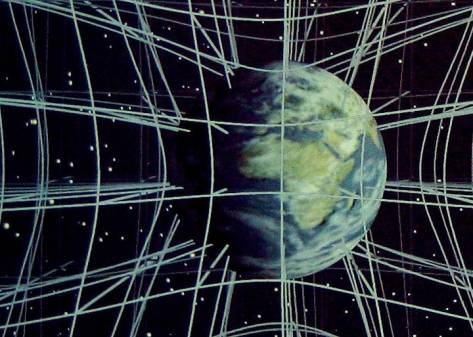 Instead of an empty, blank, three-dimensional grid, putting a mass down causes what would have been ‘straight’ lines to instead become curved by a specific amount. The curvature of space beyond a certain distance, outside of a large mass, remains unchanged even as you vary the volume the interior mass occupies. (Credit: Christopher Vitale of Networkologies and the Pratt Institute)
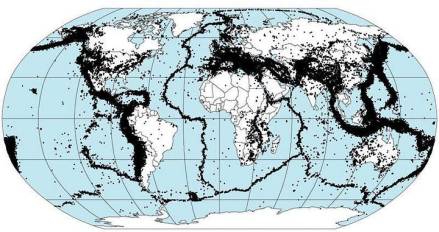 This map of Earth shows, in black, the more than 300,000 earthquake epicenters identified from 1964-present. The earthquake locations clearly trace out a number of “lines” on the map, which correspond to a number of boundaries between tectonic plates here on our planet. (Credit: A. El-Aziz Khairy Ebd el-aal, Egyptian National Seismological Network, 2011)
 The more we commit to daily habits for small actions, the more likely we are to see the payoffs.