MAY 6, 2015, BY CONTRIBUTED BY: BERL FRANCIS Jerome Gary Cooper, military, government, and business leader was appointed United States Ambassador to Jamaica by President Bill Clinton in 1994. He was the first African American to occupy the position. Prior to his appointment, he had a distinguished military career. From 1958 to 1970 he was an active-duty officer and became the first African […]
Hypnotic is a science fiction action thriller directed by Robert Rodriguez, who co-wrote the screenplay with Max Borenstein. Rodriguez also produced, co-shot, and edited the film, while his sons Rebel and Racer Max served as composer and producer, respectively. Hypnotic was theatrically released in the United States by Ketchup Entertainment. The trailers for Hypnotic sold me on the film, as I am a big science fiction fan. I liked the movie but it felt a lot like the 2010 film, “Inception” only with a different twist. See my comments at the end of this review.
Hypnotic opens with Danny Rourke (Ben Affleck), an Austin Police Department detective, in session with his therapist (Nikki Dixon). He talks about the abduction of his seven-year-old daughter, Minnie that led to the dissolution of his marriage. Danny is looking for a sign-off so he can return to active duty. Danny’s partner Nicks…
Video games are natural predators. In the earliest incarnation of the art — the arcade cabinets scattered across movie-theater lobbies and dentist waiting rooms in the ’70s and ’80s — you’d exchange a quarter for three lives and a dream. A few minutes later, once those ghosts claimed Pac-Man’s soul, or after Jumpman tripped over one too many of Donkey Kong’s barrels, you were sent back to your mother, tail between your legs, in hopes that she had a bit more spare change left in her purse. This was the business model; video games attempted to separate kids from their allowances as efficiently as possible, which was most easily accomplished through the blunt force of difficulty.
The modern home console-based games industry is almost unrecognizable compared to those early days. Extra lives are no longer stingily meted out between checkpoints, an easy mode is usually only a toggle away, and generally speaking, publishers are more interested in immersing us in a story rather than humbling us with our inadequacies. And yet, even now, gamers have a grudging appreciation for a really tough level. They may not be as common as they were in the old days when there was a direct financial incentive in thwarting players, but plenty of studios still crank up the meters to 11, eager to break our thumbs in two. In fact, with the mainstream success of games like Elden Ring and Returnal, difficulty seems to be coming back into fashion. We’re here to celebrate the tradition and hopefully get some closure on our collective anguish.
There are so many different ways to create a hard level. This list contains resource-draining RPG grinds, uncompromising tactical grids, mind-melting adventure-game puzzles, and the sort of quicksilver, arcade-y gauntlets that require a speedrunner’s acumen. (It does not contain, we want to note, The Legend of Zelda: Tears of the Kingdom, which came out too recently for us to confidently make a determination about whether any of its challenges warrant a spot. We reserve the right to add it at a later date.) We only looked at console and/or PC games released in the U.S. — meaning no arcade games (unless they were ported to a console) and no mobile-first games
We all know that food and drinks can go bad. Your refrigerator likely has items right now that were once wholesome food and is now…not wholesome, and no longer food. But one basic component of our lives that might seem immune to that spoilage is water. It’s a pretty fundamental compound, after all, and doesn’t contain anything other than a bunch of hydrogen and oxygen, so there doesn’t seem to be anything in there that other organisms could defile. When your leftover mint chutney goes bad, it makes sense, but water seems so impervious that noticing an expiration date on a bottle of water seems kind of ludicrous. But it’s not completely wrong. Water doesn’t rot or spoil like many foods, but there’s definitely a shelf life.
When tap water goes bad
Water that comes out of your faucet has most likely been treated with chlorine, which helps keep it free from microorganisms that can do you harm. But that water will react with the carbon dioxide in the air continuously, lowering the pH of the water, making it more acidic, which will can make it taste funny. Additionally, uncovered water will collect dust and other stuff from the air, adding to the unpleasantness. Eventually, this process could even make you sick—although the water would have to sit there a very long time before it became dangerous as opposed to just gross.
At the same time, that chlorine that was added is off-gassing and leeching away, making the water more inviting to organisms. The executive summary is that a glass of tap water left out overnight might taste weird, but is probably okay to drink from a health point of view. But water that sits out for a very long time should probably be avoided—especially if there are obvious signs of things, you know, living in it.
Have you ever suffered creative mortification? Coined by educator Ronald Beghetto, the term describes losing your willingness to pursue a creative avenue following a negative outcome. Maybe you gave up on stand-up comedy forever after your set at the open mic night was met with murmurs instead of laughs, or you burned your accordion after that disastrous appearance on America’s Got Talent.
Creative mortification doesn’t refer to temporarily being discouraged by negative feedback; that’s called “creative suppression” (also “reading the YouTube comments”), and it’s inevitable in any creative pursuit. Creative mortification can be understood by the classic definition of the word “mortification.” It means “to put to death,” and it encompasses all the finality that implies. It describes someone who loved to sing but never opened their mouth again after being in the school play or the person who says “I can’t draw” for their entire life because of a 4th-grade art teacher’s criticism. Creative mortification is giving up completely.
When discouragement becomes mortification
According to Beghetto’s research, there are two main components of creative mortification. The first is “attributing negative outcomes to one’s fixed creative ability,” and the second is experiencing negative emotions, particularly shame.
If you ask high-level creatives how they got that way, most will say something like, “I practiced a lot.” Very few will respond, “I’m just naturally good at it.” Still, the idea that here’s some inherent talent level that a person either has or doesn’t have tends to be how most people think of creative pursuits, especially when we’re thinking about ourselves. Mortification can come from an external event that reinforces your internal insecurity about your own inherent talent.
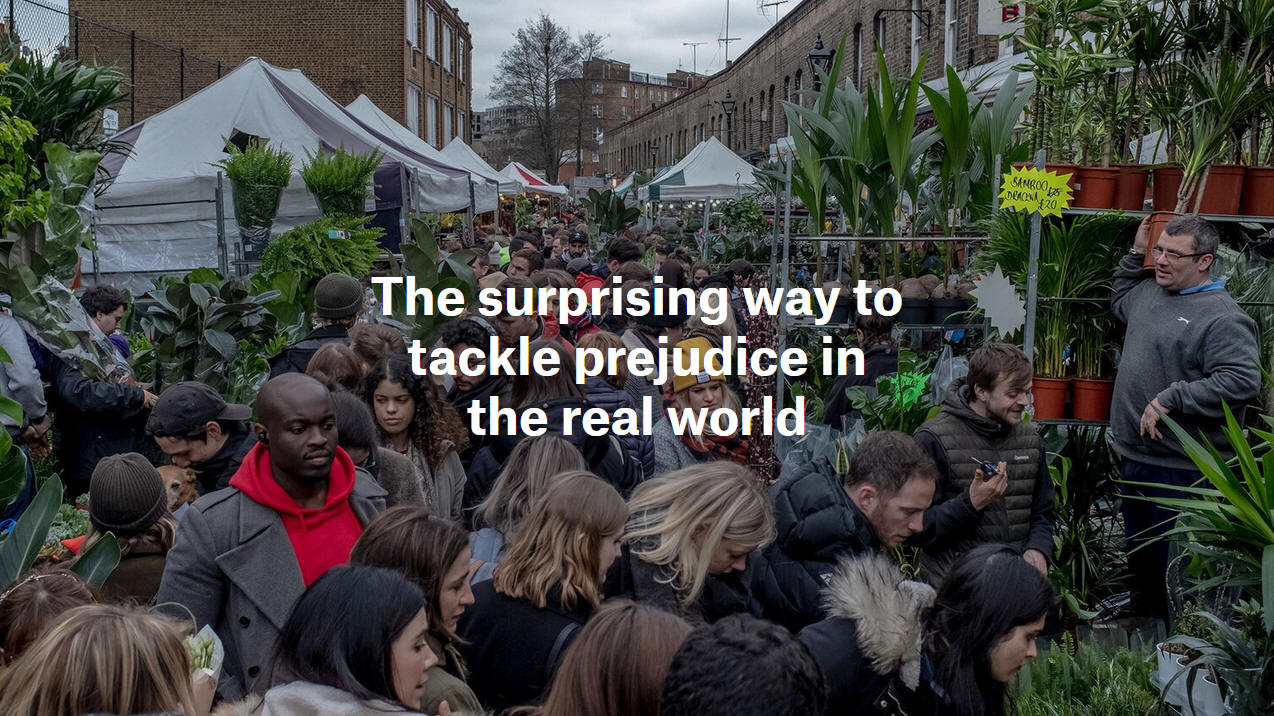
The good news is there are many effective anti-prejudice interventions, but the most promising remains relatively unknown
The best intentions are not enough to avoid the risk of being prejudiced toward people from another social group – making harmful and unfair assumptions about them. Often, people can form prejudices because of a lack of personal experience with individuals from that other social group. Based on this, many experts and policymakers have proposed that a simple but effective way to reduce prejudice is to encourage and facilitate contact between people from different social groups (an approach known as ‘contact theory’ in the research literature). Indeed, contact theory has inspired a number of diversity and inclusion programs around the world – you may have participated in one yourself. However, emerging findings in social psychology suggest that contact is far from the only way to tackle prejudice – and, importantly, it might not be the most effective.
Prejudice can manifest in negative attitudes towards groups based on a range of dimensions including race, sex, gender identity, obesity, and disability, to name a few. It can appear in many different contexts, from workplaces to shops, to schools – wherever there are people. You may have heard friends and family express prejudice casually over dinner conversations based on what they might have seen or heard in the media, or been in situations yourself where you’ve had to pause and reflect that your views are prejudiced and unfounded.
When prejudice carries over into decisions on employment, education, access to health services, and other consequential situations, it can be severely detrimental. The breadth of prejudice in society, combined with its potential to cause serious negative effects, means that prejudice has substantial costs to individuals and broader society. I am based in Australia, where it has been estimated that racism alone costs AU $37.9 billion(US $25.5 billion) per year.
.
Flower market, East End of London. Photo by Andrew Testa/Panos
Okay, so you’re not the best at small talk. We’ve all become a bit All you’re looking to have is a decent conversation. It could be with the guy on the sidelines, at the gym, or anyone else you keep running into. But someone’s gotta break the ice. You don’t mind doing it. You just don’t want things to be … ah … um … eeh … awkward.
If only there was a can’t-miss opening line. There isn’t. That’s the bad news, but also the good. The words you say are secondary to just being willing to take the chance. But still, you worry that whatever comes out won’t work. There will be silence, stares, and walking away questioning what you just did.
You know what you say to that?
“So what?,” says Bethany Teachman, professor of psychology and director of clinical training at University of Virginia. The exchange might be awkward, but will it be excruciating? Impossible to recover from? Will it ruin you? Nah. This isn’t the most important person to you, which means it’s not the most important conversation you’ll ever have.
“It’s not that big of a deal,” she says. “Not much will change in your life.”
It’s good to remember one other thing: Conversations take two people to make it work, and the other person may not be engaged because they’re stressed, preoccupied, exhausted, overly shy, or any other reason that has nothing to do with you.
The following are five common self-sabotaging mistakes overwhelmed people tend to make.There are practical solutions for each that will help you feel like you’re on top of things and do a better job of navigating your most important tasks and solving problems.
In the world, human beings are facing various problems. People who are full of greed, anger, and ignorance are seen to be fighting with each other in words and deeds. As the fighting continues, various problems such as civil wars, wars of aggression, and wars of aggression are occurring. As world peace is being destroyed, humans are facing unbearable problems. Innocent children and women are not getting the rights they deserve and deserve. I can't think of one thing every time. What is it? The United Nations. If we look at the responsibilities and duties of the United Nations, I think it is not suitable for solving the problems that are happening in the world today. In fact, the United Nations and the World Security Council, such an organization must rule the world, must be able to give orders, and must have various ways to obey orders. There must be no organization that can influence more than that organization. There should be experts from each country. They can even dominate the superpowers like the US, China, and Britain. Only then will global peace be achieved quickly. Now, if a country with power develops more militarily, economically, or socially than its own country, then powerful countries will jealously seek out enemies and wage war. Or they will attack with fighter jets. In this, innocent people are losing their lives. No one understands the value of a life. You should think about how to achieve global peace by controlling these. If the US continues to be the permanent president of the UN, world peace will never be achieved. If you think carefully, no one sees that they are working for the common good, but for their own benefit, for the benefit of their own country. The permanent president of the UN and the Security Council has rejected this, As a young Rohingya, I have come to realize that only by electing the president and secretary from among the countries in the world through a secret ballot system and governing the world fairly can we achieve global peace. The United Nations and the Security Council are organizations in which any country must govern, give orders, and make them obey their orders. For example, only when a defendant is tried in court can we hold the leaders of the countries in check and control them, can we achieve global peace smoothly. Otherwise, it will not be easy for powerful countries to use various excuses to end this war every year, every year, for the benefit of themselves and their countries. No country's leaders pay any attention to the words of the United Nations and the Security Council. If we look at it in practice, look at the Rohingya issue. Myanmar is a small country. Even that country has been under siege for 8 years. What action can be taken? Why is the UN and the Security Council Powerless? Without such Power, how can the organization bring about global peace? Everyone should think about it. Whether there is a veto or a strong one, all countries in the world can only achieve global peace if they are subject to the UN and the Security Council. Seek peace in the quiet embrace of nature. Peace is an indispensable need of the human race. It is not as if one person can kill another person, and it is as if one country can attack another country, but instead of trying to build peace, we must try to destroy the peace now, and the world is getting hotter and is on the verge of collapse. I especially appeal to all the world experts to urgently try to bring about peace in all parts of the world. Mr, Noor Muhamed Arkhan Rohingya Youth Myanmar
Film and Writing Festival for Comedy. Showcasing best of comedy short films at the FEEDBACK Film Festival. Plus, showcasing best of comedy novels, short stories, poems, screenplays (TV, short, feature) at the festival performed by professional actors.


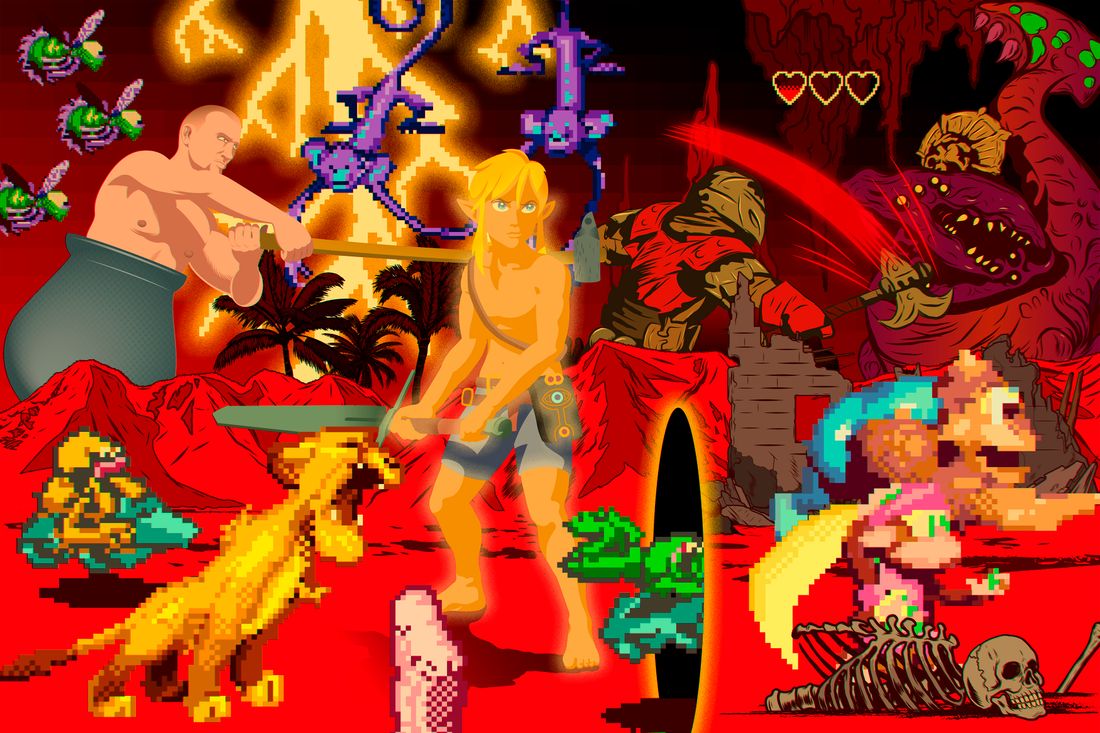

 Photo: CHALERMPHON SRISANG (Shutterstock)
 Photo: Maria Sbytova (Shutterstock)
 Smash hit TV show “Succession” has sparked a resurgence of the “quiet luxury” trend. Frazer Harrison/Getty Images
 Flower market, East End of London. Photo by Andrew Testa/Panos




 The Train of Life
