AlbieAlbie Hecht always wanted to dunk. But at just 5-foot-10, he settled for becoming a television producer instead of playing in the NBA. Then, in the early 1990s, he began developing a series that revived his childhood dream.
“The question I posed, and which I think we answered resoundingly,” Hecht says, “was, ‘How do we let kids live out their greatest sports fantasies?’”
This was the basic idea behind NickelodeonGUTS, a show that delivered the ultimate in adolescent wish fulfillment. Every week, three teenage contestants competed in four Olympic-style, bungee-cord-enhanced events. Each half-hour episode culminated in a race up the Aggro Crag, an obstacle-loaded climbing wall that became a pop-culture touchstone among ’90s kids.
To adults, GUTS resembled a junior version of American Gladiators, but in reality, it was much different. Rather than team up to take down cartoonishly pumped-up bodybuilders, the young participants faced off against one another. The stars were teens, not superheroes. And presiding over it all was the boundlessly energetic Mike O’Malley, a host/unofficial coach who provided SportsCenter-anchor-like commentary and encouragement. This is what made Nickelodeon’s programming different: It wasn’t just about kids. It was for kids.
Some content on this page was disabled on April 15, 2025 as a result of a DMCA takedown notice from Guardian Media Group. You can learn more about the DMCA here:
If you drive south on Costa Rica’s Caribbean coastal road until it ends you will reach Playa Manzanillo, a small fishing town inside the Gandoca-Manzanillo Wildlife Refuge.There is something magical about reaching the end of the road, and this particular trip will not disappoint. Once there, you will have a stunning beach to sunbathe and swim, great snorkeling and beautiful hikes, and to make it just perfect…add a great Afro-Caribbean ambiance.
Communicating is easily the single most important job of leaders. If leadership is mostly about influence–and it is–then the ability to communicate a vision and motivate people to move toward that vision is the single most important characteristic a leader can have.
The problem is, communication is hard. Sometimes people don’t understand the message we want to communicate. Sometimes we do a really poor job of expressing what we mean. In many cases, the way we communicate is directly affected by our perception of our position in a relationship, how we feel about the person we’re talking with, and our opinion on the subject of conversation.
Often those variables combine to make it more difficult than it needs to be to communicate effectively, especially when there is disagreement or emotions start to rise. In those cases, the 10-second rule can dramatically change any conversation.
It’s really quite simple: In any conversation during which the temperature has started to rise, wait 10 seconds before you respond. That’s it. Just stop. Don’t respond immediately. Instead, wait and give yourself a moment to be intentional in your response, instead of emotional. It isn’t magic, but you might be surprised at how well it works. Here’s what I mean.
Data management has bedeviled large companies for decades. Almost all firms spend a lot on it but find the results unsatisfactory. While the issue does not appear to be growing worse, resolving it is increasingly urgent as managers and companies strive to become more data-driven, leverage advanced analytics and artificial intelligence, and compete with data. In this article, we’ll explore a powerful approach to data management through the lens of “data products” and “data supply chains.”
Most companies struggle with a few common but significant data management issues.
First, companies have concentrated on the technical capabilities of data management, which are controlled by the IT function and are needed to acquire store, and move data. This is no mean feat — building technical “pipes” is a challenging job. But in so doing they have focused more on infrastructure and much less on the outputs: the data products that are used to make decisions, differentiate products and services and satisfy customers.
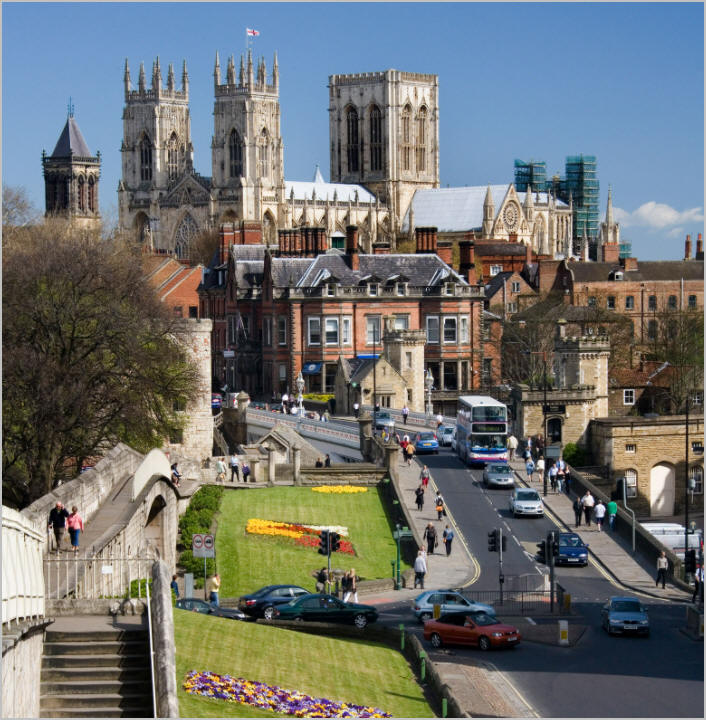
York is a cathedral city and unitary authority area, at the confluence of the rivers Ouse and Foss, in England. The city has long-standing buildings and structures, such as a minster, castle, and ancient city walls.
It is the head city of historic Yorkshire and was a county corporate, outside of the county’s council and the ridings. City of York Council is a unitary authority responsible for providing all local services and facilities throughout the city and rural areas around the outside of the old city boundaries. The city is in ceremonial North Yorkshire and a non-constituent member of the Leeds city region.
The city was founded by the Romans as Eboracum in 71 AD. It became the capital of the Roman province of Britannia Inferior, and later of the kingdoms of Deira, Northumbria, and Jórvík. In the Middle Ages, York grew as a major wool trading center and became the capital of the northern ecclesiastical province of the Church of England, a role it has retained. In the 19th century, York became a major hub of the railway network and a confectionery manufacturing center, a status it maintained well into the 20th century. During the Second World War, York was bombed as part of the Baedeker Blitz. Although less affected by bombing than other northern cities, several historic buildings were gutted and restoration efforts continued into the 1960s.
The city had a population of 153,717 in the 2011 census and is in the Yorkshire and the Humber region. The district borough, governed from the city, had a mid-2019 est. population of 210,618, the 87th most populous district in England. Wikipedia
As the car with the blacked-out windows came to a halt in a sidestreet near Tübingen’s botanical gardens, keen-eyed passersby may have noticed something unusual about its number plate. In Germany, the first few letters usually denote the municipality where a vehicle is registered. The letter Y, however, is reserved for members of the armed forces.
Military men are a rare, not to say unwelcome, sight in Tübingen. A picturesque 15th-century university town that brought forth great German minds including the philosopher Hegel and the poet Friedrich Hölderlin, it is also a modern stronghold of the German Green party, thanks to its left-leaning academic population. In 2018, there was growing resistance on campus against plans to establish Europe’s leading artificial intelligence research hub in the surrounding area: the involvement of arms manufacturers in Tübingen’s “cyber valley”, argued students who occupied a lecture hall that year, brought shame to the university’s intellectual tradition.
Yet the two high-ranking officials in field-grey Bundeswehr uniforms who stepped out of the Y-plated vehicle on 1 February 2018 had traveled into hostile territory to shake hands on a collaboration with academia, the like of which the world had never seen before.
The name of the initiative was Project Cassandra: for the next two years, university researchers would use their expertise to help the German defense ministry predict the future.
.
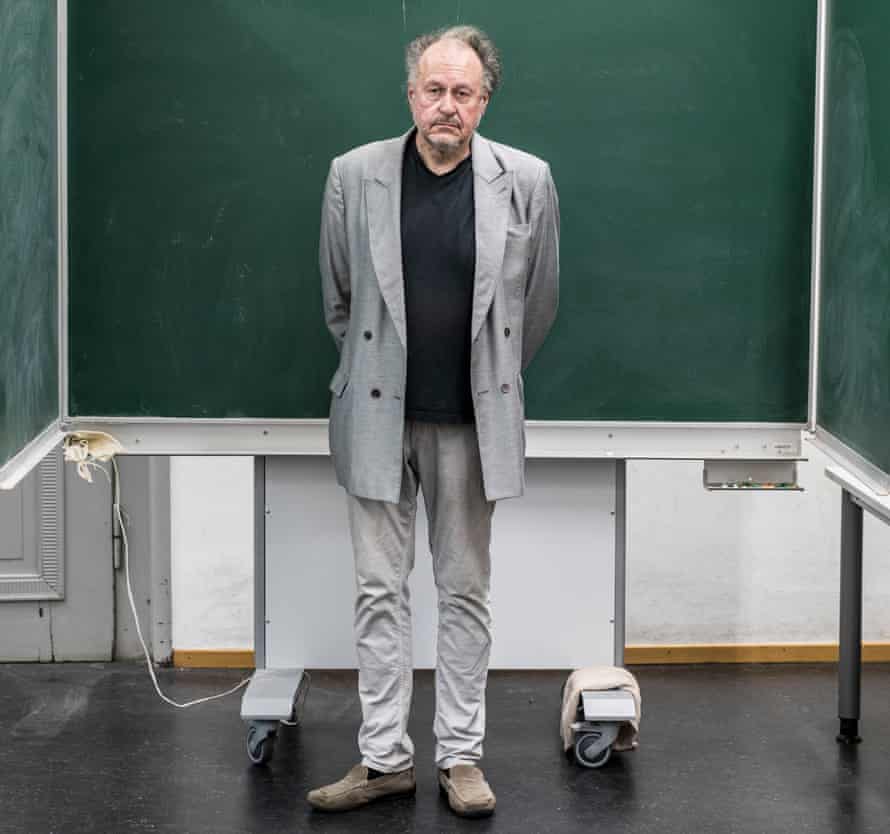
Jürgen Wertheimer, who set up Project Cassandra: ‘Writers operate on a plane that is both objective and subjective.’ Photograph: Dominik Gigler/The Guardian
Like many people during COVID, I reevaluated what I really want my quality of life to be. I’ve lived in big cities making a high salary, but I’m single and have been intimidated by homeownership only having one income source (my job).
I’m 52, a renter, and have around $230,000 in retirement, brokerage, and savings accounts. I pared back my lifestyle, and I’m now saving $5,000 a month to play a bit of catch-up. I’ve been advised to consider real estate as part of my investment strategy. I have little debt beyond a car note ($300 a month) and a 750 credit score. Should I buy a home or invest in a property like a condo near a resort?
I am yearning for a more stable lifestyle as I age, and my family all own homes, so they are pressuring me to buy something near them in a lower-cost market. With remote working, this is now a feasible option. I would look at a 15- or a 20-year mortgage either way given my age.
Sincerely,
Too old to buy?
.
Buying a home later in life involves different calculations. Getty Images
In the world, human beings are facing various problems. People who are full of greed, anger, and ignorance are seen to be fighting with each other in words and deeds. As the fighting continues, various problems such as civil wars, wars of aggression, and wars of aggression are occurring. As world peace is being destroyed, humans are facing unbearable problems. Innocent children and women are not getting the rights they deserve and deserve. I can't think of one thing every time. What is it? The United Nations. If we look at the responsibilities and duties of the United Nations, I think it is not suitable for solving the problems that are happening in the world today. In fact, the United Nations and the World Security Council, such an organization must rule the world, must be able to give orders, and must have various ways to obey orders. There must be no organization that can influence more than that organization. There should be experts from each country. They can even dominate the superpowers like the US, China, and Britain. Only then will global peace be achieved quickly. Now, if a country with power develops more militarily, economically, or socially than its own country, then powerful countries will jealously seek out enemies and wage war. Or they will attack with fighter jets. In this, innocent people are losing their lives. No one understands the value of a life. You should think about how to achieve global peace by controlling these. If the US continues to be the permanent president of the UN, world peace will never be achieved. If you think carefully, no one sees that they are working for the common good, but for their own benefit, for the benefit of their own country. The permanent president of the UN and the Security Council has rejected this, As a young Rohingya, I have come to realize that only by electing the president and secretary from among the countries in the world through a secret ballot system and governing the world fairly can we achieve global peace. The United Nations and the Security Council are organizations in which any country must govern, give orders, and make them obey their orders. For example, only when a defendant is tried in court can we hold the leaders of the countries in check and control them, can we achieve global peace smoothly. Otherwise, it will not be easy for powerful countries to use various excuses to end this war every year, every year, for the benefit of themselves and their countries. No country's leaders pay any attention to the words of the United Nations and the Security Council. If we look at it in practice, look at the Rohingya issue. Myanmar is a small country. Even that country has been under siege for 8 years. What action can be taken? Why is the UN and the Security Council Powerless? Without such Power, how can the organization bring about global peace? Everyone should think about it. Whether there is a veto or a strong one, all countries in the world can only achieve global peace if they are subject to the UN and the Security Council. Seek peace in the quiet embrace of nature. Peace is an indispensable need of the human race. It is not as if one person can kill another person, and it is as if one country can attack another country, but instead of trying to build peace, we must try to destroy the peace now, and the world is getting hotter and is on the verge of collapse. I especially appeal to all the world experts to urgently try to bring about peace in all parts of the world. Mr, Noor Muhamed Arkhan Rohingya Youth Myanmar
Film and Writing Festival for Comedy. Showcasing best of comedy short films at the FEEDBACK Film Festival. Plus, showcasing best of comedy novels, short stories, poems, screenplays (TV, short, feature) at the festival performed by professional actors.

/cdn.vox-cdn.com/uploads/chorus_image/image/69708773/Guts.0.jpeg)


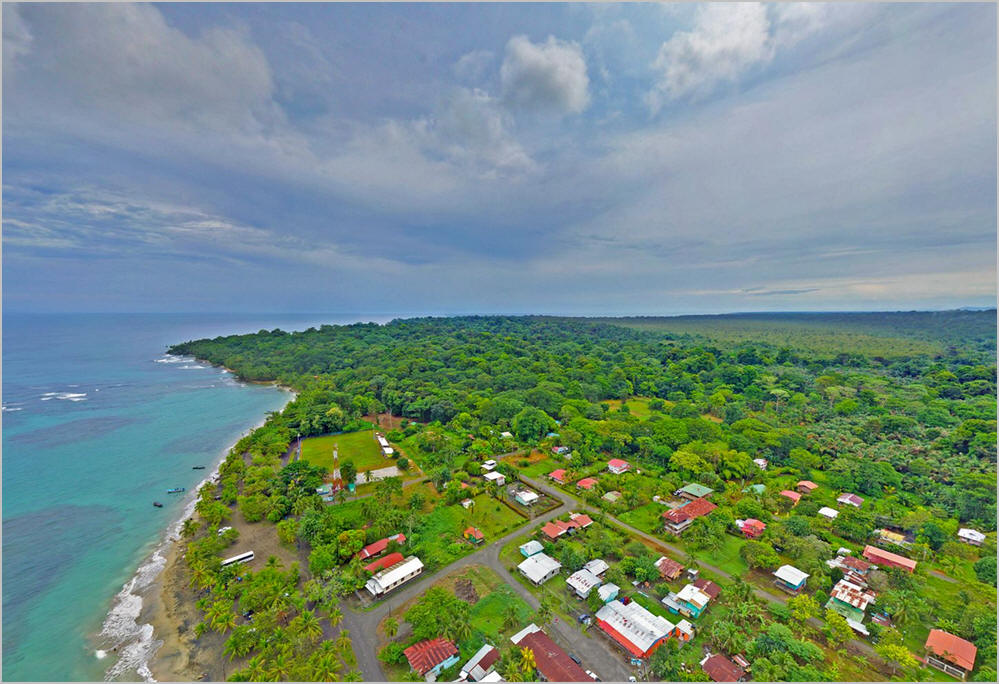 An image from Manzanillo Limon