March 1, 2022
Mohenjo
Business, Food For Thought, Human Interest, Medical, Overlooked Past Article, Science, Technical
amazon, business, Business News, current-events, Future, Hotels, human-rights, medicine, mental-health, research, Science, Science News, technology, Technology News, travel, vacation

Click the link below the picture
.
You better think twice next time you carelessly toss your plastic utensils after lunch — you never know where they could end up.
For this sea turtle, someone’s fork would up in a place it never should have — its nostril. But the Olive Ridley turtle was lucky enough to find itself in the hands of some capable researchers on a beach in Costa Rica.
“As I tested how firmly the object was lodged in its nose; it was clear that it was lodged into her nose very deeply,” Nathan Robinson, who works with the sea turtle conservation organization Leatherback Trust, wrote in a blog post. In the video below — which is not for the squeamish — Robinson and his team remove the fork from the turtle’s nose. Knowing that they were miles from the nearest vet, Robinson had to make a quick decision about the turtle’s predicament. He enlisted the help of two biologists to restrain the turtle and used his pocket knife to carefully extract the fork.
.

Removing a plastic fork from the nostril of a sea turtle. Photo Credit: Sean Williamson— with Brett Butler and 2 others.
.
.
Click the link below for the article:
.
__________________________________________
March 1, 2022
Mohenjo
Business, Food For Thought, Human Interest, Medical, Overlooked Past Article, Science, Technical
amazon, business, Business News, current-events, Future, Hotels, human-rights, medicine, mental-health, research, Science, Science News, technology, Technology News, travel, vacation

Click the link below the picture
.
I call it my arch enemy. It’s located at the base of my big toes.
There lies, on each foot, a bunion: protrusions of bone that make my toes bend inward at weird, sharp angles and give my feet the rough overall shape of diamonds. They sometimes hurt, sometimes don’t fit into shoes. They are always repellent to look at.
Bunion shame is real. One year, before the family Hanukkah party, my mom — who also has bunions — politely suggested I put on socks so I wouldn’t force relatives to witness my feet.
The summer my friends all bought gladiator sandals, I couldn’t partake: My feet wouldn’t fit through the straps. The salespeople would frown and attempt, half-heartedly, to convince me the straps would “stretch out.”
In high school, my then-boyfriend was so perplexed by the way my left bunion jutted out my foot, he measured the angle with a protractor.
And in college, midway through a conversation with a friend, I watched a look of horror explode on her face. “What happened? Why is it so swollen?” she asked, pointing with a trembling finger down to my flip-flop-clad foot.
.
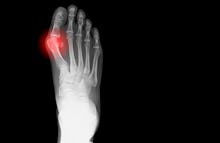 Ouch
Ouch
.
.
Click the link below for the article:
.
__________________________________________
March 1, 2022
Mohenjo
Crime, Food For Thought, Human Interest, Medical, missed News, Political, Science, Technical
amazon, business, Business News, current-events, Future, Hotels, human-rights, medicine, mental-health, research, Science, Science News, technology, Technology News, travel, vacation

.
News You might have missed!
Use your browser or smartphone back arrow (<-) to return to this table for your next selection.
.
__________________________________________
February 28, 2022
Mohenjo
Business, Enthralling, Human Interest, Photographs
amazon, business, Business News, current-events, Future, Hotels, human-rights, medicine, mental-health, research, Science, Science News, technology, Technology News, travel, vacation

Click the link below the picture
.
Quebec is one of the thirteen provinces and territories of Canada. It is the largest province by area and the second-largest by population. Much of the population lives in urban areas along the St. Lawrence River, between the most populous city, Montreal, and the provincial capital, Quebec City. Quebec is the home of the Québécois nation. Located in Central Canada, the province shares land borders with Ontario to the west, Newfoundland, and Labrador to the northeast, New Brunswick to the southeast, and a coastal border with Nunavut; in the south, it borders Maine, New Hampshire, Vermont, and New York in the United States.
Between 1534 and 1763, Quebec was called Canada and was the most developed colony in New France. Following the Seven Years’ War, Quebec became a British colony: first as the Province of Quebec (1763–1791), then Lower Canada (1791–1841), and lastly Canada East (1841–1867), as a result of the Lower Canada Rebellion. It was confederated with Ontario, Nova Scotia, and New Brunswick in 1867, beginning the Canadian Confederation. Until the early 1960s, the Catholic Church played a large role in the social and cultural institutions in Quebec. However, the Quiet Revolution of the 1960s to 1980s increased the role of the Government of Quebec in l’État québécois (state of Quebec).
The Constitution Act, 1867 created the present-day Government of Quebec, which functions within the context of a Westminster system and is both a liberal democracy and a constitutional monarchy with a parliamentary system. The Premier of Quebec, presently François Legault, acts as head of government. Québécois political culture mostly differs on a nationalist-vs-federalist continuum, rather than a left-vs-right continuum. Quebec independence debates have played a large role in politics. Quebec society’s cohesion and specificity is based on three of its unique statutory documents: the Quebec Charter of Human Rights and Freedoms, the Charter of the French Language, and the Civil Code of Quebec. Furthermore, unlike elsewhere in Canada, law in Quebec is mixed: private law is exercised under a civil-law system, while public law is exercised under a common-law system.
Quebec’s official language is French; Québécois French is the local variety. The economy of Quebec is diversified and post-industrial. Quebec’s substantial natural resources, notably exploited in hydroelectricity, forestry, and mining, have also long been a mainstay. Quebec is well known for producing maple syrup, for its comedy, and for making hockey one of the most popular sports in Canada. It is also renowned for its culture; the province produces literature, music, films, TV shows, festivals, folklore, and more.
The name Québec comes from an Algonquin word meaning ‘narrow passage’ or ‘strait’. The name originally referred to the area around Quebec City where the Saint Lawrence River narrows to a cliff-lined gap. Early variations in the spelling included Québecq and Kébec. French explorer Samuel de Champlain chose the name Québec in 1608 for the colonial outpost he would use as the administrative seat for New France. Wikipedia
.
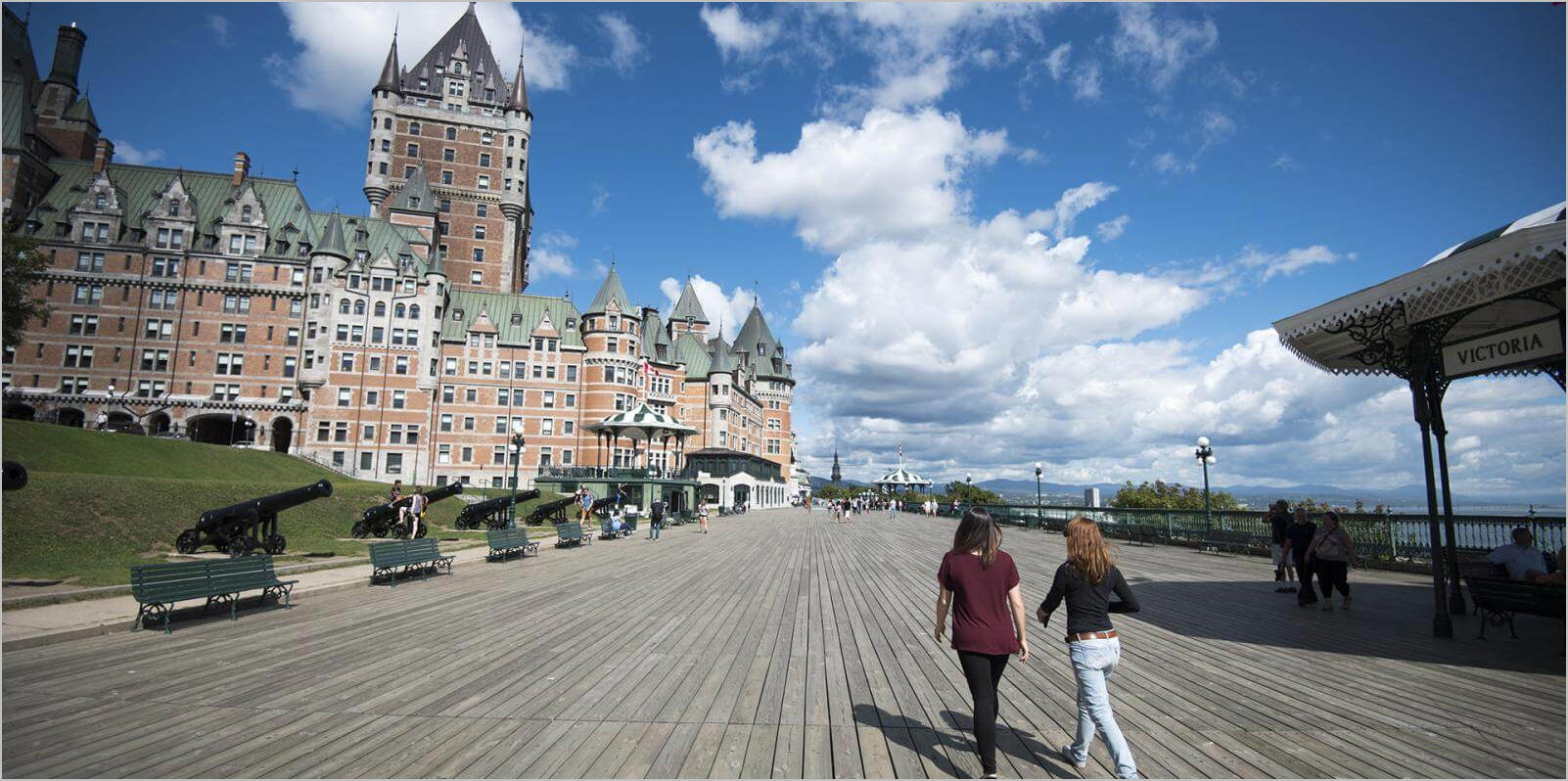 An image from Québec
.
.
Click the link below for images:
.
__________________________________________
February 28, 2022
Mohenjo
Business, Food For Thought, Human Interest, Medical, Science, Technical
amazon, business, Business News, current-events, Future, Hotels, human-rights, medicine, mental-health, research, Science, Science News, technology, Technology News, travel, vacation

Click the link below the picture
.
The human body is made up of roughly 10 trillion cells. That’s a huge number, but it’s dwarfed by the 40 trillion or so bacterial cells that live on and inside the body.
In recent years, scientists have learned that our bacteria — known collectively as the microbiome — are intimately involved with many aspects of our health, including the robustness of our immune system and our risk of developing asthma and allergies. Now, new research suggests that the microbiome may also play a key role in neurological and psychological disorders.
“At a basic neuroscience level, all the key mechanisms of the brain have been shown to be regulated by the microbiome,” says John Cryan, a neuroscientist at University College Cork in Ireland.
As scientists investigate how the microbiome impacts our bodies and minds, some experts envision fundamental changes in the way doctors diagnose and treat disease.
“Someday soon, you and I will go into the doctor’s office, and the doctor will prescribe medicine that won’t be a chemical from a lab but may be live bacteria,” says Sarkis Mazmanian, a microbiologist at Caltech in Pasadena, California. “In addition to blood work, yearly physicals may include fecal samples to profile the microbiome,” tracking changes in bacteria to predict your risk for illness, sometimes long before symptoms appear.
.
 These E. coli bacteria are part of the normal content of the digestive systems of humans and other animals. However, under certain conditions, they can cause gastroenteritis and urinary tract infections. Some strains also cause food poisoning.Ian Cuming / Getty Images/Ikon Images
.
.
Click the link below for the article:
.
__________________________________________
February 28, 2022
Mohenjo
Arts, Business, Food For Thought, Human Interest, Medical, Science, Technical
amazon, business, Business News, current-events, Future, Hotels, human-rights, medicine, mental-health, research, Science, Science News, technology, Technology News, travel, vacation
Click the link below the picture
.
What do Barbra Streisand, Ozzy Osbourne and Will.i.am have in common? Yes, they’re famous musicians — but they also process sound differently from most of us.
That’s the latest finding of a study that examines people with mild to moderate tinnitus, a hearing condition common among musicians that causes a ringing sound in the ears. (As a drummer for nearly two decades and a former member of a touring band, I’ve had tinnitus for five years. I know what it’s like to never live in complete silence.)
The research, published in the journal PLOS One, shows that people with tinnitus can habituate the bothersome sound, mentally condemning it to that neurological basement area where refrigerator hums and street traffic live.
But here’s the especially cool part: To counteract the ringing, your brain literally changes how it operates.
University of Illinois speech and hearing science professor Fatima Husain, leader of the study, had subjects with mild to moderate tinnitus listen to pleasant, unpleasant and neutral sounds (for example: laughter, pained screaming and a bottle opening).
Husain expected to find that people with tinnitus would be further irritated by negative sounds, like adding a fire alarm on top of a Meghan Trainor song. Instead, Husain found the negative sounds didn’t bother patients as much, because in their brains, the sounds took a different path. They were rerouted from a place of emotional processing to one of logical processing.
.
 ?
?
.
.
Click the link below for the article:
.
__________________________________________
February 28, 2022
Mohenjo
Arts, Crime, Food For Thought, Human Interest, Medical, missed News, Political, Science, Technical
amazon, business, Business News, current-events, Future, Hotels, human-rights, medicine, mental-health, research, Science, Science News, technology, Technology News, travel, vacation
.
News You might have missed!
Use your browser or smartphone back arrow (<-) to return to this table for your next selection.
.
__________________________________________
February 27, 2022
Mohenjo
Business, Human Interest, Political, Technical
amazon, business, Business News, current-events, Future, Hotels, human-rights, medicine, mental-health, research, Science, Science News, technology, Technology News, travel, vacation

.
Was Trump Looking in a mirror during his lengthy CPAC speech?
.
__________________________________________
February 27, 2022
Mohenjo
Business, Human Interest, Science, Technical
amazon, business, Business News, current-events, Future, Hotels, human-rights, medicine, mental-health, research, Science, Science News, technology, Technology News, travel, vacation
Click the link below the picture
.
The cost of college, like the cost of everything else, is going up. In fact, in the past 10 years, the price of attending a university has risen by more than 25%. It’s so expensive that a lot of promising students don’t get to go and those who do often end up saddled with student loan debt. So the fact that Oakland University in Michigan sent emails to 5,500 students mistakenly awarding them hefty scholarships seems like a very cruel joke.
Students received a congratulatory email on January 4th, according to the New York Times. It read, “You worked hard and it paid off!” it read, and informed students that they would receive a $48,000 academic scholarship over the course of four years. That’s a $12,000 a year scholarship at a school where the in-state tuition is $13,934 per year, according to Oakland University’s website. That’s basically a full ride.
So, when those individuals got those emails, they were understandably overjoyed. They called their parents. They told their friends. Someone probably texted all their friends to plan a celebratory beer run. Several people probably cried. Two hours later, those same students were totally deflated when they got another email from the university. “CORRECTION,” read the subject line of the email that reportedly said, “Because you are not a recipient of the Platinum Presidential Scholar Award, this message was unfortunately sent to you in error.”
“When they sent that email, I was like ‘Wow, this is my escape, this is everything I’ve ever wanted,'” Charmaine, an 18-year-old in Farmington and an incoming freshman at Oakland University, told ABC. Brown had been applying for scholarships nonstop, so the email was a dream come true. And then it was a nightmare. “That’s a big mistake. That’s a very big mistake,” Brown told ABC. She and her mother are currently petitioning the university to honor the scholarships.
.
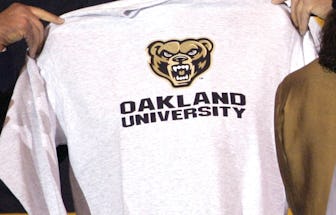 Bill Pugliano/Getty Images News/Getty Images
.
.
Click the link below for the article:
.
__________________________________________
February 27, 2022
Mohenjo
Business, Food For Thought, Human Interest, Overlooked Past Article, Political, Science, Technical
amazon, business, Business News, current-events, Future, Hotels, human-rights, medicine, mental-health, research, Science, Science News, technology, Technology News, travel, vacation

Click the link below the picture
.
Note: The numbers have changed since this article was published.
The eight individuals who own as much as half of the rest of the planet are all men and have largely made their fortunes in technology. Most are American, with one European and one Mexican in the mix. Several have pledged to give it all to charity.
The eight tycoons’ net worth, as calculated by Forbes magazine, was cited Monday by anti-poverty activists Oxfam in a report highlighting income inequality. Although most of them will not be joining the annual meeting of business and political elites in the Swiss town of Davos this week, the extraordinary individual wealth they typify will be part of the gathering’s discussions on inequality.
.
 Bill Gates, co-chair of the Bill & Melinda Gates Foundation, speaks during a discussion on innovation hosted by Reuters in Washington, U.S., April 18, 2016.REUTERS
.
.
Click the link below for the article:
.
__________________________________________
Older Entries
Newer Entries

