June 6, 2021
Mohenjo
Business, Human Interest, Science, Technical
amazon, business, Business News, current-events, Future, Hotels, human-rights, medicine, mental-health, research, Science, Science News, technology, Technology News, travel, vacation

Click the link below the picture
.
We can tell how much matter is in the universe by the motions of the stars. In the1920s, physicists attempting to do so discovered a discrepancy and concluded that there must be more matter in the universe than is detectable. How can this be?
In 1933, Swiss astronomer Fritz Zwicky, while observing the motion of galaxies in the Coma Cluster, began wondering what kept them together. There wasn’t enough mass to keep the galaxies from flying apart. Zwicky proposed that some kind of dark matter provided cohesion. But since he had no evidence, his theory was quickly dismissed.
Then, in 1968, astronomer Vera Rubin made a similar discovery. She was studying the Andromeda Galaxy at Kitt Peak Observatory in the mountains of southern Arizona when she came across something that puzzled her. Rubin was examining Andromeda’s rotation curve or the speed at which the stars around the center rotate, and realized that the stars on the outer edges moved at the exact same rate as those at the interior, violating Newton’s laws of motion. This meant there was more matter in the galaxy than was detectable. Her punch card readouts are today considered the first evidence of the existence of dark matter.
Many other galaxies were studied throughout the ’70s. In each case, the same phenomenon was observed. Today, dark matter is thought to comprise up to 27% of the universe. “Normal” or baryonic matter makes up just 5%. That’s the stuff we can detect. Dark energy, which we can’t detect either, makes up 68%.
.

Photo: Shutterstock
.
.
Click the link below for the article:
.
__________________________________________
June 6, 2021
Mohenjo
Business, Food For Thought, Human Interest, Technical
amazon, business, Business News, current-events, Future, Hotels, human-rights, medicine, mental-health, research, Science, Science News, technology, Technology News, travel, vacation

Click the link below the picture
.
We’ve been reviewing tools, gadgets, tech, outdoor gear, and other cool stuff for decades, so we know a few things about what fathers want and which products are worth the cash. We asked our gear experts and a few handy dads we know what’s on their wish lists to compile 30 perfect Father’s Day gifts.
.
 .
.
.
Click the link below for the article:
.
__________________________________________
June 5, 2021
Mohenjo
Business, Food For Thought, Human Interest, Technical
amazon, business, Business News, current-events, Future, Hotels, human-rights, medicine, mental-health, research, Science, Science News, technology, Technology News, travel, vacation

Click the link below the picture
.
If you were paying attention in the spring of 1992, you probably remember this quote coming from the mouth of Rodney King. His broadcast appeal to the violent masses was made halfway through the six-day-long rioting in Los Angeles.
And to be fair, “Can’t we all just get along?” were not his words. These were:
“People, I just want to say, you know, can we all get along? Can we get along?”
.
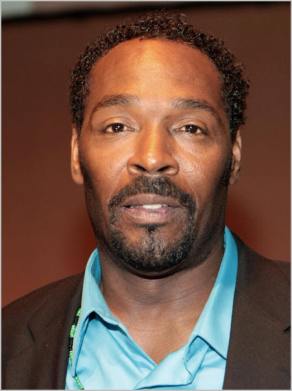 Rodney King
.
.
Click the link below for the article:
.
__________________________________________
June 5, 2021
Mohenjo
Business, Enthralling, Human Interest, Photographs
amazon, business, Business News, current-events, Future, Hotels, human-rights, medicine, mental-health, research, Science, Science News, technology, Technology News, travel, vacation

Click the link below the picture
.
Quimper is a commune and capital of the Finistère department of Brittany in northwestern France.
The city was built on the confluence of the Steir, Odet, and Jet rivers. Route National 165, D785, D765, and D783 were constructed to intersect here, 62 km (39 miles) northwest of Lorient, 181 km (112 mi) west of Rennes, and 486 km (302 mi) west-southwest of Paris.
Quimper is the ancient capital of Cornouaille, Brittany’s most traditional region, and has a distinctive Breton Celtic character. Its name is the Breton word kemper (cognate to Welsh cymer), meaning “confluence”. The town developed at the confluence of the rivers Le Steir and L’Odet. Shops and flags celebrate the region’s Celtic heritage. Wikipedia
.
 An image from Quimper, France
.
.
Click the link below for images:
.
__________________________________________
June 5, 2021
Mohenjo
Business, Food For Thought, Human Interest, Science, Technical
amazon, business, Business News, current-events, Future, Hotels, human-rights, medicine, mental-health, research, Science, Science News, technology, Technology News, travel, vacation

Click the link below the picture
.
There’s one line from Twitter power user Chrissy Teigen’s latest mea culpa that I haven’t been able to get out of my head. Teigen, who recently returned to the platform less than a month after announcing she was quitting it forever, tweeted an apology to media personality Courtney Stodden, who had accused her of harassing them online when they were just 16 years old.
“I’m mortified and sad at who I used to be,” Teigen wrote to her 13.6 million followers last week. “I was an insecure, attention-seeking troll. I am ashamed and completely embarrassed at my behavior but that is nothing compared to how I made Courtney feel.”
It was the next bit, though, that’s been haunting me: “I have worked so hard to give you guys joy and be beloved and the feeling of letting you down is nearly unbearable.” There’s something deeply telling about Teigen’s admission that she works hard to “be beloved” — which, as writer Bolu Babalola notes, “is not the same as working to be a good person.”
The vast majority of people on social media aren’t mega-celebrities attempting to charm ginormous audiences while also carrying on strange and vicious vendettas. But Teigen’s failure to leave a site that makes her feel terrible — and her bald-faced attempts to “be beloved,” which tend to backfire spectacularly — are emblematic of how a lot of people have felt about social media lately, and especially over this past year.
.

.
.
Click the link below for the article:
.
__________________________________________
June 5, 2021
Mohenjo
Business, Food For Thought, Human Interest, Science, Technical
amazon, business, Business News, current-events, Future, Hotels, human-rights, medicine, mental-health, research, Science, Science News, technology, Technology News, travel, vacation

Click the link below the picture
.
Most folks love learning, regardless of whether or not school is “their thing.” Sometimes it’s just a matter of finding the right teacher for your learning style—or maybe even the right medium.
For auditory learners, podcasts can be excellent vehicles for processing knowledge that’d be less digestible in more visual mediums like video or even the written word. The American education systems tends to fail students in myriad ways, requiring continual education after the fact to learn the truth behind what we were taught in history, art, science, language, literature, and math. Privileged gatekeepers deciding who and what gets taught can result in the denial of diverse voices and perspectives.
Podcasts radically shift the dynamics around who gets to teach, and who gets to learn. A lot of the most beloved and popular shows, like Radiolab and Dan Carlin’s Hardcore History, basically boil down to what you wish your science or history class had been like in the first place. Many others, like 1619 and You’re Wrong About, aim to correct the misinformation in many accepted cultural narratives from both our near and distant pasts.
Now, obviously, podcasts can’t replace a world-class, bonafide, IRL, teacher-to-student relationship. But they can teach us more than a few vital lessons.
.

Listen, and you might learn a thing or two.
Image: bob al-greene / mashable
.
.
Click the link below for the article:
.
__________________________________________
June 5, 2021
Mohenjo
Food For Thought, Human Interest, missed News, Political, Science, Technical
amazon, business, Business News, current-events, Future, Hotels, human-rights, medicine, mental-health, research, Science, Science News, technology, Technology News, travel, vacation

.
News You might have missed!
Use your browser or smartphone back arrow (<-) to return to this table for your next selection.
.
__________________________________________
June 4, 2021
Mohenjo
Business, Enthralling, Human Interest, Photographs
amazon, business, Business News, current-events, Future, Hotels, human-rights, medicine, mental-health, research, Science, Science News, technology, Technology News, travel, vacation

Click the link below the picture
.
Ubatuba is a Brazilian municipality, located on the southeast coast, in the state of São Paulo. It is part of the Metropolitan Region of Vale do Paraíba e Litoral Norte. The population is 91,824 (2020 est.) in an area of 723.88 km².
Ubatuba is linked with the Rodovia Longitudinal or the BR-101. It is located east of São Paulo and east/north/east of Santos and west of Rio de Janeiro. The city lies on the Tropic of Capricorn.
The urban area is mainly concentrated in the Atlantic and valley areas. The city frequently receives rain, hence the nickname Uba Chuva (chuva being Portuguese for “rain”). Much of the land to the north is forested and mountainous, forming a part of the Serra do Mar mountains. Serra do Mar State Park covers 83% of the city and has few connector roads through the mountain range.
.
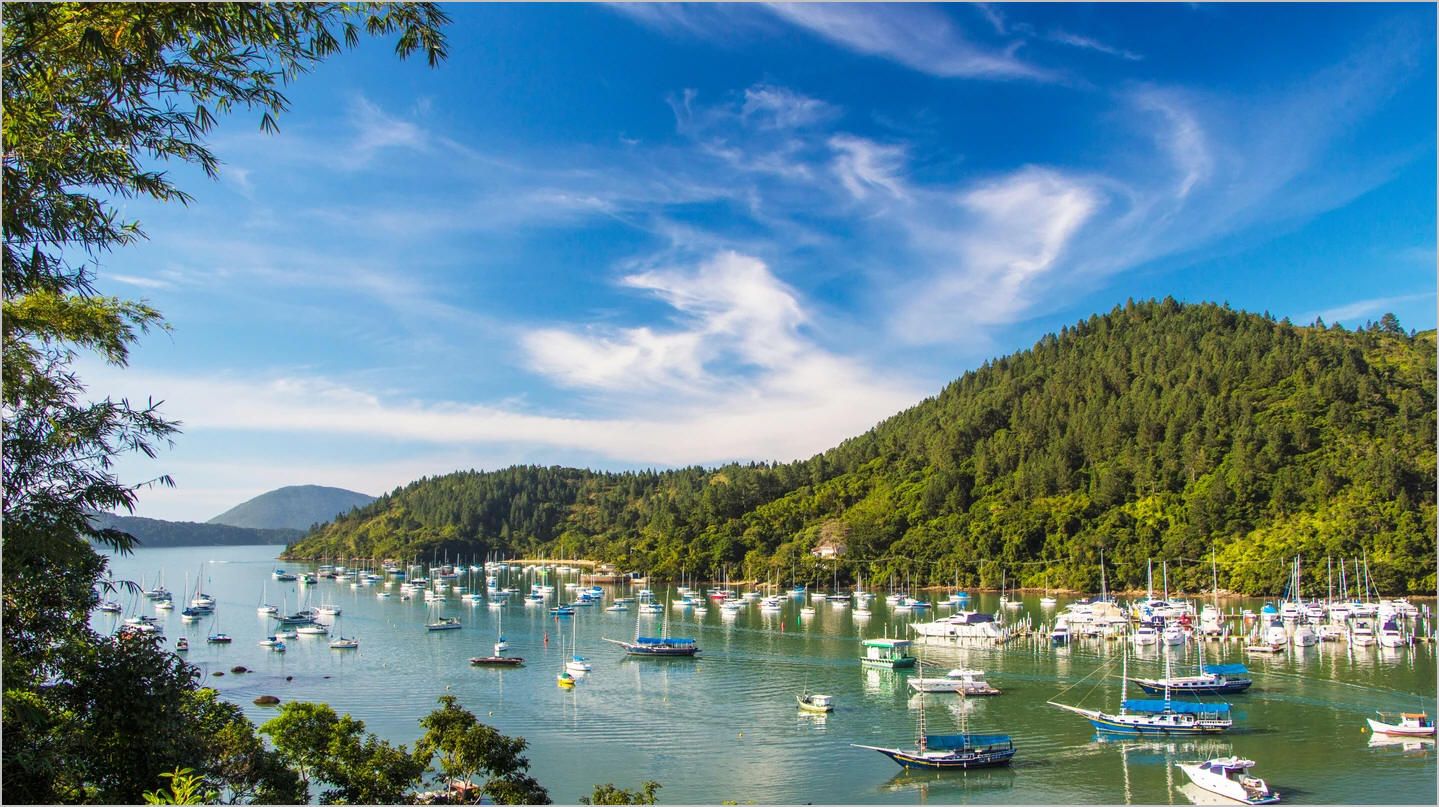 An image from Ubatuba Brazil
.
.
Click the link below for images:
.
__________________________________________
June 4, 2021
Mohenjo
Business, Food For Thought, Human Interest, Science, Technical
amazon, business, Business News, current-events, Future, Hotels, human-rights, medicine, mental-health, research, Science, Science News, technology, Technology News, travel, vacation
Click the link below the picture
.
Last month, government officials in the island nation of the Maldives officially unveiled plans to build the first fully floating island city of its kind. Could the ambitious experiment be a blueprint for how we’ll live in the future as climate change continues to raise the global sea level?
As “arguably the lowest-lying country in the world,” according to NASA—the average elevation is just 3.3 feet above sea level—the Maldives, an island republic in the northern Indian Ocean, will soon have to rely on sustainable housing. In virtually any simulation of the near future, the over 1,000 individual islands that make up the Maldives will be some of the first to disappear below the rising sea level.
Enter the floating city, appropriately called Maldives Floating City (MFC), which will be built in a lagoon just minutes from Male, the capital of the Maldives. MFC’s designers—the Netherlands-based Dutch Docklands, the global leader in floating infrastructure—say the floating city’s shape, a series of honeycomb-like hexagonal maze rows is supposed to resemble coral.
.
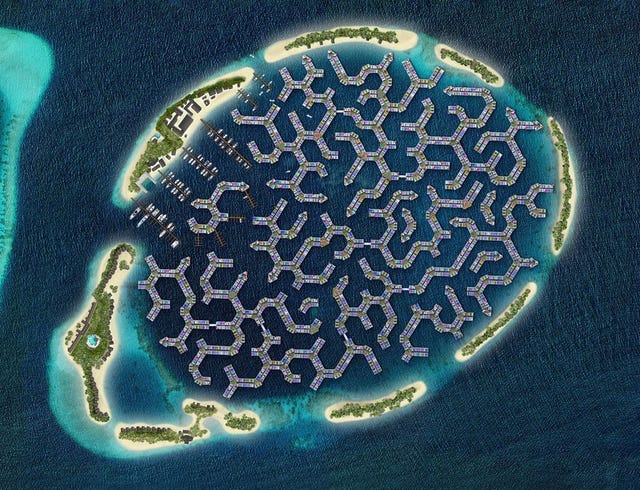 Maldives Floating City/Handout
.
.
Click the link below for the article:
.
__________________________________________
June 4, 2021
Mohenjo
Business, Food For Thought, Human Interest, Science, Technical
amazon, business, Business News, current-events, Future, Hotels, human-rights, medicine, mental-health, research, Science, Science News, technology, Technology News, travel, vacation

Click the link below the picture
.
Suppose aliens existed, and imagine that some of them had been watching our planet for its entire four and a half billion years. What would they have seen? Over most of that vast timespan, Earth’s appearance altered slowly and gradually. Continents drifted; ice cover waxed and waned; successive species emerged, evolved, with many of them becoming extinct.
But in just a tiny sliver of Earth’s history—the last hundred centuries—the patterns of vegetation altered much faster than before. This signaled the start of agriculture—and later urbanization. The changes accelerated as the human population increased.
Then came even faster changes. Within just a century, the amount of carbon dioxide in the atmosphere began to rise dangerously fast. Radio emissions that couldn’t be explained by natural processes appeared and something else unprecedented happened: Rockets launched from the planet’s surface escaped the biosphere completely. Some spacecraft were propelled into orbits around the Earth; others journeyed to the moon, Mars, Jupiter, and even Pluto.
If those hypothetical aliens continued to keep watch, what would they witness in the next century? Will a final spasm of activity be followed by silence due to climate change? Or will the planet’s ecology stabilize? Will there be massive terraforming? Will an armada of spacecraft launched from Earth spawn new oases of life elsewhere?
.
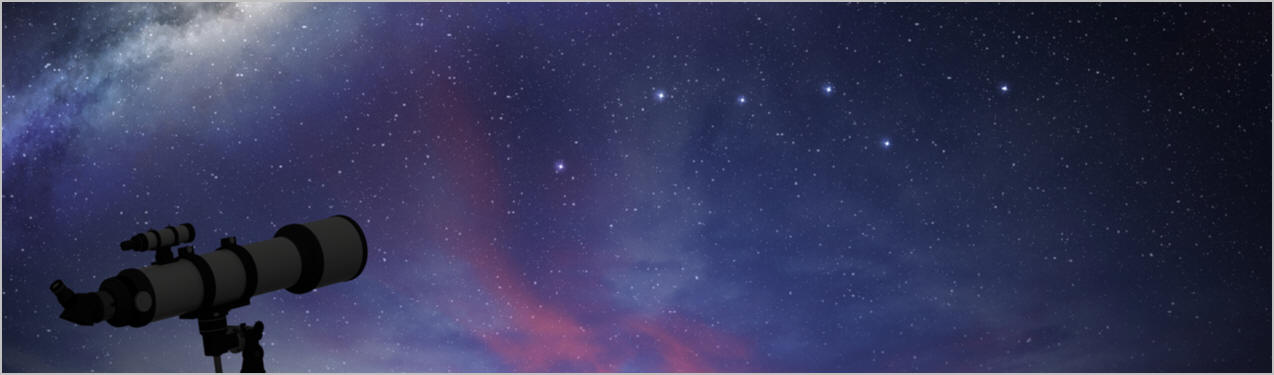 Search for Aliens
.
.
Click the link below for the article:
.
__________________________________________
Older Entries
Newer Entries

