August 7, 2014
Mohenjo
Science
amazon, Astronomers, Astronomy, Big Mystery in Perseus Cluster, business, Business News, Chandra X Ray Observatory, Dark Matter, Dark Matter Mystery, Esra Bulbul, Galaxy Strange Signal, Harvard Center for Astrophysics, Hotels, huffingtonpost, human-rights, massive galaxy cluster, medicine, mental-health, Mysterious X Ray, Mysterious X Ray Signal, Nasa Mysterious Signal, Particle Physics, Perseus Cluster, Perseus Cluster Mystery, research, Science, Science News, Slideshow, Strange Signal, Strange X Ray, technology, Technology News, travel, vacation
Click link below picture
.
When astronomers detected a strange signal in a massive galaxy cluster millions of light years from Earth, they knew they had stumbled upon something big.
“I couldn’t believe my eyes,” Esra Bulbul, of the Harvard Center for Astrophysics, said in a written statement. “What we found, at first glance, could not be explained by known physics.”
.
.
.
Click link below for story and slideshow:
.
__________________________________________
July 30, 2013
Mohenjo
Science
amazon, atom smasher, Bs Particle, business, Business News, cern scientists, climate, Daily Discovery, decay theory, Hotels, huffingtonpost, Large Hadron Collider, Muons, Particle Decay, Particle Physics, particle physics lab, Physics, rare subatomic particle, religion, research, Science, Science News, Slideshow, Standard Model, standard model of particle physics, technology, Technology News, travel, vacation
FROM

Click link below picture
.
After a quarter-century of searching, scientists have nailed down how one particularly rare subatomic particle decays into something else – a discovery that adds certainty to our thinking about how the universe began and keeps running.
The world’s top particle physics lab said Friday it had measured the decay time of a particle known as a Bs (B sub s) meson into two other fundamental particles called muons, which are much heavier than but similar to electrons. It was observed as part of the reams of data coming from CERN’s $10 billion Large Hadron Collider, the world’s largest atom smasher, on the Swiss-French border near Geneva.
The rare sighting at the European Center for Nuclear Research, known by its French acronym CERN, shows that the so-called standard model of particle physics is “coming through with flying colors,” though it describes only 5 percent of the universe, said Pierluigi Campana, who leads one of the two main teams at CERN involved in the research.
.

Large Hadron Collider at CERN where physicists conducted particle decay experiment.
.
.Click link below for story and slideshow:
http://www.huffingtonpost.com/2013/07/19/cern-scientists-rare-particle-decay-theory-universe-birth_n_3622595.html?ref=topbar
.
______________________________________________________________________________
May 16, 2013
Mohenjo
Science
amazon, Antigravity, Antimatter, antimatter counterpart, Antimatter Gravity, berkeley national laboratory, business, climate, Environment, experimental measurements, Gravity Antimatter, Hotels, huffingtonpost, Large Hadron Collider, Lawrence Berkeley National Laboratory, Particle Physics, Physics, research, Science, Science News, Slideshow, strange cousin, technology, Technology News, travel, vacation, Video, Weird Science
FROM
Click link below picture
.
When it comes to antimatter, what goes up doesn’t necessarily come down. In a new study, physicists weighed antimatter in an effort to determine how this strange cousin of matter interacts with gravity.
Ordinary matter atoms fall down due to the pull of gravity, but the same might not be true of antimatter, which has the same mass as matter, but opposite charge and spin. Scientists wondered whether antimatter atoms would instead fall up when pulled by gravity, and whether such a thing as antigravity exists.
“In the unlikely event that antimatter falls upward, we’d have to fundamentally revise our view of physics and rethink how the universe works,” Joel Fajans, a physicist at the Lawrence Berkeley National Laboratory in California, said in a statement.
Fajans and his colleagues at the Alpha experiment at Switzerland’s CERN physics lab made the first experimental measurements of the gravitational mass of antihydrogen — the antimatter equivalent of hydrogen, made of an antiproton and a positron (the antimatter counterpart to an electron). [Whoa! The Coolest Little Particles in Nature]
.

This illustration of antimatter shows antiparticle beside its particle mirror-image.
.
.Click link below for story, slideshow, and video:
http://www.huffingtonpost.com/2013/04/30/antimatter-gravity-alpha-experiment-cern-force-atoms_n_3187289.html?ref=topbar
.
____________________________________________________
April 16, 2013
Mohenjo
Science
amazon, blas cabrera, business, climate, cryogenic dark matter, Daily Discovery, Dark Matter, Dark Matter Detected, Dark Matter Detector, Dark Matter Found, dark matter search, Hotels, huffingtonpost, Particle Physicists, Particle Physics, Physics, research, Science, Science News, Slideshow, Super Cryogenic Dark Matter Search, Supercdms, technology, Technology News, travel, university physicist, vacation, Video
FROM
Click link below picture
.
Hints of dark matter, the mysterious stuff that makes up perhaps 85 percent of the matter in the universe, may have been observed by scientists.
But researchers are far from saying they’ve discovered the source of dark matter.
“We’re not claiming anything,” warned Blas Cabrera, a Stanford University physicist speaking here today (April 15) at a meeting of the American Physical Society. [Explaining Dark Matter (Infographic)]
The new results come from the Super Cryogenic Dark Matter Search (SuperCDMS), which takes place deep underground in the Soudan mine in northern Minnesota.
.

The Cryogenic Dark Matter Search experiment (SuperCDMS) uses five towers of dark matter detectors like the ones shown here.
.
.Click link below for story and slideshow:
http://www.huffingtonpost.com/2013/04/15/dark-matter-found-underground-detector-particle-physicists_n_3086829.html?ref=topbar
.
_____________________________________________________
April 4, 2013
Mohenjo
Science
Alpha Magnetic Spectrometer, amazon, Antimatter, business, climate, Dark Matter, first evidence, Future, gumshoe, Hotels, html ref, huffingtonpost, International Space Station, NASA, Nobel Prize, Particle Physics, Physics, radiation emitting star, research, Science, Science News, Slideshow, Space, Space Program, Space Shuttle Endeavour, Spaceflight, technology, Technology News, travel, vacation, Video
FROM
Click link below picture
.
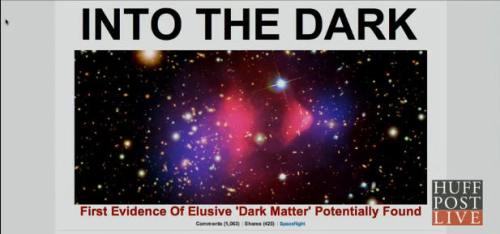
It is one of the cosmos’ most mysterious unsolved cases: dark matter. It is supposedly what holds the universe together. We can’t see it, but scientists are pretty sure it’s out there.
Led by a dogged, Nobel Prize-winning gumshoe who has spent 18 years on the case, scientists put a $2 billion detector aboard the International Space Station to try to track down the stuff. And after two years, the first evidence came in Wednesday: tantalizing cosmic footprints that seem to have been left by dark matter.
But the evidence isn’t enough to declare the case closed. The footprints could have come from another, more conventional suspect: a pulsar, or a rotating, radiation-emitting star.
.
.
.Click link below for story, video, and slideshow:
http://www.huffingtonpost.com/2013/04/03/iss-dark-matter-found_n_3009408.html?ref=topbar
.
____________________________________________________
December 17, 2012
Mohenjo
Science
Atlas, business, climate, faint hint, Higgs Boson, huffingtonpost, large hadron, Large Hadron Collider, lhc experiments, Particle Physics, photons, Physics, research, Science, Science News, Scientists, technology, travel, Two Higgs Bosons, Two-Photon Higgs Boson, vacation, Video
FROM
Click link below picture
.
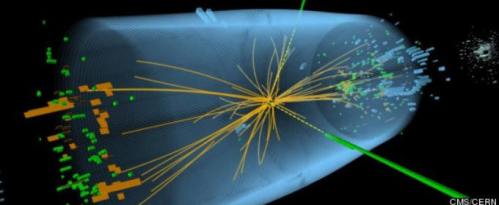
A month ago scientists at the Large Hadron Collider released the latest Higgs boson results. And although the data held few obvious surprises, most intriguing were the results that scientists didn’t share.
The original Higgs data from back in July had shown that the Higgs seemed to be decaying into two photons more often than it should—an enticing though faint hint of something new, some sort of physics beyond our understanding. In November, scientists at the Atlas and LHC experiments updated everything except the two-photon data. This week we learned why.
.
.
.Click link below for story
http://www.huffingtonpost.com/2012/12/15/two-higgs-bosons_n_2302897.html?ref=topbar
.
__________________________________________________

 James' World 2