June 1, 2013
Mohenjo
Science
1998 QE2, amazon, Asteroid 1998 QE2, Asteroid Flyby, Asteroid Live, Asteroid-Webcast, Asteroids, astronomy magazine, bob berman, business, Hotels, huffingtonpost, lincoln near earth asteroid research, lincoln near earth asteroid research program, magazine columnist, NASA, Near-Earth Asteroids, research, Science, Science News, Slideshow, Slooh, Space, space lovers, Space Rock, technology, Technology News, travel, vacation, Video
FROM

Click link below picture
.
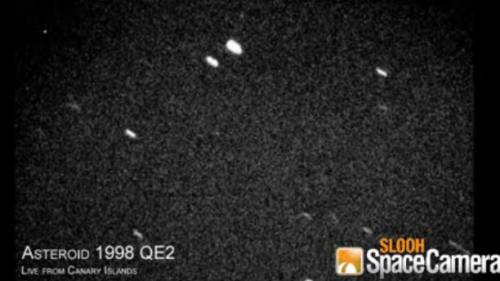
The gigantic space rock scientists call 1998 QE2 will miss earth, but that doesn’t mean you have to miss it: As asteroid 1998 QE2 zips by Earth today (May 31), with its newly discovered moon in tow, astronomers and space-lovers alike can watch the flyby live in the video above.
The SLOOH SpaceCamera webcast starts at 4:30 p.m. EDT, tracking the near-Earth asteroid’s close approach live from the Canary Islands.
Astronomers discovered the 1.7-mile-long space rock in 1998 as part of the MIT Lincoln Near Earth Asteroid Research program near Socorro, N.M.
“It will be fun to actually watch it change position,” Bob Berman, Astronomy magazine columnist, said in a written statement. “Although it will not come nearer than 14 moon distances, that’s still about ten times closer than Mars can ever get. As Slooh’s Space Cameras image it directly that afternoon, we will all be reminded that asteroids of this size have changed the biosphere of our planet in the past, and even set the stage for the present dominion of humans.”
.
.
.Click link below for view:
http://www.huffingtonpost.com/2013/05/31/asteroid-1998-qe2-flyby-slooh-space-camera-video_n_3367800.html?ref=topbar
.
____________________________________________________
May 21, 2013
Mohenjo
Science
amazon, Astronomy, business, climate, Environment, environment office, Hotels, huffingtonpost, looking at the moon, Lunar Reconnaissance Orbiter, mare imbrium, Meteorite Crash, Meteorites, Meteors, Moon, Moon Explosion, Moon Meteorite, myaol, NASA, nasa scientists, research, Science, Science News, Slideshow, Space, Space Rocks, technology, Technology News, travel, vacation, Video
FROM
Click link below picture
.
The moon has a new hole on its surface thanks to a boulder that slammed into it in March, creating the biggest explosion scientists have seen on the moon since they started monitoring it.
The meteorite crashed on March 17, slamming into the lunar surface at a mind-boggling 56,000 mph (90,000 kph) and creating a new crater 65 feet wide (20 meters). The crash sparked a bright flash of light that would have been visible to anyone looking at the moon at the time with the naked eye, NASA scientists say.
“On March 17, 2013, an object about the size of a small boulder hit the lunar surface in Mare Imbrium,” Bill Cooke of NASA’s Meteoroid Environment Office said in a statement. “It exploded in a flash nearly 10 times as bright as anything we’ve ever seen before.” [The Greatest Lunar Crashes Ever]
.

This artist’s illustration shows a meteor crashing into the surface of the moon. Scientists say hundreds of space rocks impact the lunar surface every year.
.
.Click link below for story, videos, and slideshow:
http://www.huffingtonpost.com/2013/05/18/moon-explosion-meteorite-crash-lunar-surface-nasa_n_3294710.html?icid=maing-grid7|myaol|dl12|sec1_lnk3%26pLid%3D315221
.
___________________________________________________
May 21, 2013
Mohenjo
Science
1998 QE2, amazon, Asteroid 1998 QE2, Asteroid Flyby, Asteroids, Astronomy, business, climate, current-events, distance between earth and the moon, Environment, goldstone radar, high resolution images, Hotels, huffingtonpost, jet propulsion laboratory, Jpl, NASA, Near-Earth Asteroids, Near-Earth Objects, radar telescopes, research, Science, Science News, Slideshow, Space, Space Rocks, technology, Technology News, travel, vacation, Video
FROM
Click link below picture
.
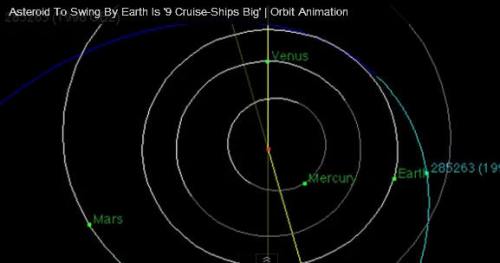
A gigantic asteroid will fly by our planet at the end of this month, making its closest approach for at least the next two centuries on May 31. But, don’t worry, it won’t get closer than about 3.6 million miles, which is around 15 times the distance between Earth and the moon.
Astronomers plan to use radar telescopes to get a good look at the space rock, named Asteroid 1998 QE2, between May 30 and June 9.
“Asteroid 1998 QE2 will be an outstanding radar imaging target at Goldstone and Arecibo [observatories] and we expect to obtain a series of high-resolution images that could reveal a wealth of surface features,” radar astronomer Lance Benner, the principal investigator for the Goldstone radar observations from NASA’s Jet Propulsion Laboratory, said in a written statement.
.
.
.Click link below for story, video, and slideshow:
http://www.huffingtonpost.com/2013/05/18/asteroid-1998-qe2-earth-video_n_3294388.html?ref=topbar
.
____________________________________________________
April 10, 2013
Mohenjo
Science
4.56 billion years old, amazon, annual Lunar & Planetary Science Conference, anthony irving, Asteroids, business, climate, Earth, Green Meteorite, Hotels, huffingtonpost, innermost planet, lunar and planetary science conference, Mars, Mercury, Mercury Meteorite, Meteorite, meteorite samples, Meteorites, NASA, NWA 7325, planetary science conference, Planets, research, Science, Science News, Slideshow, Solar System, Space, Space Rocks, technology, Technology News, Texas, The Woodlands, travel, vacation, Video
FROM
Click link below picture
.
Scientists may have discovered the first meteorite from Mercury.
The green rock found in Morocco last year may be the first known visitor from the solar system’s innermost planet, according to meteorite scientist Anthony Irving, who unveiled the new findings this month at the 44th annual Lunar and Planetary Science Conference in The Woodlands, Texas. The study suggests that a space rock called NWA 7325 came from Mercury, and not an asteroid or Mars.
NWA 7325 is actually a group of 35 meteorite samples discovered in 2012 in Morocco. They are ancient, with Irving and his team dating the rocks to an age of about 4.56 billion years.
.

.
.Click link below for story, slideshow, and video:
http://www.huffingtonpost.com/2013/03/31/mercury-meteorite-green-rock-morocco_n_2979678.html?utm_hp_ref=mostpopular
.
___________________________________________________
April 4, 2013
Mohenjo
Science
Alpha Magnetic Spectrometer, amazon, Antimatter, business, climate, Dark Matter, first evidence, Future, gumshoe, Hotels, html ref, huffingtonpost, International Space Station, NASA, Nobel Prize, Particle Physics, Physics, radiation emitting star, research, Science, Science News, Slideshow, Space, Space Program, Space Shuttle Endeavour, Spaceflight, technology, Technology News, travel, vacation, Video
FROM
Click link below picture
.
It is one of the cosmos’ most mysterious unsolved cases: dark matter. It is supposedly what holds the universe together. We can’t see it, but scientists are pretty sure it’s out there.
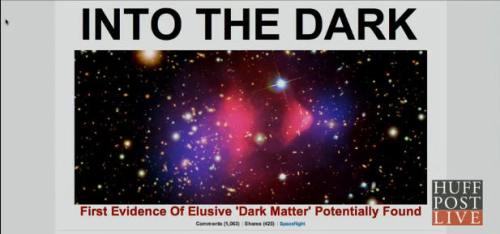
Led by a dogged, Nobel Prize-winning gumshoe who has spent 18 years on the case, scientists put a $2 billion detector aboard the International Space Station to try to track down the stuff. And after two years, the first evidence came in Wednesday: tantalizing cosmic footprints that seem to have been left by dark matter.
But the evidence isn’t enough to declare the case closed. The footprints could have come from another, more conventional suspect: a pulsar, or a rotating, radiation-emitting star.
.
.
.Click link below for story, video, and slideshow:
http://www.huffingtonpost.com/2013/04/03/iss-dark-matter-found_n_3009408.html?ref=topbar
.
____________________________________________________
March 21, 2013
Mohenjo
Crime
amazon, Arrest, aviation, Bo Jiang, Bo Jiang Arrested, Bo Jiang Scientist, business, climate, Crime News, Dulles International Airport, Environment, Hotels, huffingtonpost, libya, NASA, Nasa Arrest, politics, research, Science, Science News, Scientist Arrested, technology, Technology News, transportation, travel, vacation, Video
FROM
Click link below picture
.
A Chinese national who worked at NASA’s Langley Research Center has been arrested on a plane bound for Beijing on charges of lying to federal agents.
Bo Jiang made his initial appearance Monday in Norfolk federal court. It wasn’t immediately clear whether Jiang had an attorney.
U.S. Rep. Frank Wolf says Jiang wasn’t employed by NASA, but worked at the Hampton, Va. facility for the National Institute of Aerospace.
An affidavit says Jiang was under investigation for possible violations of the Arms Control Export Act.
.

.
.Click link below for story, videos, and slideshow:
http://www.huffingtonpost.com/2013/03/19/bo-jiang-arrested-nasa-spy-fbi-china_n_2908082.html?1363719774&icid=maing-grid7|myaol|dl14|sec1_lnk3%26pLid%3D286018
.
____________________________________________________
February 15, 2013
Mohenjo
Science
amazon, Astronomers, Astronomy, climate, companion star, Forecast Star Death, giant explosions, Hotels, huffingtonpost, million light years, NASA, NASA's Swift mission, palomar observatory, research, Science, Science News, Space, Star Death, Stars, stellar explosions, Supernova Death, Supernova Explosion, Supernova Forecast, Supernovas, technology, Telescope, travel, vacation, Video
FROM
Click link below picture
.
Forecasting when stars will die in giant explosions may one day be possible by looking for the warning outbursts they release beforehand, researchers say.
Supernovas are the most powerful stellar explosions in the universe, visible all the way to the edge of the cosmos. These stars detonate for two known reasons: either from gorging on too much mass stolen from a companion star or by running out of fuel and abruptly collapsing.
Astronomers have suggested that stars can give off smaller explosions just before they go supernova. To find out more about supernovas, researchers used three telescopes — the Palomar Observatory, the Very Large Array and NASA’s Swift mission — to investigate a star 500 million light-years away.
.

The image shows a simulation of a collision between two shells of matter ejected by a massive star in two subsequent pulsational pair-instability supernova eruptions, only years apart, just before the star dies. Image released Feb. 7, 2013.
.
.Click link below for story, slideshow, and video:
http://www.huffingtonpost.com/2013/02/12/supernova-warning-explosion-star-death_n_2668510.html?ref=topbar
.
_____________________________________________________
February 10, 2013
Mohenjo
Science
business, climate, Earth, Earth-observation satellite, Environment, environmental change, Health, huffingtonpost, Landsat, Landsat 1 launched in 1972, Landsat 11, Landsat Data Continuity Mission, landsat spacecraft, LDCM, manage their natural resources, monitor environmental change, most advanced and capable Landsat, NASA, natural resources, research, satellite nasa, Satellites, Science, Science News, Space, technology, travel, United States, vacation, vandenberg air force, vandenberg air force base, vandenberg air force base in california, Video
FROM
Click link below picture
.
NASA is gearing up for the Monday (Feb. 11) launch of an Earth-observation satellite that will continue a celebrated 40-year project to monitor our planet’s surface from space.
The Landsat Data Continuity Mission is slated to blast off Monday at 1:02 p.m. EST (1802 GMT/10:02 a.m. PST) from Vandenberg Air Force Base in California. The LDCM satellite is the eighth overall in the Landsat program, which has been scrutinizing Earth from orbit continuously since Landsat 1 launched in 1972.
Mission team members call LDCM the most advanced and capable Landsat spacecraft ever built. It should help the United States and other nations around the world monitor environmental change and better manage their natural resources, they say.
.

The payload faIring containing the Landsat Data Continuity Mission spacecraft arrives at Vandenberg Air Force Base’s Space Launch Complex-3E where it will be hoisted atop a United Launch Alliance Atlas V for launch. Image released Jan 25, 2013.
.
.Click link below for story, slideshow, and video:
http://www.huffingtonpost.com/2013/02/09/landsat-launch-earth-observing-satellite-nasa_n_2652621.html?ref=topbar
.
_____________________________________________________
January 6, 2013
Mohenjo
Science
business, climate, Environment, filament eruption, high solar activity, huffingtonpost, Joe Gurman, NASA, nasa scientists, nature, peak of its 11-year activity cycle, radio waves, research, Science, Science News, Solar Activity, Solar Cycle 24, Solar Eruption, solar filament, Solar Flare, Solar Storm 2013, Solar Storm Forecast, Solar Storms 2013, Solar System, Solar TErrestrial RElations Observatory, Sun Activity, Sunspots, technology, travel, vacation, Video, weather cycle
FROM
Click link below picture
.
The sun’s peak of solar activity this year will likely be the quietest seen in at least 100 years, say NASA scientists who watch Earth’s closest star daily.
Sunspot numbers are low, researchers said, even as the sun reaches the peak of its 11-year activity cycle. Also, radio waves that are known to indicate high solar activity have been very subdued.
“It’s likely to be the lowest solar maximum, as measured by sunspot ‘number,’ in more than a century,” wrote Joe Gurman, a project scientist for NASA’s sun-observing mission Stereo, or Solar TErrestrial RElations Observatory. The current sun weather cycle is known as Solar Cycle 24.
.

This image shows the Earth to scale with a colossal solar filament eruption from the sun on Aug. 31, 2012 as seen by NASA’s Solar Dynamics Observatory spacecraft. Note: the Earth is not this close to the sun, this image is for scale purposes only.
.
.Click link below for story, slideshow, and video:
http://www.huffingtonpost.com/2013/01/04/solar-storm-2013-forecast-sun-peak-century_n_2410576.html?utm_hp_ref=science
.
____________________________________________________
December 26, 2012
Mohenjo
Science
Boulder, business, Carolyn Porco, cassini imaging team, Cassini Photo, cassini saturn, Cassini Saturn Photo, cassini spacecraft, climate, Colo., glorious images, huffingtonpost, jet propulsion laboratory, NASA, Nasa Cassini, NASA's Jet Propulsion Laboratory, research, Saturn, Saturn Cassini, Saturn Image, Saturn Photo, Science, Science News, Solar System, Space Science Institute, technology, The Cassini spacecraft, travel, vacation, Video
FROM
Click link below picture
.
The Cassini spacecraft has taken lots of spectacular photos of Saturn over the eight-plus years it’s been orbiting the ringed gas giant. But a new image released just in time for the holidays may be the most beautiful.
“Of all the many glorious images we have received from Saturn, none are more strikingly unusual than those taken from Saturn’s shadow,” the lead of the Cassini imaging team at the Space Science Institute, Carolyn Porco, said of the new image in a written statement released by NASA’s Jet Propulsion Laboratory.
The institute is based in Boulder, Colo.
.

.
.Click link below for story, slideshow, and video:
http://www.huffingtonpost.com/2012/12/18/cassini-saturn-photo-2012_n_2324054.html?utm_hp_ref=science
.
______________________________________________________
Older Entries
Newer Entries
 James' World 2