Your gut is a thriving universe unto itself. This tiny cosmos is inhabited by thousands on thousands of microorganisms, which together make up your gut microbiome.
Among other things, this internal ecosystem contains bacteria that we rely on to help us break down and process the foods that we’re not readily equipped to digest. But a slew of recent scientific studies shows that our gut also connects more broadly to our holistic health, even to things that are seemingly unrelated, like our brains.
The science is preliminary, but there is compelling evidence that what you eat — and in turn, that changes the gut microbiome — has an outsized influence on your health. But not in the way you’d think.
What’s new — A new study published on Friday in the journal Science Advances looks at how diet could alter multiple sclerosis (MS) symptoms via the gut microbiome. By feeding mice with an MS-like condition a specific diet, scientists were able to reprogram their gut bacteria — and reduce their symptoms.
The study started with the observation that the gut microbiomes of people with MS lack a kind of bacteria that, in most folks’ gut, breakdowns a nutrient called isoflavones. This nutrient is commonly found in everyday staple foods, like soy and beans.
So, the team hypothesized that MS might be related to the absence of these bacteria — and in turn, eating more foods with isoflavones in them could alleviate the symptoms.
From there, they were able to demonstrate the critical difference that the bacteria’s presence or absence can make in this disease.
.
Eating foods like pistachios may influence the gut microbiome in positive ways.Renato Marzini/Photodisc/Getty Images
Some content on this page was disabled on April 15, 2025 as a result of a DMCA takedown notice from Guardian Media Group. You can learn more about the DMCA here:
Xilitla is a municipality and town in the state of San Luis Potosí, in the Huasteca region of Mexico. The town is located at 21°23′08″N98°59′25″W The municipality has an area of 415 square kilometers (160 sq mi) and had a population of 51,498 in 2010 of whom 6,576 lived in town of Xilitla.
Xilitla is known for its fertile mountains and springs which create panoramic landscapes throughout the municipality. Las Pozas gardens are a tourist attraction.
The rugged landscape has partly shielded Xilitla from industrialization, helping preserve its indigenous Huastec and Nahuatl cultures and traditional agrarian lifestyles. Most of Xilitla’s residents live in over 100 rural villages of several dozen up to several hundred people. About 30,000 people in Xilitla live in indigenous households and about 20,000 of them speak an indigenous language, principally Huastec. Most of the speakers of an indigenous language also speak Spanish. Wikipedia
There’s one night, in particular, I remember most. It was my third night of zero sleep and the light was growing brighter in the living room — I had transitioned to the couch after tossing in bed for close to four hours. “Please,” I pleaded aloud. “Please, just fall asleep.” I was panicking, thinking I may never sleep again and that I’d end up in the hospital with delirium or drop dead from exhaustion on a city street. (Spoiler alert: neither happened.)
Insomnia can be an insidious, strange affliction, in that the more you care about its effects, the worse it gets. Though insomnia can be caused by a variety of issues, including physical and psychological factors, for many people a few sleepless nights can snowball into what’s referred to as sleep anxiety — wherein your worry about falling asleep feeds the cycle of diminished sleep. This cycle can feel impossible to break, especially for those of us who are already prone to other forms of anxiety and obsessive thinking. Sufferers usually grow more and more anxious as the night draws closer. Reigning in the anxiety usually means rejiggering how your mind thinks about sleep.
First, a few facts about types of insomnia. It can be acute (short-term) or chronic (usually defined as at least three times a week for at least three months), as well as onset- (have trouble falling asleep) or maintenance-based (have trouble staying asleep). It can be primary, in that it has no outside causes, or secondary, wherein it’s linked to periods of intense stress, mental illness, physical pain, sleep apnea, or a variety of other things. Speaking to a professional can be helpful in homing in on the root cause and can be especially important for those struggling with secondary insomnia caused by mental illness.
“I have, like, no arm strength.” If you’ve ever said this (or even thought it while lugging your heavy tote bag), this is a challenge for you. “Women are often very critical about their arms,” says personal trainer and fitness expert Angelique Millis. “But, then they’re surprised at how quickly they respond once they start using weights.” By integrating resistance training into your fitness routine, you improve your posture, coordination, stability, and of course strength — and you can even affect your body composition, reducing non-lean mass (a.k.a. fat) and increasing lean mass (sleek, toned, powerful muscles).
.
The exercises chosen for our 30-Day Arm Challenge are ones the American Council on Exercise (ACE) has pinpointed as best for activation of the primary muscles used — in other words, these moves give you the best bang for your buck. The challenge starts slowly, with just one exercise per day, so you learn proper form and don’t get too sore. As the month progresses, you’ll begin doing more sets and reps and combining the exercises into super-sets and circuits for the greatest benefit. “You’ll get stronger and more functional for real-life activities, such as lifting a suitcase into the overhead bin,” Millis says.
The national nature reserves (NNRs) of Scotland are areas of land or water designated under the Wildlife and Countryside Act 1981 as containing habitats and species of national importance. National nature reserves can be owned by public, private, community, or voluntary organizations but must be managed to conserve their important habitats and species, as well as providing opportunities for the public to enjoy and engage with nature. There are currently 43 NNRs in Scotland, which cover 154,250 hectares (1,542.5 km2), or less than 1.5% of the land area of Scotland. They range in size from Corrieshalloch Gorge at 7 ha to Mar Lodge Estate, which covers 29,324 ha.
National nature reserve status is an accolade awarded to the best nature reserves in Scotland, and the selected sites provide examples of nationally or internationally important species and habitats. NNRs are intended to showcase Scotland’s nature, and as well as being well managed for wildlife they must be managed to provide opportunities for the public to visit and enjoy them. NNRs therefore generally have facilities such as visitor centers and trails to allow visitors to explore and understand the habitats or wildlife they contain.
Most NNRs in Scotland are also designated as Sites of Special Scientific Interest. Many also form part of the Natura 2000 network, which covers Special Protection Areas and Special Areas of Conservation. Additionally, some of the NNRs are designated as Ramsar sites. Wikipedia
.
An image from St Abb’s Head National Nature Reserve Scotland
You can lose a lot more weight when you get informed about calorie burn.
Now that I understand an appropriate diet for my height and level of exercise, it’s been much easier to lose weight and keep it off.
I’ve been overweight for much of my adult life, and it’s something I’ve long wanted to change. I tried and failed many times to address it because I misunderstood the value of exercise.
If you want to start lifting heavier weights, a full-body strength workout is a must to add to your routine. And you don’t need to go overboard on the number of exercises to get it done.
When you’re looking to get stronger, the exercises you choose and how you program your workout become particularly important, ACE-certified personal trainer Sivan Fagan, C.P.T., owner of Strong with Sivan, tells SELF. As for the exercises that’ll help you get stronger, the best bang for your workout buck is going to be big, basic compound movements—think squats and rows rather than leg extensions or bicep curls. Because these exercises activate large muscle groups, you’re also going to be able to load them up with more weight than you would for moves that isolate smaller muscles.
Then comes how you program your workout. If your goal is to build full-body strength, straight sets—where you complete one set, rest, then go back to the same exercise for one or more work-rest periods—are going to be a better way to accomplish that than circuits, where you go from one exercise to the other without resting, says Fagan. Circuits keep your heart rate up (and add a cardiovascular boost), but they don’t give you the recovery you need to lift heavy weights set after set.
Which brings us to our next point—a really important one. When you’re strength-training with the specific goal of getting stronger (rather than for general fitness, or to build muscle or endurance), you need to rest longer than you may think, says Fagan. That’s why in the full-body workout she created below, you’ll be resting a full two to three minutes after each set.
“You should rest enough so your heart rate goes back to baseline,” Fagan says. “The goal is for you to feel like you are very close to almost full recovery here, in order to feel like you can repeat the same amount of reps at the same amount of weight for three or four rounds.”
Film and Writing Festival for Comedy. Showcasing best of comedy short films at the FEEDBACK Film Festival. Plus, showcasing best of comedy novels, short stories, poems, screenplays (TV, short, feature) at the festival performed by professional actors.

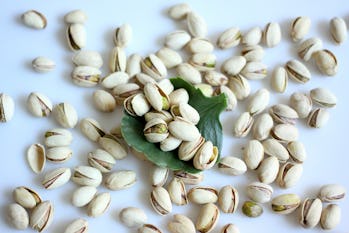


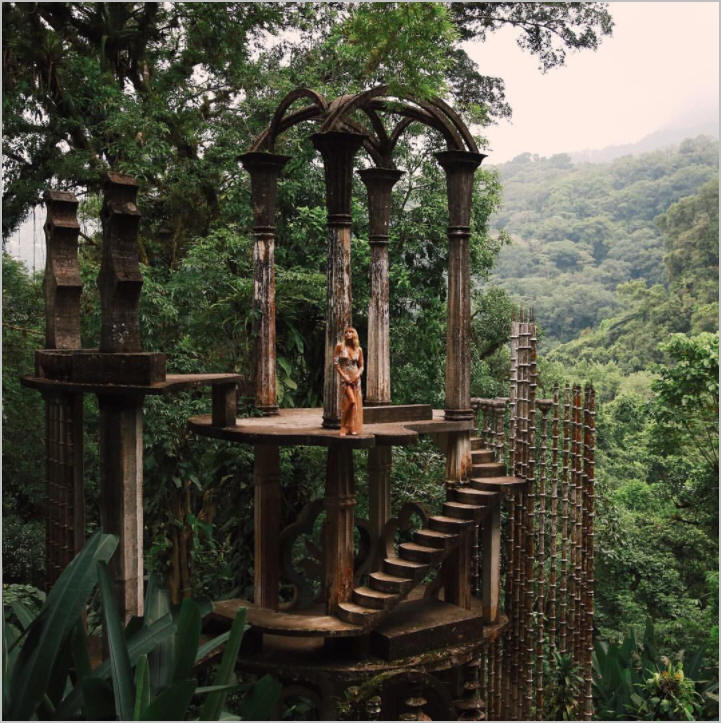



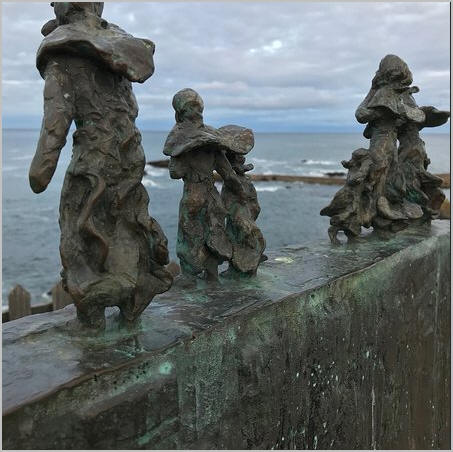

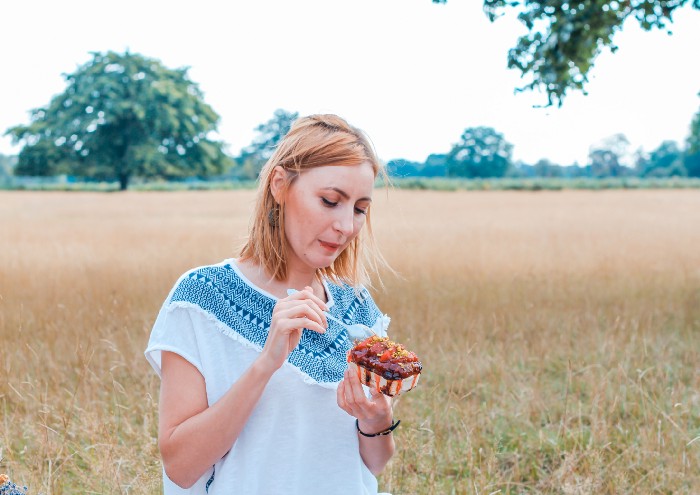 Photo by Toa Heftiba on Unsplash

 James' World 2