September 23, 2021
Mohenjo
Business, Enthralling, Human Interest, Photographs
amazon, business, Business News, current-events, Future, Hotels, human-rights, medicine, mental-health, research, Science, Science News, technology, Technology News, travel, vacation

Click the link below the picture
.
Aalen is a former Free Imperial City located in the eastern part of the German state of Baden-Württemberg, about 70 kilometers (43 mi) east of Stuttgart and 48 kilometers (30 mi) north of Ulm. It is the seat of the Ostalbkreis district and is its largest town. It is also the largest town in the Ostwürttemberg region. Since 1956, Aalen has had the status of Große Kreisstadt (major district town). It is noted for its many half-timbered houses constructed from the 16th century through the 18th century.
With an area of 146.63 km2, Aalen is ranked 7th in Baden-Württemberg and 2nd within the Government Region of Stuttgart, after Stuttgart. With a population of about 66,000, Aalen is the 15th most-populated settlement in Baden-Württemberg.
Aalen is situated on the upper reaches of the river Kocher, at the foot of the Swabian Jura which lies to the south and south-east, and close to the hilly landscapes of the Ellwangen Hills to the north and the Welland to the north-west.
The west of Aalen’s territory is on the foreland of the eastern Swabian Jura, and the north and north-west is on the Swabian-Franconian Forest, both being part of the Swabian Keuper-Lias Plains. The south-west is part of the Albuch, the east is part of the Härtsfeld, these two both being parts of the Swabian Jura.
The Kocher enters the town’s territory from Oberkochen to the south, crosses the district of Unterkochen, then enters the town center, where the Aal flows into it. The Aal is a small river located only within the town’s territory. Next, the Kocher crosses the district of Wasseralfingen, then leaves the town for Hüttlingen. Rivers originating near Aalen are the Rems (near Essingen, west of Aalen) and the Jagst (near Unterschneidheim, east of Aalen), both being tributaries of the Neckar, just like the Kocher.
The elevation in the center of the market square is 430 m (1,410 ft) relative to Normalhöhennull. The territory’s lowest point is at the Lein river near Rodamsdörfle, the highest point is the Grünberg’s peak near Unterkochen at 733 m (2,405 ft). Wikipedia
.
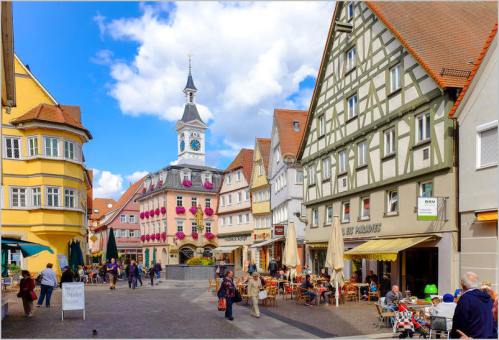 An image from Aalen, Germany
.
.
Click the link below for images:
.
__________________________________________
September 23, 2021
Mohenjo
Business, Food For Thought, Human Interest, Science, Technical
amazon, business, Business News, current-events, Future, Hotels, human-rights, medicine, mental-health, research, Science, Science News, technology, Technology News, travel, vacation

Click the link below the picture
.
There are few aspects of life where you can fail seven out of 10 times and still be considered great at what you do. With a 30 percent score on the MCAT, you wouldn’t get into medical school. You’d likely lose money if you only won 30 percent of your Super Bowl bets. But in baseball, if you get a hit 30 percent of the time you step up to the plate, you might be headed to the Hall of Fame—and that’s because it’s perhaps the most difficult thing to do in any major sport.
Ted Williams, for instance, one of the greatest hitters to ever play Major League Baseball, finished his 19-year career playing for the Boston Red Sox with a .344 batting average. That’s a 34 percent success rate, tied for seventh-best in the sport’s history. But even he famously said that hitting a baseball is the hardest thing to do in sports. So why is that the case?
For one, the physics are extreme. The velocity of the average fastball in the Major Leagues is more than 90 miles per hour. When the ball whizzes in at that speed from less than 60 feet away, the hitter has about 150 milliseconds to decide whether they want to swing. That’s literally the blink of an eye.
.
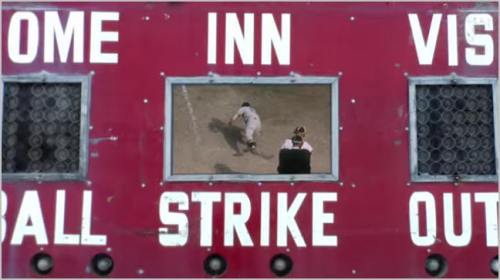 Batting
.
.
Click the link below for the article and video:
.
__________________________________________
September 23, 2021
Mohenjo
Business, Finance, Food For Thought, Human Interest, Science, Technical
amazon, business, Business News, current-events, Future, Hotels, human-rights, medicine, mental-health, research, Science, Science News, technology, Technology News, travel, vacation

Click the link below the picture
.
America’s roaring real estate boom is leaving millions of would-be homebuyers out in the cold. The problem is most severe in that corner of the market that once propelled the American dream: the small entry-level home.
“I would like to a have a space with a yard, like 900 square feet,” says Mat Pergens, 39, who repairs and installs garage doors in and around Reno, Nev. “Simple cabinets, simple countertops, Shag carpeting. I don’t care. I just want four walls and a roof that I can afford.”
But his aspiration for a modest starter home is completely out of reach. The country is nearly 4 million homes short of demand, according to the mortgage giant Freddie Mac.
Like many American cities, Reno is undergoing a homebuying frenzy, with rapidly escalating prices. Home values in Reno have gone up 27% in the past year. With an influx of affluent Silicon Valley workers driving the market, luxury is trumping affordability.
.

Mat Pergens just wants “four walls and a roof that I can afford” for himself, his wife, his 6-year-old daughter, and his baby on the way. But even that modest of a dream is out of reach these days. Zac Visco for NPR
.
.
Click the link below for the article:
.
__________________________________________
September 23, 2021
Mohenjo
Arts, Food For Thought, Human Interest, Medical, missed News, Political, Science, Technical
amazon, business, Business News, current-events, Future, Hotels, human-rights, medicine, mental-health, research, Science, Science News, technology, Technology News, travel, vacation

.
News You might have missed!
Use your browser or smartphone back arrow (<-) to return to this table for your next selection.
.
__________________________________________
September 22, 2021
Mohenjo
Business, Enthralling, Human Interest, Photographs
amazon, business, Business News, current-events, Future, Hotels, human-rights, medicine, mental-health, research, Science, Science News, technology, Technology News, travel, vacation

Click the link below the picture
.
The Bali Botanic Garden (Indonesian: Kebun Raya Bali) is the largest botanic garden in Indonesia and is located in the mountainous region of Bedugul, central Bali, around 90 minutes drive north of Denpasar. The Garden was established on 15 July 1959 and is situated around 1300 metres above sea level overlooking Bratan Lake and the Ulun Danu Temple on the slopes of Tapak Hill. The Garden is a center for botanical research, conservation, education, and recreation. It is operated by the Indonesian Institute of Sciences (LIPI).
The Garden has an area of 157.5 hectares (389 acres) and daytime temperatures range from 17 – 25 °C and 10 – 15 °C at night. The humidity averages around 70-90%.
The Garden contains more than 21,000 living specimens belonging to 2,400 species, representing various species from mountainous areas of eastern Indonesia: Bali, Nusa Tenggara, Sulawesi, Maluku, and Papua. In addition, its herbarium contains 10,000 preserved plant specimens ranging from algae to flowering plants.
Apart from plant collections that include orchids, ferns, cacti, and carnivorous plants, there is also a traditional Balinese-style guesthouse that functions as a guest house for visitors. One of the world’s largest displays of begonias is also on display in the conservatory building.
The Bali Botanic Garden was first established on 15 July 1959 by Indonesia’s first president, Sukarno. The Garden was first known as the Eka Karya Botanic Garden, where “Eka” means first while “Karya” means creation in the Balinese language, referring to the garden’s status as the first Indonesian botanic garden to be established after independence.
It was originally intended that The Bali Botanic Garden specialize in the cultivation of conifer plants (non-flowering seed plants, or Gymnosperms) and as a place for recreation. The garden accommodates scientific, cultural, and recreational activities for visitors.
Development of the garden stopped in 1965 due to political instability and was only reopened on 30 April 1975. When the garden became operational once again, its area was expanded to 129.2 hectares. It also added a new function for ex-situ conservation of plants from the mountainous region of eastern Indonesia.
In 2001 the land area of the Garden was expanded to 157.5 hectares. Wikipedia
.
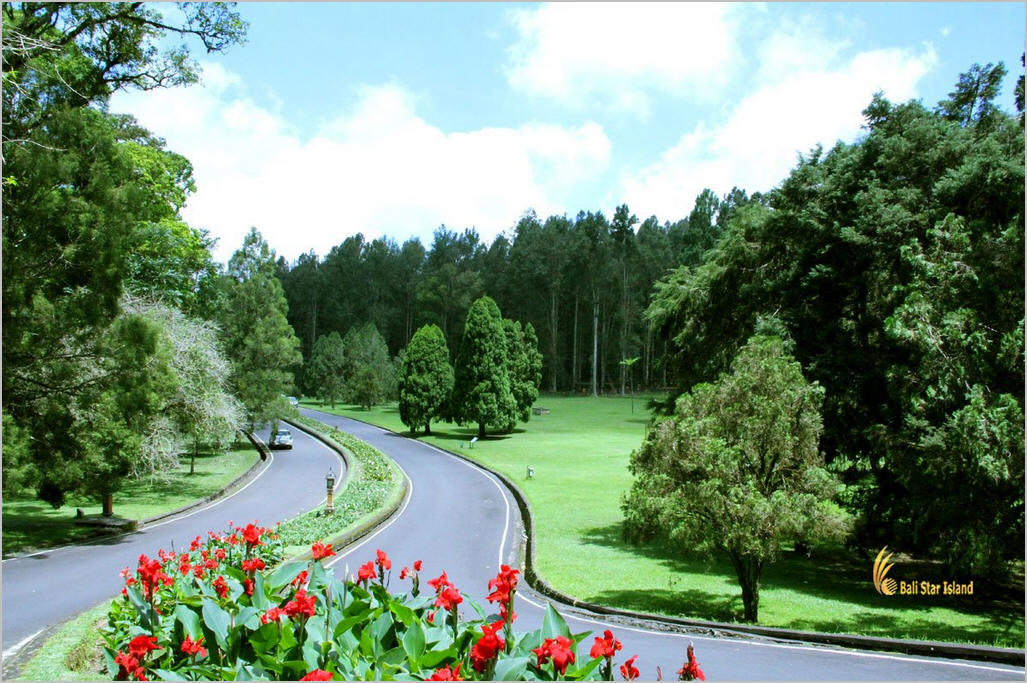 An image from the Bali Botanic Garden
.
.
Click the link below for images:
.
__________________________________________
September 22, 2021
Mohenjo
Business, Food For Thought, Human Interest, Science, Technical
amazon, business, Business News, current-events, Future, Hotels, human-rights, medicine, mental-health, research, Science, Science News, technology, Technology News, travel, vacation

Click the link below the picture
.
Parents don’t set out to say hurtful or harmful things to their children, but it happens. You’re tired, they’re pushing your buttons, and you’re frustrated after asking them for the 600th time to clear their plates or get out the door on time. You could also be inadvertently repeating things you heard in your own childhood that your parents (and maybe even you) didn’t realize took an emotional toll.
We parents are trying our best, but sometimes — a lot of times — we fall short. That’s why it can be helpful to know some of the potentially damaging phrases parents often resort to without realizing their impact. It’s not about beating ourselves up. It’s about doing better by being a bit more conscious of our language.
So HuffPost Parents spoke with several experts who shared some harmful phrases you should try to erase from your vocabulary — and what to say instead.
.

ridvan_celik via Getty Images Parents sometimes say things to their children that are harmful — without realizing it.
.
.
Click the link below for the article:
.
__________________________________________
September 22, 2021
Mohenjo
Business, Finance, Food For Thought, Human Interest, Science, Technical
amazon, business, Business News, current-events, Future, Hotels, human-rights, medicine, mental-health, research, Science, Science News, technology, Technology News, travel, vacation

Click the link below the picture
.
Recently, I’ve been spending money like a robber baron’s wayward son. I’m buying flamboyant leather boots, limited-print-run poetry collections on thick paper, tiny statuettes from the local thrift store. My pent-up energy has been directly channeled into frivolity. If you’re selling me a drink with a wild garnish (ramps, sure!), I will order one for me and one for you! This is a marked change. I used to be a woman of simple tastes: a whiskey neat with lemon, literally zero statuettes.
It seems as if many of us experienced a tidal shift in how we think about spending during the pandemic. But as fun as it is to talk about what we are buying, I also wondered what people have decided to forego. Asking around, I found that even people who feel as spendy as I do have also isolated things they never want to buy ever again. The homesteaders gained skills they never knew they could possess: They could do their own spa treatments, they could make their own pickled delicacies. The aesthetes realized they’d rather have the weird, special, real thing and never settle for substitutes. And the previously buttoned-up discovered the deep pleasures in avoiding bras.
After talking to 12 people about their budget cuts, I saw that it wasn’t astringency or asceticism that changed them: It was making sure that what they were buying was as fun, comfortable, lively, and joyful as possible. The answers below might be about giving things up, but only in the name of pleasure.
.
 Photo-Illustration: by The Cut; Photos: Getty Images
.
.
Click the link below for the article:
.
__________________________________________
September 22, 2021
Mohenjo
Crime, Enthralling, Food For Thought, Human Interest, Medical, missed News, Science, sports, Technical
amazon, business, Business News, current-events, Future, Hotels, human-rights, medicine, mental-health, research, Science, Science News, technology, Technology News, travel, vacation
.
News You might have missed!
Use your browser or smartphone back arrow (<-) to return to this table for your next selection.
.
__________________________________________
September 21, 2021
Mohenjo
Business, Human Interest
amazon, business, Business News, current-events, Future, Hotels, human-rights, medicine, mental-health, research, Science, Science News, technology, Technology News, travel, vacation

Click the link below the picture
.
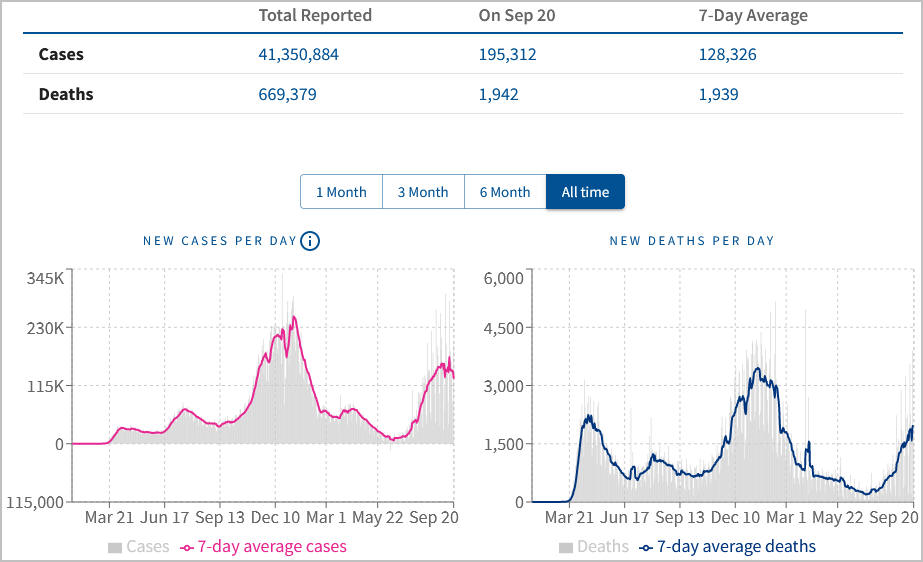
From cities to rural towns, stay informed on where COVID-19 is spreading to understand how it could affect families, commerce, and travel. Follow new cases found each day and the number of cases and deaths in the US. The county-level tracker makes it easy to follow COVID-19 cases on a granular level, as does the ability to break down infections per 100,000 people. This county visualization is unique to USAFacts and will be updated with the most recent data as frequently as possible. The underlying data is available for download below the US county map and has helped government agencies like the Centers for Disease Control and Prevention in its nationwide efforts.
.
 .
.
.
Click the link below for the article:
.
__________________________________________
September 21, 2021
Mohenjo
Business, Food For Thought, Human Interest, Science, Technical
amazon, business, Business News, current-events, Future, Hotels, human-rights, medicine, mental-health, research, Science, Science News, technology, Technology News, travel, vacation

Click the link below the picture
.
Imagine you’re lying in bed at 1 a.m., relentlessly tossing and turning in the dark. You roll over on your side to check the time and realize you’ll be running on the bare minimum: a pathetic five hours of sleep to get you through the day ahead. You might start to plan a coping strategy — maybe three pumps of espresso and an ice-cold shower to boot. But here’s the good news: Technically, five hours of sleep is enough to function. However, experts don’t recommend actively pulling an all-nighter just because you can. The U.S. Department of Health and Human Services recommends the average adult clock in seven to eight hours of sleep per night, but for some people, less is apparently more.
Seriously, who runs the world? Sleep, that’s who. It’s been scientifically proven time and again that how you function both mentally and physically throughout the day heavily relies on how much and how well you slept the night before, but this whole timing detail is still up for debate. According to ScienceAlert, a mere one percent of the population is made up of “short sleepers,” people who only require four to six hours of sleep instead of the recommended seven to eight.
.
 Thais Ramos Varela
.
.
Click the link below for the article:
.
__________________________________________
Older Entries
Newer Entries
 James' World 2