Toulouse is the capital of the French department of Haute-Garonne and of the region of Occitanie. The city is on the banks of the River Garonne, 150 kilometers (93 miles) from the Mediterranean Sea, 230 km (143 mi) from the Atlantic Ocean, and 680 km (420 mi) from Paris. It is the fourth-largest city in France, with 479,553 inhabitants within its municipal boundaries (as of January 2017), and 1,360,829 inhabitants within its wider metropolitan area (also as of January 2017), after Paris, Lyon, and Marseille, and ahead of Lille and Bordeaux.
Toulouse is the center of the European aerospace industry, with the headquarters of Airbus (formerly EADS), the SPOT satellite system, ATR, and the Aerospace Valley. It also hosts the European headquarters of Intel and CNES’s Toulouse Space Centre (CST), the largest space center in Europe. Thales Alenia Space, ATR, SAFRAN, Liebherr-Aerospace, and Airbus Defence and Space also have a significant presence in Toulouse. Wikipedia
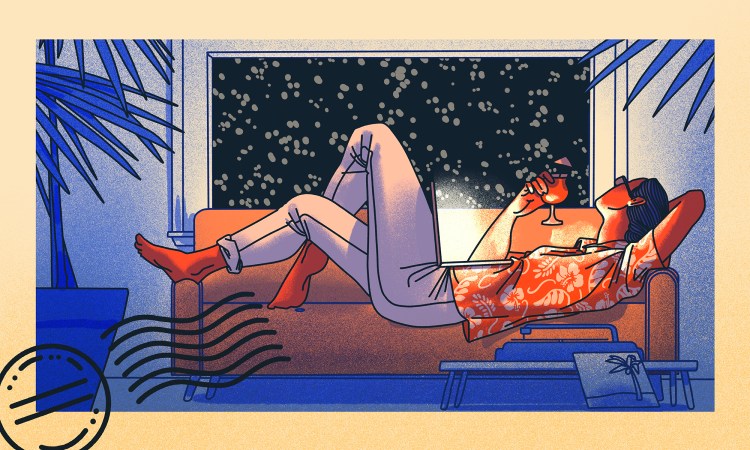
I know I’m not the only one feeling this right now. It’s a sentiment I’ve been hearing a lot from friends and on social media, and it’s no surprise given the strange and stressful circumstances we find ourselves in. The unpredictability of the pandemic and the global economy, coupled with the strain of adjusting to new realities of work, childcare, and school, have almost everyone I know craving an escape.
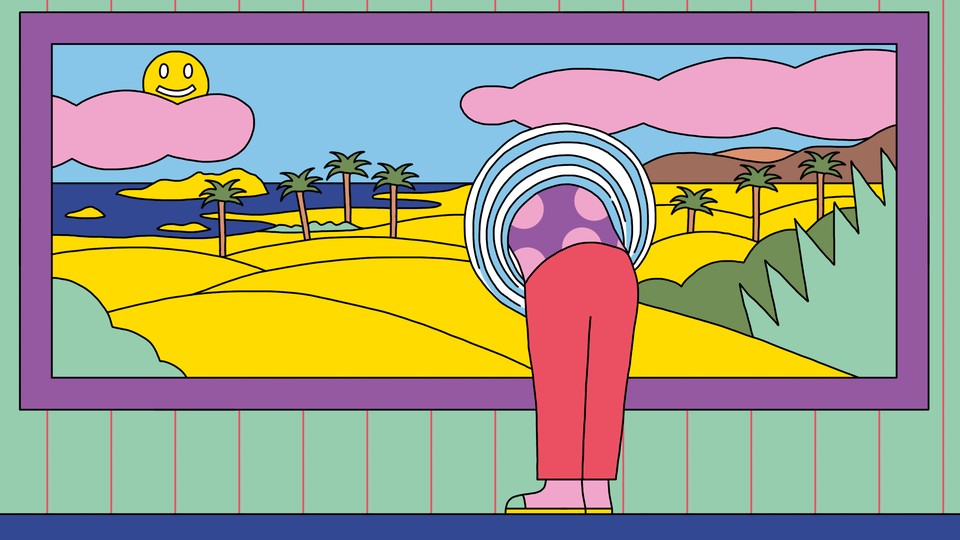
Yet with travel restricted in many places, a carefree getaway isn’t in the cards for most people.
Still, vacations are an important part of well-being. One study, for example, showed that when men at risk for heart disease didn’t take annual vacations, they had a 32 percent higher risk of having a fatal heart attack than those who did. Likewise, a study of women showed that those who took vacation rarely — i.e., once every six years or less often — were eight times more likely to develop heart disease. Other studies have shown an increase in sleep quality and an improvement in reaction times of up to 80 percent after taking a vacation.
Still other research has shown that regular vacations are more important than money to overall well-being, so much that a regular vacationer making less than $24,000 a year might even be happier than a non-vacationer making more than $120,000 a year.
Many parents of young children struggle to introduce new foods into their kids’ diets. About half of American children are picky eaters by the age of two; they are, in the vernacular of nutritionists, “food neophobic.” Our pediatrician once told me that one of our sons, who was a fussy eater, would need to try new food at least six times before the taste would no longer fill him with fear and loathing. My wife and I wanted to fight our son’s food neophobia for some practical, nutritional reasons, but more fundamentally, we wanted him to eat adventurously so he could enjoy this part of life. Openness to a wide variety of tastes and smells enhances the pleasure of eating.
This is an instance of a larger truth: Openness to a wide variety of life experiences, from visiting interesting places to considering unusual political views, brings happiness. “Only someone who is ready for everything, who doesn’t exclude any experience, even the most incomprehensible,” Rainer Maria Rilke wrote in his Letters to a Young Poet, “will himself sound the depths of his own being.”
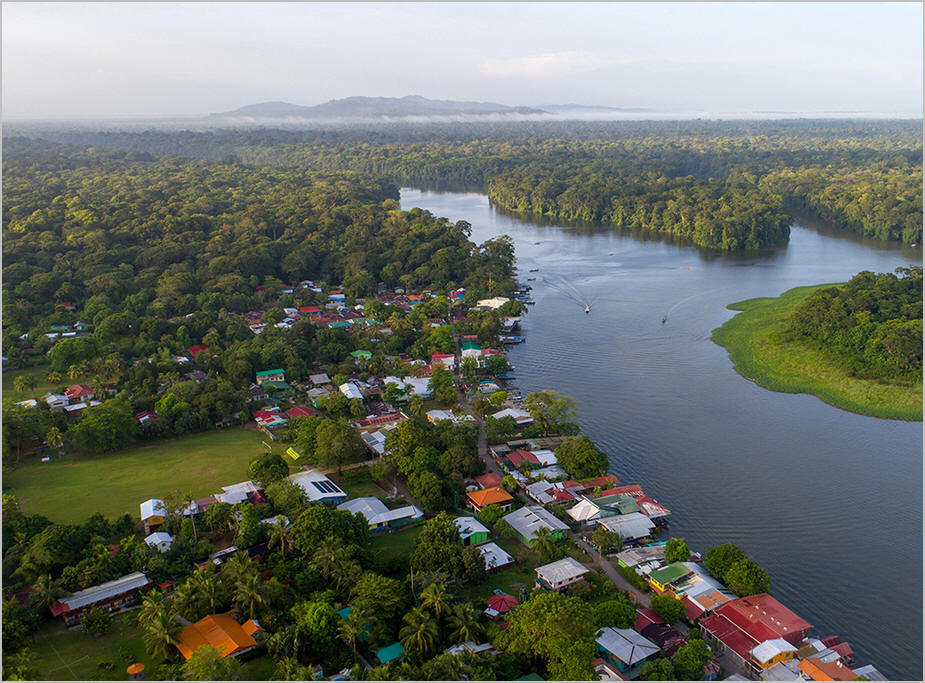
Tortuguero is a village on the Northern Caribbean coast of Costa Rica in the Limón Province. The small village, which can be reached only by boat or airplane, is sustained almost entirely by eco-tourism. The population is estimated at around 1200-1500. Tortuguero can be translated as Land of Turtles and gave its name to the neighboring Tortuguero National Park. The village is situated on a sand bar island, separated from the mainland by Tortuguero River and bordering the Caribbean Sea. Tortuguero is renowned for its navigable canals that run through the rainforest in the national park, and has earned the nickname of ‘Central America’s Amazon’.
The beaches around Tortuguero are key nesting sites for four species of sea turtle, including two critically endangered species. The National Park is also host to an incredible biodiversity of insects, resident and migratory birds, and mammals, including jaguars and four species of monkey. Accordingly, there are four biological stations — the John H. Phipps Biological Field Station, the Caño Palma Biological Research Station, the ASVO station (Asociación de Voluntarios para Servicio en Areas Protegidas), and the GVI Jalova Biological Station — which operate from the area immediately around the village and concentrate on research and conservation of the local ecology, particularly the turtles. The ocean here can be dangerous to swim in due to rough surf and strong currents. Wikipedia
An image from Tortuguero Conservation Area Costa Rica
When Singaporean car dealer Keith Oh first read the Facebook message, he wasn’t sure it was real. A Chinese client ordered a S$1.1 million ($830,000) Bentley—sight unseen—over the social network.
“They just asked for the price and when we could do the delivery, that’s all,” he said. “It’s a million dollars to us but it’s probably nothing to them.”
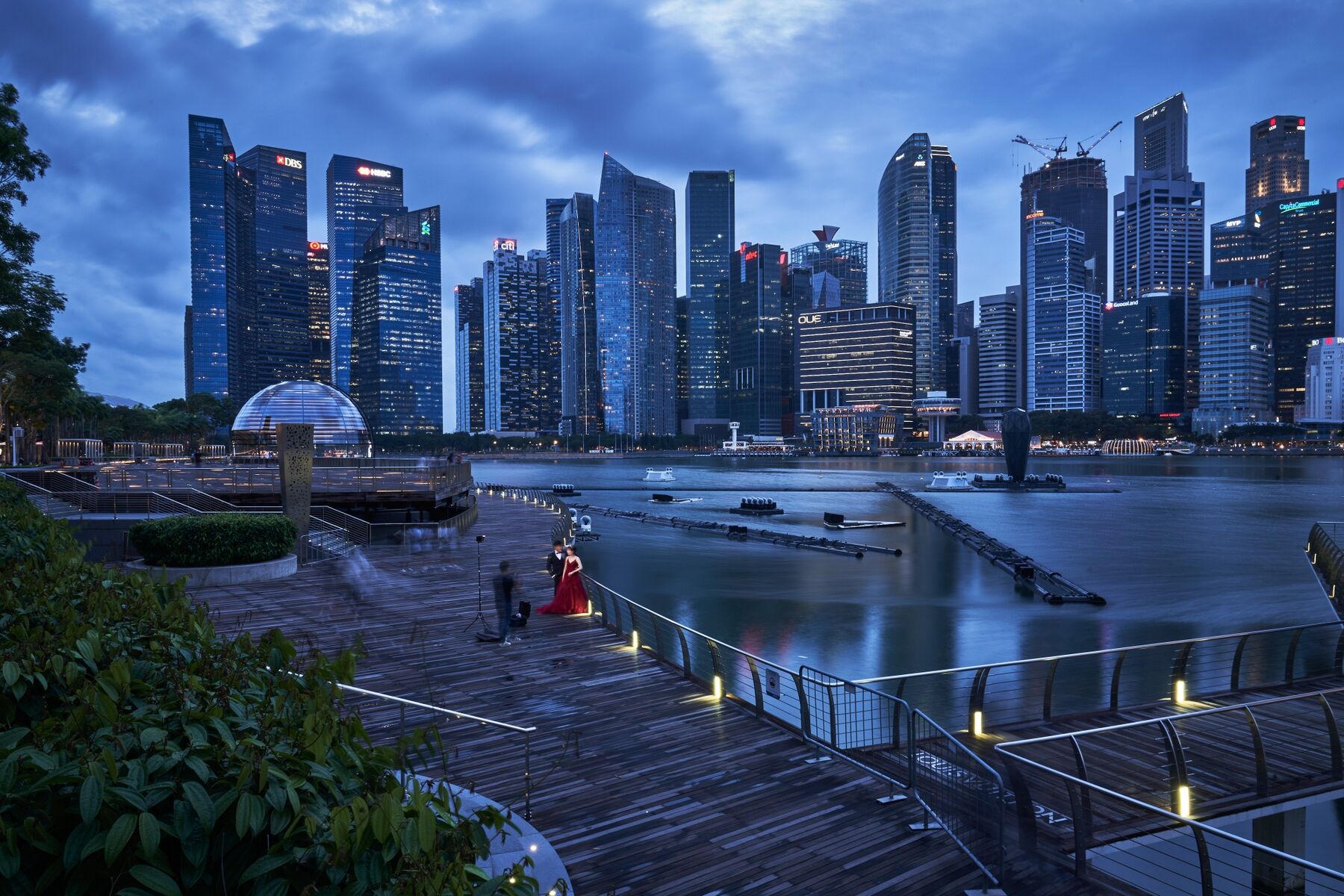
The quick sale was the latest sign of a wider trend: Money is sloshing around Singapore like never before. As the coronavirus pandemic hammers Southeast Asia and political turmoil threatens Hong Kong, the city has become a safe harbor for some of the region’s wealthiest tycoons and their families.
For rich people “who can decide where they want to live and settle down, Singapore is a place of choice now,” said Stephan Repkow, who founded Wealth Management Alliance in 2015 after four years at Union Bancaire Privee. He said two of his foreign clients had become residents in the past 12 months and more are on the way.
Singapore has long been a draw for wealthy Chinese, Indonesians and Malaysians who would come for short trips to shop, play baccarat at the casino or get medical check-ups at world-class clinics. Mount Elizabeth Hospital Orchard, just steps from the flagship stores of Gucci and Rolex, features a UOB Privilege Banking Centre in the lobby.
The pandemic has changed all that, prompting many tycoons and their families to stay for months, in some cases seeking residency to ride out the storm. On a per-capita basis, the mortality rates in Malaysia and Indonesia are more than 10 and 30 times higher than in Singapore, according to data collected by Johns Hopkins University.
.
Marina Bay in Singapore, on Jan. 28, 2021. Photographer: Lauryn Ishak/Bloomberg
The word “gerrymandering” prompts an image: district maps that look less like a tangible community than a Rorschach blot—perhaps one that suggests a “broken-winged pterodactyl,” as one federal judge referred to Maryland’s 3rd district. Read a line like that, and a certain intuition kicks in: There must be something wrong here.
The problem is that our intuition isn’t necessarily correct.
“While badly shaped districts are a fairly successful flag that somebody was trying to do something, they don’t really tell us what their agenda was, or whether it was nefarious or benign,” says Moon Duchin, a mathematician at Tufts University and an expert on gerrymandering. “Bad shapes are not necessarily bad, and good shapes are not necessarily good.”
For the past five years, Duchin has led Tufts’ Metric Geometry and Gerrymandering Group, a lab that has quietly upended conventional wisdom about how gerrymandering works by approaching the issue less as a political problem than a mathematical one. As the country sprints into a new redistricting cycle, understanding redistricting in those terms has taken on new importance—especially in light of a controversial change to the Census Bureau data that will be used to draw the new district maps.
It’s hard to remember a time when scrolling through Instagram was anything but a thoroughly exhausting experience.
Where once the social network was basically lunch and sunsets, it’s now a parade of strategically crafted life updates, career achievements, and public vows to spend less time online (usually made by people who earn money from social media)—all framed with the carefully selected language of a press release. Everyone is striving, so very hard.
And great for them, I guess. But sometimes one might pine for a less aspirational time, when the cool kids were smoking weed, eating junk food, and… you know, just chillin’.
Back in the 1990s, our heroes were slackers: the dudes and the clerks, the stick-it-to-the-man, stay-true-to-yourself burnouts we saw in Ferris Bueller’s Day Off, and Slacker, and Reality Bites. In the latter, Winona Ryder’s character, Leilana, chooses the disillusioned musician (Ethan Hawke) over the TV exec (Ben Stiller), and it’s presented as an excellent choice. Nobody cool was trying to monetize their lifestyle back then or rake in the brand endorsements. Selling out (remember that?) was whack.
.
Nirvana, patron saints of nineties slacker-dom. Photo by Getty Images/Mark and Colleen Haywar
I have a tenet that I follow when it comes to social media conflagrations: Don’t add your air to someone else’s fire.
This rule has saved my butt multiple times. For example, during one social media snafu, a writer responded to a post I made of an article I’d written, saying she wanted to discuss our opposing views—in a Facebook forum of thousands of people. The wording and tone of her comment showed she wasn’t interested in a real dialog, so I didn’t respond. Had I agreed to the requestor made a snarky comment like “Get your own damn articles published,” I would have been following her playbook to gain attention for herself and undermine me and my work. Should I have done something else? I figured I’d check with the experts.
“You did the right thing by not responding,” says Michele Borba, an educational psychologist and author of Thrivers. “No response is a great response, and often the most powerful response. The person wants the attention, and you are not giving it to them. She clearly wanted to use and undermine you by hijacking your platform. If you shamed her, you would have lost credibility and would be in a position of defending yourself.”
In the world, human beings are facing various problems. People who are full of greed, anger, and ignorance are seen to be fighting with each other in words and deeds. As the fighting continues, various problems such as civil wars, wars of aggression, and wars of aggression are occurring. As world peace is being destroyed, humans are facing unbearable problems. Innocent children and women are not getting the rights they deserve and deserve. I can't think of one thing every time. What is it? The United Nations. If we look at the responsibilities and duties of the United Nations, I think it is not suitable for solving the problems that are happening in the world today. In fact, the United Nations and the World Security Council, such an organization must rule the world, must be able to give orders, and must have various ways to obey orders. There must be no organization that can influence more than that organization. There should be experts from each country. They can even dominate the superpowers like the US, China, and Britain. Only then will global peace be achieved quickly. Now, if a country with power develops more militarily, economically, or socially than its own country, then powerful countries will jealously seek out enemies and wage war. Or they will attack with fighter jets. In this, innocent people are losing their lives. No one understands the value of a life. You should think about how to achieve global peace by controlling these. If the US continues to be the permanent president of the UN, world peace will never be achieved. If you think carefully, no one sees that they are working for the common good, but for their own benefit, for the benefit of their own country. The permanent president of the UN and the Security Council has rejected this, As a young Rohingya, I have come to realize that only by electing the president and secretary from among the countries in the world through a secret ballot system and governing the world fairly can we achieve global peace. The United Nations and the Security Council are organizations in which any country must govern, give orders, and make them obey their orders. For example, only when a defendant is tried in court can we hold the leaders of the countries in check and control them, can we achieve global peace smoothly. Otherwise, it will not be easy for powerful countries to use various excuses to end this war every year, every year, for the benefit of themselves and their countries. No country's leaders pay any attention to the words of the United Nations and the Security Council. If we look at it in practice, look at the Rohingya issue. Myanmar is a small country. Even that country has been under siege for 8 years. What action can be taken? Why is the UN and the Security Council Powerless? Without such Power, how can the organization bring about global peace? Everyone should think about it. Whether there is a veto or a strong one, all countries in the world can only achieve global peace if they are subject to the UN and the Security Council. Seek peace in the quiet embrace of nature. Peace is an indispensable need of the human race. It is not as if one person can kill another person, and it is as if one country can attack another country, but instead of trying to build peace, we must try to destroy the peace now, and the world is getting hotter and is on the verge of collapse. I especially appeal to all the world experts to urgently try to bring about peace in all parts of the world. Mr, Noor Muhamed Arkhan Rohingya Youth Myanmar
Film and Writing Festival for Comedy. Showcasing best of comedy short films at the FEEDBACK Film Festival. Plus, showcasing best of comedy novels, short stories, poems, screenplays (TV, short, feature) at the festival performed by professional actors.

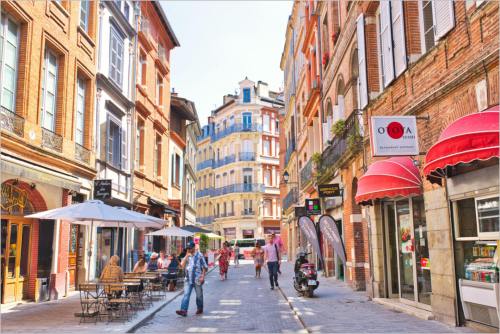 An image from Toulouse France
 Avalon Nuovo
 JAN BUCHCZIK