The scene is a familiar one: an urban park, with young couples picnicking, dog owners playing fetch, parents chatting while their children scamper around. Marie – a young child – becomes entranced by a new wonder of her world – maybe a springtime butterfly, maybe another child throwing an impressive fit. Eventually, looking away from her intense focus, she realizes that the world has shifted around her and that her parents are no longer in sight. Interest and elation morph into concern and fear, as she holds back her tears and begins to search. Just around the corner, she finds her father, who scoops her up, and, as quick as her fear started, it dissipates; her world is complete and safe again.
From the moment we are born, we are hardwired to seek attachment to others. Throughout our lives, relationships that involve attachment serve as sources of emotional security, joy, and companionship, while at other times, pain and grief. Compared with those of other animals, human relationships are staggeringly multifaceted. Yet despite this, what lies at the core of our relationships is an elaboration of a phenomenon whose roots across the species spectrum are wide and deep. As we wend our way through life’s course – from infancy to adolescence to adulthood to loss – attachment holds a strong grip on our lives, shifting to accommodate our changing needs. While the roots of this phenomenon tell us much about who we are, they tell us just as much about mysteries that remain unanswered in evolution, psychology, neuroscience, and more.
The Baltic Sea is an arm of the Atlantic Ocean, enclosed by Denmark, Estonia, Finland, Germany, Latvia, Lithuania, Poland, Russia, Sweden, and the North and Central European Plain.
The sea stretches from 53°N to 66°N latitude and from 10°E to 30°E longitude. A marginal sea of the Atlantic, with limited water exchange between the two water bodies, the Baltic Sea drains through the Danish Straits into the Kattegat by way of the Øresund, Great Belt, and Little Belt. It includes the Gulf of Bothnia, the Bay of Bothnia, the Gulf of Finland, the Gulf of Riga, and the Bay of Gdańsk.
The Baltic Proper is bordered on its northern edge, at latitude 60°N, by the Åland Islands and the Gulf of Bothnia, on its northeastern edge by the Gulf of Finland, on its eastern edge by the Gulf of Riga, and in the west by the Swedish part of the southern Scandinavian Peninsula.
The Baltic Sea is connected by artificial waterways to the White Sea via the White Sea-Baltic Canal and to the German Bight of the North Sea via the Kiel Canal. Wikipedia
In late June, when temperatures climbed to 115 degrees in Portland, Oregon, houses and buildings across the Pacific Northwest were caught way off guard. Most were designed for much cooler temperatures, with insulation and ventilation tuned to handle moderate highs and lows. Typically, even on hot days, the evening lows would be cold enough to bring down the overall temperature of buildings, keeping them from turning into roasting ovens. Air conditioning was typically irrelevant, and buildings could usually stay comfortable passively, or without much intervention.
But that was before. The heatwave showed that temperatures can and probably will continue to be higher than in previous decades. The low- or no-effort temperature control that has been designed into the region’s homes likely won’t be able to keep up, according to Mike Fowler, an architect at Seattle-based Mithun. “We’re going to phase out of that by the end of the decade. And this has been eye-opening for a lot of folks,” he says.
A new type of building design will be needed in the Pacific Northwest sooner than most people expected, he says, but design approaches that are regularly used in hotter, more extreme climates offer some clues for how architecture will need to evolve.
Are you an ecosystem? Your mouth, skin, and gut are home to whole communities of microscopic organisms, whose influence on your body ranges from digesting your food to training your immune system and, possibly, impacting your mood and behavior. What are these tiny tenants, and how do they change the way we think about human health, disease, and even identity?
The human body is made up of trillions of cells—well, trillions of human cells. Around the beginning of the 21st century, scientists learned that in fact, the human body contains many trillions more microbial cells—possibly three times as many. This is the microbiome: the collection of microorganisms (bacteria, fungi, and other microbes) living in and on the human body. It is an especially curious discovery—it has been with us, evolving, interacting, and helping to determine our fate as organisms, since before the emergence of the human species itself. And while scientists have known about the existence of some microorganisms on and in the human body since the discovery of E. coli, the magnitude, and importance of the microbiome has only recently begun to come to light.
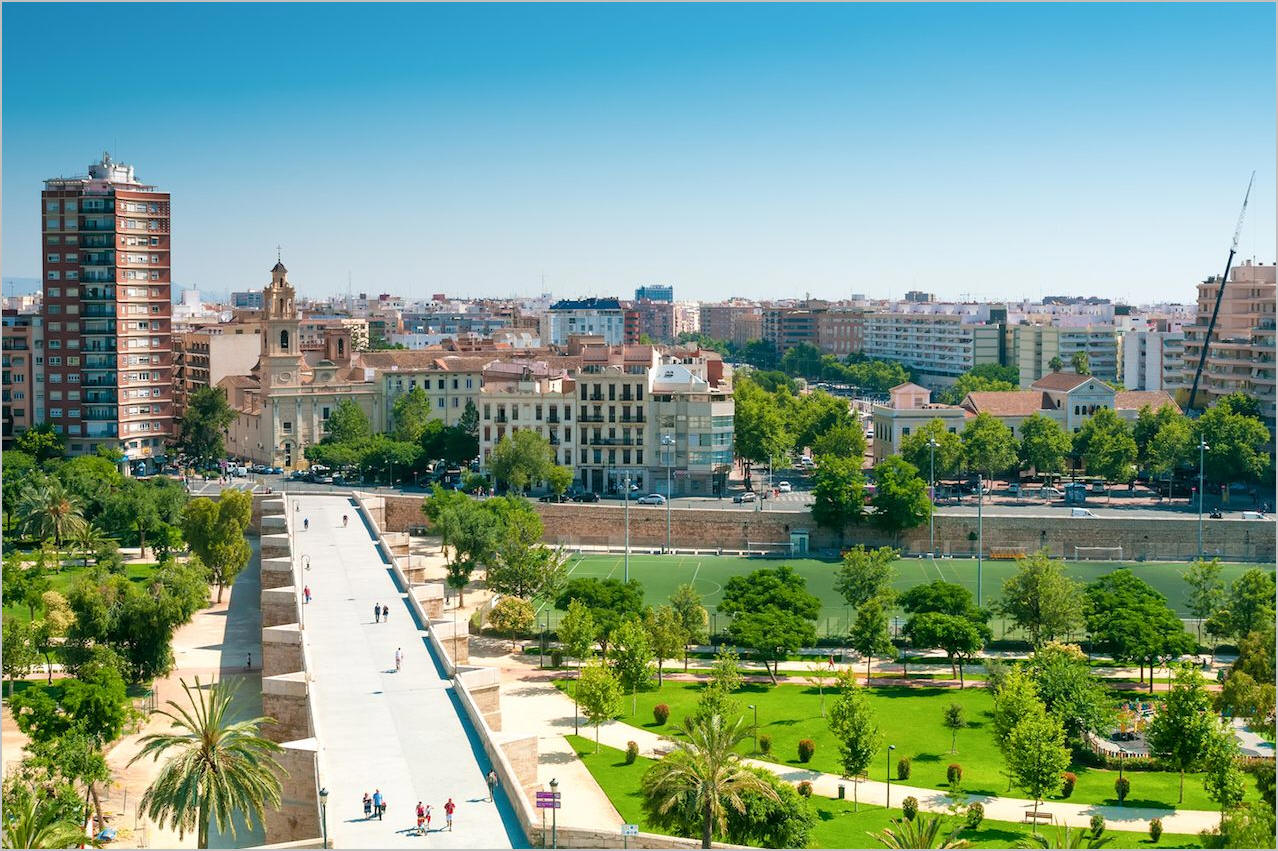
Valencia, is the capital of the autonomous community of Valencia and the third-largest city in Spain after Madrid and Barcelona, surpassing 800,000 inhabitants in the municipality. The wider urban area also comprising the neighboring municipalities has a population of around 1.6 million. Valencia is Spain’s third-largest metropolitan area, with a population ranging from 1.7 to 2.5 million depending on how the metropolitan area is defined. The Port of Valencia is the 5th-busiest container port in Europe and the busiest container port on the Mediterranean Sea. The city is ranked as a Gamma-level global city by the Globalization and World Cities Research Network.
Valencia was founded as a Roman colony by the consul Decimus Junius Brutus Callaicus in 138 BC and called Valentia Edetanorum. In 714, Moroccan and Arab Moors occupied the city, introducing their language, religion, and customs; they implemented improved irrigation systems and the cultivation of new crops as well. Valencia was the capital of the Taifa of Valencia. In 1238 the Christian king James I of Aragon conquered the city and divided the land among the nobles who helped him conquer it, as witnessed in the Llibre del Repartiment. He also created the new Kingdom of Valencia, which had its own laws (Furs), with Valencia as its main city and capital. In the 18th century, Philip V of Spain abolished the privileges as punishment to the kingdom of Valencia for aligning with the Habsburg side in the War of the Spanish Succession. Valencia was the capital of Spain when Joseph Bonaparte moved the Court there in the summer of 1812. It also served as the capital between 1936 and 1937, during the Second Spanish Republic. Wikipedia
It’s a good time to look up. One of the year’s most spectacular skywatching shows, the annual Perseid meteor shower, is back to light up the night sky.
The Perseid meteor shower peaks in mid-August, when up to 100 meteors can be seen per hour, but the celestial event will be active beginning Wednesday, which means shooting stars may be visible on clear nights starting this week. The Perseids are considered “the best meteor shower of the year,” according to NASA.
In the Northern Hemisphere, the best way to view the Perseids is to head out in the predawn hours, though some meteors may be visible earlier, from 10 p.m. onward, according to NASA. Meteor showers are best viewed from places that are away from city lights, as light pollution can drown out the shooting stars.
The Perseid meteor shower is called that because the shooting stars appear to stream from a point in the sky where the constellation of Perseus is located. While the constellation is not the source of the meteors, it can help skywatchers figure out where to look.
.
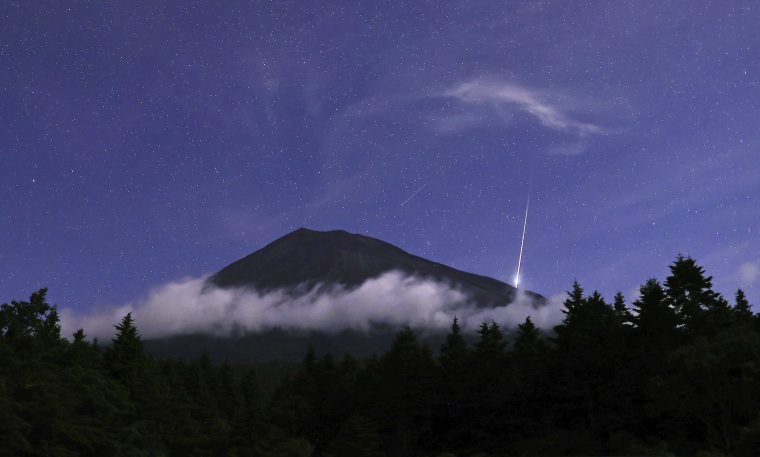
A meteor streaks across the sky above Mount Fuji in Fujinomiya in Shizuoka prefecture in Japan during the annual Perseid meteor shower Aug. 13. Yasushi Kanno / The Yomiuri Shimbun via AP file
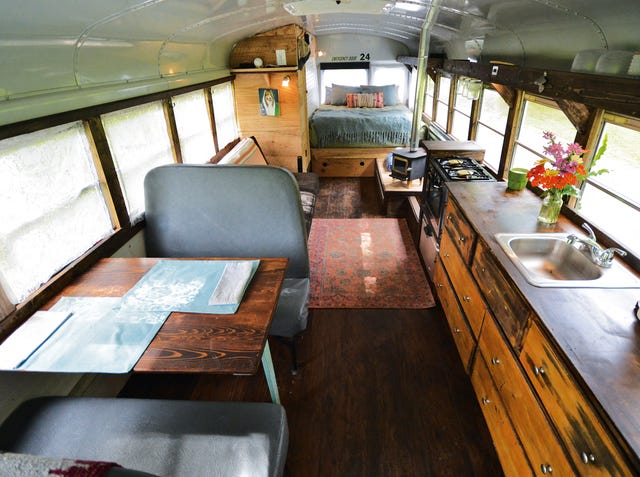
My first school bus conversion (skoolie) was an escape. I was living under the dual thumbs of my student loans and mortgage, and working two jobs to pay for a life I didn’t have time to enjoy. After a crash course in converting a 16-seat school bus into a dwelling, I had both an outlet for adventure and an income source I loved (West Virginia’s top-rated Airbnb since 2015).
Why on Earth did I convert a retired school bus into a mobile tiny home? Simple: Big yellow buses are cheap and durable. A used bus at auction goes for around $2,000 to $5,000—about 10 percent of the cost of a used RV. And where RVs are designed to be lightweight, buses are designed to work. That gets you a steel-framed body and steel paneling on top of a heavy-duty commercial truck frame. And under the hood, most school buses feature commercial-grade diesel engines that fleet mechanics have reliably maintained for years.
My book, Skoolie!: How to Convert a School Bus or Van into a Tiny Home or Recreational Vehicle, covers every step of the process, along with time-, sweat-, and money-saving insights I’ve picked up along the way. But to show (and hopefully inspire) anyone who can hold an angle grinder that they’re capable of building a home on wheels, I’m sharing the basic process for converting a school bus into a clean, well-insulated room to outfit as you please.
Film and Writing Festival for Comedy. Showcasing best of comedy short films at the FEEDBACK Film Festival. Plus, showcasing best of comedy novels, short stories, poems, screenplays (TV, short, feature) at the festival performed by professional actors.

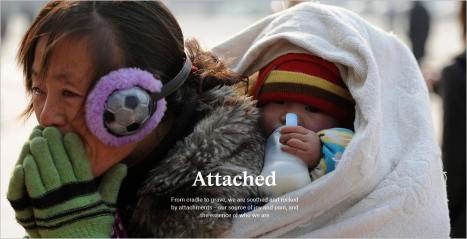 Photo by Jianan Yu/Reuters

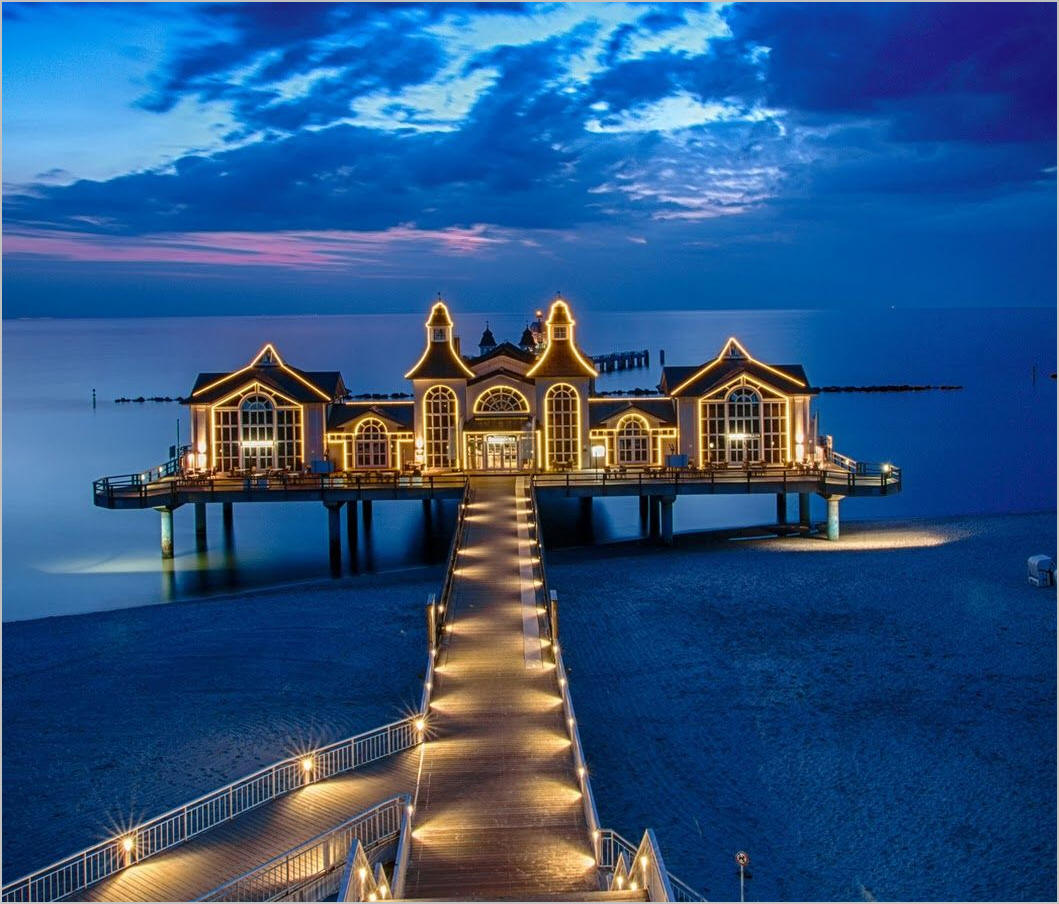

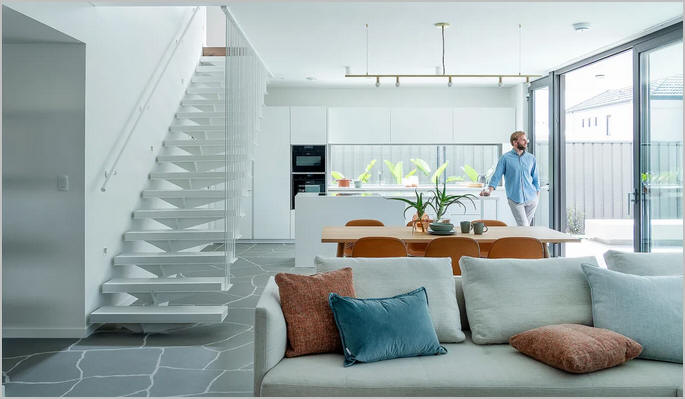 Photo: Courtesy Jody D’Arcy



 James' World 2