August 9, 2021
Mohenjo
Business, Food For Thought, Human Interest, Science, Technical
amazon, business, Business News, current-events, Future, Hotels, human-rights, medicine, mental-health, research, Science, Science News, technology, Technology News, travel, vacation

Click the link below the picture
.
Steak knives, scissors, writing desks, and power tools: If you bring any of these things up around someone and they cringe, they either have a bizarre story to tell or they’re just left-handed, and, like 15 percent of the population, live in a world that’s not designed for them.
But handedness goes deeper than how you like to hold a pen. A dive into the genetics of handedness reveals that southpaws have quite a few other things in common, as well. But before that, it’s important to understand where handedness comes from.
Where Does Handedness Come From?
It used to be thought that lefties came to be as a result of a mother being stressed during pregnancy, but a more scientifically valid explanation has traced handedness to specific genes. Geneticists debated for years over whether the genes responsible for handedness were spread throughout our DNA or whether it was just one gene; there seemed to be no clear pattern.
.

Photo from webphotographer / Getty Images.
.
.
Click the link below for the article:
.
__________________________________________
August 9, 2021
Mohenjo
Business, Food For Thought, Human Interest, Science, Technical
amazon, business, Business News, current-events, Future, Hotels, human-rights, medicine, mental-health, research, Science, Science News, technology, Technology News, travel, vacation

Click the link below the picture
.
Your desk is made up of individual, distinct atoms, but from far away its surface appears smooth. This simple idea is at the core of all our models of the physical world. We can describe what’s happening overall without getting bogged down in the complicated interactions between every atom and electron.
So when a new theoretical state of matter was discovered whose microscopic features stubbornly persist at all scales, many physicists refused to believe in its existence.
“When I first heard about fractons, I said there’s no way this could be true because it completely defies my prejudice of how systems behave,” said Nathan Seiberg, a theoretical physicist at the Institute for Advanced Study in Princeton, New Jersey. “But I was wrong. I realized I had been living in denial.”
The theoretical possibility of fractons surprised physicists in 2011. Recently, these strange states of matter have been leading physicists toward new theoretical frameworks that could help them tackle some of the grittiest problems in fundamental physics.
.
 This simulation shows how a fracton-filled material would be expected to scatter a beam of neutrons. H. Yan et al., Physical Review Letters
.
.
Click the link below for the article:
.
__________________________________________
August 9, 2021
Mohenjo
Crime, Food For Thought, Human Interest, Medical, missed News, Political, Science, sports, Technical
amazon, business, Business News, current-events, Future, Hotels, human-rights, medicine, mental-health, research, Science, Science News, technology, Technology News, travel, vacation

.
News You might have missed!
Use your browser or smartphone back arrow (<-) to return to this table for your next selection.
.
__________________________________________
August 8, 2021
Mohenjo
Business, Food For Thought, Human Interest, Science, Technical
amazon, business, Business News, current-events, Future, Hotels, human-rights, medicine, mental-health, research, Science, Science News, technology, Technology News, travel, vacation

Click the link below the picture
.
We trekked through the Bolivian Amazon, drenched in sweat. Draped head to toe in bug repellent gear, we stayed just ahead of the clouds of mosquitoes as we sidestepped roots, vines, and giant ants. My local research assistant Dino Nate, my partner Kelly Rosinger and I were following Julio, one of my Tsimane’ friends and our guide on this day. Tsimane’ are a group of forager-horticulturalists who live in this hot, humid region. Just behind us, Julio’s three-year-old son floated happily through the jungle, unfazed by the heat and insects despite his lack of protective clothing, putting my perspiration-soaked efforts to shame.
We stopped in front of what looked like a small tree but turned out to be a large vine. Julio told us Tsimane’ use it when they are in the old-growth forest and need water. He began whacking at the vine from all sides with his machete, sending chips of bark flying with each stroke. Within two minutes he had cut off a meter-long section. Water started to pour out of it. He held it over his mouth, drinking from it for a few seconds to quench his thirst, then offered it to me. I put my water bottle under the vine and collected a cup. It tasted pretty good: light, a little chalky, almost carbonated.
As part of my field research, I was asking Julio and other Tsimane’ people how they obtain the drinking water they need in different places—in their homes, in the fields, on the river, or in the forest. He told me only two types of vines are used for water; the rest don’t work or make you sick. But when he pointed to those other vines, I could hardly tell a difference. The vines are a hidden source of water. Julio’s observations raise a fundamental question of human adaptation: How did our evolutionary history shape the strategies we use to meet our water needs, particularly in environments without ready access to clean water?
.
 Credit: I AM A PHOTOGRAPHER AND AN ARTIST Getty Images
.
.
Click the link below for the article:
.
__________________________________________
August 8, 2021
Mohenjo
Business, Food For Thought, Human Interest, Science, Technical
amazon, business, Business News, current-events, Future, Hotels, human-rights, medicine, mental-health, research, Science, Science News, technology, Technology News, travel, vacation

Click the link below the picture
.
They look like mirrors: 32 rectangles neatly arranged in eight rows on the rooftop of a supermarket called Grocery Outlet in Stockton, California. Shimmering beneath a bright sky, at first glance they could be solar panels, but the job of this rig is quite different. It keeps the store from overheating.
Tilted toward the sun, the panels absorb almost none of the warmth beating down on them; they even launch some into space, improving the performance of the systems that keep things inside cold. The feat relies on a phenomenon called radiative cooling: Everything on Earth emits heat in the form of invisible infrared rays that rise skyward. At night, in the absence of mercury-raising daylight, this can chill something enough to produce ice. When your car’s windshield frosts over, even if the thermometer hasn’t dipped below freezing? That’s radiative cooling in action.
To Aaswath Raman, who was a key mind behind Grocery Outlet’s shiny tiles, that effect seemed like an opportunity. “Your skin, your roof, the ground, all of them are cooling by sending their heat up to the sky,” he says.
.
 Courtesy SkyCool Systems
.
.
Click the link below for the article:
.
__________________________________________
August 7, 2021
Mohenjo
Business, Enthralling, Human Interest, Photographs
amazon, business, Business News, current-events, Future, Hotels, human-rights, medicine, mental-health, research, Science, Science News, technology, Technology News, travel, vacation

Click the link below the picture
.
Würzburg is a city in the traditional region of Franconia in the north of the German state of Bavaria. At the next-down tier of local government, it is the administrative seat of Lower Franconia. It spans the banks of the Main.
Würzburg is about 120 kilometers (75 mi) from Frankfurt am Main, to the west, and Nuremberg (Nürnberg), to the east. The city has around 130,000 residents.
The regional dialect is East Franconian.
The city is outside of the Landkreis Würzburg (district of Würzburg) but has its administrative center.
A Bronze Age (Urnfield culture) refuge castle, the Celtic Segodunum, and later a Roman fort, stood on the hill known as the Leistenberg, the site of the present Fortress Marienberg. The former Celtic territory was settled by the Alamanni in the 4th or 5th century, and by the Franks in the 6th to 7th. Würzburg was the seat of a Merovingian duke from about 650. It was Christianized in 686 by Irish missionaries Kilian, Kolonat, and Totnan. The city is mentioned in a donation by Duke Hedan II to bishop Willibrord, dated 1 May 704, in castellum Virteburch. The Ravenna Cosmography lists the city as Uburzis at about the same time. The name is presumably of Celtic origin, but based on a folk etymological connection to the German word Würze “herb, spice”, the name was Latinized as Herbipolis in the medieval period. Wikipedia
.
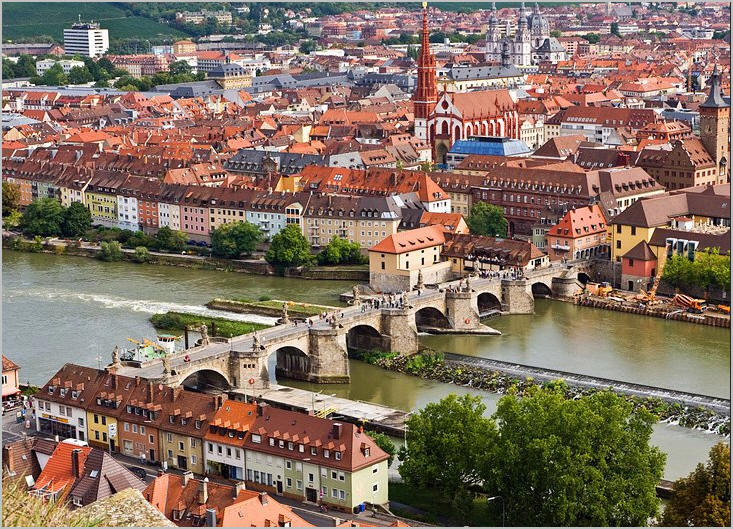 An image from Wurzburg, Germany
.
.
Click the link below for images:
.
__________________________________________
August 7, 2021
Mohenjo
Business, Food For Thought, Human Interest, Science, Technical
amazon, business, Business News, current-events, Future, Hotels, human-rights, medicine, mental-health, research, Science, Science News, technology, Technology News, travel, vacation

Click the link below the picture
.
More and more people are tossing out the harsh chemicals from their daily cleaning routine and instead of turning to natural products, such as baking soda and vinegar, to remove grime, disinfect surfaces, and leave spaces shiny and clean, according to Reader’s Digest. So why are these household items such effective cleaning agents? The answer is pretty basic — baking soda and vinegar lie on opposite ends of the pH scale.
“When you are cleaning using baking soda or vinegar, you are actually doing very complicated manipulations of molecules,” said May Nyman, a professor in the department of chemistry at Oregon State University.
Baking soda is the common name for sodium bicarbonate (NaHCO3). Most people probably associate it with cooking, because it makes your cakes and breads big and puffy. Vinegar is a dilute solution of acetic acid (HC2H3O2), produced by bacteria during fermentation.
.

Cleaning with baking soda can be an effective way to cut out harsh chemicals from your home. (Image credit: Credit: BSIP/UIG via Getty Images)
.
.
Click the link below for the article:
.
__________________________________________
August 7, 2021
Mohenjo
Business, Food For Thought, Human Interest, Science, Technical
amazon, business, Business News, current-events, Future, Hotels, human-rights, medicine, mental-health, research, Science, Science News, technology, Technology News, travel, vacation

Click the link below the picture
.
In the last 260 million years, dinosaurs came and went, Pangea split into the continents and islands we see today, and humans have quickly and irreversibly changed the world we live in.
But through all of that, it seems Earth has been keeping time. A new study of ancient geological events suggests that our planet has a slow, steady ‘heartbeat’ of geological activity every 27 million years or so.
This pulse of clustered geological events – including volcanic activity, mass extinctions, plate reorganizations, and sea level rises – is incredibly slow, a 27.5-million-year cycle of catastrophic ebbs and flows. But luckily for us, the research team notes we have another 20 million years before the next ‘pulse’.
“Many geologists believe that geological events are random over time,” said Michael Rampino, a New York University geologist and the study’s lead author.
“But our study provides statistical evidence for a common cycle, suggesting that these geologic events are correlated and not random.”
The team conducted new analysis on the ages of 89 well-understood geological events from the past 260 million years.
.
 (NASA/Joshua Stevens)
.
.
Click the link below for the article:
.
__________________________________________
August 7, 2021
Mohenjo
Food For Thought, Human Interest, Made Me Laugh, Medical, missed News, Political, Science, Technical
amazon, business, Business News, current-events, Future, Hotels, human-rights, medicine, mental-health, research, Science, Science News, technology, Technology News, travel, vacation
.
News You might have missed!
Use your browser or smartphone back arrow (<-) to return to this table for your next selection.
.
__________________________________________
August 6, 2021
Mohenjo
Business, Enthralling, Human Interest, Photographs
amazon, business, Business News, current-events, Future, Hotels, human-rights, medicine, mental-health, research, Science, Science News, technology, Technology News, travel, vacation
Click the link below the picture
.
Litløy Lighthouse (Norwegian: Litløy fyr) is a coastal lighthouse in Bø Municipality in Nordland county, Norway. It is located on the island of Litløya in the Vesterålen archipelago, which overlooks the nearby Lofoten Islands.
The lighthouse and the adjoining buildings were built in 1912, and the light itself was electrified in 1959. In 1991, the light was automated. The people who worked at Litløy Lighthouse remained, however, first and foremost to do maintenance at the lighthouse and nearby beacons. Secondly, there was a need to keep shipping activity under observation, both to control and assist if need be. There was also a meteorological weather station on the island. Eventually, the cost of keeping the staff at the island caused the lighthouse to be depopulated on 26 June 2003.
In 2005-06, the Norwegian Coastal Administration (NCA) sold 20 lighthouses along the coast of Norway. One of these was Litløy Lighthouse. Bø municipality was offered to buy the lighthouse but chose not to accept the offer. It was then sold to Ellen Marie Hansteensen. She bought the lighthouse in order to make it accessible to the public, in accordance to Norwegian law (Stortingsmelding 28 (2000–2001)). Wikipedia
.
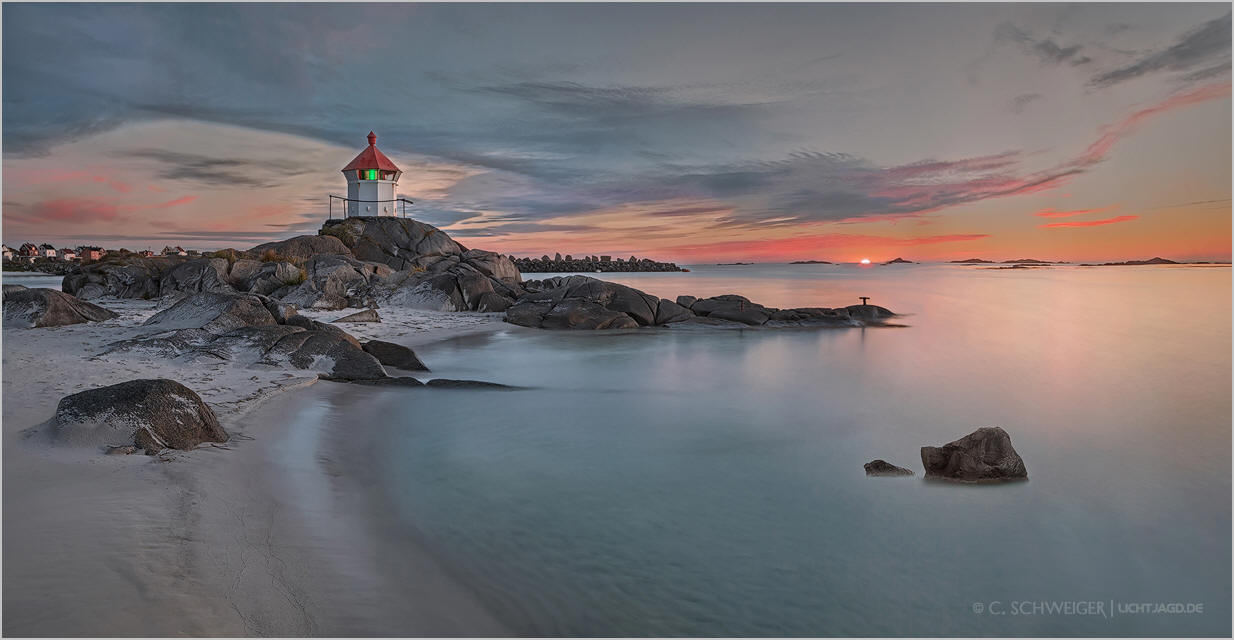
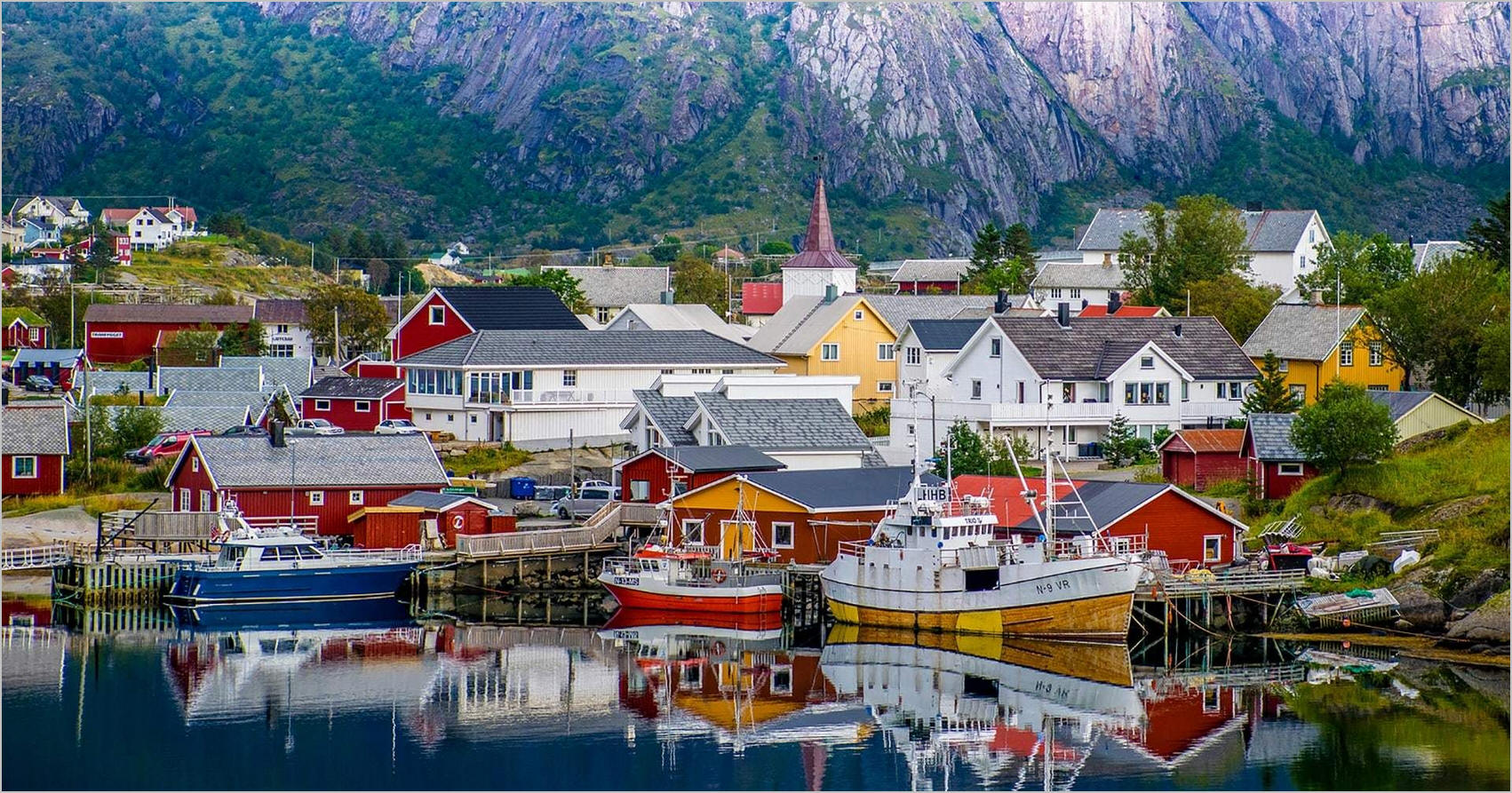 Images from Lofoten Islands Norway
.
.
Click the link below for images:
.
__________________________________________
Older Entries
Newer Entries
 James' World 2