July 26, 2022
Mohenjo
Business, Food For Thought, Human Interest, Medical, Political, Science, Technical
amazon, business, Business News, current-events, Future, Hotels, human-rights, medicine, mental-health, research, Science, Science News, technology, Technology News, travel, vacation

Click the link below the picture
.
The US attorney general, Merrick Garland, said he would “pursue justice without fear or favor” in his decision on whether to charge Donald Trump with crimes related to the Capitol attack and his attempt to overturn the 2020 election, as news reports indicate the justice department’s investigation is heating up.
The department is conducting a criminal investigation into the events surrounding and preceding the January 6 insurrection, an effort that Garland – speaking to NBC’s Lester Holt on Tuesday – called “the most wide-ranging investigation in its history”.
News reports on Tuesday suggested the inquiry is homing in on Trump’s role. The Washington Post reported – according to sources who spoke on condition of anonymity – that investigators have specifically questioned witnesses about Trump’s involvement in schemes to overturn the vote, and received the phone records of Trump officials and aides, including former chief of staff, Mark Meadows. The New York Times also reported that federal investigators had directly questioned witnesses about Trump’s efforts, signaling an escalation.
Responding to criticism that it is not acting quickly enough, Garland told NBC that the department was “moving urgently to learn everything we can lean about this period, and to bring to justice everybody who is criminally responsible for interfering with the peaceful transfer of power … which is the fundamental element of our democracy”.
.

Provided by The Guardian Photograph: Jacquelyn Martin/AP
.
.
Click the link below for the article:
.
__________________________________________
July 26, 2022
Mohenjo
Business, Enthralling, Human Interest, Photographs
amazon, business, Business News, current-events, Future, Hotels, human-rights, medicine, mental-health, research, Science, Science News, technology, Technology News, travel, vacation

Click the link below the picture
.
Mount Roraima is the highest of the Pakaraima chain of tepuis (table-top mountain) or plateaux in South America. It is located at the junction of Venezuela, Brazil, and Guyana. A characteristic large flat-topped mountain surrounded by cliffs 400 to 1,000 meters high. The highest point of Mount Roraima is located on the southern edge of the cliff at an altitude of 2,810 meters in Venezuela, and another protrusion at an altitude of 2,772 meters at the junction of the three countries in the north of the plateau is the highest point in Guyana. The name of Mount Roraima came from the native Pemon people. Roroi in the Pemon language means “blue-green”, and ma means “great”.
Leaching caused by intense rainfall has shaped the peculiar topography of the summit, and the geographical isolation of Mount Roraima has made it home to much endemic flora and fauna. Western exploration of Mount Roraima did not begin until the 19th century when it was first climbed by a British expedition in 1884. Yet despite subsequent expeditions, its flora and geology remain largely unknown. The privileged setting and relatively easy access and climbing conditions on the south side of the cliffs make Mount Roraima one of the most popular destinations for hikers.
Mount Roraima is located in the northern part of South America, the Pacarema Mountains in the eastern part of the Guyana Plateau, Brazil in the east accounting for 5% of its area, Guyana in the north accounting for 10%, and Venezuela in the south and west accounting for 85%. Access to Mount Roraima from the Venezuelan side is close to the road and relatively easy; however, for both Brazil and Guyana the area is completely isolated and can only be reached by a few days of forest hikes or small local airstrip.
Mount Roraima is a flat-topped mountain, typical of the Guyana Shield, with an elevation of about 1,200 meters in the southeast and only about 600 meters in the northwest. The south, southeast, east, northeast, and northwest faces are all formed by straight cliffs up to about 1,000 meters high. At the southern end of the mountain, part of the cliff has collapsed, forming a spectacular natural boulder. The base of the cliff is surrounded by steep slopes to the south and east, and the north and west sides form river valleys leading to the summit.
The top of Mount Roraima has a length of more than 10 kilometers, a maximum width of 5 kilometers, an area of about 33 to 50 square kilometers, an altitude of more than 2200 meters, and an average altitude of 2600–2700 meters. The plateau is a pseudo-karst surface etched by heavy rainfall. The highest point is 2810 meters above sea level, located at the southern end of the plateau and the highest point in the state of Bolivar, 8.25 kilometers north of the summit is another high point with an altitude of 2,772 meters, which is the highest point in Guyana. In the northern part of the plateau is the landmark of the border between Brazil, Venezuela, and Guyana, with an altitude of 2734 meters.
Due to its high altitude and proximity to the equator, Mount Roraima has a constant average annual temperature between 20 and 22 °C and annual rainfall of more than 1,500 mm, with 1,800 to 3,000 mm in parts of the rainy season from April to November. The climatic conditions at the top of the mountain differ significantly from its base, the high cloudiness in the region is associated with the prevailing northeasterly and southeasterly winds, and the relative humidity of the air remains between 75% and 85%.
.
 An image from Mount Roraima Pools
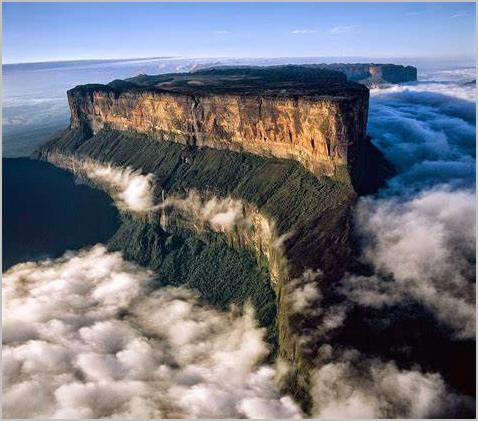 Mount Roraima
.
.
Click the link below for images:
.
__________________________________________
July 26, 2022
Mohenjo
Business, Food For Thought, Human Interest, Medical, Political, Science, Technical
amazon, business, Business News, current-events, Future, Hotels, human-rights, medicine, mental-health, research, Science, Science News, technology, Technology News, travel, vacation

Click the link below the picture
.
After two years of pandemic life, you could find yourself at a fork in the friendship road, choosing between a whittled-down social circle and becoming overextended trying to make up for lost time with everyone on the outer reaches of your network. Amid an ongoing loneliness epidemic, people may feel renewed in their efforts to revive their networks due to the anxiety-inducing realization that their friend group has shrunk to an all-time minimum. Realizing the potential of fostering just a few intimate relationships, however, can be empowering.
Having lots of friends does have benefits: Acquiring a large quantity of friends in your 20s can help inform the quality of friendships you’ll have in your 30s, according to research. “People in their 20s tend to want to build a big roster of friends, because their motive is to expand their sense of identity, and you can do that through different types of people,” says psychologist and friendship expert Marisa Franco, author of the upcoming book Platonic: How the Science of Attachment Can Help You Make — and Keep — Friends. People who regularly interacted with 10 or more friends in midlife have higher levels of psychological well-being than those who had fewer than 10, according to a 2012 study. We also know that maintaining friendships leads to positive life satisfaction, minimizes stress, and even contributes to better physical health outcomes.
But you don’t need a roster dozens deep to enjoy the fruits of friendship. Franco says even having one friend is a net positive. “The biggest return we get in friendship is going from zero to one friend in terms of its impact on our mental health and well-being,” Franco says. “If you can get that deep with one person, it’s going to be powerful and it’s going to be impactful, and you don’t need to have a ton of friends.”
.
:format(webp)/cdn.vox-cdn.com/uploads/chorus_image/image/70946704/Untitled_Artwork_200.0.png) Illustration by Shanée Benjamin for Vox
Illustration by Shanée Benjamin for Vox
.
.
Click the link below for the article:
.
__________________________________________
July 26, 2022
Mohenjo
Business, Food For Thought, Human Interest, Medical, Political, Science, Technical
amazon, business, Business News, current-events, Future, Hotels, human-rights, medicine, mental-health, research, Science, Science News, technology, Technology News, travel, vacation

Click the link below the picture
.
This week she talks with three women who are part of a group experimenting with “arranged friendship.” Inspired by the arranged marriages common in her home country of Iran, Ari Honarvar brought together a group of relative strangers who decided to commit upfront to be friends through thick and thin. In this interview, they discuss “the friendship desert of modern adulthood” and the oasis that this experiment created for them.
The Friends:
Jessica Harmer, 47, an artist and state-park employee who lives in Oceanside, California
Ari Honarvar, 49, a writer who lives in San Diego
Carolyne Ouya, 30, a nonprofit program developer who lives in San Diego
This interview has been edited for length and clarity.
.
 Wenjia Tang
.
.
Click the link below for the article:
.
__________________________________________
July 26, 2022
Mohenjo
Crime, Food For Thought, Human Interest, Medical, missed News, Political, Science, Technical
amazon, business, Business News, current-events, Future, Hotels, human-rights, medicine, mental-health, research, Science, Science News, technology, Technology News, travel, vacation

.
News You might have missed!
Use your browser or smartphone back arrow (<-) to return to this table for your next selection.
.
__________________________________________
July 25, 2022
Mohenjo
Business, Enthralling, Human Interest, Photographs
amazon, business, Business News, current-events, Future, Hotels, human-rights, medicine, mental-health, research, Science, Science News, technology, Technology News, travel, vacation

Click the link below the picture
.
Tanzania, officially the United Republic of Tanzania, is a country in East Africa within the African Great Lakes region. It borders Uganda to the north; Kenya to the northeast; Comoro Islands and the Indian Ocean to the east; Mozambique and Malawi to the south; Zambia to the southwest; and Rwanda, Burundi, and the Democratic Republic of the Congo to the west. Mount Kilimanjaro, Africa’s highest mountain, is in northeastern Tanzania.
Many important hominid fossils have been found in Tanzania, such as 6-million-year-old Pliocene hominid fossils. The genus Australopithecus ranged across Africa between 4 and 2 million years ago, and the oldest remains of the genus Homo are found near Lake Olduvai. Following the rise of Homo erectus 1.8 million years ago, humanity spread all over the Old World, and later in the New World and Australia under the species Homo sapiens. H. sapiens also overtook Africa and absorbed the older species of humanity.
Later in the Stone and Bronze Age, prehistoric migrations into Tanzania included Southern Cushitic speakers who moved south from present-day Ethiopia; Eastern Cushitic people who moved into Tanzania from north of Lake Turkana about 2,000 and 4,000 years ago; and the Southern Nilotes, including the Datoog, who originated from the present-day South Sudan–Ethiopia border region between 2,900 and 2,400 years ago. These movements took place at about the same time as the settlement of the Mashariki Bantu from West Africa in the Lake Victoria and Lake Tanganyika areas. They subsequently migrated across the rest of Tanzania between 2,300 and 1,700 years ago.
German rule began in mainland Tanzania during the late 19th century when Germany formed German East Africa. This was followed by British rule after World War I. The mainland was governed as Tanganyika, with the Zanzibar Archipelago remaining a separate colonial jurisdiction. Following their respective independence in 1961 and 1963, the two entities merged in 1964 to form the United Republic of Tanzania. The countries had joined the British Commonwealth in 1961 and Tanzania is still a member of the Commonwealth as one republic.
The United Nations estimated Tanzania’s population at 63.59 million, which is slightly smaller than South Africa and makes it the second-most populous country located entirely south of the Equator. The population is composed of about 120 ethnic, linguistic, and religious groups. The sovereign state of Tanzania is a presidential constitutional republic and since 1996 its official capital city has been Dodoma where the president’s office, the National Assembly, and all government ministries are located. Dar es Salaam, the former capital, retains most government offices and is the country’s largest city, principal port, and leading commercial center. Tanzania is a de facto one-party state with the democratic socialist Chama Cha Mapinduzi party in power.
Tanzania is mountainous and densely forested in the northeast, where Mount Kilimanjaro is located. Three of Africa’s Great Lakes are partly within Tanzania. To the north and west lie Lake Victoria, Africa’s largest lake, and Lake Tanganyika, the continent’s deepest lake, known for its unique species of fish. To the south lies Lake Malawi. The eastern shore is hot and humid, with the Zanzibar Archipelago just offshore. The Menai Bay Conservation Area is Zanzibar’s largest marine protected area. The Kalambo Falls, located on the Kalambo River at the Zambian border, is the second-highest uninterrupted waterfall in Africa.
Christianity is the largest religion in Tanzania, but there are also substantial Muslim and Animist minorities. Over 100 different languages are spoken in Tanzania, making it the most linguistically diverse country in East Africa. The country does not have a de jure official language, although the national language is Swahili. Swahili is used in parliamentary debate, in the lower courts, and as a medium of instruction in primary school. English is used in foreign trade, in diplomacy, in higher courts, and as a medium of instruction in secondary and higher education; although the Tanzanian government is planning to discontinue English as the primary language of instruction, it will be available as an optional course. Approximately 10% of Tanzanians speak Swahili as a first language, and up to 90% speak it as a second language. Wikipedia
.
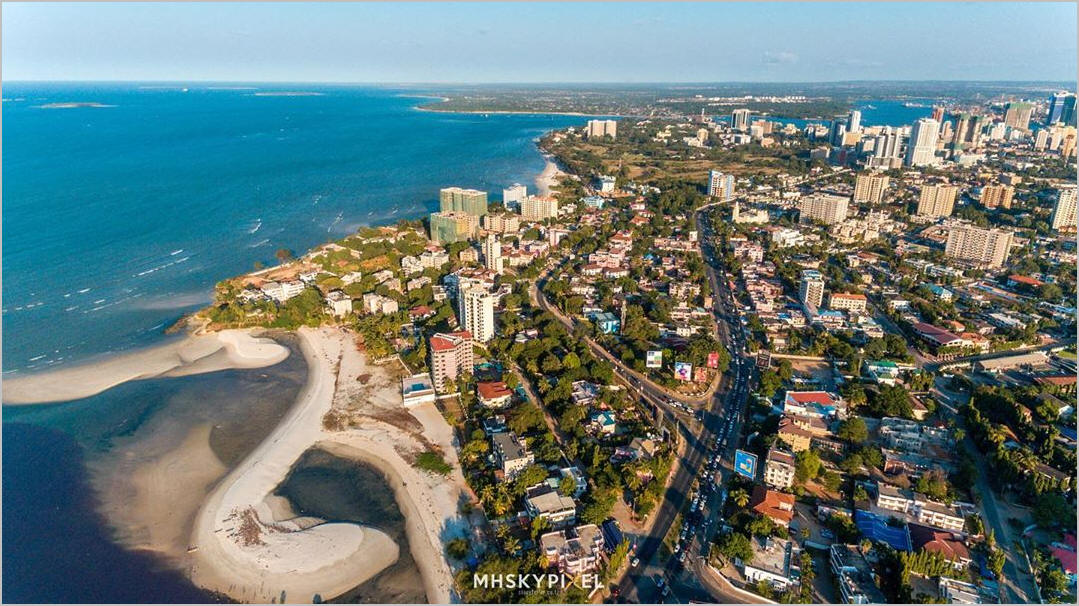 An image from Beautiful Tanzania
.
.
Click the link below for images:
.
__________________________________________
July 25, 2022
Mohenjo
Business, Food For Thought, Human Interest, Medical, Political, Science, Technical
amazon, business, Business News, current-events, Future, Hotels, human-rights, medicine, mental-health, research, Science, Science News, technology, Technology News, travel, vacation

Click the link below the picture
.
You’re hosting a cookout, so you make a run to the store. As you tip various ingredients and supplies into your cart, you realize you need a plan for the non-meat eaters. You haven’t really played around with them before, but you grab a couple of packages of plant-based burger meat and links.
The good news is that you don’t have to worry too much about a learning curve after that. “It’s not as dramatic as I thought it would be,” says Dan Zuccarello, executive food editor for cookbooks at America’s Test Kitchen, which recently released “Cooking With Plant-Based Meat.”
That’s one of the main goals for brands such as Impossible Foods, says Laura Kliman, the company’s director of new product development. “We’re trying to replicate the entire sensory and meat-eating experience,” and that includes how the items cook, she says.
Although cooks who are well-versed in grilling traditional meat will find plant-based options pretty similar, there are a few things to keep in mind to make the transition as easy as possible.
.
 (Scott Suchman for The Washington Post/food styling by Lisa Cherkasky for The Washington Post)
.
.
Click the link below for the article:
.
__________________________________________
July 25, 2022
Mohenjo
Business, Food For Thought, Human Interest, Medical, Political, Science, Technical
amazon, business, Business News, current-events, Future, Hotels, human-rights, medicine, mental-health, research, Science, Science News, technology, Technology News, travel, vacation

Click the link below the picture
.
When Bob Bergeson’s friend invited him to a Denver Nuggets basketball game with some new pals, he was excited to join in. Sure, the evening would cost him nearly $400, an amount he wouldn’t normally spend. But Mr. Bergeson’s splurge didn’t reflect a slavish devotion to basketball; he opened his wallet because he felt insecure about his languishing relationship with his friend, who he perceived to be getting closer to a new group of people.
“He started hanging out with the dads on his daughter’s soccer team and talking about them fondly and I thought, ‘Oh, man he’s kind of got some new friends,’” Mr. Bergeson, 42, a business consultant in Denver, said. “I needed to insert myself to make sure I still mattered to him.”
Just like you can lose a romantic partner to another person, “friends can also lose their slot in the best friend hierarchy,” said Jaimie Krems, a friendship researcher and assistant professor of psychology at Oklahoma State University. This fear of being replaced is often borne out of jealousy, Dr. Krems said. And one way to cope with it, she added, is by doing something social scientists refer to as friend guarding — actions like excessively praising a friend or cutting down a new rival, for example — to maintain a threatened relationship.
.
 Ohni Lisle
.
.
Click the link below for the article:
.
__________________________________________
July 25, 2022
Mohenjo
Crime, Food For Thought, Human Interest, Medical, missed News, Political, Science, Technical
amazon, business, Business News, current-events, Future, Hotels, human-rights, medicine, mental-health, research, Science, Science News, technology, Technology News, travel, vacation
.
News You might have missed!
Use your browser or smartphone back arrow (<-) to return to this table for your next selection.
.
__________________________________________
July 24, 2022
Mohenjo
Business, Food For Thought, Human Interest, Political, Science, Technical
amazon, business, Business News, current-events, Future, Hotels, human-rights, medicine, mental-health, research, Science, Science News, technology, Technology News, travel, vacation

Click the link below the picture
.
The mere thought of barbecue’s smoky scents and intoxicating flavors is enough to get most mouths watering. Summer is here, and that means it is barbecue season for many people in the U.S.
I am a chemist who studies compounds found in nature, and I am also a lover of food – including barbecue. Cooking on a grill may seem simple, but there is a lot of chemistry that sets barbecue apart from other cooking methods and results in such a delicious experience.
Cooking with fire
First, it is important to define barbecue because the term can mean different things in different cultures or geographic locations. At its most basic, barbecue is the cooking of food over an open flame. What sets barbecue apart from other cooking methods is how heat reaches the food.
.
 Cooking food over an open flame produces unique flavors thanks to some interesting chemistry. Lars Szatmari / EyeEm via Getty Images
.
.
Click the link below for the article:
.
__________________________________________
Older Entries
Newer Entries

