The investigator in Syria had made the drive perhaps a hundred times, always in the same battered truck, never with any cargo. It was forty miles to the border, through eleven rebel checkpoints, where the soldiers had come to think of him as a local, a lawyer whose wartime misfortunes included a commute on their section of the road. Sometimes he brought them snacks or water, and he made sure to thank them for protecting civilians like himself. Now, on a summer afternoon, he loaded the truck with more than a hundred thousand captured Syrian government documents, which had been buried in pits and hidden in caves and abandoned homes.
He set out at sunset. To the fighters manning the checkpoints, it was as if he were invisible. Three reconnaissance vehicles had driven ahead, and one confirmed by radio what the investigator hoped to hear: no new checkpoints. Typically, the border was sealed, but soldiers from the neighboring country waved him through. He drove until he reached a Western embassy, where he dropped off the cargo for secure transfer to Chris Engels, an American lawyer. Engels expected the papers to include evidence linking high-level Syrian officials to mass atrocities. After a decade spent training international criminal-justice practitioners in the Balkans, Afghanistan, and Cambodia, Engels now leads the regime-crimes unit of the Commission for International Justice and Accountability, an independent investigative body founded in 2012, in response to the Syrian war.
In the past four years, people working for the organization have smuggled more than six hundred thousand government documents out of Syria, many of them from top-secret intelligence facilities. The documents are brought to the group’s headquarters, in a nondescript office building in Western Europe, sometimes under diplomatic cover. There, each page is scanned, assigned a bar code and a number, and stored underground. A dehumidifier hums inside the evidence room; just outside, a small box dispenses rat poison.
.
Image: Breaking News and Opinion on The Huffington Post
In a sign of deep political tension within the Taliban, a collection of religious leaders in the group’s headquarters in Pakistan issued a letter of rebuke this month to the new insurgent leader over his bloody crackdown on dissenting commanders.
It was unclear whether the letter, a copy of which was obtained by The New York Times and confirmed in interviews with several Taliban commanders, would amount to more than a symbolic setback for the Taliban leader, Mullah Akhtar Mansour. He has aggressively consolidated power since he was named leader in July. Commanders say he has kept a grip on the group’s biggest sources of income, including the trafficking of opium.
The Taliban commanders and members of the group’s ruling council at the headquarters in Quetta, Pakistan, most of whom spoke on condition of anonymity to discuss internal negotiations, differed on how much weight was carried by the letter from the religious leaders. But they agreed that it reflected unease over infighting and deadly crackdowns ordered by Mullah Mansour, including the deployment of hundreds of fighters to kill a rival senior commander this month.
.
An Afghan police officer searching for drugs in Nimroz Province this spring. The top Taliban commander, Mullah Akhtar Mansour, has a tight grip on trafficking of opium by the Taliban.Credit Bryan Denton for The New York Times
More than 37,000 migrants have been blocked from illegally crossing from France into England this year, according to the company operating the tunnel between the countries.
Service in the Eurotunnel has been disrupted repeatedly in recent weeks by migrants’ attempts in the French city of Calais to board trucks or trains heading to the U.K.
France’s Interior Minister Bernard Cazeneuve said Wednesday that nine migrants have died in attempts since June 26 and that he will be deploying 120 additional police to stem the crisis.
.
Migrants Walk Alongside Rail Tracks Near Calais, France
Afghanistan hanged five men on Wednesday over a gang rape that had shocked the country, officials said. Human rights groups had called for new President Ashraf Ghani to stay the executions to address concerns about the handling of the case. The incident sparked concern in Afghanistan’s conservative society over public security at a time when foreign troops are leaving the country.
The men were convicted of robbery and extramarital sex, but not rape — which is widely seen as a taboo subject. The victims were returning home from a wedding along with their families outside Kabul in August. Officials said a large group of men, some dressed in police uniforms, and carrying assault rifles, stopped a convoy of cars. They dragged four women out of the cars in the middle of the night and raped them in a field near the main road. The assault provoked such an outpouring of rage that former President Hamid Karzai told a delegation of women the perpetrators would face the death penalty. Karzai confirmed the death sentences just before leaving office late last month.
.
Nooses hang at an execution site in Pul-e-Charkhi prison on the outskirts of Kabul on Wednesday.
Athletes who overdo may be at risk for a condition called rhabdomyolysis, which can even be fatal.
When it comes to exercise, most people think the harder you train, the better results you’ll get. But athletes who overexert themselves can end up with a life-threatening condition called rhabdomyolysis, known in fitness circles as “rhabdo.”
Steve Hanson, a 31-year-old former Corporal in the Army rangers who is stationed in Afghanistan and works for the federal government as diplomatic security, developed rhabdomyolysis it when he overworked his body while training for races that lasted up to 12 hours.
“I was concurrently training for endurance races that involved biking, kayaking and running,” Hanson said via email. “I was training six days a week, and the one day off apparently wasn’t enough.”
The pain from the rhabdo was so excruciating that he initially thought he had broken his back.
“I was in terrible pain,” he said. “I was convinced my spine was fractured at the very least. I didn’t know at the time that it was my kidneys shutting down. On top of that, my feeling of well-being was at an all-time low. I felt extremely depressed, which only amplified the pain.”
Every American soldier killed in war, is a fallen hero, and deserves both the nation’s thanks and a ‘Hero’s Welcome’. That’s what the ‘Flagman’ Larry Eckhardt believes, and wait until you see what he does about it. Steve Hartman reports from Mt. Sterling, Kentucky, the home of U.S. Army Pvt. FC, Dustin Gross, who was killed by a roadside bomb earlier this month in Afghanistan.
He is accused of the kind of crime that makes people shiver, the killing of families in their own homes under cover of night, the butchery of defenseless children. Under normal circumstances, Americans would dismiss such an act as worthy of only one response: swift and merciless punishment.
Film and Writing Festival for Comedy. Showcasing best of comedy short films at the FEEDBACK Film Festival. Plus, showcasing best of comedy novels, short stories, poems, screenplays (TV, short, feature) at the festival performed by professional actors.

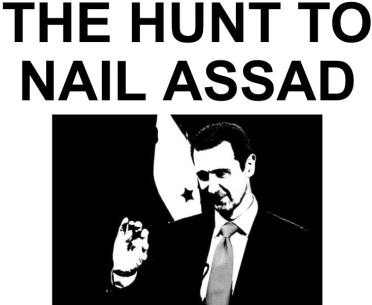 Image: Breaking News and Opinion on The Huffington Post




 James' World 2