The continuing audiophile fascination with LPs is a mystery, LPs are ancient tech, records can be noisy, they’re fragile, expensive and they take up a lot of space. The best turntables, high quality phono cartridges, and preamps can cost a fortune. Even so, a lot of audiophiles still favor LPs, I know I do.
Playing audio files is gigantically more convenient than playing an LP, digital converter technology is getting better every year, and high-resolution files are clearer than the best LPs. Digital is eminently portable; LP playback is strictly a stay-at-home affair. So why are audiophiles still clinging to LPs? Ask them why, and they all say the sound comes first — and I agree. Music sounds better played on a good turntable than it does from files or CDs.
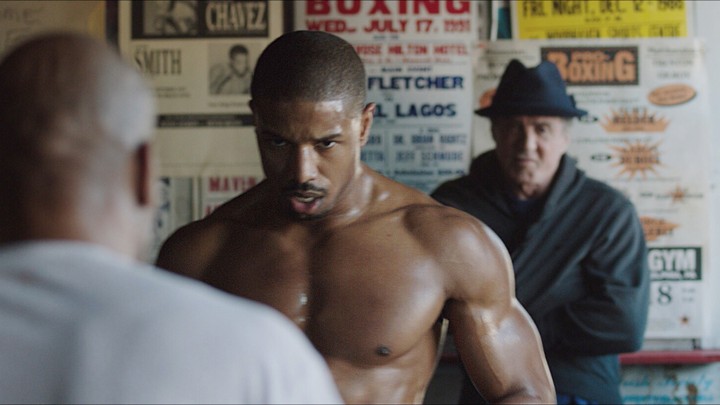
Rocky Balboa sits in a Philly bar as Apollo Creed, in a three-piece suit, holds forth on a grainy black-and-white TV screen. The bartender complains about the “jig clown” on the screen, and asks where the “real fighters” have gone. Rocky scolds the bartender not for his racism, but for questioning the champ, and walks off.
Had the Rocky franchise never existed, that scene, which took place in the original 1976 film, might have simply been a poignant acknowledgment of a persistent wound in the ego of certain white sports fans: the absence of a white American heavyweight boxing champion. Instead that wound became the fuel for the Rocky series, which sees a black boxer humbled by a white challenger in every single movie.
The moment the members of Team USA disembarked their plane in Orlando, their fears were realized. This was the first Women’s Baseball World Cup ever played on United States soil, and they expected to be ignored.
At the last World Cup, played in 2016 in South Korea, Team USA didn’t make it to the final round of the only competition they ever play in. But at least in Korea they had been acknowledged. More than that, they’d felt important and beloved, barraged by reporters’ questions at every turn and hounded by fans: fans holding handmade signs with sparkling lettering, fans who knew their names and numbers, fans who sent love notes down to the dugout in the middle of their games.
For every day of the past two years each woman had trained, practiced, and dreamed about playing baseball. According to USA Baseball, the members of the U.S. women’s national baseball team are among the top 20 players in the country, but here at home, almost no one knows they exist.
.
Team USA and Canada face off during the super round of the Women’s Baseball World Cup 2018 in Viera, Florida at USSSA Space Coast Stadium on Wednesday, August 29, 2018. (Cassi Alexandra for Longreads)
Editor’s note:Naples (Florida) Daily News columnist and professional organizer Marla Ottenstein has been through a harrowing, expensive and life-changing experience since she was “hacked” last summer. She’s sharing some of her insights and the lessons she’s learned.
Shame on me, one of the most organized and security-conscious people you’ll ever meet, for logging onto the unsecured Wi-Fi at Miami International Airport last summer. I knew it was the wrong thing to do, but feeling impervious to hackers and somewhat cavalier, I figured: What could happen in 15 minutes.
It turns out a lot can happen. The criminals hijacked my email and my mobile accounts and tried (unsuccessfully) to take over my Apple account, and that was just the beginning.
Artificial intelligence is everywhere but it is considered in a wholly ahistorical way. To understand the impact AI will have on our lives, it is vital to appreciate the context in which the field was established. After all, statistics and state control have evolved hand in hand for hundreds of years.
Consider computing. Its origins have been traced not only to analytic philosophy, pure mathematics and Alan Turing, but perhaps surprisingly, to the history of public administration. In “The Government Machine: A Revolutionary History of the Computer” from 2003, Jon Agar of University College London charts the development of the British civil service as it ballooned from 16,000 employees in 1797 to 460,000 by 1999. He noticed an uncanny similarity between the functionality of a human bureaucracy and that of the digital electronic computer. (He confessed that he could not tell whether this observation was trivial or profound.)
Within five minutes of entering the Flowbuilt factory, north of Bellingham, Washington, I’m barefoot and standing on what looks like a copy machine. The blue light of a laser beam glides over my toes, and I take a couple steps across a spongy pad that measures pressure. Seconds later, I’m staring at a 3D rendering of my feet, with their bone spurs, flat arches, and busted knuckles, on the screen of a computer program called FitStation.
Right now, the FitStation setup—which is in 26 running stores across the country—can use that rendering to recommend existing shoes for me, as well as 3D-print custom $150 Superfeet insoles. In the future, once you’ve had your feet scanned, you’ll be able to load your data into the program and get your own version of the Brooks Genesys, which will be the first and (so far) only customized running shoe available in the United States. FitStation takes your foot shape, gait, and stance into account to shape the insole and determine the midsole’s stiffness. And Brooks is exploring options for making the shoes right here at Flowbuilt.
At the end of 2015, I found myself at an inflection point. The Bay Area housing market bounced back, and the owners of my rental decided to sell. I was 27 years old and working long hours at a startup, following a relatively traditional path. I moved all my possessions into a five-by-ten-foot storage unit and headed to Mount Hood in Oregon for a backcountry ski trip. On the drive back, I totaled my hatchback, sold it for cash, tucked my tail between my legs, and flew home to Minnesota. Like any good origin story, you gotta fall before you get back up.
This unlucky series of events felt surprisingly cathartic. Not having an address, car maintenance, or monthly rent was liberating. Over the holiday I started scheming, convincing myself that my late twenties was the ideal time to live nomadically. I worked through a year’s worth of finances, sketched a few camper designs, and made a spreadsheet of the parts I would need. This sounds pragmatic in hindsight, but it didn’t feel that way at the time. I went with it anyway.
Despite a long history of segregation and racism, America’s top pageants have broken racial barriers in recent decades. Vanessa Williams became the first black woman to win the Miss America title in 1984. Carole Gist won Miss USA in 1990. Janel Bishop won Miss Teen USA in 1991.
Each competition has had multiple black winners since.
Last week, for the first time, black women wore the crowns of all three major pageants simultaneously. tangie
.
Nia Franklin, Miss America 2019; Cheslie Kryst, 2019 Miss USA; and Kaliegh Garris, 2019 Miss Teen USA. CreditCreditNoah K. Murray/Associated Press; Jason Bean, via The Reno Gazette-Journal; Miss Teen USA
All year long as Earth revolves around the sun, it passes through streams of cosmic debris. The resulting meteor showers can light up night skies from dusk to dawn, and if you’re lucky you might be able to catch a glimpse.
The next shower you might be able to see is known as the Eta Aquariids. Active between April 19 and May 28, the show peaks around Sunday night into Monday morning, or May 5-6. The moon will be close to new, which could make for good viewing in places with clear skies.
The Eta Aquariids are one of two meteor showers from Halley’s comet. Its sister shower, the Orionids, will peak in October. Specks from the Eta Aquariids streak through the sky at about 148,000 miles per hour, making it one of the fastest meteor showers. Its display is better seen from the Southern Hemisphere where people normally enjoy between 20 and 30 meteors per hour during its peak. The Northern Hemisphere tends to see about half as many.
.
A photo of Halley’s comet during its closest approach to the inner solar system in 1986.CreditCreditNASA
Film and Writing Festival for Comedy. Showcasing best of comedy short films at the FEEDBACK Film Festival. Plus, showcasing best of comedy novels, short stories, poems, screenplays (TV, short, feature) at the festival performed by professional actors.






 Criminals hacking
 AI thinks like a corporation
 Custom Shoe Factory


