
.
News You might have missed!
Use your browser or smartphone back arrow (<-) to return to this table for your next selection.
.
__________________________________________
Assorted human interest posts.
June 18, 2022
Crime, Food For Thought, Human Interest, Medical, missed News, Political, Science, Technical amazon, business, Business News, current-events, Future, Hotels, human-rights, medicine, mental-health, research, Science, Science News, technology, Technology News, travel, vacation Leave a comment
.
.
__________________________________________
June 17, 2022
Business, Food For Thought, Human Interest, Science, Technical amazon, business, Business News, current-events, Future, Hotels, human-rights, medicine, mental-health, research, Science, Science News, technology, Technology News, travel, vacation Leave a comment

Click the link below the picture
.
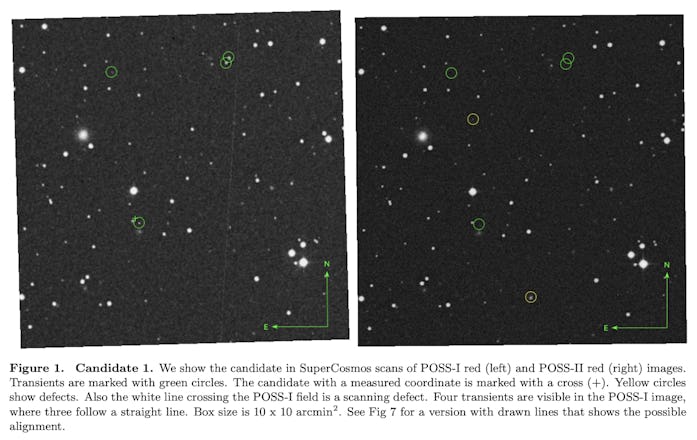
On a series of 70-year-old photographic plates containing images of the night sky, a few astronomers say they’ve found something weird: flashes of light that appear and then disappear, like ghosts.
“We found one image where nine stars were out there, and they vanished. And they are not there half an hour earlier, and they are not there six days later,” says Beatriz Villarroel, a postdoctoral researcher at the Nordic Institute for Theoretical Physics. “And you wonder, ‘Is this real?’”
There isn’t any readily available astronomical explanation for what these vanishing points of light, which the researchers call transients, might be. The dots might be defects in the photographic emulsions or image artifacts from when astronomers first scanned the plates. But in a series of recent papers, Villarroel and a small team of astronomers have been more seriously probing the possibility that the flashes might be something more exciting — extraterrestrial objects.
A shiny, spinning object passing by Earth would leave a line of dots in a long-exposure image of the night sky. Asteroids or meteors aren’t likely to look like that — most asteroids are dark, and meteors are moving so fast they’d look like streaks. And, most intriguingly for the researchers, there weren’t any satellites in the night sky when the images were taken, as all the plates were before the launch of Sputnik.
Still, Villarroel and colleagues haven’t ruled out Earthly explanations for these tantalizing dots. And there’s a long history of events associated with the search for extraterrestrial intelligence (SETI) fizzling out under closer scrutiny.
.
 .
.
.
Click the link below for the article:
.
__________________________________________
June 17, 2022
Business, Food For Thought, Human Interest, Science, Technical amazon, business, Business News, current-events, Future, Hotels, human-rights, medicine, mental-health, research, Science, Science News, technology, Technology News, travel, vacation Leave a comment

Click the link below the picture
.
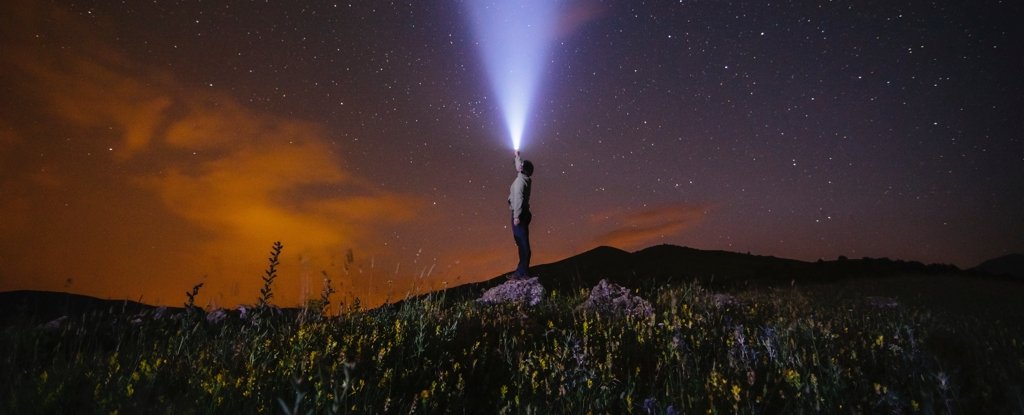
In about 5 billion years, the Sun will leave the main sequence and become a red giant. It’ll expand and transform into a glowering, malevolent ball and consume and destroy Mercury, Venus, Earth, and probably Mars.
Can humanity survive the Sun’s red giant phase? Extraterrestrial Civilizations (ETCs) may have already faced this existential threat.
Could they have survived it by migrating to another star system without the use of spaceships?
Universe Today readers are well-versed in the difficulties of interstellar travel. Our nearest neighboring solar system is the Alpha Centauri system.
If humanity had to flee an existential threat in our Solar System, and if we could identify a planetary home in Alpha Centauri, it would still take us over four years to get there – if we could travel at the speed of light!
It still takes us five years to get an orbiter to Jupiter at our technological stage. There’s lots of talk about generation starships, where humans could live for generations while en route to a distant habitable planet.
Those ships don’t need to reach anywhere near the speed of light; instead, entire generations of humans would live and die on a journey to another star that takes hundreds or thousands of years. It’s fun to think about but pure fantasy at this point.
.
 (Cavan Images/Getty Images)
.
.
Click the link below for the article:
.
__________________________________________
June 17, 2022
Crime, Food For Thought, Human Interest, Medical, missed News, Political, Science, sports, Technical amazon, business, Business News, current-events, Future, Hotels, human-rights, medicine, mental-health, research, Science, Science News, technology, Technology News, travel, vacation Leave a comment
.
.
__________________________________________
June 16, 2022
Business, Food For Thought, Human Interest, Photographs, Science, Technical amazon, business, Business News, current-events, Future, Hotels, human-rights, medicine, mental-health, research, Science, Science News, technology, Technology News, travel, vacation Leave a comment

Click the link below the picture
.
Key Takeaways
- Here on Earth, our entire planet is a little under 13,000 kilometers in diameter, or about seven orders of magnitude greater than the size of a human.
- But as we go up, to larger and larger scales, we find that stars, stellar systems, star clusters, galaxies, clusters of galaxies, and more show us how insignificant human, and even planetary, scales truly are.
- Even with all we know, the vast abyss of the unobservable Universe is larger than the cumulative suite of all we can see. These images show how big the cosmic scale truly is.
Within this Universe, we’re merely a drop in the cosmic ocean.
.
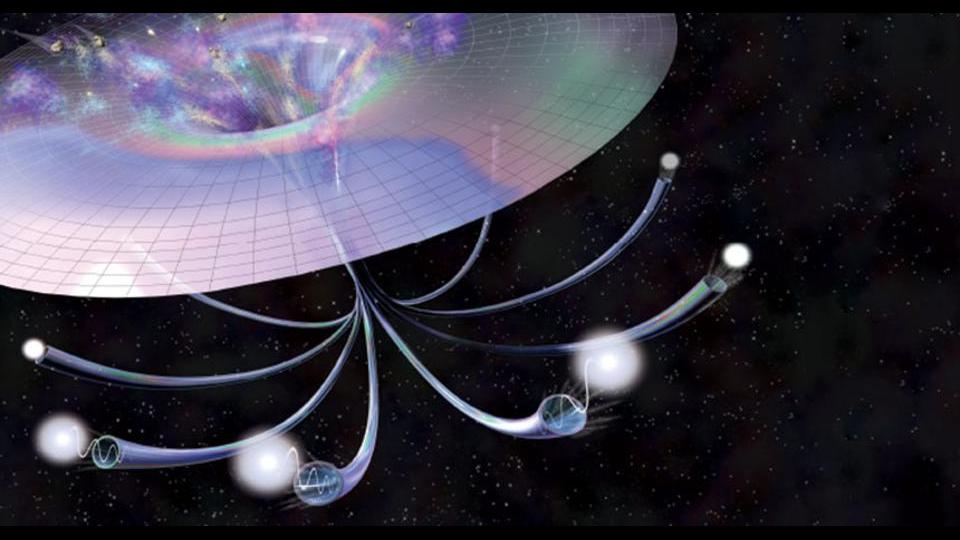 From a pre-existing state, inflation predicts that a series of universes will be spawned as inflation continues, with each one being completely disconnected from every other one, separated by more inflating space. One of these “bubbles,” where inflation ended, gave birth to our Universe some 13.8 billion years ago, where our entire visible Universe is just a tiny portion of that bubble’s volume. Each individual bubble is disconnected from all of the others (Credit: Nicolle Rager Fuller)
.
.
Click the link below for the article:
.
__________________________________________
June 16, 2022
Business, Food For Thought, Human Interest, Political, Science, Technical amazon, business, Business News, current-events, Future, Hotels, human-rights, medicine, mental-health, research, Science, Science News, technology, Technology News, travel, vacation Leave a comment

Click the link below the picture
.
NASA’s new powerful space observatory, the James Webb Space Telescope, got pelted by a larger than expected micrometeoroid at the end of May, causing some detectable damage to one of the spacecraft’s 18 primary mirror segments. The impact means that the mission team will have to correct for the distortion created by the strike, but NASA says that the telescope is “still performing at a level that exceeds all mission requirements.”
NASA’s James Webb Space Telescope, or JWST, is the agency’s incredibly powerful next-generation space telescope, designed to look into the farthest reaches of the Universe and see back in time to the stars and galaxies that formed just after the Big Bang. It cost NASA nearly $10 billion to build and more than two decades to complete. But, on Christmas Day 2021, the telescope finally launched to space, where it underwent an extremely complex unfolding process before reaching its final destination roughly 1 million miles from Earth.
Since its launch, JWST has already been hit by at least four different micrometeoroids, according to a NASA blog post, but all of those were small and about the size of what NASA expected the observatory to encounter. A micrometeoroid is typically a small fragment of an asteroid, usually smaller than a grain of sand. The one that hit JWST in May, however, was larger than what the agency had prepared for, “likely less than .1 millimeter,” a NASA spokesperson told The Verge in an email. NASA admits that the strike, which occurred between May 23rd and May 25th, caused a dimple in the mirror and a “marginally detectable effect in the data,” which engineers are continuing to analyze.
.
/cdn.vox-cdn.com/uploads/chorus_image/image/70957294/stsci_j_p2223a.0.jpeg) What’s going on?
What’s going on?
.
.
Click the link below for the article:
.
__________________________________________
June 16, 2022
Crime, Food For Thought, Human Interest, Medical, missed News, Political, Science, Technical amazon, business, Business News, current-events, Future, Hotels, human-rights, medicine, mental-health, research, Science, Science News, technology, Technology News, travel, vacation Leave a comment
.
Some news you might have missed!>Click Title of Item You Wish to Select< |
|
|---|---|
| NEWS | TED TALKS |
| 1 dead, 2 wounded in Alabama church shooting; suspect held | Are all relationships messy? | Carol Bruess |
| The January 6 Committee’s Most Damning Revelation Yet | The power of dematerialization | Andrew McAfee |
| Your Daily AM Roundup | The business of biometrics | Madhumita Murgi |
| Coronavirus Daily Briefing (2) | The robots of the future | Dennis Hong |
| Coronavirus Daily Briefing (1) | Do job titles matter? | Carissa Nimah |
| ——————— | ——————— |
.
__________________________________________
June 15, 2022
Business, Food For Thought, Human Interest, Science, Technical amazon, business, Business News, current-events, Future, Hotels, human-rights, medicine, mental-health, research, Science, Science News, technology, Technology News, travel, vacation Leave a comment

Click the link below the picture
.
If the Great Salt Lake, which has already shrunk by two-thirds, continues to dry up, here’s what’s in store:
The lake’s flies and brine shrimp would die off — scientists warn it could start as soon as this summer — threatening the 10 million migratory birds that stop at the lake annually to feed on the tiny creatures. Ski conditions at the resorts above Salt Lake City, a vital source of revenue, would deteriorate. The lucrative extraction of magnesium and other minerals from the lake could stop.
Most alarming, the air surrounding Salt Lake City would occasionally turn poisonous. The lake bed contains high levels of arsenic and as more of it becomes exposed, wind storms carry that arsenic into the lungs of nearby residents, who make up three-quarters of Utah’s population.
“We have this potential environmental nuclear bomb that’s going to go off if we don’t take some pretty dramatic action,” said Joel Ferry, a Republican state lawmaker, and rancher who lives on the north side of the lake.
As climate change continues to cause record-breaking drought, there are no easy solutions. Saving the Great Salt Lake would require letting more snowmelt from the mountains flow to the lake, which means less water for residents and farmers. That would threaten the region’s breakneck population growth and high-value agriculture — something state leaders seem reluctant to do.
Utah’s dilemma raises a core question as the country heats up: How quickly are Americans willing to adapt to the effects of climate change, even as those effects become urgent, obvious, and potentially catastrophic?
The stakes are alarmingly high, according to Timothy D. Hawkes, a Republican lawmaker who wants more aggressive action. Otherwise, he said, the Great Salt Lake risks the same fate as California’s Owens Lake, which went dry decades ago, producing the worst levels of dust pollution in the United States and helping to turn the nearby community into a veritable ghost town.
.

Credit…EROS Center, U.S.G.S.
 Credit…EROS Center, U.S.G.S.
.
.
Click the link below for the article:
.
__________________________________________
June 15, 2022
Business, Food For Thought, Human Interest, Science, Technical amazon, business, Business News, current-events, Future, Hotels, human-rights, medicine, mental-health, research, Science, Science News, technology, Technology News, travel, vacation 2 Comments
Click the link below the picture
.
In 1905, our conception of the Universe changed forever when Einstein put forth his special theory of relativity. Prior to Einstein, scientists were able to describe every “point” in the Universe with the use of just four coordinates: three spatial positions for each of the three dimensions, plus a time to indicate which moment any particular event occurred. All of this changed when Einstein had the fundamental realization that every single observer in the Universe, dependent on their motion and location, each had a unique perspective on where and when every event in the Universe would have occurred.
Whenever one observer moves through the Universe relative to another, the observer-in-motion will experience time dilation: where their clocks run slower relative to the observer-at-rest. Based on this, Einstein suggested that we could make use of two clocks to put this to the test: one at the equator, which speeds around the Earth at approximately 1670 km/hr (1038 mph), and one at the Earth’s poles, which is at rest as the Earth rotates about its axis.
.
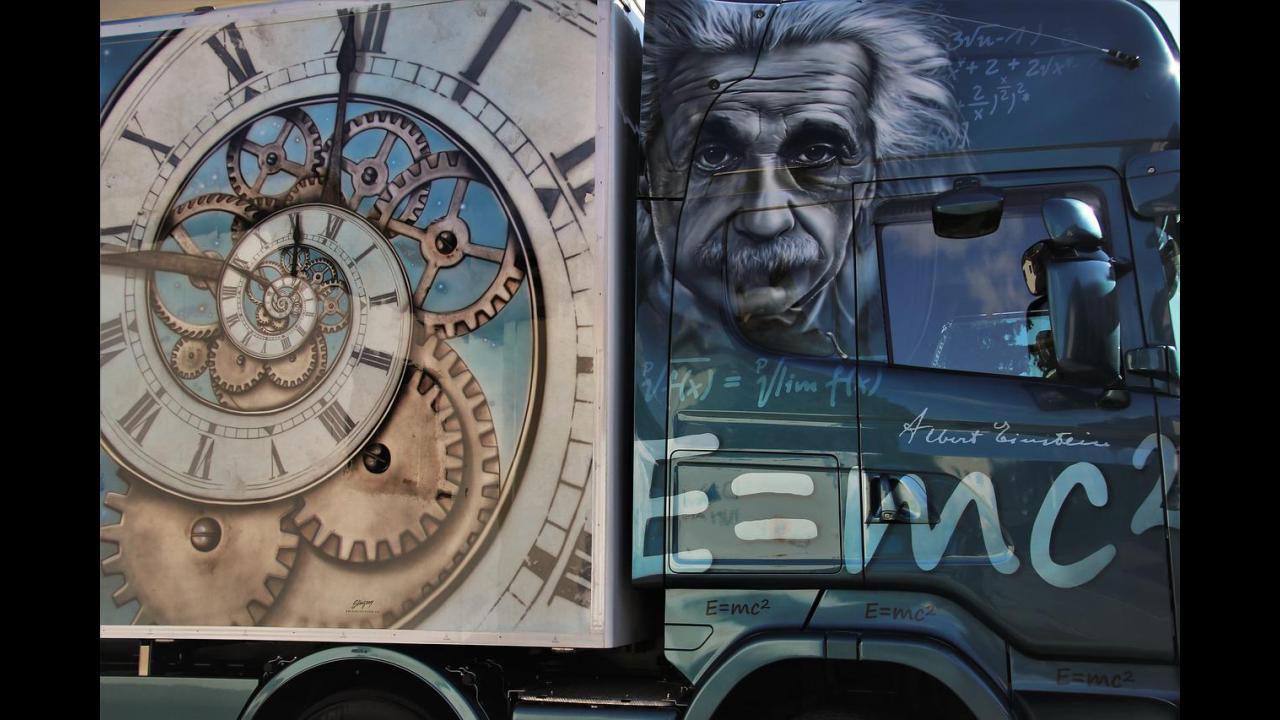 This artful illustration of Einstein, some of his equations, and a rendering of a surreal clock helps us conceptualize the differing passage of time experienced by people in different locations and moving at different rates. Although time dilation had been measured for subatomic particles previously, it wasn’t until ~50 years ago that it was measured for an actual clock (Credit: pasja1000/pixabay)
.
.
Click the link below for the article:
.
__________________________________________
June 15, 2022
Crime, Food For Thought, Human Interest, Medical, missed News, Political, Science, Technical amazon, business, Business News, current-events, Future, Hotels, human-rights, medicine, mental-health, research, Science, Science News, technology, Technology News, travel, vacation Leave a comment
.
.
__________________________________________
Christian Lifestyle Blogger
Finanzalibera.com per una libertà finanziaria
https://www.tangietwoods
CEO and president of The Mullins Companies
Two Cultures. One Life. Endless Stories
Real Estate Development Specialist
¡Bienvenido de vuelta viajero!
so looking to the sky ¡ will sing and from my heart to YOU ¡ bring...
CEO and Founder of Nsight Health
Catholic News, Prayers, HD Images, Rosary, Music, Videos, Holy Mass, Homily, Saints, Lyrics, Novenas, Retreats, Talks, Devotionals and Many More
Decoding Power. Defying Narratives.
A creative collaboration introducing the art of nature and nature's art.
The Home Of Entertainment News, Reviews and Reactions
•Whenever you are confronted with an opponent, conquer him with love.(Gandhi)
Algotrader at TRADING-CLUBS.COM
Film and Writing Festival for Comedy. Showcasing best of comedy short films at the FEEDBACK Film Festival. Plus, showcasing best of comedy novels, short stories, poems, screenplays (TV, short, feature) at the festival performed by professional actors.
Peace. Tranquility. Insanity.
Take a ride on the wild side
Découvre des musiques prometteuses (principalement) dans la sphère musicale française.
No tiene que Ser una Pesadilla.
Life in Kana-text (er... CONtext)
Where feelings meet metaphors and make questionable choices.
Finding hope and peace through writing, art, photography, and faith in Jesus.
Eyasu
Essu Center TV
Because He lived..
love each other like you're the lyric to their music
Comprendere il mondo per cambiarlo.
Mid-Life Ponderings
Travel,Tourism, Life style "Now in hundreds of languages for you."
I speak the honest truth. I share my honest opinions. I share my thoughts. A platform to grow and get surprised.
User-generated ratings for ethical consumerism
Travel and Lifestyle Blog
Questo è un piccolo angolo di poesie, canzoni, immagini, video che raccontano le nostre emozioni
“Log your journey to success.” “Where goals turn into progress.”
scrivo per dare forma ai silenzi e anima alle storie che il mondo dimentica | Sito Gratuito No-Profit
“Dream deeper. Believe bolder. Live transformed.”
Vichar, Motivation, Kadwi Baat ( विचार दर्शनम्)
Traum zur Realität
 James' World 2