July 5, 2022
Mohenjo
Business, Food For Thought, Human Interest, Political, Science, Technical
amazon, business, Business News, current-events, Future, Hotels, human-rights, medicine, mental-health, research, Science, Science News, technology, Technology News, travel, vacation

Click the link below the picture
.
Not long ago, I explained why Google greatly prefers applicants whose resumes use the X-Y-Z formula to describe their experiences — and why job seekers who don’t use that formula greatly diminish their chances of getting an offer.
However, it’s clear that there’s an even more fundamental problem before we even get to the formula. It also makes it much harder for top companies to identify great candidates from among the millions (literally, millions) who apply.
Writing for Business Insider, Rachel Premack interviewed Amazon’s recruiting manager for university programs, Celeste Joy Diaz, about what she thinks is the single biggest mistake that Amazon applicants make.
It turns out Diaz agrees with the top Google recruiters, along with many others at top companies. It all comes down to a basic misconception about what a resume is supposed to do, and therefore what successful applicants choose to include.
.
 Photo by zhazhin_sergey/Getty Images
.
.
Click the link below for the article:
.
__________________________________________
July 5, 2022
Mohenjo
Crime, Food For Thought, Human Interest, Medical, missed News, Political, Science, Technical
amazon, business, Business News, current-events, Future, Hotels, human-rights, medicine, mental-health, research, Science, Science News, technology, Technology News, travel, vacation

.
News You might have missed!
Use your browser or smartphone back arrow (<-) to return to this table for your next selection.
.
__________________________________________
July 4, 2022
Mohenjo
Business, Food For Thought, Human Interest, Medical, Political, Science, Technical
amazon, business, Business News, current-events, Future, Hotels, human-rights, medicine, mental-health, research, Science, Science News, technology, Technology News, travel, vacation

Click the link below the picture
.
Ever since COVID-19 reared its ugly head and upended our world, long-lasting symptoms of the virus have been varied and hard to pinpoint—until now. “A survey conducted by Dr. Natalie Lambert of Indiana University School of Medicine and Survivor Corps analyzed the long-term experiences COVID-19 survivors are having with the virus. The COVID-19 ‘Long Hauler’ Symptoms Survey Report identified 98 long-lasting symptoms.” And ever since the report came out last year, it’s held up. Click through from least common to most common to see if you’ve experienced any. Read on, and to ensure your health and the health of others, don’t miss these 35 Places You’re Most Likely to Catch COVID.
.
 Shutterstock
.
.
Click the link below for the article:
.
__________________________________________
July 4, 2022
Mohenjo
Business, Food For Thought, Human Interest, Political, Science, Technical
amazon, business, Business News, current-events, Future, Hotels, human-rights, medicine, mental-health, research, Science, Science News, technology, Technology News, travel, vacation

Click the link below the picture
.
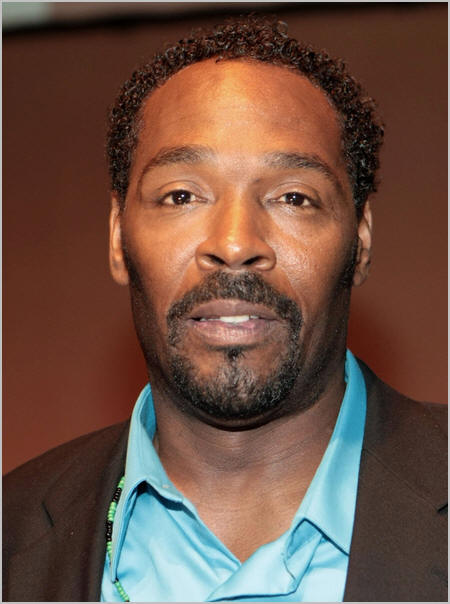
If you were paying attention in the spring of 1992, you probably remember this quote coming from the mouth of Rodney King. His broadcast appeal to the violent masses was made halfway through the six-day-long rioting in Los Angeles.
And to be fair, “Can’t we all just get along?” were not his words. These were:
“People, I just want to say, you know, can we all get along? Can we get along?”
Frankly, I prefer the way our collective brains have chosen to remember what we think he said on May 1st, 1992: more eloquent.
Mr. King’s (mis)quote came to mind the other day when I read a similar appeal from a women who is part of a discussion group on social media. In so many words, she suggested that the members of the discussion group stop being “negative.” Based on her post, I concluded that she didn’t like the tone and tenor of some of the comments from some of the others and was appealing to their “better selves” to be more “positive” in the expression of their ideas and opinions.
.

 .
.
.
Click the link below for the article:
.
__________________________________________
July 4, 2022
Mohenjo
Business, Food For Thought, Human Interest, Medical, Science, Technical
amazon, business, Business News, current-events, Future, Hotels, human-rights, medicine, mental-health, research, Science, Science News, technology, Technology News, travel, vacation

Click the link below the picture
.
Workplace stress is increasingly becoming a larger part of the conversation since the pandemic. And against the backdrop of hustle culture, reports indicate that the number of people seeking help with stress or anxiety has increased by 55%, according to a study by a mental health services provider in the United Kingdom. The British Health and Safety Executive indicates that in 2021 alone, 822,000 workers in the U.K. suffered from work-related stress, depression, or anxiety.
I entered law—the second most stressed-out professional in Britain, according to insurance company, Protectivity—in 2009 as an ambitious high-achiever. As a career defined by its high standards and perfectionism, it is often home to high-achievers and the ambitious few who are willing to burn the candle at both ends and make the sacrifice required to progress. But the impact stress was having on my life nearly resulted in my leaving the profession altogether. I know I am not alone.
For many in professional services and other demanding industries that attract high achievers, these statistics may come as no surprise. Reflective of my experience as a lawyer, I’m sure they are no stranger to the long hours, competitive work environments, and the monumental pressure of meeting targets. And, while some thrive under this intensity, many are battling with burnout.
.
 [Source illustration: Malte Mueller/Getty images]
.
.
Click the link below for the article:
.
__________________________________________
July 4, 2022
Mohenjo
Business, Food For Thought, Human Interest, Medical, Science, Technical
amazon, business, Business News, current-events, Future, Hotels, human-rights, medicine, mental-health, research, Science, Science News, technology, Technology News, travel, vacation

Click the link below the picture
.
Bosses want video call cameras on. But workers may have a strong argument against appearing on screen when they don’t want to.
.
“Good morning, team! If we could all turn our cameras on for this meeting, that’d be great.” It’s a line that’s become a common refrain in the remote work era – but one that many employees dread.
Platforms such as Zoom were a blessing when Covid-19 lockdowns hit, allowing many people to work from home. But, two and a half years into the pandemic, that same technology has become something of a curse, too. These days, millions of workers spend hours each day on video calls, exhausting themselves trying to decode colleagues’ body language or distracted by their own image on screen.
Having a camera on can often be seen as a sign of engagement; proof an employee really is committed to their work. But experts also suggest turning off cameras could, along with mitigating the annoyance of always appearing on screen, improve worker wellbeing – and makes meetings more efficient, to boot.
How cameras on became the norm
“At the beginning of the pandemic, it made a lot of sense that people wanted to be on camera because we were living under the premise that this was going to be a two-week pause of our lives – and so we were like, ‘We want to see everybody, we want to connect’,” says Allison Gabriel, professor of management and organizations at the University of Arizona, US, who’s studied the effects of Zoom fatigue.
.

.
.
Click the link below for the article:
.
__________________________________________
July 3, 2022
Mohenjo
Business, Food For Thought, Human Interest, Medical, Science, Technical
amazon, business, Business News, current-events, Future, Hotels, human-rights, medicine, mental-health, research, Science, Science News, technology, Technology News, travel, vacation

Click the link below the picture
.
Last week, publisher Aspyr officially acknowledged the existence of a game-breaking glitch in the recent Switch port of Star Wars: Knights of the Old Republic II. That glitch, which crashes the game after the “Basilisk Crash” cutscene on the planet Onderon, has the inconvenient side effect of making the Switch version completely unbeatable.
While Aspyr promised this game-breaking glitch would be fixed in the game’s next downloadable patch, plenty of game developers in the past haven’t had that option. KOTOR II on the Switch is the latest in a long line of games that were literally impossible to complete (or to get a full, 100 percent completion rate) when they launched.
Here, we’re not talking about games like The Sims or Tetris that are designed not to have a win condition and/or always end in failure for the player (though some games that seem like they fall in that category are surprisingly beatable). We’re also not talking about games where the player is forced to reset after accidentally stumbling into an in-game predicament where they can no longer make progress (TV Tropes has a massive list of games that fit this description).
No, instead we’re talking about games that are supposed to be beatable but, for one reason or another, can’t be fully completed regardless of what the player does (short of using external cheats). While gaming’s short history has seen plenty of these games, here are a few notable examples that should make Aspyr feel a little better about its recent KOTOR problems.
.
 A promised patch should soon allow KOTOR II players to beat the game on Switch.
.
.
Click the link below for the article:
.
__________________________________________
July 3, 2022
Mohenjo
Business, Food For Thought, Human Interest, Medical, Science, Technical
amazon, business, Business News, current-events, Future, Hotels, human-rights, medicine, mental-health, research, Science, Science News, technology, Technology News, travel, vacation

Click the link below the picture
.
My Indian immigrant parents instilled in me an incredible and intense work ethic. I watched them put in long hours, with a relentless commitment to achieving their dreams. My father always said, “Keep your head down, work hard, and work some more, and you will be recognized.”
And yet, his advice to only work hard hasn’t always served me well at work.
Early in my career, I presented my company’s brand forecast at monthly senior leadership meetings. I spent hours and hours preparing and over-preparing, working into the early hours of the morning. The actual presentations were never more than 10 minutes long. On one occasion, overloaded on caffeine and sleep deprivation, I completely blanked when the vice president asked me a question, and I stood there frozen in front of the senior leadership team.
I was working hard, but not on the right things. I struggled with being over-prepared and striving for perfection. Without much coaching or guidance from my bosses, I wasted hours on details that didn’t matter,
on pulling and analyzing the wrong data sets, and on answering the wrong questions. Some might argue that these are simple mistakes we make in the course of our careers, and mistakes can help us learn and be better leaders. Yet research shows that contrary to what so many of us have been taught, the errors we make need to be close to the right answer in order to be educational. This is what helps us to learn and improve our memory to retain the correct information — and then ultimately do things differently.
.
 Brand X Pictures/Getty Images
.
.
Click the link below for the article:
.
__________________________________________
July 2, 2022
Mohenjo
Business, Food For Thought, Human Interest, Medical, Science, Technical
amazon, business, Business News, current-events, Future, Hotels, human-rights, medicine, mental-health, research, Science, Science News, technology, Technology News, travel, vacation

Click the link below the picture
.
Marina Koren wrote in The Atlantic that, “My mornings are the messiest part of my day. I do not rise and shine. Instead, I hit snooze on the alarm and throw the covers over my head.” This, Koren goes on, causes her distress because “it never seems to be the case with other people’s morning routine.” Koren is referencing the deluge of morning-routine media and advice, including The Cut’s “ How I Get It Done” column, The New York Times’ Sunday Routine specials, roundups in news outlets ranging from CNN to Vogue, #routine Instagram posts, and the endless instruction from self-improvement podcasters.
Morning routines are having a moment. And it’s easy to feel that if you don’t have one, you should. Or else you’ll fall behind, or worse, be miserable. But, as is usually the case with these things, the truth is a bit more complicated and a lot more freeing.
.
 Routine
.
.
Click the link below for the article:
.
__________________________________________
July 2, 2022
Mohenjo
Business, Food For Thought, Human Interest, Medical, Science, Technical
amazon, business, Business News, current-events, Future, Hotels, human-rights, medicine, mental-health, research, Science, Science News, technology, Technology News, travel, vacation

Click the link below the picture
.
But extracting wax from our ear canals is precisely why most of us buy Q-tips in the first place. The humble Q-tip was so perfectly designed for this purpose that it turned into a generic word for a product.
.
Yet, somehow, we use it for the very thing it specifically warns us not to do.
.
The origins of this strange consumer phenomenon can be traced to Leo Gerstenzang, an immigrant from Poland.
.
In 1923, Gerstenzang supposedly thought he could improve upon his wife Ziuta’s method of wrapping a wad of cotton around a toothpick to clean their newborn daughter Betty’s eyes, ears, belly button, and other sensitive areas during bathing.
Gerstenzang started a company that year to develop and manufacture the first ready-made sterilized cotton swabs for baby care. Over the next couple of years, he worked to design a machine that could produce swabs “untouched by human hands.”
“Baby Betty Gays” was the original working name for the swabs because daughter Betty laughed when her parents tickled her with them, according to her 2017 paid obituary. By the time Gerstenzang put out one of the first newspaper advertisements for his invention in 1925 it was shortened to “Baby Gays.”
.
Soon, Gerstenzang changed the brand name to “Q-Tips Baby Gays.” By the mid-1930s, “Baby Gays” was dropped from the name.
.
There are competing histories to where the “Q-tips” addition came from. According to a spokesperson for Unilever, (UL) the consumer goods conglomerate that bought Q-tips in 1987, the “Q” stands for “quality” and “tips” describes the cotton swab at the end of the stick (the first swabs were single-sided sold in sliding tin boxes).
.

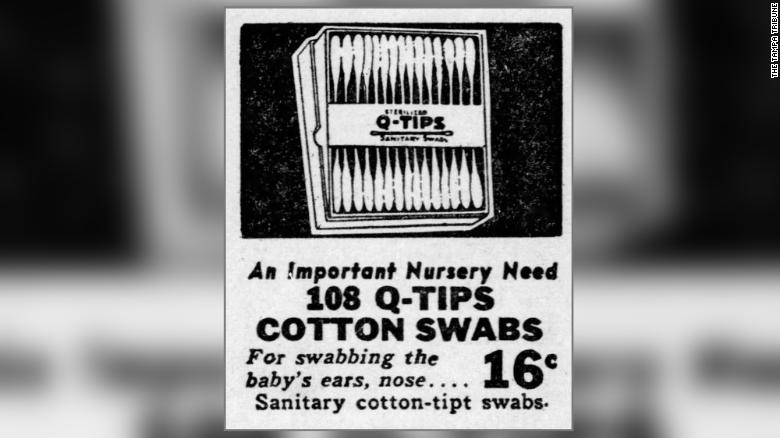 A Q-tips advertisement from 1945. Q-tips were originally designed for baby care.
.
.
Click the link below for the article:
.
__________________________________________
Older Entries
Newer Entries
 James' World 2