September 13, 2013
Mohenjo
Science
amazon, Astronomers, business, Business News, central bulge, climate, dense clouds, ESO, ESO telescopes, ESO’s VISTA survey telescope, galactic bulge, galactic disc, Galaxy, Hotels, infrared radiation, Massive Star Milky Way, Milky Way, research, Science, Science News, survey telescope, technology, Technology News, telescopes, travel, vacation, wavelength light
Click link below picture
.55443
Two groups of astronomers have used data from ESO telescopes to make the best three-dimensional map yet of the central parts of the Milky Way. They have found that the inner regions take on a peanut-like, or X-shaped, appearance from some angles. This odd shape was mapped by using public data from ESO’s VISTA survey telescope along with measurements of the motions of hundreds of very faint stars in the central bulge.
One of the most important and massive parts of the galaxy is the galactic bulge. This huge central cloud of about 10 000 million stars spans thousands of light-years, but its structure and origin were not well understood.
Unfortunately, from our vantage point from within the galactic disc, the view of this central region — at about 27 000 light-years’ distance — is heavily obscured by dense clouds of gas and dust. Astronomers can only obtain a good view of the bulge by observing longer wavelength light, such as infrared radiation, which can penetrate the dust clouds.
Earlier observations from the 2MASS infrared sky survey had already hinted that the bulge had a mysterious X-shaped structure. Now two groups of scientists have used new observations from several of ESO’s telescopes to get a much clearer view of the bulge’s structure.
.

.
.
Click link below for article:
.
______________________________________________________________________________
September 13, 2013
Mohenjo
Science
amazon, biology, business, Business News, Fossils, Hotels, huffingtonpost, human-rights, largest prehistoric fish, Leedsichthys, Leedsichthys 50 Feet, Leedsichthys World's Largest Prehistoric Fish, museums of scotland, Paleontology, Prehistoric Fish Leedsichthys, research, Science, Science News, shark research, Slideshow, technology, Technology News, travel, university of glasgow, vacation, Video, whale shark, World's Largest Fish
FROM

Click link below picture
.
This is one ancient whale of a tale! An international team of scientists from the National Museums Scotland and the Universities of Glasgow and Edinburgh have completed a years-long project to excavate and assemble the most complete fossil of the world’s largest prehistoric fish.
The specimen suggests that Leedsichthys problematicus grew to a full size of around 50 feet long, twice that of previous estimates, according to a written statement from the University of Glasgow.
The massive fish must have cast an impressive shadow as it swam through the seas about 165 million years ago. With a bony physique, Leedsichthys pioneered an important ecological niche: It was the first of the giant plankton-feeders, whose modern-day equivalents today include the behemoth whale shark.
Research team leader Dr. Jeff Liston of the National Museums of Scotland told The Huffington Post in an email that several significant conclusions can be drawn from the Leedsichthys discovery.
.
.
.
Click link below for story, video and slideshow:
.
______________________________________________________________________________
September 7, 2013
Mohenjo
Science
amazon, Astronomy, business, Business News, dust environment, Hotels, huffingtonpost, Ladee, LADEE Launch, LADEE Livestream, LADEE Mision, LADEE Nasa, lunar atmosphere, Lunar-Atmosphere-And-Dust-Environment-Explorer, Moon, Moon Mission, Moon Mission Launch, Nasa Ladee, nasa launch, Nasa Moon Mission, nasa tv, research, Science, Science News, Slideshow, Space, Space Program, technology, Technology News, travel, vacation, Video, virginia weather, Watch LADEE, wide swath
FROM
Click link below picture
.
NASA will launch a new spacecraft tonight (Sept. 6) to unlock the mysteries of moon dust and the wispy lunar atmosphere, and you can watch the blastoff live online.
The space agency’s Lunar Atmosphere and Dust Environment Explorer, nicknamed LADEE, is poised to liftoff atop a brand-new Minotaur V rocket from Wallops Island, Va., at 11:27 p.m. EDT (0327 Sept. 7 GMT) in what will be the first-ever lunar mission to launch from Virginia. Weather permitting, the nighttime launch may be visible to millions of observers along a wide swath of the U.S. East Coast that stretches from Maine to North Carolina.
But for observers outside the viewing area, NASA has two webcasts to offer live video views of tonight’s planned moon shot. You can watch the LADEE launch live on SPACE.com beginning at 9:30 p.m. EDT (0130 GMT), courtesy of NASA TV.
.
.
.
Click link below for story, videos and slideshow:
.
______________________________________________________________________________
September 7, 2013
Mohenjo
Science
amazon, Animal Behavior, animals, biology, Boa Constrictor, Boa Eating Monkey Video, Boa Eats Monkey, business, Business News, Hotels, howler monkey, Howler Monkeys, huffingtonpost, monkeys, new evidence, paul garber, primates, primatologist, research, Science, Science News, Slideshow, Snake Eating Monkey, technology, Technology News, time scientists, travel, vacation, Video
FROM
Click link below picture
.
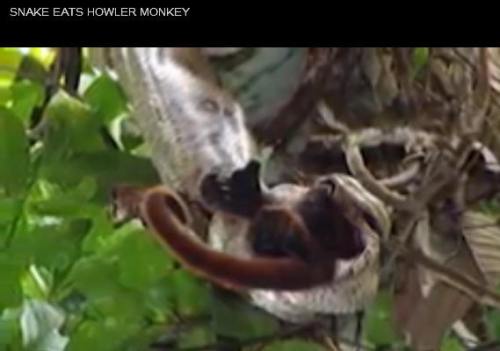
If a snake eats a monkey in the forest and no one sees it, does it make a difference? New evidence suggests that it does.
For the first time, scientists have witnessed a boa constrictor attacking and eating a howler monkey. The finding, and boa-eating-monkey video, is noteworthy since reports of primates being eaten by predators are relatively rare, according to the study, published this month in the journal Primates.
“This may cause us to rethink how vulnerable [these] primates are to predation,” said Paul Garber, a primatologist at the University of Illinois, who wasn’t involved in the study.
.
.
.
Click link below for story, video and slideshow:
.
______________________________________________________________________________
September 1, 2013
Mohenjo
Science
amazon, Ancient Nanotechnology, Ancient Romans, Ancient Romans Lycurgus Cup, Ancient Romans Nanotechnology, ancient technology, anthropology, Archaeology, biology, business, Business News, chemistry, color changes, Daily Discovery, Hotels, huffingtonpost, illinois assistant, Lycurgus Cup Nanotechnology, Nanotechnology, Nanotechnology History, Physics, research, Science, Science News, silver and gold, Slideshow, smithsonian magazine, technology, Technology News, tiny particles, travel, vacation, Video
FROM
Click link below picture
.54294
The ancient Romans were pretty advanced for their time — so advanced that they may even have been pioneers of what we now call nanotechnology.
In fact, an ornately decorated Roman artifact, known as the Lycurgus cup, is inspiring researchers to explore practical applications of the ancient technology.
Created sometime in the Fourth Century, the goblet exhibits a color-changing property that makes its glass take on different hues, depending on the light source — just watch the cup in the video above.
Scientists were long at a loss to explain the cup’s color changes. Then in the 1990s they discovered tiny particles of silver and gold in the cup’s glass. According to Smithsonian Magazine, “When hit with light, electrons belonging to the metal flecks vibrate in ways that alter the color depending on the observer’s position.”
Now, a research team is attempting to build upon the unique technology and apply it in the medical field.
Gang Logan Liu, an University of Illinois assistant professor who has studied the Lycurgus cup for several years, described it as an “icon for inspiration.”
.
.
.
Click link below for story, video and slideshow:
.
______________________________________________________________________________
September 1, 2013
Mohenjo
Science
amazon, aviation, business, Business News, chemistry, climate, Daily Discovery, Element 115, Element 115 Confirmed, Elements, gaming, gsi accelerator facility, History Of Science, Hotels, huffingtonpost, new element, New Element 115, Periodic Table, Periodic Table Of Elements, Radioactive, Radioactive Element, research, Science, Science News, Slideshow, technology, Technology News, transportation, travel, Ununpentium, vacation, videogames
FROM
Click link below picture
.
The periodic table of the elements has grown ever since the first version was published by Dmitri Mendeleev in 1869. And now scientists in Sweden suggest it’s time to add yet another element to the table.
New research confirms the existence of a super-heavy, radioactive element with atomic number 115. Its temporary name is ununpentium (Uup), as the element has yet to be named formally. The research was conducted at the GSI accelerator facility near Darmstadt, Germany, where scientists are known for having discovered six other elements since the early 1980s.
“This was a very successful experiment and is one of the most important in the field in recent years,” lead researcher Dr. Dirk Rudolph, physics professor at the University of Lund in Sweden, said in a written statement.
Evidence for element 115 was first discovered by Russian scientists in 2004. But additional research now has confirmed that the element’s atomic number — the number of protons in the nucleus of one atom of the substance — is 115, BBC News reports.
.

Dmitri Mendeleev, Russian chemist who published the first periodic table of elements.
.
.
Click link below for story and slideshow:
.
______________________________________________________________________________
August 28, 2013
Mohenjo
Science
amazon, Ancient Proteins, biology, business, Business News, chemistry, climate, deep sea hydrothermal vents, early earth, Earth, evolution, Fossil Proteins, Fossils, Hotels, html ref, Paleontology, physical chemist, Prehistory, Protein Fossils, research, Science, Science News, Slideshow, Space, Space Rocks, technology, Technology News, travel, university of granada, vacation
FROM
Click link below picture
.
Researchers have reconstructed the structure of 4-billion-year-old proteins.
The primeval proteins, described today (Aug. 8) in the journal Structure, could reveal new insights about the origin of life, said study co-author José Manuel Sanchez Ruíz, a physical chemist at the University of Granada in Spain.
Exactly how life emerged on Earth more than 3 billion years ago is a mystery. Some scientists believe that lightning struck the primordial soup in ammonia-rich oceans, producing the complex molecules that formed the precursors to life. Others believe that chemical reactions at deep-sea hydrothermal vents gave rise to cell membranes and simple cellular pumps. And still others believe that space rocks brought the raw ingredients for life — or perhaps even life itself — to Earth.
But it’s difficult to recreate events that happened so far in the distant past.
.

The individual molecules within early Earth’s primordial soup that form the basis of life likely developed in response to natural selection.
.
.
Click link below for story and slideshow:
.
______________________________________________________________________________
August 28, 2013
Mohenjo
Science
agence france presse, amazon, Ancient Priestess, Ancient Priestess Peru, Ancient Priestess Unearthed, business, Business News, high priestess, Hotels, huffingtonpost, moche culture, mud bricks, northern peru, Priestess Peru, Priestess Tomb Peru, Priestess Unearthed Peru, Priestess Unearthed Tomb, research, Science, Science News, Slideshow, technology, Technology News, travel, vacation, Women Ruled Peru, working in peru, World News
FROM

Click link below picture
.
Talk about ancient girl power!
Archaeologists working in Peru have uncovered the skeleton of a woman believed to have been a high priestess of a mysterious culture that existed around 1,200 years ago. The pre-Hispanic remains were found in late July in an impressive burial chamber located in the country’s northern Chepén province, according to the Agence France-Presse.
The priestess seems to have been a leader of an ancient culture known as the Moche, or Mochia. Around 2,000 years ago, the Moche dominated the cultural landscape of what is now northern Peru, building large pyramids from mud bricks before disappearing without explanation. The name Moche comes from the site of Moche, an ancient capital city.
Researchers have spent years attempting to unravel the riddles of a society which left no written record. According to the BBC, illustrations show the Moche engaged in brutal bouts of ritualized combat that ended with the losers being sacrificed.
The priestess discovered in Chepén was buried with child and adult human sacrifices, AFP reports. She joins the list of several other priestesses who have been found in northern Peru in the past few years.
.

View of one of two skeletons found in a burial chamber of the Moche culture, in the Cao religious compound in northern Peru.
.
.
Click link below for story and slideshow:
.
______________________________________________________________________________
August 22, 2013
Mohenjo
Science
amateur astronomer, amazon, Astronomy, business, Business News, constellation delphinus, cosmic event, Hotels, huffingtonpost, New Nova Space, Nova, Nova Delphini, Nova Delphinus 2013, Nova In Space, research, Science, Science News, sky atlas, skywatchers, Skywatching, Slideshow, Solar System, Space, space photos, Star Explosion, Stars, surprise appearance, technology, Technology News, travel, vacation, Video
FROM
Click link below picture
.
Stargazers are thrilled over the surprise appearance of a star explosion, known as a nova, in the night sky last week, but there is more to this cosmic event than meets the eye.
The new Nova Delphinus 2013 was first spotted in the constellation Delphinus (The Dolphin) by Japanese amateur astronomer Koichi Itagaki on Aug. 14 and quickly confirmed by other skywatchers soon after. Novas are stars that are undergoing a powerful eruption, causing them to brighten significantly, so that they appear suddenly in the night sky where previously no star was visible.
Since its discovery, this nova has brightened rapidly to become an object visible to the naked eye, though stargazers will need to be away from city lights in order to see it clearly
Just how frequently does a nova become bright enough to be seen without the use of binoculars or a telescope?
On average, new novas are detected about once every four or five years. Over the last 112 years, there have been 47 novas that have flared into naked-eye view. The majority of these — 26 — were quite dim and could only be positively identified by using a star chart or sky atlas.
.

Photographer Justin Ng photographed Nova Delphinus 2013 on August 18, 2013. He is based in Singapore.
.
.
Click link below for story, video and slideshow:
.
______________________________________________________________________________
August 22, 2013
Mohenjo
Science
amazon, ancient cemetery, Ancient Egypt, Ancient Egypt Meteorites, Ancient Egyptian Jewelry, business, Business News, Daily Discovery, Earth From Space, exotic materials, Hotels, huffingtonpost, iron artifacts, iron meteorites, Jewelry From Space, Jewelry Meteorite, Jewelry Space, Jewelry Space Origins, Meteorites, research, Science, Science News, Slideshow, Space, Space Rocks, technology, Technology News, travel, University College London, vacation
FROM
Click link below picture
.
Ancient Egyptian beads found in a 5,000-year-old tomb were made from iron meteorites that fell to Earth from space, according to a new study. The beads, which are the oldest known iron artifacts in the world, were crafted roughly 2,000 years before Egypt’s Iron Age.
In 1911, nine tube-shaped beads were excavated from an ancient cemetery near the village of el-Gerzeh, which is located south of Cairo, said study lead author Thilo Rehren, a professor at UCL Qatar, a Western Asian outpost of the University College London’s Institute of Archaeology. The tomb dates back to approximately 3200 B.C., the researchers said.
Inside the tomb, which belonged to a teenage boy, the iron beads were strung together into a necklace alongside other exotic materials, including gold and gemstones. Early tests of the beads’ composition revealed curiously high concentrations of nickel, a telltale signature of iron meteorites.
“Even 100 years ago, [the beads] attracted attention as being something strange,” Rehren told LiveScience.
.
.
.
Click link below for story and video:
.
______________________________________________________________________________
Older Entries
Newer Entries