February 5, 2014
Mohenjo
Science
Albert Einstein College of Medicine of Yeshiva University, amazon, Brain Makes Memories Video, Brain Memories in Brain, business, Business News, Hotels, How Memories Are Made, huffingtonpost, human-rights, medicine, memories, mental-health, research, Science, Science News, Slideshow, technology, Technology News, travel, vacation, Video, Video Biology, Video Brain Memories, Video How Brain Makes Memories, Video How Memories Are Made, Video How Memories Made
Click link below picture
.
Before they become part of our consciousness, memories aren’t much more than molecules. But how exactly do memories get stored in the brain?
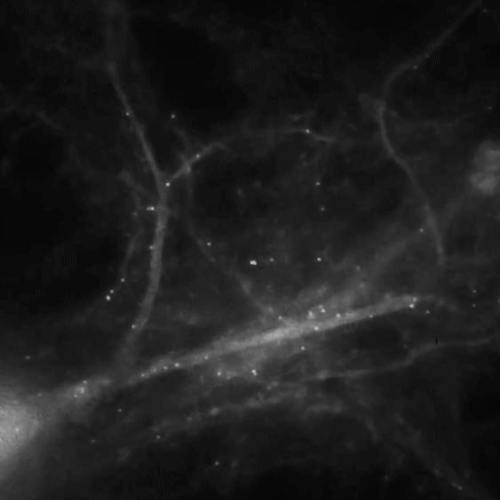
With the help of mice and some advanced imaging techniques, scientists from the Albert Einstein College of Medicine of Yeshiva University in New York recently sought to answer that question. This short video illustrates how the brain makes memories on a molecular level.
The team put fluorescent tags on messenger RNA (mRNA) molecules that code for beta-actin, a protein believed to be crucial for the formation of memories. As described in two studies published Jan. 24 in the journal Science, the team then stimulated neurons in the hippocampus — the part of the brain where memories are formed — and monitored a living brain cell.
.
.
.
Click link below for story, video and slideshow:
.
__________________________________________
February 5, 2014
Mohenjo
Science
amazon, Brain Science, business, Business News, Hotels, huffingtonpost, Human Biology, human-rights, medicine, mental-health, Myths About the Brain, Neurology, Percentage of the Brain, research, Richard Cytowic, Richard Cytowic Debunks Brain Myth, Science, Science News, Slideshow, Smarter Ideas, technology, Technology News, ted, Ted Ed, Ted Lesson, travel, vacation, Video, What Percentage of Our Brain Do We Use
Click link below picture
.
It’s commonly said that we humans use only about 10 percent of our brains, with some people attributing Einstein’s brilliance to his ability to stretch that paltry figure to 15 percent.
But in the video above, neurologist Dr. Richard Cytowic debunks these familiar notions, arguing that brain regions once believed to be “silent” are actually humming with activity.
.
.
.
Click link below for story, video and slideshow:
.
__________________________________________
January 30, 2014
Mohenjo
Science
amazon, Ansel Adams, artist, artist Emma Howell, batch of photosensitive chemicals, business, Business News, coating the glass, darkroom on her back, Emma Howell, exposing with a customized camera, flat print of the cliché beach, handblown glass vessels, homage to Ansel Adams, Hotels, human-rights, Instagram-esqe photo filters, medicine, mental-health, miniature chemistry lab, photo filters, photo of a mountain or coastline, photographs on handblown glass vessels, predate the Civil War, records her images custom plates, research, Science, Science News, technology, Technology News, travel, unaffected by the human presence, vacation, wet plate collodion process, wired
Click link below picture
.
How do you take a photo of a mountain or coastline that doesn’t feel like a hackneyed homage to Ansel Adams? Instagram-esqe photo filters are the solution for many, but artist Emma Howell brings a fresh perspective to old vistas by exposing her photographs on handblown glass vessels.
“Most people are not able to experience a place that is unaffected by the human presence,” says Howell. “So I’m creating a way for others to experience this in a way that’s more than looking at a flat print of the cliché beach we all see and know.”
Instead of film or an SD card, Howell records her images on custom plates using the wet plate collodion process—a set of techniques and chemical formulations that predate the Civil War. Her workflow involves hiking to remote areas with a miniature chemistry lab and darkroom on her back, mixing up a batch of photosensitive chemicals, coating the glass, exposing the shot with a customized camera, and then developing the image—all within the space of 15 minutes.
.

.
.
Click link below for article:
.
__________________________________________
January 30, 2014
Mohenjo
Science
amazon, Bluetooth, business, Business News, gallery, Hotels, human-rights, medicine, mental-health, pebble, Pebble Steel, Permalink, research, Science, Science News, second-gen Pebble Steel, smartphone, smartwatch, smartwatch normal person might wear, smartwatches Post Comment, technology, Technology News, travel, vacation, wired
Click link below picture
.
The Pebble was the smartwatch that started it all — and by “all” we mean a general interest in smartphone notifications on the wrist and a handful of “me too” devices from larger tech companies. Fittingly, the second-gen Pebble Steel comes boasting another distinction: It’s the first smartwatch a normal person might actually want to wear.
From the beginning, Pebble was designed purely as a smartphone aide. An unassuming two-tone, e-ink screen relayed notifications, text messages, and calls from your smartphone to your wrist using Bluetooth. It wasn’t much of a looker — “sporty” might be a charitable way of describing it — but at least the watch face was more reasonably sized than recent competitors like the Qualcomm Toq and Samsung Galaxy Gear.
.
.
.
Click link below for article:
.
__________________________________________
January 24, 2014
Mohenjo
Science
500 million miles away, all-clear message "Hello World!, amazon, archeologists, business, Business News, comet, comet 67P/Churyumov-Gerasimenko, comet-chasing, comet-chasing space probe, composition of comets, decipher ancient Egyptian hieroglyphs, drop a lander, European Space Agency, hibernation, Hotels, human-rights, in hibernation 3 years, in hibernation since 2011, medicine, mental-health, research, Rosetta, Rosetta spacecraft, Science, Science News, sent signal back to Earth, skye, Slideshow, space probe, technology, Technology News, travel, vacation

Click link below picture
.
A comet-chasing space probe that has been in hibernation for almost three years has woken up and sent its first signal back to Earth.
.
The European Space Agency received the all-clear message “Hello World!” from its Rosetta spacecraft some 800 million kilometers (500 million miles) away shortly after 7 p.m. (1800 GMT; 1 p.m. EST).
Rosetta was put into hibernation in 2011 to conserve energy for its long journey to meet with comet 67P/Churyumov-Gerasimenko.
If all goes as planned the probe will rendezvous with the comet in the coming months and drop a lander onto its icy surface in November.
Rosetta is named after a block of stone that allowed archeologists to decipher ancient Egyptian hieroglyphs. Scientists hope the probe’s findings will help them understand the composition of comets and thereby discover more about the origins and evolution of our solar system.
.
.
.
Click link below for article and 78 Mind-Blowing New Photos from Space:
.
__________________________________________
January 24, 2014
Mohenjo
Science
amazon, animals, Araguaia River Dolphin, Brazil, Brazil Dolphin, Brazil River Dolphin, business, Business News, Dolphins, Hotels, huffingtonpost, human-rights, medicine, mental-health, nature, New Dolphin Species, New River Dolphin Species, New Species River Dolphin, research, river dolphin, River Dolphin Discovered, river dolphins, Science, Science News, Slideshow, species, technology, Technology News, travel, vacation
FROM

Click link below picture
.
It seems Mother Nature still has a few secrets up her sleeve.
In a study published in PLOS ONE this week, researchers announced the discovery of a new species of river dolphin in Brazil. The marine mammal is the first river dolphin to be described since 1918, the authors noted in the research.
Discovered in the Araguaia River basin, Inia araguaiaensis is believed to have diverged from river dolphins in the Amazon more than 2 million years ago due to a shift in the landscape. Unlike other river dolphins in Brazil, the newly discovered species has only 24 teeth per jaw, instead of the typical 25 to 29.
.
.
.
Click link below for story, photos and slideshow:
.
__________________________________________
January 19, 2014
Mohenjo
Science
amazon, business, Business News, cancer, evolution, Evolutionary Trade Off, Hotels, huffingtonpost, human-rights, Ludwig Institute for Cancer Research, medicine, mental-health, p53, p53 Gene, research, Science, Science News, Slideshow, technology, Technology News, Testicular Cancer, Testicular Cancer Gene, Testicular Cancer Sun Protection, travel, vacation
FROM
Click link below picture
.
A genetic variant that increases the risk of testicular cancer may be favored by evolution because it helps protect those with fair skin from the sun’s damaging ultraviolet rays, according to a new study. The finding could account for white men being more susceptible than black men to this type of cancer. It may also explain why testicular cancer is so readily treatable.
Gareth Bond, a molecular biologist at the Ludwig Institute for Cancer Research in Oxford, U.K., and colleagues hit upon the unexpected tradeoff while studying inherited genes that influence cancer risk. They were especially interested in a gene known as p53, which is mutated in more than half of all cancers. The protein produced by this gene is a key defense for the cell—acting on a wide array of other genes to protect against many types of stress, including DNA damage and oxygen deprivation. It also protects against cancer, telling badly damaged cells to commit suicide. Mutations in p53, or in other genes with which it acts, prevent this order from being received, and damaged cells continue to reproduce, forming tumors.
.

Testicular cancer under the microscope. | Getty
.
.
Click link below for story and video:
.
__________________________________________
January 14, 2014
Mohenjo
Science
Accidents and disasters, amazon, AP News, business, Business News, Earth Science, Environment and nature, General news, Hot springs and geysers, Hotels, human-rights, Jamie Farrell, magma chamber, medicine, mental-health, molten rock, Montana, Natural hazards, Natural-Disasters, North America, research, Science, Science News, Seismology, technology, Technology News, travel, United States, University of Utah, vacation, Volcanic eruptions, Volcanoes, Vulcanology, Yellowstone caldera, Yellowstone supervolcano
Click link below picture
.
The hot molten rock beneath Yellowstone National Park is 2 ½ times larger than previously estimated, meaning the park’s supervolcano has the potential to erupt with a force about 2,000 times the size of Mount St. Helens, according to a new study.
By measuring seismic waves from earthquakes, scientists were able to map the magma chamber underneath the Yellowstone caldera as 55 miles long, lead author Jamie Farrell of the University of Utah said Monday.
The chamber is 18 miles wide and runs at depths from 3 to 9 miles below the earth, he added.
That means there is enough volcanic material below the surface to match the largest of the supervolcano’s three eruptions over the last 2.1 million years, Farrell said.
.

FILE – In this Friday, Aug. 15, 1997 file photo, an unidentified pair of visitors to the Yellowstone National Park photograph the Old Faithful geyser as it rockets 100-feet skyward in Wyoming. Hundreds of small earthquakes at Yellowstone National Park in recent weeks have been an unsettling reminder for some people that underneath the park’s famous geysers and majestic scenery lurks one of the world’s biggest volcanoes. (AP Photo/Kevork Djansezian, File)

FILE – This graphic provided by the University of Utah geophysicists shows the first large-scale picture of the electrical conductivity of the gigantic underground plume of hot and partly molten rock that feeds the Yellowstone supervolcano. The plume of molten rock feeding the supervolcano under the surface of Yellowstone National Park is much larger than previously thought, according to University of Utah geophysicists whose findings will be published in Geophysical Research Letters. (AP Photo/University of Utah, File)
.
.
Click link below for article:
.
__________________________________________
January 8, 2014
Mohenjo
Science
Abell 2744, Abell 2744 Galaxies, amazon, American Astronomical Society, Ancient Galaxies, business, Business News, Distant Galaxies, Faraway Galaxies, Galaxies, Hotels, Hubble Galaxies, Hubble Space Telescope, huffingtonpost, human-rights, Jennifer Lotz, medicine, mental-health, NASA, research, Science, Science News, Slideshow, Space, space photos, Space Program, Spaceflight, technology, Technology News, travel, vacation, Youngest Galaxies
Click link below picture
.
The Hubble Space Telescope has peered back to a chaotic time 13. 2 billion years ago when never-before-seen galaxies were tiny, bright blue and full of stars bursting to life all over the place.
Thanks to some complex physics tricks, NASA’s aging telescope is just starting to see the universe at its infancy in living color and detail.
Images released by NASA on Tuesday show galaxies that are 20 times fainter than those pictured before. They are from a new campaign to have the 23-year-old Hubble gaze much earlier and farther away than it was designed to see.
“I like to call it cosmic dawn,” Hubble astronomer Jennifer Lotz said at the American Astronomical Society convention in Washington. “It’s when the lights are coming on.”
.

This long-exposure image from NASA’s Hubble Space Telescope of massive galaxy cluster Abell 2744 is the deepest ever made of any cluster of galaxies. It shows some of the faintest and youngest galaxies ever detected. | ASSOCIATED PRESS
.
.
Click link below for story and slideshow:
.
__________________________________________
January 8, 2014
Mohenjo
Science
Alice in Wonderland, amazon, biology, business, Business News, Caterpillar, Caterpillar Breath, Caterpillar Nicotine, Caterpillar Tobacco, Caterpillars, chemistry, Daily Discovery, Hornworm Caterpillar, Hotels, huffingtonpost, human-rights, Lewis Carroll, medicine, mental-health, nicotine, research, Science, Science News, Slideshow, Smoking Caterpillar, technology, Technology News, travel, vacation, Video, Weird Science
FROM
Click link below picture
.
Ripped from the pages of Lewis Carroll’s “Alice in Wonderland,” scientists have discovered a smoking caterpillar of sorts.
While this find may not push Alice’s hookah-smoking insect from its psychedelic pedestal, this caterpillar is pretty snazzy, as it can use nicotine to ward off hungry wolf spiders.
The researchers found a gene in hornworm caterpillars that allows them to puff nicotine out through their spiracles (tiny holes in their sides), from the tobacco they consume, as a warning to their would-be predators. Researchers called this tactic “defensive halitosis.”
.
.
.
Click link below for story
.
__________________________________________
Older Entries
Newer Entries



Pebble Steel – The First Smartwatch Worth Wearing
January 30, 2014
Mohenjo Science amazon, Bluetooth, business, Business News, gallery, Hotels, human-rights, medicine, mental-health, pebble, Pebble Steel, Permalink, research, Science, Science News, second-gen Pebble Steel, smartphone, smartwatch, smartwatch normal person might wear, smartwatches Post Comment, technology, Technology News, travel, vacation, wired Leave a comment