In 1990, not long after Jean-Marie Robine and Michel Allard began conducting a nationwide study of French centenarians, one of their software programs spat out an error message. An individual in the study was marked as 115 years old, a number outside the program’s range of acceptable age values. They called their collaborators in Arles, where the subject lived, and asked them to double-check the information they had provided, recalls Allard, who was then the director of the IPSEN Foundation, a nonprofit research organization. Perhaps they made a mistake when transcribing her birth date? Maybe this Jeanne Calment was actually born in 1885, not 1875? No, the collaborators said. We’ve seen her birth certificate. The data is correct.
Calment was already well known in her hometown. Over the next few years, as rumors of her longevity spread, she became a celebrity. Her birthdays, which had been local holidays for a while, inspired national and, eventually, international news stories. Journalists, doctors, and scientists began crowding her nursing home room, eager to meet la doyenne de l’humanité. Everyone wanted to know her story.
Calment lived her entire life in the sunburned clay-and-cobble city of Arles in the South of France, where she married a second cousin and moved into a spacious apartment above the store he owned. She never needed to work, instead of filling her days with leisurely pursuits: bicycling, painting, roller skating, and hunting. She enjoyed a glass of port, a cigarette, and some chocolate nearly every day. In town, she was known for her optimism, good humor, and wit. (“I’ve never had but one wrinkle,” she once said, “and I’m sitting on it.”)
.
Photo illustration by Maurizio Cattelan and Pierpaolo Ferrari
A child’s brain is not a miniature adult brain. It is a brain born under construction that wires itself to the world. And it’s up to parents to create a world — both physical and social — that is rich with wiring instructions.
Based on years of research in neuroscience and psychology, follwing are seven parenting rules to help your kid build a brain that is flexible and therefore resilient.
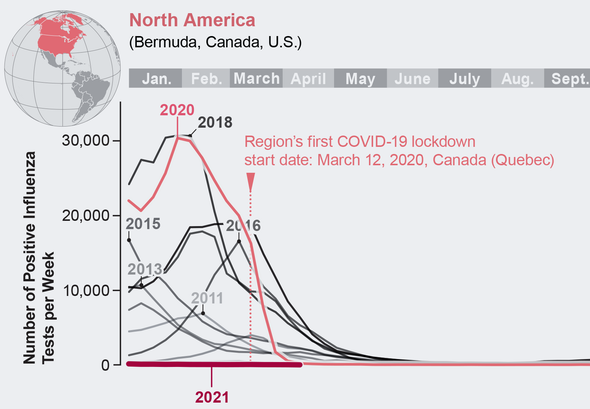
Since the novel coronavirus began its global spread, influenza cases reported to the World Health Organization have dropped to minuscule levels. The reason, epidemiologists think, is that the public health measures taken to keep the coronavirus from spreading also stop the flu. Influenza viruses are transmitted in much the same way as SARS-CoV-2, but they are less effective at jumping from host to host.
As Scientific American reported last fall, the drop-off in flu numbers was both swift and universal. Since then, cases have stayed remarkably low. “There’s just no flu circulating,” says Greg Poland, who has studied the disease at the Mayo Clinic for decades. The U.S. saw about 600 deaths from influenza during the 2020–2021 flu season. In comparison, the Centers for Disease Control and Prevention estimated there were roughly 22,000 deaths in the prior season and 34,000 two seasons ago.
Because each year’s flu vaccine is based on strains that have been circulating during the past year, it is unclear how next year’s vaccine will fare, should the typical patterns of the disease return. The WHO made its flu strain recommendations for vaccines in late February as usual, but they were based on far fewer cases than in a common year. At the same time, with fewer virus particles circulating in the world, there is less chance of an upcoming mutation, so it is possible the 2021–2022 vaccine will prove extra effective.
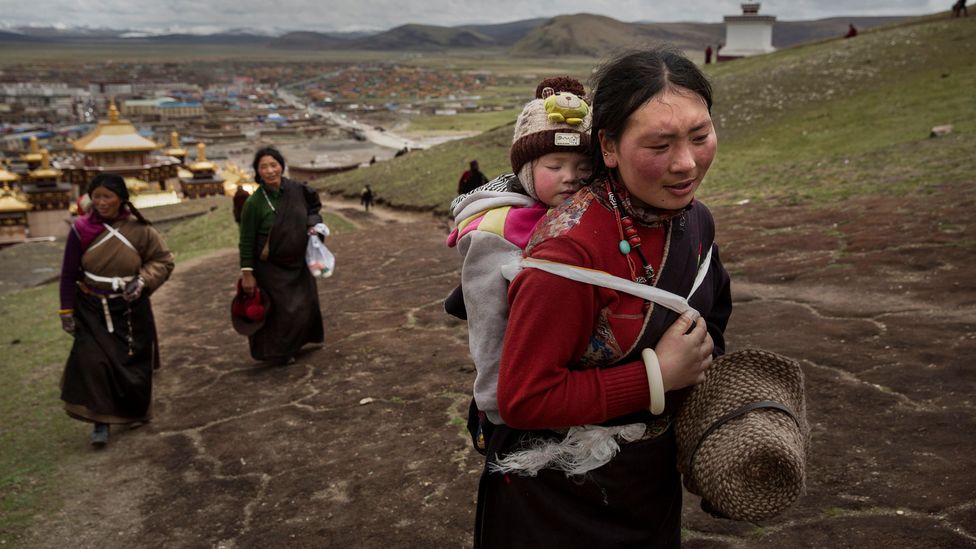
“Is he in his own room yet?” is a question new parents often field once they emerge from the haze of life with a newborn. But sleeping apart from our babies is a relatively recent development – and not one that extends around the globe. In other cultures sharing a room, and sometimes a bed, with your baby is the norm.
This isn’t the only aspect of new parenthood that Westerners do differently. From napping on a schedule and sleep training to pushing our children around in strollers, what we might think of as standard parenting practices are often anything but.
Parents in the US and UK are advised to have their babies sleep in the same room as them for at least the first six months, but many view this as a brief stopover on their way to a dedicated nursery.
In most other societies around the world, babies stick with their parents longer. A 2016 review that looked at research on children sharing not just a room but a bed with one or more of their parents found a high prevalence in many Asian countries: over 70% in India and Indonesia, for example, and over 80% in Sri Lanka and Vietnam. Research on bedsharing rates in countries across Africa is patchy, but where it does exist suggests the practice is near-universal.
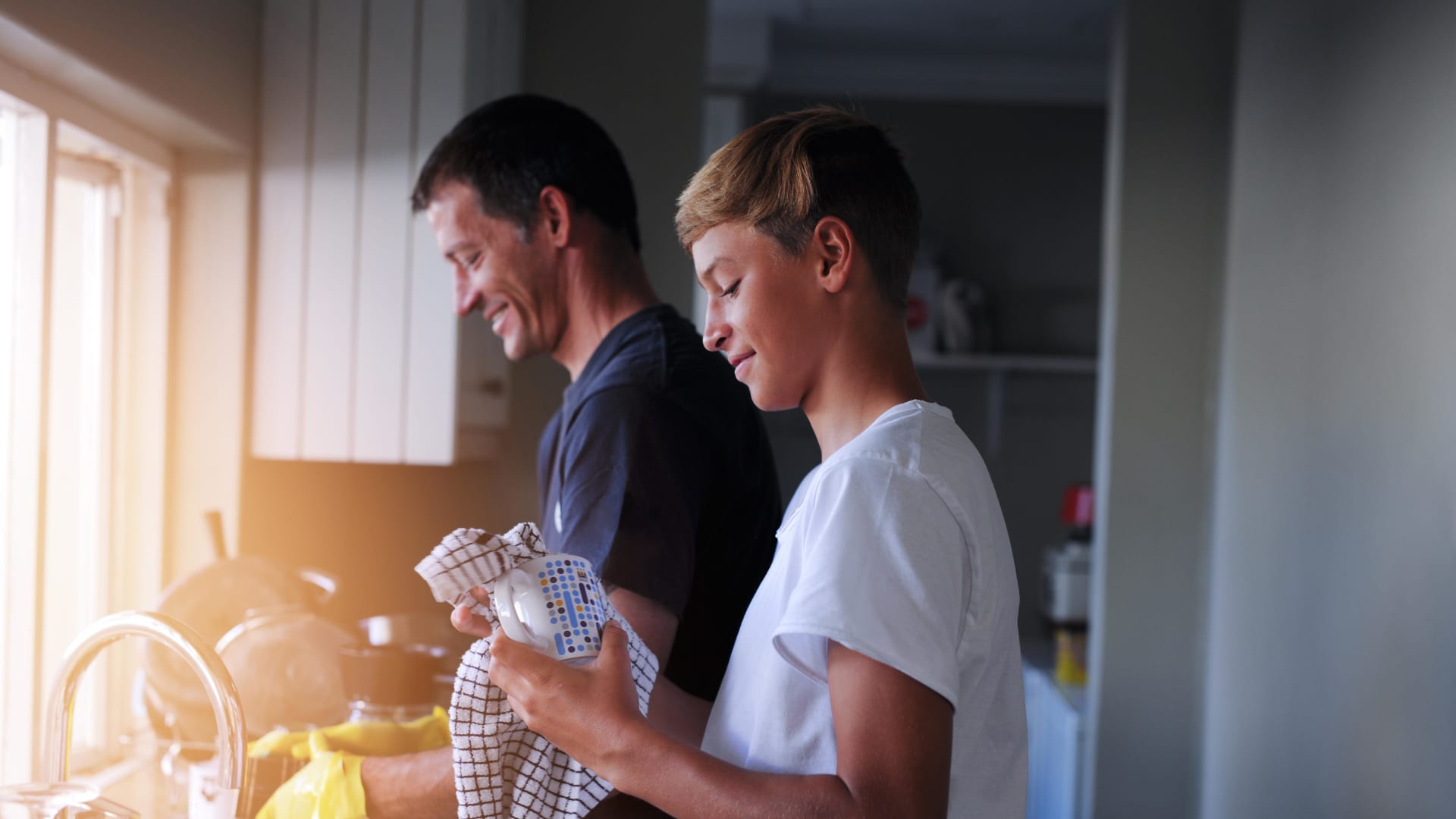
Want to raise successful kids? Make them do chores. The science backs you up, and it’s the kind of technique I cover in my free e-book How to Raise Successful Kids, which you can download here.
Now, it turns out there’s a fairly simple way to get them to cooperate. This new technique (well, new to a lot of us, anyway) makes so much sense, you’ll wonder why we all haven’t been doing it already.
Here’s the specific, two-part strategy, according to Michaeleen Doucleff, author of Hunt, Gather, Parent, along with why it’s so beneficial both for you and for their later success in life.
On February 18, 2021, NASA’s Perseverance rover, the most complex scientific robot to ever journey to Mars, finally landed. A suite of experiments onboard are fine-tuned to discover new secrets, confirm theories, and set up a future mission to return precious Martian soil to Earth.
But one of these experiments, buried in the cornucopia of science taking place on the SUV-sized rover, stems from a decades-long effort to record the sonic landscape on another planet. NASA is sending two microphones, the Entry Descent and Landing Microphone and the SuperCam microphone, to Mars. For the first time, we will be able to listen to the sounds of Percy’s Entry, Descent, and Landing (EDL) sequence—the most gut-wrenching seven minutes of any Mars mission—and if all goes according to plan, the whistling winds of the Martian landscape itself.
I chatted with the two engineers who’ve made it their mission to record the sounds of the Red Planet. You can listen to an edited version of our conversations and the story behind Percy’s microphones in the audio player below, or read the following transcript.
NASA’s Perseverance rover is ready to make its debut on the Red Planet. The intrepid spacecraft is designed to search for signs of ancient microbial life on Mars, collect geologic samples for return to Earth and send the first helicopter into the skies of another world. That’s just the beginning.
For the first time ever, two microphones aboard the spacecraft—the Entry Descent and Landing Cam microphone and the SuperCam Microphone—will sample Mars’ sonic landscape. It could reshape our understanding of the Red Planet. It’s a project that has been decades in the making. One that traces its origins back to the mid-90s and the Mars Polar Lander Mission.
In the world, human beings are facing various problems. People who are full of greed, anger, and ignorance are seen to be fighting with each other in words and deeds. As the fighting continues, various problems such as civil wars, wars of aggression, and wars of aggression are occurring. As world peace is being destroyed, humans are facing unbearable problems. Innocent children and women are not getting the rights they deserve and deserve. I can't think of one thing every time. What is it? The United Nations. If we look at the responsibilities and duties of the United Nations, I think it is not suitable for solving the problems that are happening in the world today. In fact, the United Nations and the World Security Council, such an organization must rule the world, must be able to give orders, and must have various ways to obey orders. There must be no organization that can influence more than that organization. There should be experts from each country. They can even dominate the superpowers like the US, China, and Britain. Only then will global peace be achieved quickly. Now, if a country with power develops more militarily, economically, or socially than its own country, then powerful countries will jealously seek out enemies and wage war. Or they will attack with fighter jets. In this, innocent people are losing their lives. No one understands the value of a life. You should think about how to achieve global peace by controlling these. If the US continues to be the permanent president of the UN, world peace will never be achieved. If you think carefully, no one sees that they are working for the common good, but for their own benefit, for the benefit of their own country. The permanent president of the UN and the Security Council has rejected this, As a young Rohingya, I have come to realize that only by electing the president and secretary from among the countries in the world through a secret ballot system and governing the world fairly can we achieve global peace. The United Nations and the Security Council are organizations in which any country must govern, give orders, and make them obey their orders. For example, only when a defendant is tried in court can we hold the leaders of the countries in check and control them, can we achieve global peace smoothly. Otherwise, it will not be easy for powerful countries to use various excuses to end this war every year, every year, for the benefit of themselves and their countries. No country's leaders pay any attention to the words of the United Nations and the Security Council. If we look at it in practice, look at the Rohingya issue. Myanmar is a small country. Even that country has been under siege for 8 years. What action can be taken? Why is the UN and the Security Council Powerless? Without such Power, how can the organization bring about global peace? Everyone should think about it. Whether there is a veto or a strong one, all countries in the world can only achieve global peace if they are subject to the UN and the Security Council. Seek peace in the quiet embrace of nature. Peace is an indispensable need of the human race. It is not as if one person can kill another person, and it is as if one country can attack another country, but instead of trying to build peace, we must try to destroy the peace now, and the world is getting hotter and is on the verge of collapse. I especially appeal to all the world experts to urgently try to bring about peace in all parts of the world. Mr, Noor Muhamed Arkhan Rohingya Youth Myanmar
Film and Writing Festival for Comedy. Showcasing best of comedy short films at the FEEDBACK Film Festival. Plus, showcasing best of comedy novels, short stories, poems, screenplays (TV, short, feature) at the festival performed by professional actors.

 Photo illustration by Maurizio Cattelan and Pierpaolo Ferrari


 Credit: Katie Peek