February 6, 2022
Mohenjo
Business, Food For Thought, Human Interest, Overlooked Past Article, Science, Technical
amazon, business, Business News, current-events, Future, Hotels, human-rights, medicine, mental-health, research, Science, Science News, technology, Technology News, travel, vacation

Click the link below the picture
.
Our time has been called the “age of loneliness.” It’s estimated that one in five Americans suffers from persistent loneliness, and while we’re more connected than ever before, social media may actually be exacerbating the problem.
A new wave of research is shedding light on some of the causes and consequences of chronic loneliness, a condition that significantly raises the risk of a number of physical and psychological health problems, including heart disease and depression.
For a condition that has such an enormous impact on our health and well-being, loneliness has been relatively neglected by psychologists — but that’s beginning to change.
In a special section of the March 2015 issue of the journal Perspectives on Psychological Science, psychologists took stock of some of the potential causes and risks of loneliness, as well as possible treatments.
While it’s true that nearly everyone will experience feelings of loneliness at some point in their lives, chronic feelings of loneliness can become a significant health concern.
“Many people thought of loneliness as a transient state — something most everyone experiences but that is relatively short-lived,” Dr. David Sbarra, a psychologist at the University of Arizona and the editor of the journal issue’s special loneliness report, told The Huffington Post. “As we learned that some people are chronically lonely, we began to see that the topic has considerable public health importance.”
.
 midle age man thinking
.
.
Click the link below for the article:
.
__________________________________________
February 2, 2022
Mohenjo
Business, Food For Thought, Human Interest, Overlooked Past Article, Science, Technical
amazon, business, Business News, current-events, Future, Hotels, human-rights, medicine, mental-health, research, Science, Science News, technology, Technology News, travel, vacation
Click the link below the picture
.
Updated December 6, 2017
Without Spock, there would be no “Star Trek.” The Starship Enterprise’s part-Vulcan officer always captivated audiences with his wit and logic while knowing exactly how to keep Captain Kirk in check.
On Friday, Leonard Nimoy, the actor who made Spock famous, died at the age of 83. Now, looking back on his career, we fondly remember the times no one could have said it better than Spock.
.
 LOS ANGELES – SEPTEMBER 15: Leonard Nimoy as Mr. Spock in the STAR TREK episode, ‘Charlie X.’ Season 1, episode, 2. Original air date September 15, 1966. Image is a screen grab. (Photo by CBS via Getty Images)
.
.
Click the link below for the article:
.
__________________________________________
January 31, 2022
Mohenjo
Business, Food For Thought, Human Interest, Overlooked Past Article, Science, Technical
amazon, business, Business News, current-events, Future, Hotels, human-rights, medicine, mental-health, research, Science, Science News, technology, Technology News, travel, vacation
Click the link below the picture
.
NASA’s Curiosity rover has detected a strange burst of methane gas in the atmosphere on Mars, along with other organic chemicals in rocks on the planet’s surface. The findings are raising new questions about the planet’s habitability–today as well as in the past.
“That we detect methane in the atmosphere on Mars is not an argument that we have found evidence of life on Mars, but it is one of the few hypotheses that we can propose that we must consider as we go forward in the future,” Dr. John Grotzinger, Curiosity project scientist at the California Institute of Technology in Pasadena, said on Dec. 16 in a news briefing at the American Geophysical Union’s convention in San Francisco.
Using its onboard Sample Analysis at Mars (SAM) laboratory, the rover “sniffed” more than a dozen samples of the Martian atmosphere over a 20-month period. Grotzinger and his team found that methane levels shot up tenfold to an average of seven parts per billion over two months in late 2013 and early 2014, according to NASA.
The researchers aren’t sure what caused the burst, but they’ve offered two potential explanations: an interaction between water and rocks called serpentization, or methane-belching microbes. Anaerobic bacteria produce around 95 percent of the methane on Earth.
.
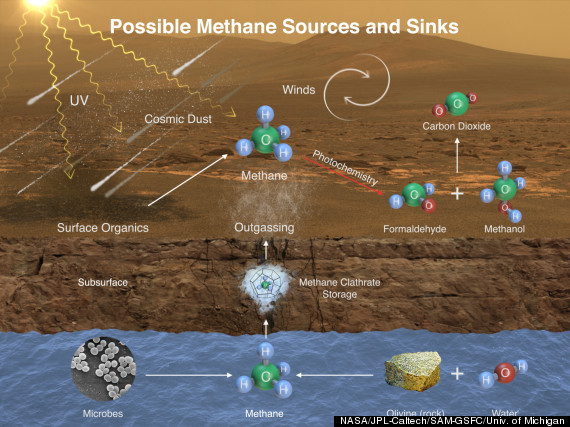 This image illustrates possible ways methane might be added to Mars’ atmosphere (sources) and removed from the atmosphere (sinks). NASA’s Curiosity Mars rover has detected fluctuations in methane concentration in the atmosphere, implying both types of activity occur on modern Mars.
.
.
Click the link below for the article:
.
__________________________________________
January 28, 2022
Mohenjo
Business, Food For Thought, Human Interest, Medical, Overlooked Past Article, Science, Technical
amazon, business, Business News, current-events, Future, Hotels, human-rights, medicine, mental-health, research, Science, Science News, technology, Technology News, travel, vacation

Click the link below the picture
.
As marijuana goes mainstream in the U.S., people are asking new questions about weed. What makes some marijuana especially potent, for example, and how can marijuana be regulated to make sure legal weed doesn’t send them on a bad trip?
.

.
.
Click the link below for the article (click – ‘Watch on Utube’ under age restriction to play ‘Reactions’ video in article):
.
__________________________________________
January 27, 2022
Mohenjo
Business, Food For Thought, Human Interest, Overlooked Past Article, Photographs, Science, Technical
amazon, business, Business News, current-events, Future, Hotels, human-rights, medicine, mental-health, research, Science, Science News, technology, Technology News, travel, vacation
Click the link below the picture
.
Due to its low light pollution, remote and idyllic landscapes, and a whole sub-population of people with a passion for astronomy, Hawaii may have been the Western Hemisphere’s sweetest spot for observing the “blood moon.”
The state, which is home to the famed Mauna Kea observatories on the Big Island of Hawaii and the Institute for Astronomy at the University of Hawaii on Oahu, is affectionately known as “Earth’s connecting point to the rest of the Universe.” Moreover, given Hawaii’s history with expert navigators, “knowledge of the night sky is an integral part of [Hawaii’s] culture and history,” according to the institute’s outreach coordinator and astronomer Dr. Roy Gal.
The time difference helps too. While most stargazers across North and South America had to set their alarms in order to catch the stellar sight, astronomy enthusiasts and several staffers from the institute and the observatories enjoyed the eclipse starting at about 8 p.m. HST on April 14.
“Mauna Kea is one of, if not, the most spiritually connected places I have ever set foot on,” photographer Andrew Richard Hara told HuffPost. “The ability to witness the entirety of the Milky Way with your bare eyes is something not only incredible but also humbling to acknowledge how interconnected we are with the Earth, atmosphere, and the space above.”
.
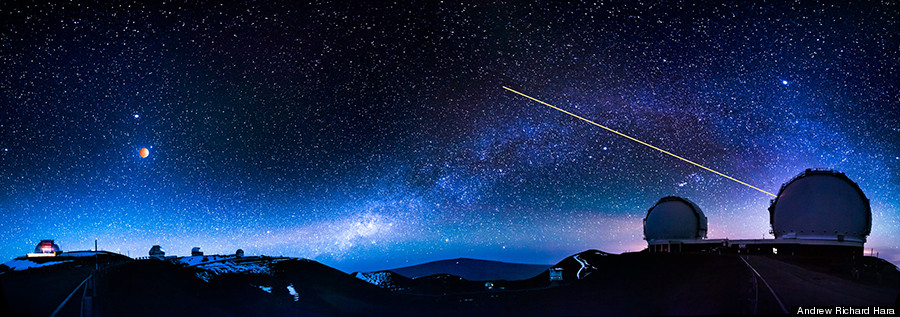 Photographer Andrew Richard Hara‘s composite of the eclipse alongside the W. M. Keck Observatory at the summit of Mauna Kea on the Big Island of Hawaii. At right, Keck’s Laser Guide Star Adaptive Optics system in action.
.
.
Click the link below for the article:
.
__________________________________________
January 26, 2022
Mohenjo
Business, Food For Thought, Human Interest, Overlooked Past Article, Science, Technical
amazon, business, Business News, current-events, Future, Hotels, human-rights, medicine, mental-health, research, Science, Science News, technology, Technology News, travel, vacation
Click the link below the picture
.
It turns out the hole in the now-famous ozone layer above the South Pole isn’t the only hole in the atmosphere. Researchers recently discovered, to their considerable surprise, that the atmosphere above part of the western tropical Pacific Ocean is nearly devoid of one of the key chemicals that scrubs pollutants from the air.
This newfound hole occurs naturally over thousands of kilometers in one of the most remote places on the planet (which accounts for its having gone unnoticed until now) and one of the main spots where the air is sent up to the stratosphere. The stratosphere is the layer of Earth’s atmosphere above the troposphere, the layer where humans live and in which most weather occurs. Having air shooting up to this layer without first being “washed” of all the junk that humans and nature put into the atmosphere has uncertain implications for the health of the planet’s protective ozone layer and its overall climate.
In tropical thunderstorms over the West Pacific, air masses and the chemical substances they contain are quickly hurled upward to the edge of the stratosphere. On the way, hydroxyl (OH) molecules “scrub” these substances from the air before it reaches the stratosphere, where they would be able to spread around the globe and would last for longer than in the lower reaches of the atmosphere. Except in a region of the tropical Pacific, a hole in this OH “shield” has been discovered.
“I first suspected a series of false measurements and had to convince myself that the measurements were correct,” Rex told Climate Central in an email.
But the probes were right: There was barely any ozone throughout this huge chunk of the atmosphere. Without any ozone, there weren’t any hydroxyl radicals, a molecule made up of an oxygen and hydrogen atom (designated as OH) that is highly reactive in the atmosphere. This reactivity makes it an excellent “detergent” for cleaning from the air many of the thousands of other chemical compounds released by humans, other animals, microbes, and plants. For this reason, the layer of OH that exists elsewhere in the troposphere is known as the “OH shield.”
.
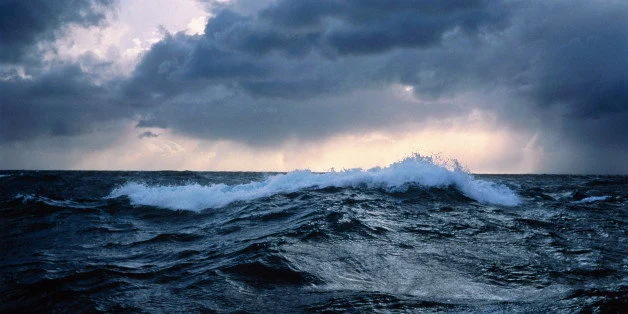 This post originally appeared on Climate Central
.
.
Click the link below for the article:
.
__________________________________________
January 23, 2022
Mohenjo
Business, Food For Thought, Human Interest, Overlooked Past Article, Science, Technical
amazon, business, Business News, current-events, Future, Hotels, human-rights, medicine, mental-health, research, Science, Science News, technology, Technology News, travel, vacation
Click the link below the picture
.
In rare cases, one of life’s important childhood lessons — always chew your food properly — becomes fossilized. And now, anyone can own one of these reminders in rock. A specimen containing the remains of a large, predatory amphibian choking on another creature is up for auction in October.
Nearly 300 million years ago, during the Paleozoic Era, this predator attempted to eat another, smaller amphibian. The larger creature died mid-meal with the smaller one’s body half-consumed. This type of fossil, in which a predator chokes on its prey, is known as an aspiration.
When a scene like this is captured forever by geology, the value of the fossil goes up, said Jim Walker, director of the nature and science department at the auction house Heritage Auctions. [See Photos of ‘Choking Predators’ and other Fossils for Auction]
“It affects it to the degree of eight or 10 times without any trouble at all,” Walker said. Heritage expects this specimen to sell for between $150,000 and $250,000.
The predator, in this case, is a 28-inch-long (71 centimeters) creature known as Sclerocephalus haeuseri. Artists’ representations of it depict an animal that looks like a cross between an alligator and a salamander, with a heavy skull and jaws, a streamlined body with a menacing-looking tail, and eyes on top of its head.
The resemblance to a crocodile or alligator is no coincidence. During the Permian Period — the last period of the Paleozoic lasting from 299 million to 251 million years ago — this ancient amphibian filled a similar ecological role to these modern aquatic predators, Walker said.
.
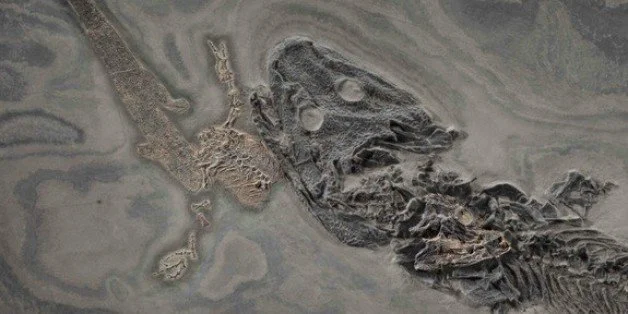 Choking
.
.
Click the link below for the article:
.
__________________________________________
January 22, 2022
Mohenjo
Business, Food For Thought, Human Interest, Overlooked Past Article, Science, Technical
amazon, business, Business News, current-events, Future, Hotels, human-rights, medicine, mental-health, research, Science, Science News, technology, Technology News, travel, vacation
Click the link below the picture
.
Just two decades after discovering the first world beyond our solar system, astronomers are closing in on alien planet No. 1,000.
Four of the five main databases that catalog the discoveries of exoplanets now list more than 900 confirmed alien worlds, and two of them peg the tally at 986 as of Sept. 26. So the 1,000th exoplanet may be announced in a matter of days or weeks, depending on which list you prefer.
That’s a lot of progress since 1992, when researchers detected two planets orbiting a rotating neutron star, or pulsar, about 1,000 light-years from Earth. Confirmation of the first alien world circling a “normal” star like our sun did not come until 1995. [The Strangest Alien Planets (Gallery)]
And the discoveries will keep pouring in, as astronomers continue to hone their techniques and sift through the data returned by instruments on the ground and in space.
The biggest numbers in the near future should come from NASA’s Kepler space telescope, which racked up many finds before being hobbled in May of this year when the second of its four orientation-maintaining reaction wheels failed.
Kepler has identified 3,588 planet candidates to date. Just 151 of these worlds have been confirmed so far, but mission scientists have said they expect at least 90 percent will end up being the real deal.
.
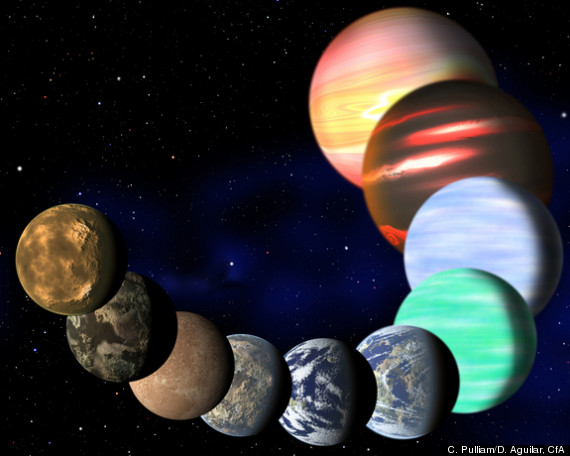 This artist’s illustration represents the variety of planets being detected by NASA’s Kepler spacecraft. Scientists now say that one in six stars hosts an Earth-size planet.
.
.
Click the link below for the article:
.
__________________________________________
April 5, 2019
Mohenjo
Arts, Business, Human Interest, missed News, Overlooked Past Article, Political
amazon, business, Business News, current-events, Future, Hotels, human-rights, medicine, mental-health, research, Science, Science News, technology, Technology News, travel, vacation

.
News You might have missed!
Use your browser or smartphone back arrow (<-) to return to this table for your next selection.
.
__________________________________________
March 22, 2019
Mohenjo
Arts, Business, Enthralling, Human Interest, Overlooked Past Article, Photographs
amazon, business, Business News, current-events, Future, Hotels, human-rights, medicine, mental-health, research, Science, Science News, technology, Technology News, travel, vacation

Click the link below the picture
.
A zorse is the offspring of a zebra stallion and a horse mare. This cross is also called a zebrula, zebrule, or zebra mule. The rarer reverse pairing is sometimes called a horbra, hebra, zebrinny, or zebret. Like most other animal hybrids, the zorse is sterile.
.
 Zorse
Zorse
.
.
Click the link below for the article:
https://www.bing.com/images/search?q=zorse&FORM=EMSDS0
.
__________________________________________
Older Entries
Newer Entries

 James' World 2