The U.S. Supreme Court on Monday declined to hear the Trump administration’s appeal of a federal judge’s ruling that requires the government to keep the Deferred Action for Childhood Arrivals program going.
Under a lower court order that remains in effect, the Department of Homeland Security must continue to accept renewal applications from the roughly 700,000 young people who are currently enrolled in the program, known as DACA. The administration had intended to shut the program down by March 5, but that deadline is now largely meaningless.
In a brief order, the court said simply, “It is assumed the court of appeals will act expeditiously to decide this case.”
.
Immigration activists march in front of the U.S. Capitol on Feb. 7, 2018 in Washington. A coalition of activists from across the U.S. demonstrated to pressure Congress to pass legislation protecting “Dreamers” as part of federal budget negotiations.John Moore / Getty Images file
SpaceX’s Falcon Heavy rocket successfully completed its long-awaited maiden flight on Tuesday, roaring into the blue skies over Kennedy Space Center to usher in a new era of spaceflight.
The gigantic booster, which lifted off at 3:45 p.m. ET, could one day take astronauts to the moon and Mars. The rocket rose over the Atlantic Ocean before its two expended solid rocket boosters fell back to Earth and landed upright, just as planned. The third booster failed to make a landing on a robotic drone ship at sea.
SpaceX CEO Elon Musk said he felt “quite giddy” before the launch. “What I find strange about this flight is normally I feel superstressed out the day before,” he told reporters in a press briefing on Monday. “This time I don’t.”
According to the UN, nearly one in three people worldwide live in a country facing a water crisis, and less than five percent of the world lives in a country that has more water today than it did 20 years ago.Lana Mazahreh grew up in Jordan, a state that has experienced absolute water scarcity since 1973, where she learned how to conserve water as soon as she was old enough to learn how to write her name. In this practical talk, she shares three lessons from water-poor countries on how to save water and address what’s fast becoming a global crisis.
Despite widespread opposition from medical and mental health organizations, tens of thousands of LGBTQ youth in the U.S. will be subjected to anti-gay “conversion therapy” during their lifetime, a new report estimates.
Released this month by the Williams Institute at University of California, Los Angeles, School of Law, the report estimates that 698,000 LGBTQ Americans between the ages of 18 and 59 have undergone conversion therapy at some point in their lives. About 350,000 of those received that treatment as adolescents.
The report also estimates that 20,000 LGBTQ youths currently between the ages of 13 and 17 will be subjected to conversion therapy from a licensed health care professional before they turn 18. An additional 57,000 will be subjected to the controversial practice from a religious or spiritual adviser before age 18.
The study’s lead author, Christy Mallory, believes the results may surprise many Americans in the wake of marriage equality and other social strides made on behalf of the LGBTQ community.
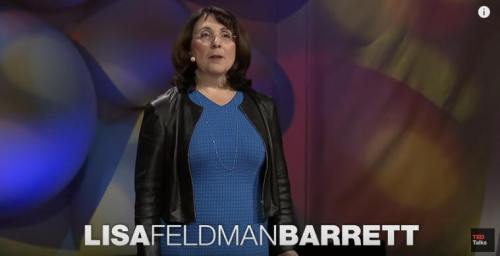
Can you look at someone’s face and know what they’re feeling? Does everyone experience happiness, sadness and anxiety the same way? What are emotions anyway? For the past 25 years, psychology professor Lisa Feldman Barrett has mapped facial expressions, scanned brains and analyzed hundreds of physiology studies to understand what emotions really are. She shares the results of her exhaustive research — and explains how we may have more control over our emotions than we think.
Las Vegas mogul Steve Wynn has been accused of a decades-long pattern of sexual harassment and abuse toward workers at his casinos, according to an investigation by The Wall Street Journal.
Dozens of current and former employees at Wynn’s gambling establishments told the Journal they had experienced or witnessed chronic abuse by the billionaire, who was named finance chairman for the Republican National Convention last year.
The allegations range from lewd comments and inappropriate touching to soliciting sex acts from women who worked as manicurists and massage therapists at Wynn’s Las Vegas casinos.
One former employee at Wynn Las Vegas said the mogul pressured her into having unwanted sex with him after she gave him a manicure in 2005. Wynn later agreed to pay the woman a $7.5 million settlement after she filed a report.
.
Jessica Rinaldi/The Boston Globe via Getty Images
President Donald Trump has called Steve Wynn, seen here in March 2016, a “great friend.”
A new era of internet regulation is about to begin.
Years after Facebook and Google went public, regulators in the United States and abroad are finally taking a closer look at the internet behemoths. And they’re not only looking at the way these companies have come to dominate markets, but also examining the heart of the two firms’ business models. What they decide will have powerful implications for the way we do business on the internet.
Most people associate Facebook with cute family photos and think of Google like a semi-reliable encyclopedia. But these services have only a tangential relationship to the way either company actually makes money. The twin Silicon Valley titans rely on two closely intertwined technologies, customer surveillance and advertising, to maximize shareholder profits. The pair control 63 percent of the U.S. digital advertising market, and in 2016, they secured 99 percent of all digital advertising growth. That profit-making combo is exactly what regulators are focused on in 2018.
Many of the companies’ difficulties stem from the European Union’s tough new stance on privacy. The biggest threat to their business model comes from the General Data Protection Regulation, new data privacy rules set to go in effect in the EU in May. For the most part, Facebook and Google prevent you from using their products if you decline to agree to their entire terms of service. You cannot pick and choose what to agree to and still use their free services.
.
Joshua Roberts / Reuters
Congress grilled representatives from Facebook, Twitter and Google over their advertising and privacy practices in November 2017. (Pictured from left to right: Colin Stretch, Facebook general counsel, Sean Edgett, Twitter acting general counsel, and Richard Salgado, Google director of law enforcement and information security.)
The real Jessica Rychly is a Minnesota teenager with a broad smile and wavy hair. She likes reading and the rapper Post Malone. When she goes on Facebook or Twitter, she sometimes muses about being bored or trades jokes with friends. Occasionally, like many teenagers, she posts a duck-face selfie.
But on Twitter, there is a version of Jessica that none of her friends or family would recognize. While the two Jessicas share a name, photograph and whimsical bio — “I have issues” — the other Jessica promoted accounts hawking Canadian real estate investments, cryptocurrency and a radio station in Ghana. The fake Jessica followed or retweeted accounts using Arabic and Indonesian, languages the real Jessica does not speak. While she was a 17-year-old high school senior, her fake counterpart frequently promoted graphic pornography, retweeting accounts called Squirtamania and Porno Dan.
In a surprise reversal, the Environmental Protection Agency announced it is withdrawing its plan to suspend environmental protections for an area of Alaska that is home to the world’s most valuable wild salmon fishery.
The EPA proposed last year to “reverse clean water safeguards” for the Bristol Bay watershed, paving the way for a massive gold and copper mine to be built in the region.
.
The controversial proposal would have canceled an EPA protection put in place during the Obama administration. After years of study, the EPA found in 2014 that a mine “would result in complete loss of fish habitat” in some areas of the bay, and that “all of these losses would be irreversible.”
The Bristol Bay watershed is one of the most pristine ecosystems in the world, supplying about half of the world’s sockeye salmon.
Often close but never the closer in grand slams, Caroline Wozniacki finally got the job done. Her wait is over.
Wozniacki won her first grand slam title Saturday when she beat Simona Halep 7-6 (7-2) 3-6 6-4 in an eventful, absorbing Australian Open final that lasted nearly three hours in the draining Melbourne heat.
.
Indeed the heat rule was implemented for the first time during the fortnight despite higher temperatures in week one. Both players took medical timeouts and a pair of games lasted longer than 10 minutes as the athleticism of the world’s two highest-ranked players was on show at Rod Laver Arena.
Billed as a blockbuster battle in the buildup, no one would dare say it disappointed.
Film and Writing Festival for Comedy. Showcasing best of comedy short films at the FEEDBACK Film Festival. Plus, showcasing best of comedy novels, short stories, poems, screenplays (TV, short, feature) at the festival performed by professional actors.

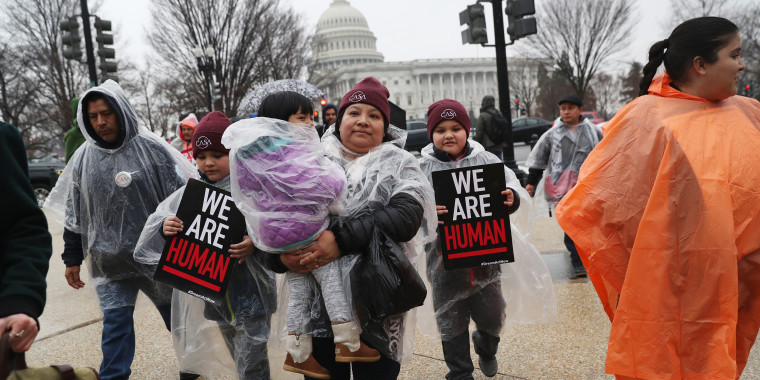 Immigration activists march in front of the U.S. Capitol on Feb. 7, 2018 in Washington. A coalition of activists from across the U.S. demonstrated to pressure Congress to pass legislation protecting “Dreamers” as part of federal budget negotiations.John Moore / Getty Images file
 .
.
 Thoughtful ways to conserve water
 Conversion Therapy
 .
.
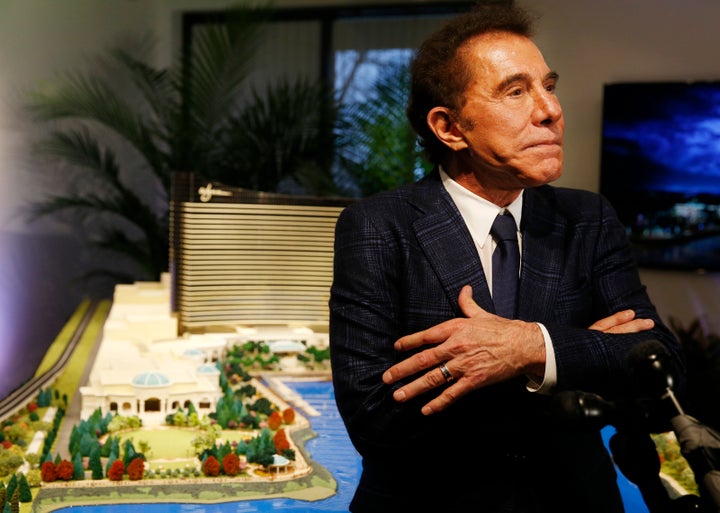
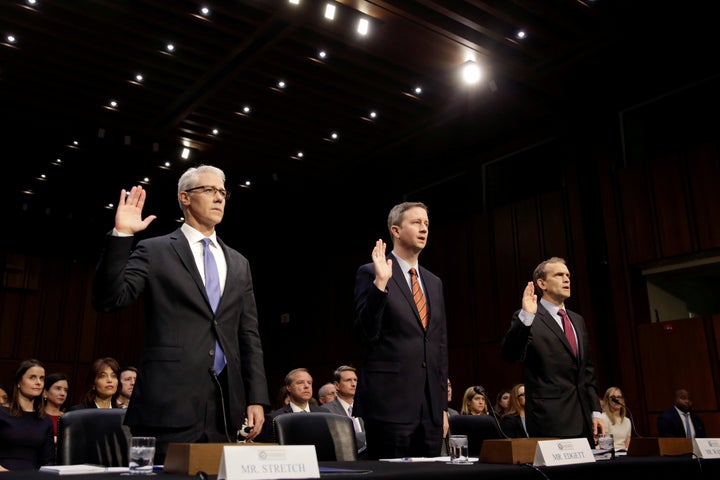

 Photo illustration by Adam Ferriss
 .
.