When James Hamblin tells people he has not used soap in the shower for five years, they tend not to hold back in expressing their disgust. “It’s one of the few remaining things for which we feel fine telling someone that they’re gross,” he says. “It’s amazing to me, honestly.”
Yet despite people’s “clearly moralizing judgments”, Hamblin is no hygiene slouch. Even pre-pandemic, he made a point of washing his hands with soap. He is, after all, a doctor who lectures at the Yale School of Public Health and a medical writer and podcaster for the US magazine the Atlantic. At 37, he looks so youthful that he still gets compared to the fictional child doctor Doogie Howser.
But eschewing soap on your pits and bits does raise awkward technical questions, more on which after some context. Hamblin’s minimalist showering habits evolved gradually, after he relocated from California to a studio apartment in Brooklyn, New York, to pursue a writing career. He needed to save time, money, and space. Simultaneously, he says: “I started learning about emerging microbiome science and decided to try going all-out for a bit.”
.
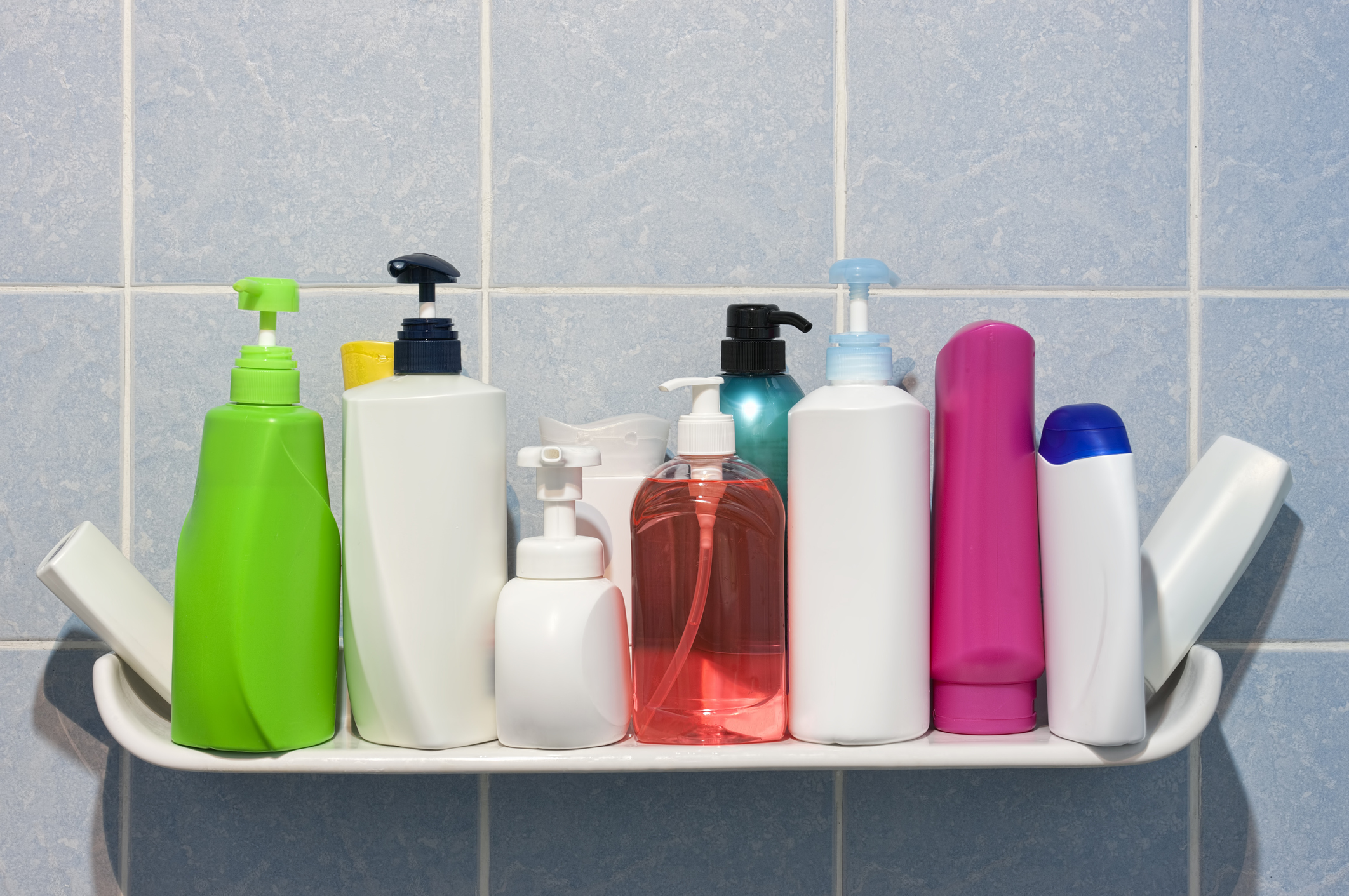
‘As I gradually used less and less, I started to need less and less’ … James Hamblin on cutting out soap and deodorant. Photo from enviromantic / Getty Images.
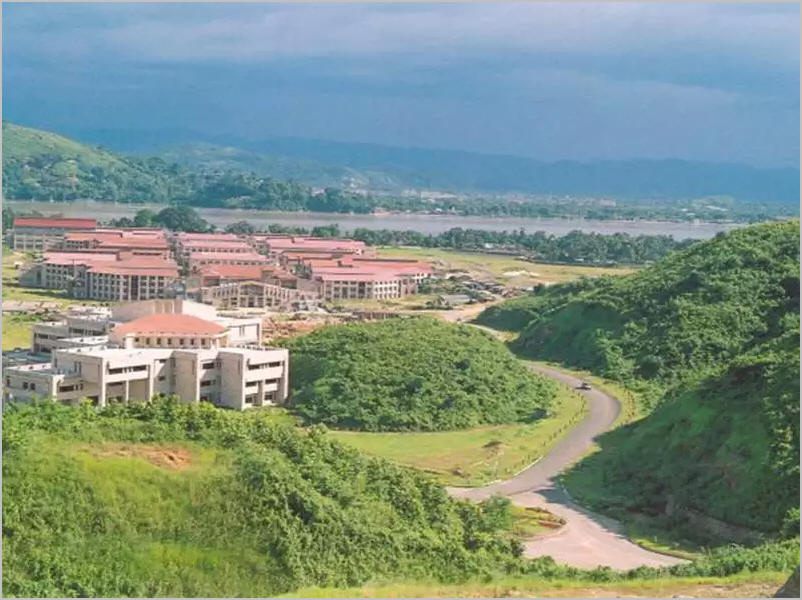
Guwahati; formerly known as Gauhati) is the capital city of the Indian state of Assam and also the largest metropolis in northeastern India. A major riverine port city along with hills, and one of the fastest-growing cities in India, Guwahati is situated on the south bank of the Brahmaputra. It is called the ‘Gateway to North-East India’.
The ancient cities of Pragjyotishpura and Durjaya (North Guwahati) were the capitals of the ancient state of Kamarupa. Many ancient Hindu temples like the Kamakhya Temple, Ugratara Temple, Basistha Temple, Doulgovinda, and the Umananda Temple are situated in the city, giving it the title of “The City of Temples”. Dispur, the capital of Assam, is in the circuit city region located within Guwahati and is the seat of the Government of Assam.
Carlotta has never been able to recognize faces, neither the faces of other people nor her own. Her condition, face blindness, has had a major effect on her life but has also given her a sense of purpose as an artist – to make self-portraits of the face she cannot picture in her mind.
Carlotta sits down to draw a self-portrait. The room is very dark, lit just by a few candles. She doesn’t need light, because she’s not using a mirror or a photograph – instead, with one hand she traces the contours of her face, while her other hand sketches the shapes on paper.
“It’s always a surprise when I see my drawings in daylight,” she says.
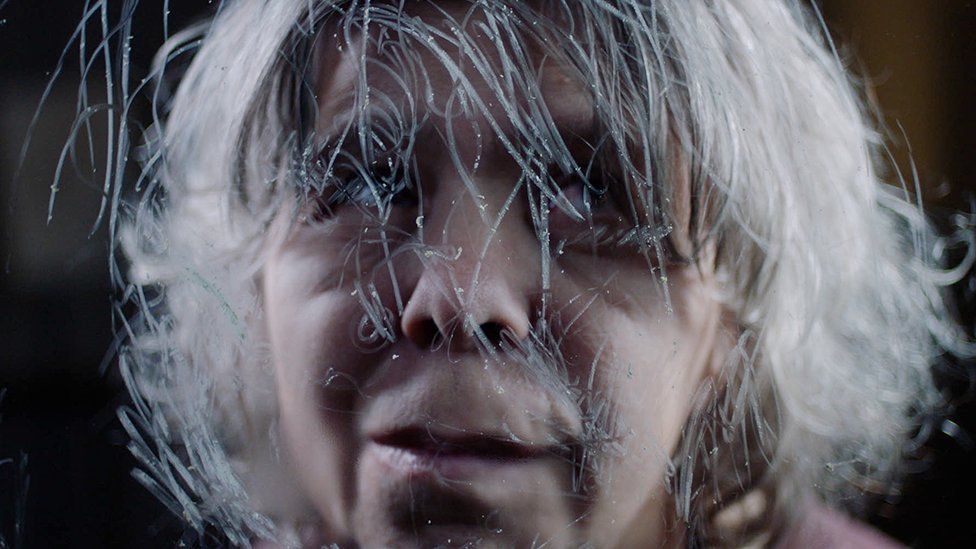
Her apartment is filled with self-portraits – about 1,000 of them, she thinks. Each one is completely different, and they have an otherworldly quality. Shapes overlap. Several heads may be projected on top of each other, sometimes upside down. In one, she has three eyes, in another six.
If she catches sight of herself in a mirror, Carlotta will think, “the woman looking at me is in my nightie and in my flat, so it must be me”. She will also recognise her hair – it’s what happens underneath those grey curls that’s a mystery.
One August day in 1987, Brian Campbell was refilling the hole left by a tree stump in his yard in Romford, East London, when his shovel struck something metal. He leaned down and pulled the object from the soil, wondering at its strange shape. The object was small—smaller than a tennis ball—and caked with heavy clay. “My first impressions,” Campbell tells Mental Floss, “were it was beautifully and skillfully made … probably by a blacksmith as a measuring tool of sorts.”
Campbell placed the artifact on his kitchen windowsill, where it sat for the next 10 or so years. Then, he visited the Roman fort and archaeological park in Saalburg, Germany—and there, in a glass display case, was an almost identical object. He realized that his garden surprise was a Roman dodecahedron: a 12-sided metal mystery that has baffled archaeologists for centuries. Although dozens, and perhaps hundreds, of explanations have been offered to account for the dodecahedrons, no one is certain just what they were used for.
An Ancient Puzzle
The first Roman dodecahedron to intrigue archaeologists was found almost 300 years ago, buried in a field in the English countryside along with some ancient coins. “A piece of mixed metal, or ancient brass, consisting of 12 equal sides,” read the description of the egg-sized object when it was presented to the Society of Antiquaries in London in 1739. The 12 faces had “an equal number of perforations within them, all of unequal diameters, but opposite to one another … every faceing had a knobb or little ball fixed to it.” The antiquarians were flummoxed by the finely crafted metal shell, and what its purpose may have been.
.
The Roman dodecahedron Brian Campbell found in East London. Photo by Brian Campbell.
Just after the 2016 presidential election in the United States,
Joanne Li realized the app that connected her to fellow Chinese immigrants had disconnected her from reality.
Everything she saw on the Chinese app, WeChat, indicated Donald J. Trump was an admired leader and impressive businessman. She believed it was the unquestioned consensus on the newly elected American president. “But then I started talking to some foreigners about him, non-Chinese,” she said. “I was totally confused.”
She began to read more widely, and Ms. Li, who lived in Toronto at the time, increasingly found WeChat filled with gossip, conspiracy theories, and outright lies. One article claimed Prime Minister Justin Trudeau of Canada planned to legalize hard drugs. Another rumor purported that Canada had begun selling marijuana in grocery stores. A post from a news account in Shanghai warned Chinese people to take care lest they accidentally bring the drug back from Canada and get arrested.
She also questioned what was being said about China. When a top Huawei executive was arrested in Canada in 2018, articles from foreign news media were quickly censored on WeChat. Her Chinese friends both inside and outside China began to say that Canada had no justice, which contradicted her own experience. “All of a sudden I discovered talking to others about the issue didn’t make sense,” Ms. Li said. “It felt like if I only watched Chinese media, all of my thoughts would be different.”
Some content on this page was disabled on April 15, 2025 as a result of a DMCA takedown notice from Guardian Media Group. You can learn more about the DMCA here:
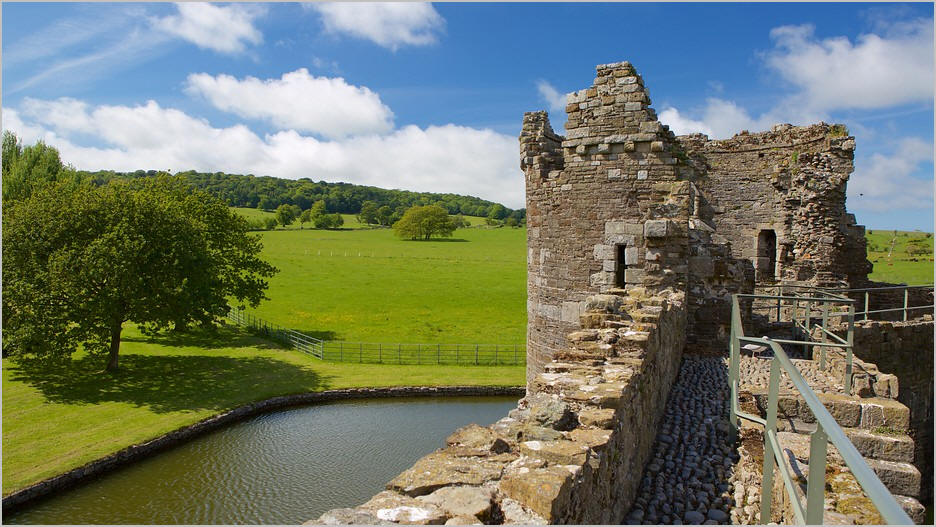
Beaumaris Castle, in Beaumaris, Anglesey, Wales, was built as part of Edward I’s campaign to conquer north Wales after 1282.Plans were probably first made to construct the castle in 1284, but this was delayed due to lack of funds, and work only began in 1295 following the Madog ap Llywelyn uprising. A substantial workforce was employed in the initial years under the direction of James of St George. Edward’s invasion of Scotland soon diverted funding from the project, however, and work stopped, only recommencing after an invasion scare in 1306. When work finally ceased around 1330 a total of £15,000 had been spent, a huge sum for the period, but the castle remained incomplete.
Given you’re reading this story, the chances are that you’re somewhat cyber-aware. If I was to send you a file attachment in a text message—let’s say a Word or PDF document, you’re hopefully programmed to ask a whole set of questions before opening or saving that attachment to your phone. Do I know the sender? Was I expecting the file? But what if it was just a photo—something amusing or attention-grabbing to keep or share? You can view the image within the messaging app, you can see what you’re getting, surely there’s no harm in saving it to your photo album?
If only that was the case. The fact is that a malicious image has the same capacity to damage your device and steal your data as a malicious attachment. The only difference is that it’s a more sophisticated attack, which makes it rarer. We saw the latest example of just such a threat this week, with Facebook confirming that it had patched an Instagram vulnerability disclosed by Check Point’s researchers, one involving a crafted image that could potentially hijack an entire account, maybe even piggyback on Instagram’s permissions to take-over a smartphone.
Facebook disputed Check Point’s claim that the malicious image which crashed Instagram could be used to take-over the smartphone itself, accessing the camera and microphone. Facebook told me that the worst case would be an account hijack, which seems bad enough in itself. And while Check Point claimed that just saving an image to a phone would trigger the attack, Facebook said a user would need to load the image into Instagram. Again, the fact that an image had been crafted as an attack tool was accepted. And that’s the point here.
Film and Writing Festival for Comedy. Showcasing best of comedy short films at the FEEDBACK Film Festival. Plus, showcasing best of comedy novels, short stories, poems, screenplays (TV, short, feature) at the festival performed by professional actors.

 ‘As I gradually used less and less, I started to need less and less’ … James Hamblin on cutting out soap and deodorant. Photo from enviromantic / Getty Images.



 The Roman dodecahedron Brian Campbell found in East London. Photo by Brian Campbell.



 James' World 2