March 19, 2022
Mohenjo
Business, Food For Thought, Human Interest, Political, Science, Technical
amazon, business, Business News, current-events, Future, Hotels, human-rights, medicine, mental-health, research, Science, Science News, technology, Technology News, travel, vacation

Click the link below the picture
.
Banks are in the business of making money, and a lot of it — even if that means charging you to deal with money that’s yours.
From ATM fees to overdraft fees to maintenance fees, banks have all sorts of ways of extracting funds out of consumers. You go to an out-of-network ATM for cash and wind up paying a few extra dollars. You don’t have a ton of money in your checking account and notice your bank is charging you each month just to hold onto your (dwindling) funds. Maybe you screw up, accidentally try to spend money that isn’t in your account, and you get slapped with a $35 overdraft fee. Or you don’t have a bank account, need to cash a check, and the place where you do it winds up keeping a cut.
The whole thing can feel a little gross. Sure, banks are private businesses beholden to shareholders. At the same time, it’s hard not to look at the ways big and small they’re scooping up extra cash and think wait, what? Banks made $279.1 billion in 2021, up $132 billion from the year before.
“One might want to question whether the amount of fees that are being charged are necessary to cover the costs, given those levels of profit margins,” said Brian Shearer, senior adviser to the director at the Consumer Financial Protection Bureau (CFPB), which recently launched an initiative to look into what it describes as “junk fees” from banks and financial institutions. “One, they add up and they really can have a substantial impact on consumers’ pocketbooks, and, two, we’re concerned that they distort the competitive process and have hindered overall competitive forces in banking.” The concern is that consumers aren’t able to effectively comparison shop because of practices such as drip pricing or hidden pricing that hide actual costs. Basically, if you’re looking for a new bank and on the back end there are all sorts of fees you don’t notice, you might not make the best choice for yourself — and banks won’t have to compete as hard for your business.
.
/cdn.vox-cdn.com/uploads/chorus_image/image/70603156/480659782.0.jpg) Out-of-network ATM charges can make it pricey to withdraw your own money.Patrick T. Fallon/Bloomberg via Getty Images
Out-of-network ATM charges can make it pricey to withdraw your own money.Patrick T. Fallon/Bloomberg via Getty Images
.
.
Click the link below for the article:
.
__________________________________________
March 19, 2022
Mohenjo
Business, Food For Thought, Human Interest, Science, Technical
amazon, business, Business News, current-events, Future, Hotels, human-rights, medicine, mental-health, research, Science, Science News, technology, Technology News, travel, vacation

Click the link below the picture
.
When something feels off, but isn’t exactly life-threatening and not entirely weird, what is it? Creepy. Researchers at Knox College — in the first empirical study of creepiness — have now discovered the parameters for what makes someone likely to be perceived as creepy. The study surveyed 1,341 people, who were an average age of 29, Slate reported. The survey had participants rate how creepy 44 different behaviors and habits were.
As it turns out — and as everyone has probably encountered at some point in time — creepiness is felt when someone interacts with something that’s “outside the norm, like a person with idiosyncratic behavioral patterns, unusual physical characteristics, or a tendency to over-or underemote,” according to Slate. The person doesn’t know if they should interpret the interaction as a threat, and thus is creeped out. “Atypical expressions” could be one reason, according to a neurologist who wrote a column for Psychology Today, why many people describe Republican presidential candidate Texas Sen. Ted Cruz as creepy.
Behaviors considered creepy according to the survey were akin to the creepy uncle trope, like constantly licking their lips or bringing up the same topic (usually sex) over and over in conversation.
The creepiest features were having greasy hair, unclean clothes, and a “peculiar smile,” according to Slate.
.

.
.
Click the link below for the article:
.
__________________________________________
March 19, 2022
Mohenjo
Crime, Food For Thought, Human Interest, Medical, missed News, Political, Science, Technical
amazon, business, Business News, current-events, Future, Hotels, human-rights, medicine, mental-health, research, Science, Science News, technology, Technology News, travel, vacation

.
News You might have missed!
Use your browser or smartphone back arrow (<-) to return to this table for your next selection.
.
__________________________________________
March 18, 2022
Mohenjo
Business, Enthralling, Human Interest, Photographs
amazon, business, Business News, current-events, Future, Hotels, human-rights, medicine, mental-health, research, Science, Science News, technology, Technology News, travel, vacation

Click the link below the picture
.
Croatia, officially the Republic of Croatia is a country at the crossroads of Central and Southeast Europe. It shares a coastline along the Adriatic Sea and borders Slovenia to the northwest, Hungary to the northeast, Serbia to the east, Bosnia and Herzegovina and Montenegro to the southeast, and shares a maritime border with Italy to the west and southwest. Croatia’s capital and largest city, Zagreb, forms one of the country’s primary subdivisions, with twenty counties. The country spans an area of 56,594 square kilometers (21,851 square miles), with a population of nearly 3.9 million.
The Croats arrived in the 6th century and organized the territory into two duchies by the 9th century. Croatia was first internationally recognized as independent on 7 June 879 during the reign of Duke Branimir. Tomislav became the first king by 925, elevating Croatia to the status of a kingdom. During the succession crisis after the Trpimirović dynasty ended, Croatia entered a personal union with Hungary in 1102. In 1527, faced with Ottoman conquest, the Croatian Parliament elected Ferdinand I of Austria to the Croatian throne. In October 1918, the State of Slovenes, Croats, and Serbs, independent from Austria-Hungary, was proclaimed in Zagreb, and in December 1918, merged into the Kingdom of Yugoslavia. Following the Axis invasion of Yugoslavia in April 1941, most of Croatia was incorporated into a Nazi-installed puppet state, the Independent State of Croatia, which committed genocide against Serbs, Jews, and Roma. A resistance movement led to the creation of the Socialist Republic of Croatia, which after the war became a founding member and constituent of the Socialist Federal Republic of Yugoslavia. On 25 June 1991, Croatia declared independence, and the War of Independence was fought for four years following the declaration.
A sovereign state, Croatia is a republic governed under a parliamentary system. It is a member of the European Union, the United Nations, the Council of Europe, NATO, the World Trade Organization, and a founding member of the Union for the Mediterranean. An active participant in United Nations peacekeeping, Croatia has contributed troops to the International Security Assistance Force and took a nonpermanent seat on the United Nations Security Council for the 2008–2009 term. Since 2000, the Croatian government has invested in infrastructure, especially transport routes and facilities along the Pan-European corridors.
Croatia is classified by the World Bank as a high-income economy and ranks very high on the Human Development Index. Service, industrial sectors, and agriculture dominate the economy, respectively. Tourism is a significant source of revenue, with Croatia ranked among the 20 most popular tourist destinations. The state controls a part of the economy, with substantial government expenditure. The European Union is Croatia’s most important trading partner. Croatia provides social security, universal health care, and tuition-free primary and secondary education while supporting culture through public institutions and corporate investments in media and publishing. Wikipedia
.
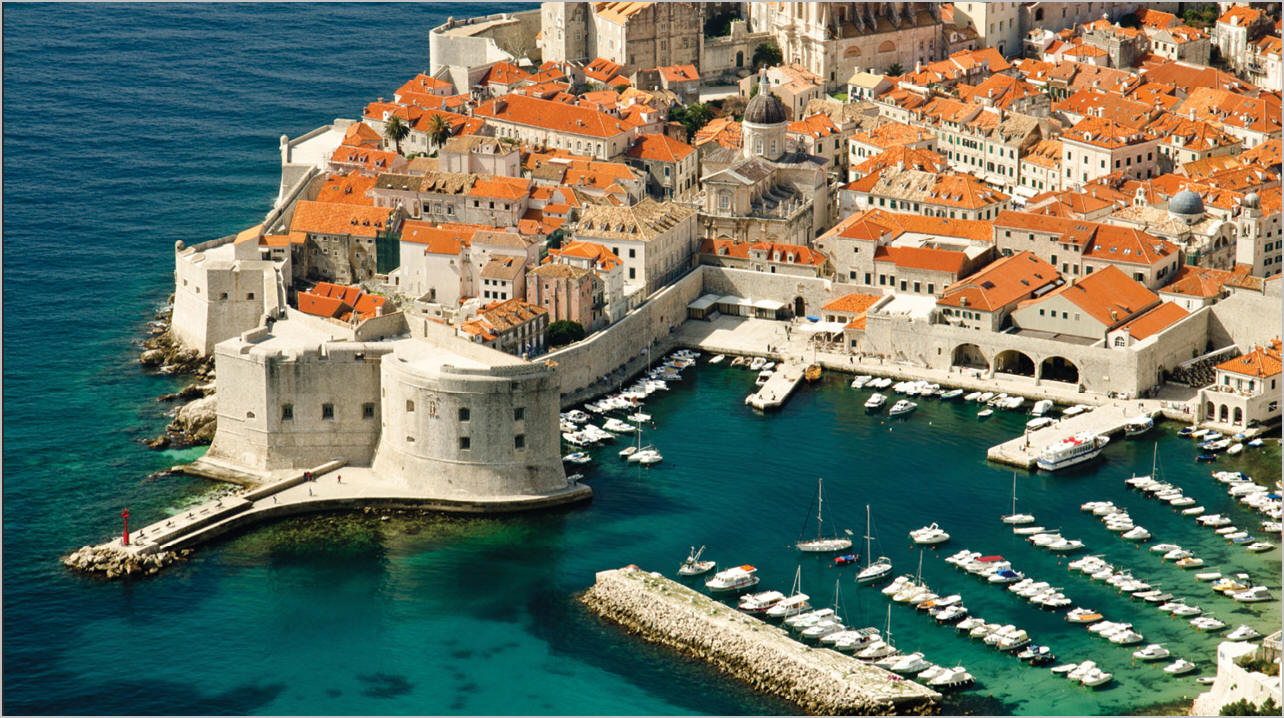 An image from Croatia
.
.
Click the link below for images:
.
__________________________________________
March 18, 2022
Mohenjo
Business, Food For Thought, Human Interest, Science, Technical
amazon, business, Business News, current-events, Future, Hotels, human-rights, medicine, mental-health, research, Science, Science News, technology, Technology News, travel, vacation

Click the link below the picture
.
Russia’s aggression against Ukraine has rocked the petroleum market, and Americans already see this reflected in rising gas prices at the pump. AAA reports that the national gas price average of $4.27 a gallon for regular fuel is 75 cents higher than a month ago and $1.39 higher than a year ago; it’s also only 6 cents lower the highest price in American history.
Motorists will need to be mindful that commuting and road trips will cost more in the foreseeable future. Car shoppers should keep this in mind, prioritizing fuel economy in making their choice.
Now is as good a time as ever to fine-tune your driving strategies and techniques to maximize your fuel economy and ease the squeeze on your wallet.
Consumer Reports experts pulled together this series of test-proven tips to help drivers save money.
.
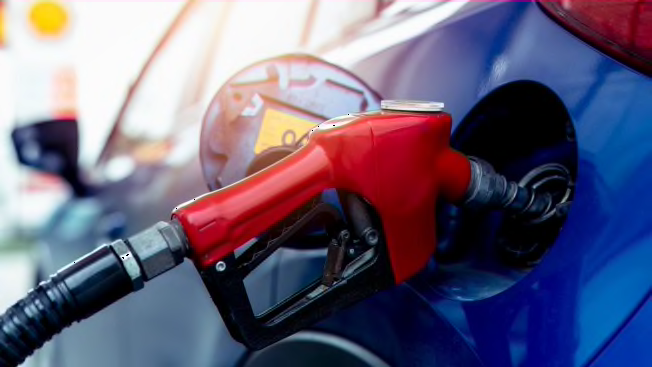 Photo: iStock
.
.
Click the link below for the article:
.
__________________________________________
March 18, 2022
Mohenjo
Business, Food For Thought, Human Interest, Overlooked Past Article, Science, Technical
amazon, business, Business News, current-events, Future, Hotels, human-rights, medicine, mental-health, research, Science, Science News, technology, Technology News, travel, vacation
Click the link below the picture
.
Millennials love ordering food — at least according to this 2014 study. In the study, which stacked results from millennials alongside their baby boomer predecessors, millennials ranked “ease” and “convenience” as the main reasons behind their incessant Seamless orders.
However, if you’re looking for ease and convenience, you really can’t go wrong with a crockpot slow cooker. Prep all your ingredients, dump them into your crockpot, set the timer, and return a few hours later to a dinner ready for consumption. Here are five effortless recipes you can make in your crockpot. (Pro-tip: You can even eat right out of if you’re feeling particularly lazy about dishes – no judgment.)
.
 Effortless
.
.
Click the link below for the article:
.
__________________________________________
March 18, 2022
Mohenjo
Arts, Crime, Food For Thought, Human Interest, Medical, missed News, Political, Science, sports, Technical
amazon, business, Business News, current-events, Future, Hotels, human-rights, medicine, mental-health, research, Science, Science News, technology, Technology News, travel, vacation
.
News You might have missed!
Use your browser or smartphone back arrow (<-) to return to this table for your next selection.
.
__________________________________________
March 17, 2022
Mohenjo
Business, Enthralling, Human Interest, Photographs
amazon, business, Business News, current-events, Future, Hotels, human-rights, medicine, mental-health, research, Science, Science News, technology, Technology News, travel, vacation
Click the link below the picture
.
Grand Teton National Park is an American national park in northwestern Wyoming. At approximately 310,000 acres (1,300 km2), the park includes the major peaks of the 40-mile-long (64 km) Teton Range as well as most of the northern sections of the valley known as Jackson Hole. Grand Teton National Park is only 10 miles (16 km) south of Yellowstone National Park, to which it is connected by the National Park Service–managed John D. Rockefeller Jr. Memorial Parkway. Along with surrounding national forests, these three protected areas constitute the almost 18-million-acre (73,000-square-kilometer) Greater Yellowstone Ecosystem, one of the world’s largest intact mid-latitude temperate ecosystems.
The human history of the Grand Teton region dates back at least 11,000 years when the first nomadic hunter-gatherer Paleo-Indians began migrating into the region during warmer months pursuing food and supplies. In the early 19th century, the first white explorers encountered the eastern Shoshone natives. Between 1810 and 1840, the region attracted fur trading companies that vied for control of the lucrative beaver pelt trade. U.S. Government expeditions to the region commenced in the mid-19th century as an offshoot of exploration in Yellowstone, with the first permanent white settlers in Jackson Hole arriving in the 1880s.
Efforts to preserve the region as a national park began in the late 19th century, and in 1929 Grand Teton National Park was established, protecting the Teton Range’s major peaks. The valley of Jackson Hole remained in private ownership until the 1930s when conservationists led by John D. Rockefeller Jr. began purchasing land in Jackson Hole to be added to the existing national park. Against public opinion and with repeated Congressional efforts to repeal the measures, much of Jackson Hole was set aside for protection as Jackson Hole National Monument in 1943. The monument was abolished in 1950 and most of the monument land was added to Grand Teton National Park.
Grand Teton National Park is named for Grand Teton, the tallest mountain in the Teton Range. The naming of the mountains is attributed to early 19th-century French-speaking trappers—les trois tétons (the three teats) was later anglicized and shortened to Tetons. At 13,775 feet (4,199 m), Grand Teton abruptly rises more than 7,000 feet (2,100 m) above Jackson Hole, almost 850 feet (260 m) higher than Mount Owen, the second-highest summit in the range. The park has numerous lakes, including 15-mile-long (24 km) Jackson Lake as well as streams of varying length and the upper main stem of the Snake River. Though in a state of recession, a dozen small glaciers persist at the higher elevations near the highest peaks in the range. Some of the rocks in the park are the oldest found in any American national park and have been dated at nearly 2.7 billion years.
Grand Teton National Park is an almost pristine ecosystem and the same species of flora and fauna that have existed since prehistoric times can still be found there. More than 1,000 species of vascular plants, dozens of species of mammals, 300 species of birds, more than a dozen fish species, and a few species of reptiles and amphibians inhabit the park. Due to various changes in the ecosystem, some of them human-induced, efforts have been made to provide enhanced protection to some species of native fish and the increasingly threatened whitebark pine.
Grand Teton National Park is a popular destination for mountaineering, hiking, fishing, and other forms of recreation. There are more than 1,000 drive-in campsites and over 200 miles (320 km) of hiking trails that provide access to backcountry camping areas. Noted for world-renowned trout fishing, the park is one of the few places to catch Snake River fine-spotted cutthroat trout. Grand Teton has several National Park Service–run visitor centers, and privately operated concessions for motels, lodges, gas stations, and marinas. Wikipedia
.
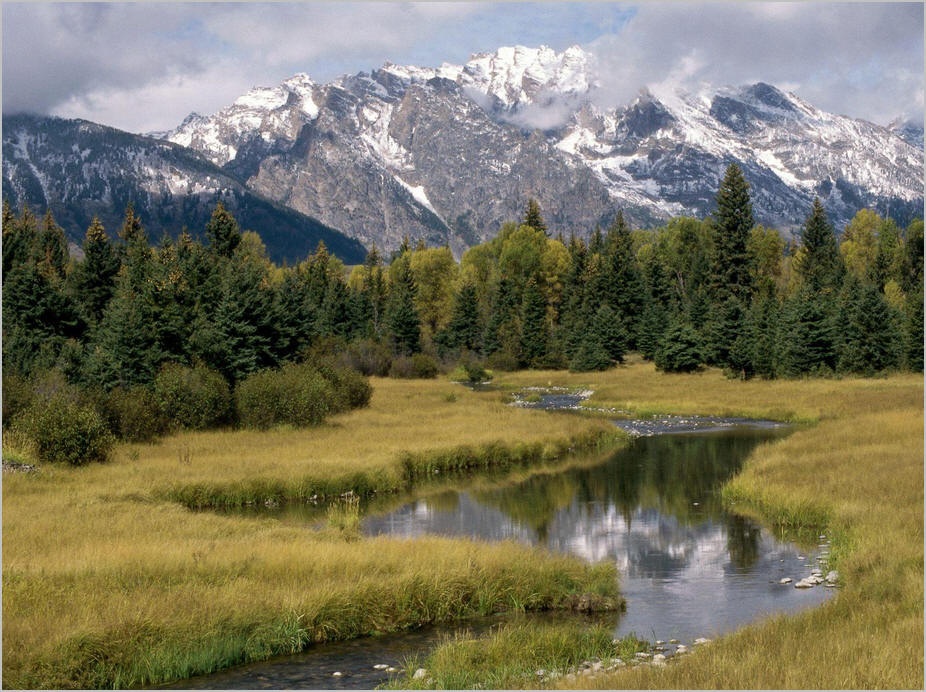 An image from Grand Teton National Park, Wyoming
.
.
Click the link below for images:
.
__________________________________________
March 17, 2022
Mohenjo
Business, Food For Thought, Human Interest, Science, Technical
amazon, business, Business News, current-events, Future, Hotels, human-rights, medicine, mental-health, research, Science, Science News, technology, Technology News, travel, vacation

Click the link below the picture
.
For homeowners and renters lucky enough to have backyards, these outdoor spaces have become more important than ever in recent months. So it should come as no surprise that many residents are sprucing up their patios, decks, and backyards to make them comfortable oases for relaxing and spending quality time with loved ones.
But with so many choices in terms of furniture, accessories, and other outdoor elements, it can be overwhelming to decide what exactly to splurge on—especially if you’re working with a blank slate or a tight budget.
We turned to three home experts for their advice on what purchases are always worth the extra money for making your backyard the best it can be.
.
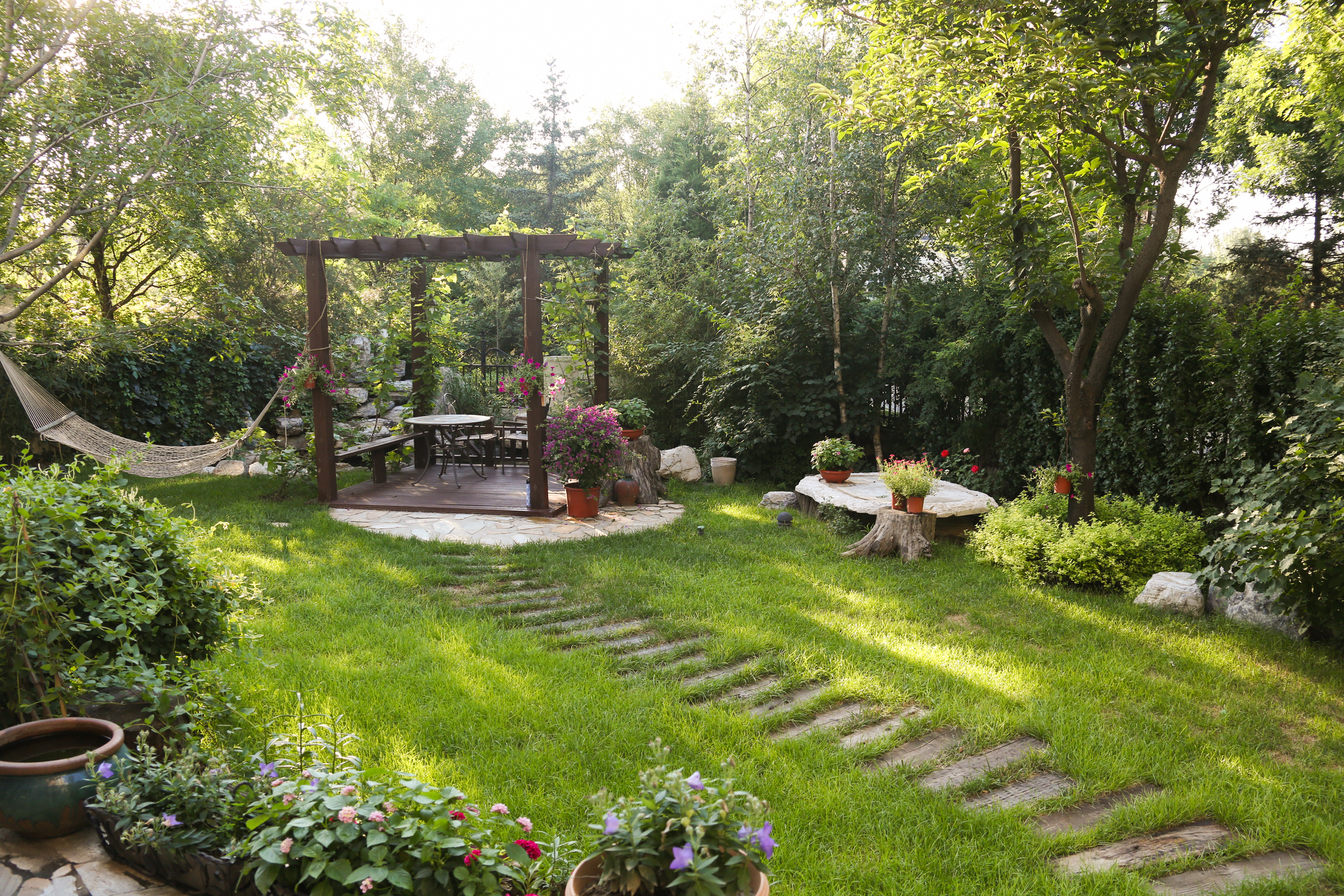 Credit: View Stock / Getty Images.
.
.
Click the link below for the article:
.
__________________________________________
March 17, 2022
Mohenjo
Business, Food For Thought, Human Interest, Medical, Science, Technical
amazon, business, Business News, current-events, Future, Hotels, human-rights, medicine, mental-health, research, Science, Science News, technology, Technology News, travel, vacation
Click the link below the picture
.
Drink more water” seems to be the all-encompassing solution to life. People swear it can ease sickness, eradicates exhaustion, clears pimples, helps you lose weight, etc. Hydration sustains life — scientists search far and wide for planets that have H2O. But there is such a thing as drinking too much water, and it can kill you.
First, it’s important to know that every substance has a lethal limit. Water’s lethal limit is way higher than, say, alcohol or hard drugs — but it does exist. It’s 90 milliliters per kilogram, according to a study on rats, Gizmodo reported. In other words, assuming the same effect on humans, it’s highly inadvisable for a 150-pound person to drink six liters (approximately 1.6 gallons) of water at once. In fact, based on the study, if 100 people did that, 50 of them would die.
The condition is called hyponatremia — it means water intoxication. Under normal circumstances, if you drink more than enough water to hydrate your body, you’ll just pee the rest out. But if you drink a lethal amount of water, osmosis will transfer the extra H2O to your cells, causing them to swell — and if the water reaches your brain cells, your brain drowns.
“You should drink only when you need to, when you are actually thirsty,” said Dr. James Winger, a family medicine professor at Loyola University Medical Center, according to the New York Times. “Thirst is a very reliable indicator,” he added.
So who’s died from hyponatremia? Mostly athletes and people on drugs. The condition became more relevant when marathon runners started dying from it a couple decades ago, according to the Times. They were mostly slower runners who didn’t sweat much and therefore overcompensated by drinking too much water in their attempts to stay well hydrated.
.
 Drown Your Brain
.
.
Click the link below for the article:
.
__________________________________________
Older Entries
Newer Entries

