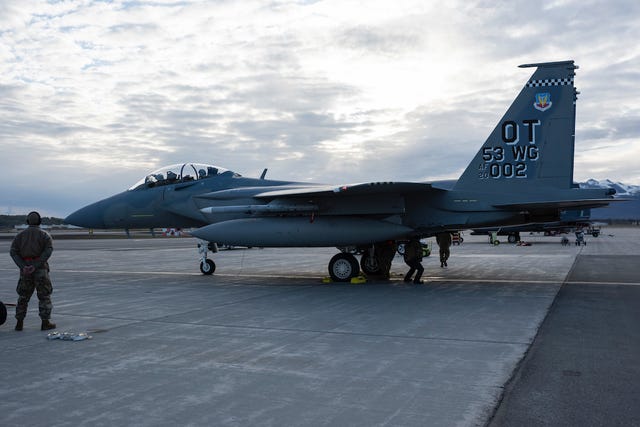
The U.S. Air Force’s first two F-15EX Super Eagle fighters flew to Alaska this month to participate in the Northern Edge 21 wargame—to mixed results.
During the joint multi-service exercise, the two planes flew 33 sorties (or dispatches), while paired up with a variety of active duty planes, including F-15C Eagles, F-16 Fighting Falcons, F-35 Joint Strike Fighters, and F-22 Raptors.
There, the F-15EX “shot down some adversaries and was shot down itself,” according to Air Force magazine. Still, the results aren’t exactly shocking, considering the Air Force has yet to figure out a strategy for the new, non-stealthy fighters.
Lt. Col. John O’Rear of the 84th Test and Evaluation Squadron told Air Force the F-15EX “tallied some kills,” but also took some losses. O’Rear said the performance met expectations, as any simulated adversary worth practicing against would naturally be strong enough to inflict losses.
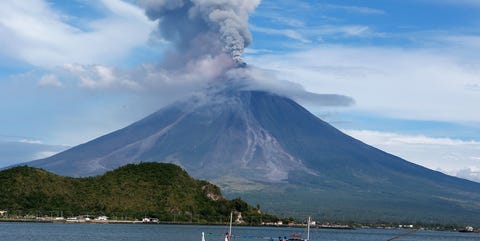
In 2021, we’ve seen lava erupt from volcanoes in Iceland, St. Vincent and the Grenadines, and, most recently, the Democratic Republic of the Congo. While volcanic eruptions are certainly nothing new, these recent eruptions serve as a reminder that dangerous active volcanoes exist and will continue to serve as a potential threat to the surrounding creatures and environment.
While there are many active volcanoes around the world (and in space), experts generally classify the most dangerous ones as those that are closest to highly populated areas, as they can have the most deadly effects.
And while it may seem like the volcanoes with the most recent eruptions would be the most dangerous, the opposite is true in some cases: When volcanoes go a long time without erupting, they have more mounting pressure inside of them, leading to a bigger explosion.
Take a look at some of the most dangerous volcanoes that exist today.
.
Xinhua News AgencyGetty Images
.
.
Click the link below for the article and slideshow:
Some content on this page was disabled on April 15, 2025 as a result of a DMCA takedown notice from Guardian Media Group. You can learn more about the DMCA here:
Whoops, we accidentally made the planet move: New research says human-caused climate change has accelerated the rate at which Earth’s rotational axis changes.
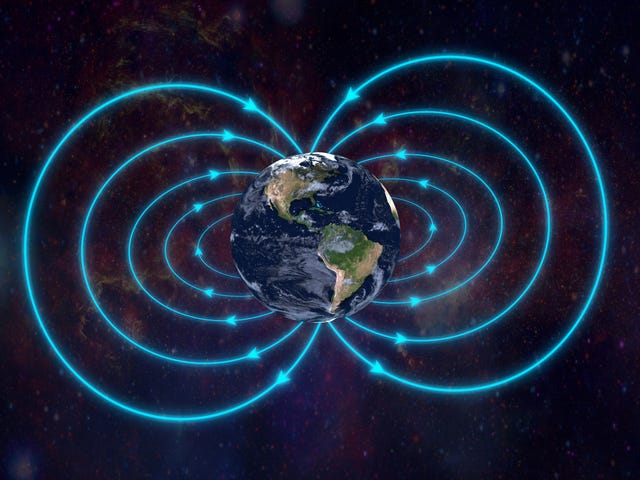
Earth has two kinds of poles. The north and south magnetic poles, which affect things like navigation, drift and even switch places back and forth over time. Earth’s other kind of pole is the axis around which the planet physically spins. This axis has also slightly shifted over time, but scientists haven’t been able to exactly figure out why.
To get to the bottom of it, researchers from the Institute of Geographic Sciences and Natural Resources Research in China and the Technical University of Denmark pulled satellite data from NASA’s Gravity Recovery and Climate Experiment (GRACE) spacecraft and studied this “true polar wander” phenomenon during a specific period of time in the 1990s.
By now, you have probably heard of the huge Facebook data breach, in which upwards of 533 million Facebook users from 106 countries had personal data leaked online, including phone numbers, Facebook IDs, birthdates — you name it.
Your first question will be, of course, how to check whether you are part of that breach. There are a couple of places out there where you can find out whether your data has been compromised.
One well-known site that tracks data breaches is Have I Been Pwned. Just follow the link to the site and put in your email address or phone number. You will find out not only if you’ve been part of the Facebook breach, but also any other breaches in which your data may have been compromised.
Troy Hunt, creator of Have I Been Pwned, was considering whether to include a phone number search (as this comes with certain privacy risks), but ultimately decided to add the feature:
For an academic, Michael Caulfield has an odd request: Stop overthinking what you see online.
Mr. Caulfield, a digital literacy expert at Washington State University Vancouver, knows all too well that at this very moment, more people are fighting for the opportunity to lie to you than at perhaps any other point in human history.
Misinformation rides the greased algorithmic rails of powerful social media platforms and travels at velocities and in volumes that make it nearly impossible to stop. That alone makes information warfare an unfair fight for the average internet user. But Mr. Caulfield argues that the deck is stacked even further against us. That the way we’re taught from a young age to evaluate and think critically about information is fundamentally flawed and out of step with the chaos of the current internet.
“We’re taught that, in order to protect ourselves from bad information, we need to deeply engage with the stuff that washes up in front of us,” Mr. Caulfield told me recently. He suggested that the dominant mode of media literacy (if kids get taught any at all) is that “you’ll get imperfect information and then use reasoning to fix that somehow. But in reality, that strategy can completely backfire.”
.
Our attention economy allows grifters, conspiracy theorists, trolls and savvy attention hijackers to take advantage of us and steal our focus. Credit…Leah Nash for The New York Times
Film and Writing Festival for Comedy. Showcasing best of comedy short films at the FEEDBACK Film Festival. Plus, showcasing best of comedy novels, short stories, poems, screenplays (TV, short, feature) at the festival performed by professional actors.




/cdn.vox-cdn.com/uploads/chorus_image/image/69076937/acastro_180806_1777_facebook_0001.0.jpg)


