January 14, 2022
Mohenjo
Business, Enthralling, Human Interest, Photographs
amazon, business, Business News, current-events, Future, Hotels, human-rights, medicine, mental-health, research, Science, Science News, technology, Technology News, travel, vacation

Click the link below the picture
.
Guatapé is a town and municipality in the Department of Antioquia, Colombia. It is a part of the subregion of Eastern Antioquia and is located 79 kilometers (49 mi) from Medellín, the capital of the department. Guatapé is bordered on the north by Alejandría, San Rafael to the east, and Granada and El Peñol to the south. This town is the gathering place for Las Vegas, referring to the small farms of the area.
The town is a major tourist attraction, especially for travelers from Medellín. El Peñón de Guatapé, a large rock that visitors can climb, and the famous zócalos (murals) that adorn several buildings attract many tourists.
Before Iberian conquistadors reached the area in the 16th century, this territory was inhabited by indigenous groups, some controlled by a cacique named Guatape. In his honor, the town was named after him. The name “Guatapé”, comes from the Quechua language, related to “stones and water”. Another name that the town had in the past was “La Ceja de Guatapé”.
In 1714, the indigenous people under Guatapé of this region were grouped into a shelter known as “San Antonio de Remolinos Peñol”. Traces of their existence come from clay urns found in the town of Alto Verde, and several archaeological sites not yet studied in the villages of La Peña, La Piedra, El Roble, and El Rosario.
Guatapé was founded 4 October 1811, by the Spaniard Don Francisco Giraldo y Jimenez. It was declared a municipality in September 1867.
Guatapé has undergone changes throughout its history. It was predominately a farming town that relied on livestock, agriculture, and mining. Empresas Públicas de Medellín built a large hydroelectric complex here in the 1970s. This megaproject produced large impacts on social, economic, political, environmental, and cultural development in the locality. With the construction of this dam, Guatapé became one of the most important electric production centers in the country. Wikipedia
.
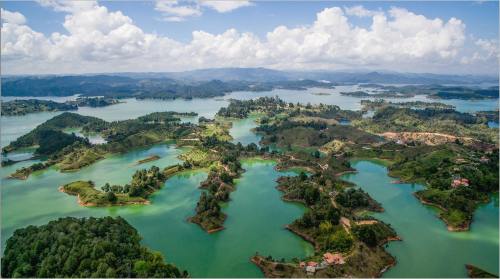 An image from Guatape, Colombia
.
.
Click the link below for images:
.
__________________________________________
January 14, 2022
Mohenjo
Business, Food For Thought, Human Interest, Political, Science, Technical
amazon, business, Business News, current-events, Future, Hotels, human-rights, medicine, mental-health, research, Science, Science News, technology, Technology News, travel, vacation

Click the link below the picture
.
It’s not unusual to hear that a particular military technology has found its way into other applications, which then revolutionized our lives. From the imaging sensors that were refined to fly on spy satellites to advanced aerodynamics used on every modern jetliner, many of these ideas initially sounded like bad science fiction.
So did this one.
Consider the following scenario:
To defend the United States and Canada, a massive array of interconnected radars would be set up across the two nations. Connected by high-speed links to a distributed network of computers and radar scopes, Air Force personnel scan the skies for unexpected activity. One day, an unidentified aircraft is discovered, flying over the Arctic and heading toward the United States. A quick check of all known commercial flights rules out a planeload of holiday travelers lost over the Northern Canadian tundra. At headquarters, the flight is designated as a bogey, as all attempts to contact it have failed. A routine and usually uneventful intercept will therefore fly alongside to identify the aircraft and record registration information.
Before the intercept can be completed, more aircraft appear over the Arctic; an attack is originating from Russia. Readiness is raised to DEFCON 2, one step below that of nuclear war. Controllers across the country begin to get a high-level picture of the attack, which is projected on a large screen for senior military leaders. At a console, the intercept director clicks a few icons on his screen, assigning a fighter to its target. All the essential information is radioed directly to the aircraft’s computer, without talking to the pilot.
.
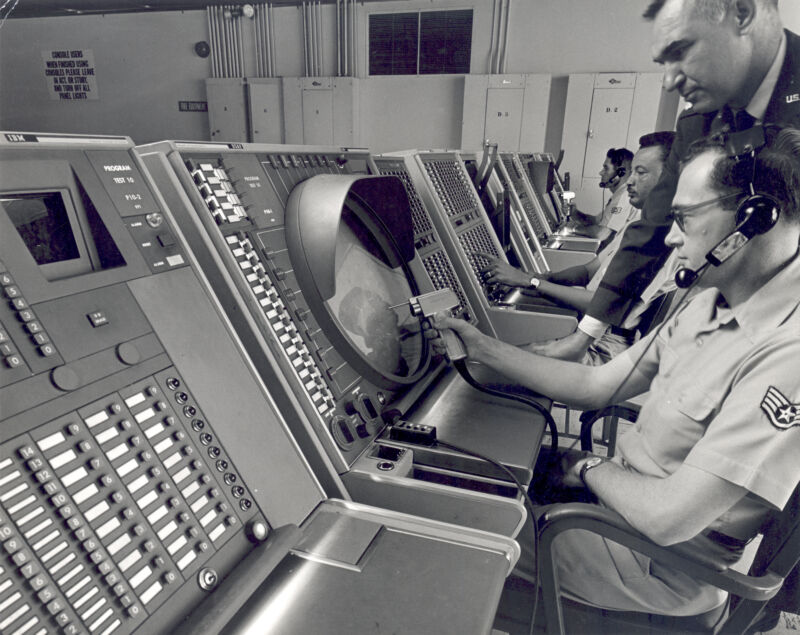 Airmen operating SAGE radar consoles.
.
.
Click the link below for the article:
.
__________________________________________
January 14, 2022
Mohenjo
Business, Food For Thought, Human Interest, Science, Technical
amazon, business, Business News, current-events, Future, Hotels, human-rights, medicine, mental-health, research, Science, Science News, technology, Technology News, travel, vacation

Click the link below the picture
.
The party-going partner now prefers chamomile tea on the couch. The lover of wanderlust has started to cling to routine. The big spender has become a frugal budgeter. Blond turns brown, turns gray, turns bald. Waistlines expand and contract. So do sex drives.
We don’t marry one person as much as we marry one version of a person, a snapshot of who we (and our partner) are individually and to one another at the moment when we say “I do.” Who we are five, 10 or 40 years later is anybody’s guess.
People change. As a result, relationships change, too.
“Not only do relationships change with time, but people change, which can affect the relationship dynamics as well,” said Michelle Chalfant, a therapist in Charlotte, N.C.
Personalities are more malleable than we may think. Most of us change, though often gradually, according to a study published in 2018 by the University of Houston, University of Tübingen, and University of Illinois at Urbana-Champaign, which assessed the personality traits of 1,795 people in the U.S. in adolescence and then 50 years later. Many participants, the study showed, tended to become more emotionally stable, conscientious, and agreeable over time.
.
 Holly Stapleton
.
.
Click the link below for article:
.
__________________________________________
January 13, 2022
Mohenjo
Business, Enthralling, Human Interest, Photographs
amazon, business, Business News, current-events, Future, Hotels, human-rights, medicine, mental-health, research, Science, Science News, technology, Technology News, travel, vacation
Click the link below the picture
.
The Valle Verzasca is a valley in the Locarno district of the Canton of Ticino, Switzerland. It comprises the municipalities of Mergoscia, Vogorno, Corippo, Lavertezzo, Brione, Gerra, Frasco, and Sonogno. As of 2004, the total population is 3,200. Mergoscia is at the geographical center of the Ticino, and none of the passes out of the valley cross cantonal or national borders. The valley is formed by the Verzasca River and is situated between the Leventina and the Maggia and culminates at Pizzo Barone.
Located between the Leventina and the Valle Maggia valleys, Valle Verzasca extends over a length of 25 kilometers (16 mi) in a north-south direction and is situated in the north of the Lago Maggiore. The valley floor is at about 500 meters (1,640 ft) to 900 meters (2,953 ft)above sea level. The surrounding mountain passes respectively have an average altitude of 2,400 meters (7,874 ft). The Valley is crossed by the Verzasca river which is dammed at the southernly outlet of the Valley, forming the Lago di Vogorno, before it flows in the Magadino plain in the vicinity of the Ticino River in the Lago Maggiore.
Due to the different altitudes, all climate zones are combined in the Valle Verzasca. Tenero-contra and Gordola include the insubric climate region thanks to the deep sea level, close to the Lago Maggiore, and protected by the mountains from the north winds. Vineyards and Mediterranean vegetation benefit from the mildest climate area of Switzerland, nebulae are rare, and rainfall of short duration. With increasing altitude, the hills and mountain climate goes over to regions dominated by the Alpine climate (over 2,000 meters (6,562 ft)).
The diversity benefits among other things, the cultivation of vines, and it flourish chestnut forests and palm trees thrive. Due to differences in soil type and amounts, almost all flora occurring in the Ticino and fauna of the various environmental zones are found in the Verzasca Valley.
The Romans introduced and comparable to the tropical wood species, Castanea sativa is in the southern part of the valley, below 1,000 meters (3,281 ft), the dominant species. It is no longer actively cultivated but favors the further diffusion, and studies suggest to take advantage of the valuable wood of chestnut as a valuable wood.
In the Valle Verzasca, the endemic Nera Verzasca goat has been preserved, which looks very much like the ancient Roman goat. This medieval durable goat has short hair because it’s not stuck in the snow. Wikipedia
.
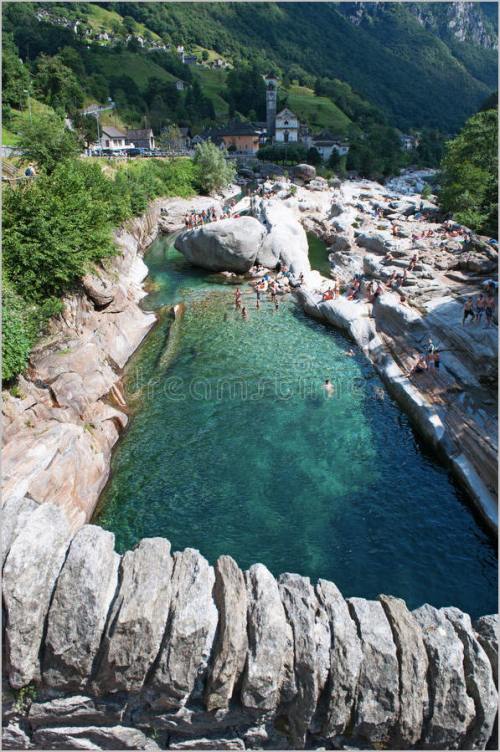 An image from Lavertezzo, Valle Verzasca, Verzasca Valley, Ticino, Switzerland, Europe
.
.
Click the link below for article:
.
__________________________________________
January 13, 2022
Mohenjo
Business, Food For Thought, Human Interest, Science, Technical
amazon, business, Business News, current-events, Future, Hotels, human-rights, medicine, mental-health, research, Science, Science News, technology, Technology News, travel, vacation

Click the link below the picture
.
A couple of years ago, following the publication of my book The Art of Decision Making (2019), I took part in the BBC Radio 4 program ‘Should I Stay or Should I Go?’ named after the 1981 hit song by the Clash. This is the question we face time and time again, whether it applies to a relationship, a job, the home we inhabit, or any other critical dilemma.
My work as an executive coach involves helping people make these tough decisions for themselves and ultimately by themselves. Unlike a mentor, this is not about giving advice. It is about giving people the tools and confidence to trust their own choices and to act upon them.
In this Guide, I will give you an overview of some of these tools and techniques, and how you can use them to accelerate and improve your decision-making.
.
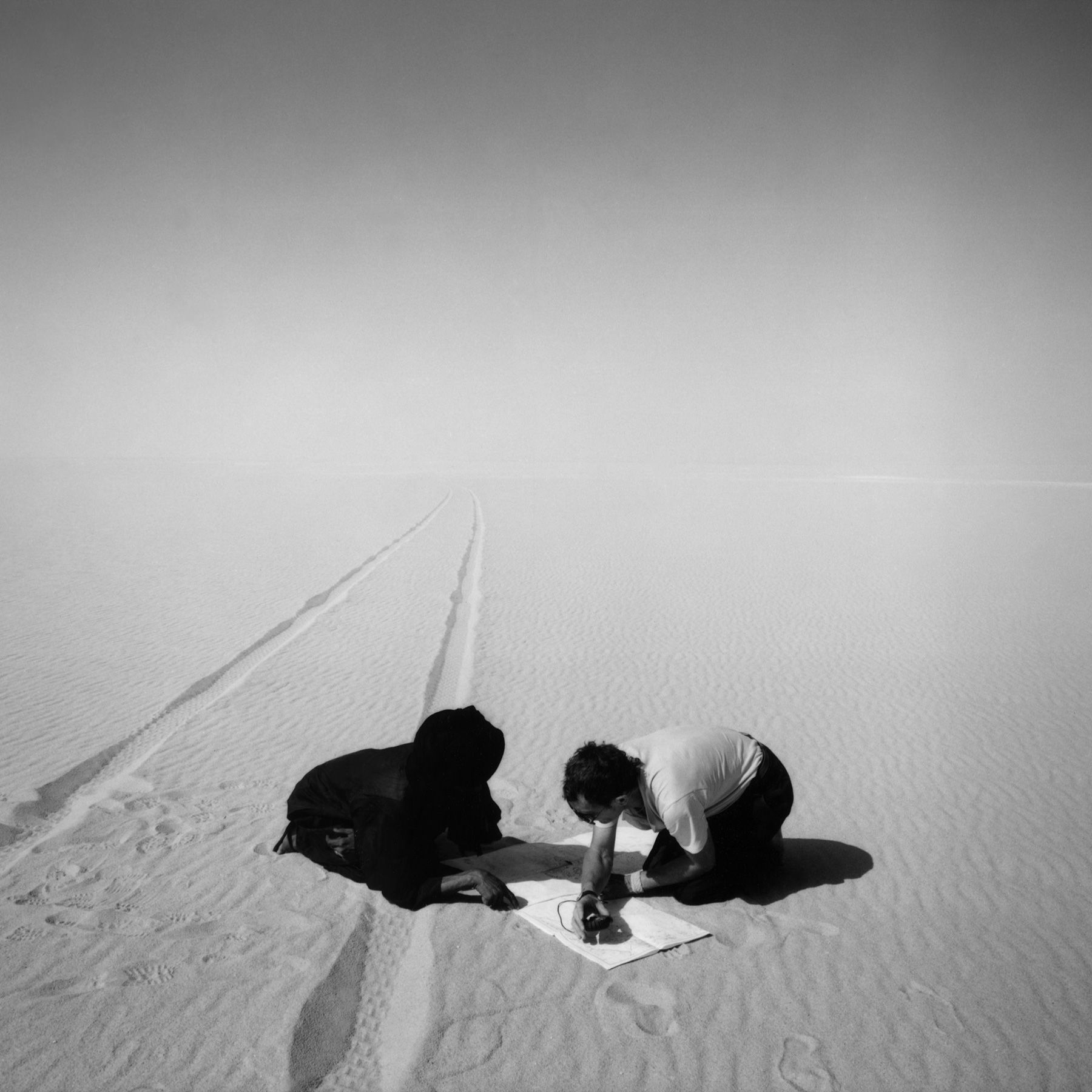 Photo by Raymond Depardon/Magnum
.
.
Click the link below for the article:
.
__________________________________________
January 13, 2022
Mohenjo
Arts, Business, Food For Thought, Human Interest, Science, Technical
amazon, business, Business News, current-events, Future, Hotels, human-rights, medicine, mental-health, research, Science, Science News, technology, Technology News, travel, vacation

Click the link below the picture
.
Drawing is a powerful tool of communication. It helps build self-understanding and can boost mental health.
But our current focus on productivity, outcomes, and “talent” has us thinking about it the wrong way. Too many believe the myth of “I can’t draw”, when in fact it’s a skill built through practice.
Dedicated practice is hard, however, if you’re constantly asking yourself: “What’s the point of drawing?”
As I argue in a 2021 paper in Closure E-Journal for Comic Studies, we need to reframe our concept of what it means to draw, and why we should do it – especially if you think you can’t.
Devoting a little time to drawing each day may make you happier, more employable, and sustainably productive.
.
 Photo by Darren C. Fisher
 Darren Fisher, Author provided
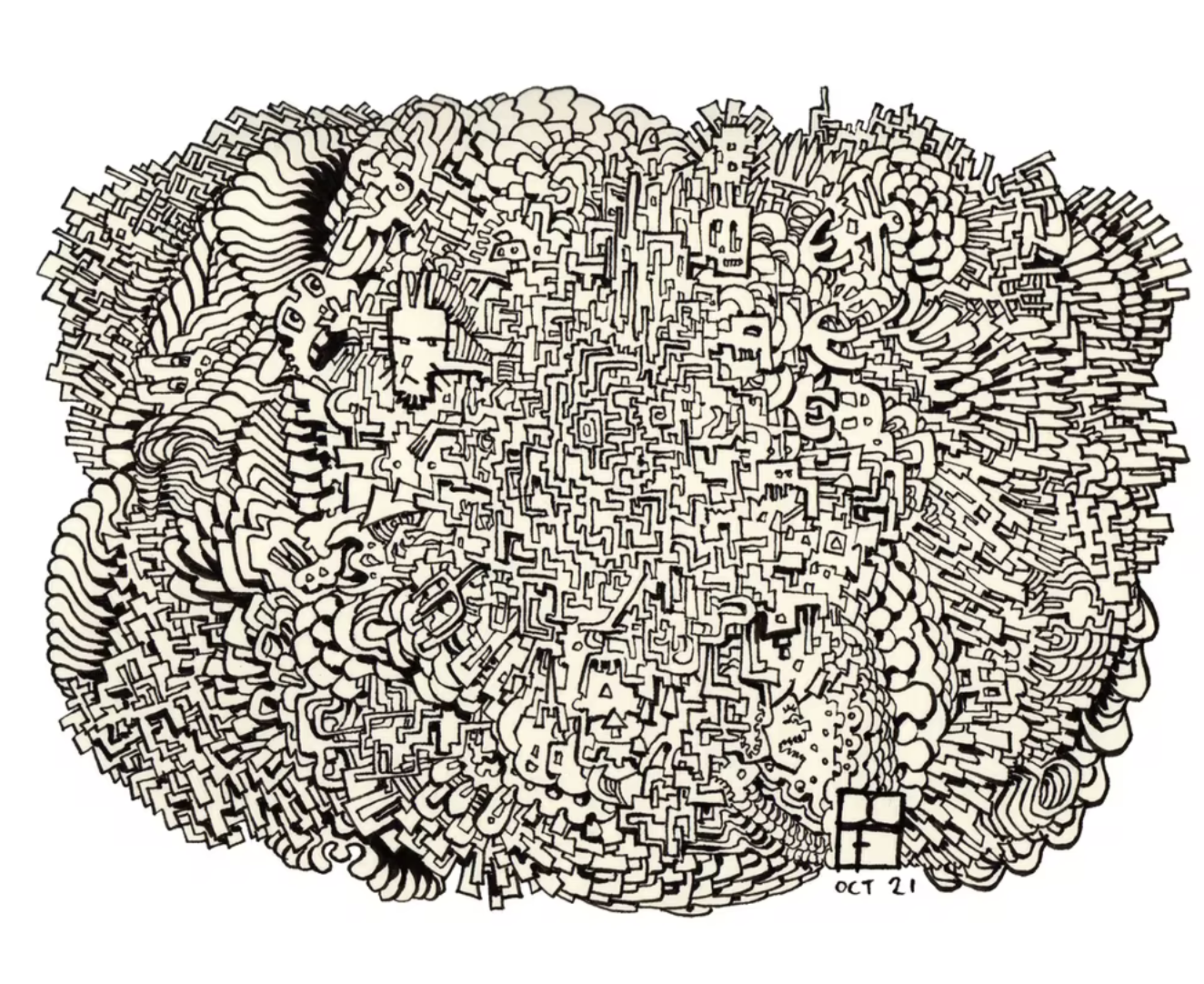 Automatic drawing – where one doodles without a specific aim – is a way to tap into flow states and become mindfully absorbed. Darren C. Fisher, Author provided
.
.
Click the link below for the article:
.
__________________________________________
January 12, 2022
Mohenjo
Business, Enthralling, Human Interest, Photographs
amazon, business, Business News, current-events, Future, Hotels, human-rights, medicine, mental-health, research, Science, Science News, technology, Technology News, travel, vacation
Click the link below the picture
.
Aït Benhaddou is a historic ighrem or ksar (fortified village) along the former caravan route between the Sahara and Marrakech in present-day Morocco. It is considered a great example of Moroccan earthen clay architecture and has been a UNESCO World Heritage Site since 1987.
The site of the ksar has been fortified since the 11th century during the Almoravid period. None of the current buildings are believed to date from before the 17th century, but they were likely built with the same construction methods and designs as had been used for centuries before. The site’s strategic importance was due to its location in the Ounila Valley along one of the main trans-Saharan trade routes. The Tizi n’Tichka pass, which was reached via this route, was one of the few routes across the Atlas Mountains, crossing between Marrakech and the Dra’a Valley on the edge of the Sahara. Other kasbahs and ksour were located all along this route, such as the nearby Tamdaght to the north.
Today, the ksar itself is only sparsely inhabited by several families. The depopulation over time is a result of the valley’s loss of strategic importance in the 20th century. Most local inhabitants now live in modern dwellings in the village on the other side of the river, and make a living off agriculture and especially off the tourist trade. In 2011 a new pedestrian bridge was completed linking the old ksar with the modern village, with the aim of making the ksar more accessible and to potentially encourage inhabitants to move back into its historic houses.
The ksar is located on the slopes of a hill next to the Ounila River (Asif Ounila). The village’s buildings are grouped together within a defensive wall that includes corner towers and a gate. They include dwellings of various sizes ranging from modest houses to tall structures with towers. Some of the buildings are decorated in their upper parts with geometric motifs. The village also has a number of public or community buildings such as a mosque, a caravanserai, a kasbah (castle-like fortification), and the Marabout of Sidi Ali or Amer. At the top of the hill, overlooking the ksar, are the remains of a large fortified granary (agadir). There is also a public square, a Muslim cemetery, and a Jewish cemetery. Outside the ksar’s walls was an area where grain was grown and threshed. Wikipedia
.
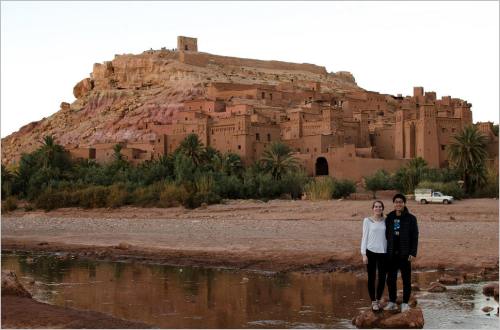 An image of Ait Benhaddou
.
.
Click the link below for images:
.
__________________________________________
January 12, 2022
Mohenjo
Business, Food For Thought, Human Interest, Science, Technical
amazon, business, Business News, current-events, Future, Hotels, human-rights, medicine, mental-health, research, Science, Science News, technology, Technology News, travel, vacation
Some content on this page was disabled on April 15, 2025 as a result of a DMCA takedown notice from Guardian Media Group. You can learn more about the DMCA here:
https://wordpress.com/support/copyright-and-the-dmca/
January 12, 2022
Mohenjo
Business, Food For Thought, Human Interest, Science, Technical
amazon, business, Business News, current-events, Future, Hotels, human-rights, medicine, mental-health, research, Science, Science News, technology, Technology News, travel, vacation
Click the link below the picture
.
Most of us have been told to “Cheer up” or “Look on the bright side” by well-meaning family and friends. Sometimes, it’s because they see us looking sad, angry, anxious, or frustrated, but it can also happen because we look pensive, uncertain, or just about any state other than joyful. While we may be tempted to tell them “Stuff it,” we don’t because, well, feelings.
Next time, feel free to do so (but please be polite). “Being positive has become a new form of moral correctness,” says psychologist Susan David, founder, and co-director of the Institute of Coaching at McLean Hospital of Harvard University Medical School, an instructor in psychology at Harvard, and author of Emotional Agility (read an excerpt here).
Suppressing or turning away from our difficult emotions is not healthy or helpful, says David. “What happens is, it undermines our ability to deal with the world as it is, not as we wish it to be,” she says. “This is associated with lower levels of resilience, lower levels of wellbeing, and higher levels of depression and anxiety. And it also impacts our relationships and our ability to achieve our goals.”
.
 Illustration by Rose Wong
.
.
Click the link below for the article:
.
__________________________________________
January 11, 2022
Mohenjo
Business, Enthralling, Human Interest, Photographs
amazon, business, Business News, current-events, Future, Hotels, human-rights, medicine, mental-health, research, Science, Science News, technology, Technology News, travel, vacation
Click the link below the picture
.
Royal Natal National Park is an 80.94-square-kilometer (31.25 sq mi) park in KwaZulu-Natal province, South Africa, and forms part of the uKhahlamba Drakensberg Park World Heritage Site. Notwithstanding the name, it is actually not a South African National Park managed by the SANParks, but rather a Provincial Park managed by Ezemvelo KZN Wildlife. This park is now included in the Maloti-Drakensberg Transfrontier Conservation Area Peace Park.
The Drakensberg Mountains were once the hunting ground of the San people (bushmen). Though the San no longer live in the area, they recorded their exploits in the form of remarkable rock paintings.
The main features of the park are the Drakensberg Amphitheatre, a rock wall 5 kilometers (3.1 mi) long by up to 1,200 meters (3,900 ft) high, Mont-Aux-Sources peak where the Orange and Tugela rivers have their source, and the 948-meter (3,110 ft) Tugela Falls, the world’s second-highest waterfall. A distinctive rock feature and popular hiking destination in the park is the so-called “Policeman’s Helmet”. Wikipedia
.
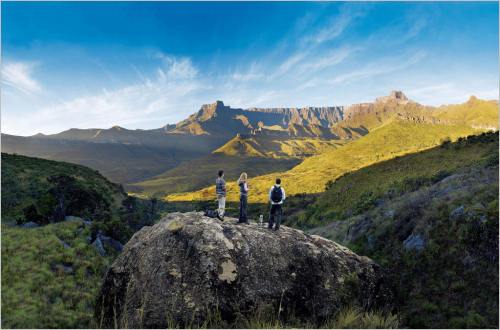 An image from Royal Natal National Park
.
.
Click the link below for images:
.
__________________________________________
Older Entries
Newer Entries

