January 11, 2022
Mohenjo
Business, Food For Thought, Human Interest, Science, Technical
amazon, business, Business News, current-events, Future, Hotels, human-rights, medicine, mental-health, research, Science, Science News, technology, Technology News, travel, vacation

Click the link below the picture
.
There’s one question I hear as a personal finance writer more than any other. It’s not how to game the stock market, or become a billionaire—it’s simply how to make a budget work while still saving enough to retire comfortably.
And of course, it’s simple: Change your habits so you can put money aside for the things that matter to you. But that’s also really, really hard to do.
That’s because understanding personal finance is an uphill battle for many Americans. We’re not taught about the practicalities of money in school, because the truth is many industries profit from our ignorance. While wages have hardly budged in decades, shareholders and CEOs have never been richer. The cost of living in many major cities is prohibitive to just about anyone but the super privileged, or those willing to take on a lot of debt or make enormous sacrifices. While the stock market soars, just 52% of U.S. adults actually owned stock in 2016, according to Gallup, and the wealthiest 1% of households owned 38% of all stock shares in 2013. The government is actively working against consumers to make it easier for financial institutions to prey on its citizens, and a single medical bill can send a person into debt for the rest of their life.
.
 Paramount
.
.
Click the link below for the article:
.
__________________________________________
January 11, 2022
Mohenjo
Business, Food For Thought, Human Interest, sports, Technical
amazon, business, Business News, current-events, Future, Hotels, human-rights, medicine, mental-health, research, Science, Science News, technology, Technology News, travel, vacation

Click the link below the picture
.
May 19, 2020, 6:31 p.m.
The text was from Michael. He didn’t reach out very often.
What’s up dude? I’m getting word that you’re upset with me. Love to talk about it if you have time.
My schedule was packed that evening and I knew the conversation would take a while.
I hit him back an hour and a half later:
Let’s talk tomorrow.
Michael was right. I was upset with him. It was because of The Last Dance, the ten-part ESPN documentary about the Chicago Bulls’ final championship season (1997–98), which millions of people watched during the early weeks of the pandemic.
With no live sports on TV, The Last Dance, for five straight Sunday nights starting in mid-April, provided a much-needed distraction from the new normal we suddenly found ourselves in. There was only so much news about hot spots and hospitalizations and deaths anyone could absorb.
.

.
.
Click the link below for the article:
.
__________________________________________
January 10, 2022
Mohenjo
Business, Enthralling, Human Interest, Photographs
amazon, business, Business News, current-events, Future, Hotels, human-rights, medicine, mental-health, research, Science, Science News, technology, Technology News, travel, vacation

Click the link below the picture
.
The king penguin is the second largest species of penguin, smaller, but somewhat similar in appearance to the emperor penguin. There are two subspecies: A. p. patagonicus and A. p. halli; patagonicus is found in the South Atlantic and halli in the South Indian Ocean (at the Kerguelen Islands, Crozet Island, Prince Edward Islands, and Heard Island and McDonald Islands) and at Macquarie Island.
King penguins mainly eat lanternfish, squid, and krill. On foraging trips, king penguins repeatedly dive to over 100 meters (300 ft) and have been recorded at depths greater than 300 meters (1,000 ft). Predators of the king penguin include giant petrels, skuas, the snowy sheathbill, the leopard seal, and the orca.
King penguins breed on the Subantarctic islands at the northern reaches of Antarctica, South Georgia, and other temperate islands of the region.
The king penguin stands at 70 to 100 cm (28 to 39 in) tall and weighs from 9.3 to 18 kg (21 to 40 lb). Although female and male king penguins are monomorphic they can be separated by their calls. Males are also slightly larger than females. The mean body mass of adults from Marion Island was 12.4 kg (27 lb) for 70 males and 11.1 kg (24 lb) for 71 females. Another study from Marion Island found that the mean mass of 33 adults feeding chicks was 13.1 kg (29 lb). The king penguin is approximately 25% shorter and weighs around 1/3rd less than the emperor penguin.
At first glance, the king penguin appears very similar to the larger, closely related emperor penguin, with a broad cheek patch contrasting with surrounding dark feathers and yellow-orange plumage at the top of the chest. However, the cheek patch of the adult king penguin is a solid bright orange whereas that of the emperor penguin is yellow and white, and the upper chest tends to be more orange and less yellowish in the king species. Both have colorful markings along the side of their lower mandible, but these tend towards pink in emperor penguins and orange in king penguins. Emperor and king penguins typically do not inhabit the same areas in the wild, with the possible exception of vagrants at sea, but the two can readily be distinguished from one another by the king’s longer, straighter bill, larger flippers, and noticeably sleeker body. The juvenile king penguin with its long bill and heavy dark brown down are completely different in appearance from the mostly grey emperor chick with its distinctive black and white mask. Once molted of its brown juvenile plumage, the king chick resembles the adult but is somewhat less colorful.
king penguins often breed on the same large, circumpolar islands as at least half of all living penguins, but it is easily distinguished from other species by its much larger size and taller frame, distinctive colorful markings, and grizzled sooty-greyish rather than blackish back. Wikipedia
.
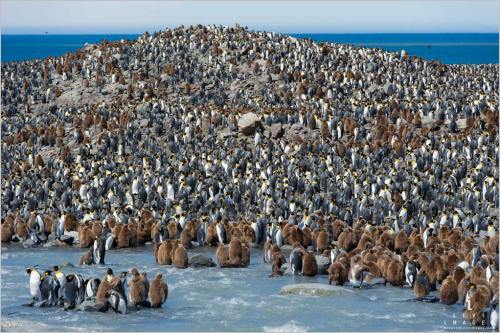 An image of a King Penguin Colony South Georgia Island
.
.
Click the link below for images:
.
__________________________________________
January 10, 2022
Mohenjo
Business, Food For Thought, Human Interest, Science, Technical
amazon, business, Business News, current-events, Future, Hotels, human-rights, medicine, mental-health, research, Science, Science News, technology, Technology News, travel, vacation
Some content on this page was disabled on April 15, 2025 as a result of a DMCA takedown notice from Guardian Media Group. You can learn more about the DMCA here:
https://wordpress.com/support/copyright-and-the-dmca/
January 10, 2022
Mohenjo
Business, Food For Thought, Human Interest, Political, Science, Technical
amazon, business, Business News, current-events, Future, Hotels, human-rights, medicine, mental-health, research, Science, Science News, technology, Technology News, travel, vacation

Click the link below the picture
.
At the outset of the pandemic, millions of Americans with federal student loans were granted a brief reprieve: Donald Trump’s administration waived interest rates and allowed borrowers to pause their payments, initially for 60 days and then until January 2021. The pause was extended by President Joe Biden, first through January 2022 and now through May 1.
Some 45 million Americans owe more than $1.7 trillion in private and public student loan debt, according to the Federal Reserve. Most student loans are federal, but an estimated $140 billion — about 8 percent of loans owed — are private. The average student debt for a bachelor’s degree hovers around $29,000, according to NerdWallet, and around $71,000 for a graduate degree. Based on data from the New York Fed, the average balance overall, regardless of degree, is about $35,000.
Until recently, the student loan freeze was set to expire at the end of January 2022. The White House initially resisted pressure from Democrats to extend it, declaring that it’s time for business to get back to normal. On December 10, White House press secretary Jen Psaki said at a press briefing that “a smooth transition back into repayment is a high priority for the administration.” However, on December 22, the Biden administration reversed course under continued pressure. In the coming months, the administration said, it will make sure borrowers “have the support they need to transition smoothly back into repayment” in May.
President Biden has resisted calls for him to cancel student debt through executive action — some Democrats on the Hill have urged him to forgive up to $50,000. And while Biden has publicly expressed his support for student loan forgiveness on the campaign trail, the president wants Congress to take the first step.
.
:format(webp)/cdn.vox-cdn.com/uploads/chorus_image/image/70329900/GettyImages_515705750.0.jpg) Getty Images/iStockphoto
Getty Images/iStockphoto
.
.
Click the link below for the article:
.
__________________________________________
January 9, 2022
Mohenjo
Business, Food For Thought, Human Interest, Science, Technical
amazon, business, Business News, current-events, Future, Hotels, human-rights, medicine, mental-health, research, Science, Science News, technology, Technology News, travel, vacation

Click the link below the picture
.
Of all the different things you can try to improve your productivity, a morning routine is one of the most effective.
There are a few reasons why morning routines are so useful. The first is obvious to anyone who has ever procrastinated, just getting started is often the hardest part. If you can start out with the right momentum towards your goals, you’ll avoid wrestling with yourself in the morning to get started.
The second is that the morning, particularly before the workday officially begins, is a quiet time with fewer social obligations. For many of us, the rest of the day can present a chaotic, ever-changing blast of responsibilities, urgent errands, and unexpected interruptions. The morning, in contrast, is often the most consistent part of your day.
Morning routines also set the tone for your upcoming day. Do you want your workday to begin quiet and contemplative? With vigorous exercise? Silent meditation? Creative and productive? Your morning habit can push you along a current which will carry throughout the morning and allow you to maximize whatever aspect of your personality you want to be most important.
.
 Good morning!
.
.
Click the link below for the article:
.
__________________________________________
January 9, 2022
Mohenjo
Business, Food For Thought, Human Interest, Science, Technical
amazon, business, Business News, current-events, Future, Hotels, human-rights, medicine, mental-health, research, Science, Science News, technology, Technology News, travel, vacation

Click the link below the picture
.
Whether you’re on the head or tail end of the cryptocurrency craze, one thing is for sure: These digital assets are hitting the mainstream hard, and don’t seem to be going away anytime soon. Notably, the country of El Salvador recently adopted bitcoin as legal tender, and New York’s incoming mayor Eric Adams is intent on transforming New York City into a hotspot for cryptocurrency. Although only 16 percent of Americans say they invested, traded, or used cryptocurrency, almost 90 percent have heard about it, according to a recent Pew Research Center survey.
Advocates for cryptocurrency and decentralized finance (where people can make financial deals with one another without being moderated by a middleman or central authority like a bank) in general argue that these platforms are transparent and simultaneously anonymous—both good things.
The key to this vision lies in a digital technology called the blockchain, which undergirds all cryptocurrencies. The blockchain serves as a virtual hall of records, or a public ledger, that records every transaction, detailing the amount as well as the sender and receiver’s wallet addresses.
Yet, critics and regulatory bodies are worried about the potential for harm from cryptocurrencies, such as people using them for scams, money laundering, or funding illegal activities (not to mention the enormous carbon footprint that some of these cryptocurrencies have—The New York Times reported that Bitcoin burns through more electricity than certain countries). And experts have raised concerns about the strength of cryptocurrency networks against attacks, and whether the design of some systems have warped over time to become centralized or inherently allow the rich to get richer.
.
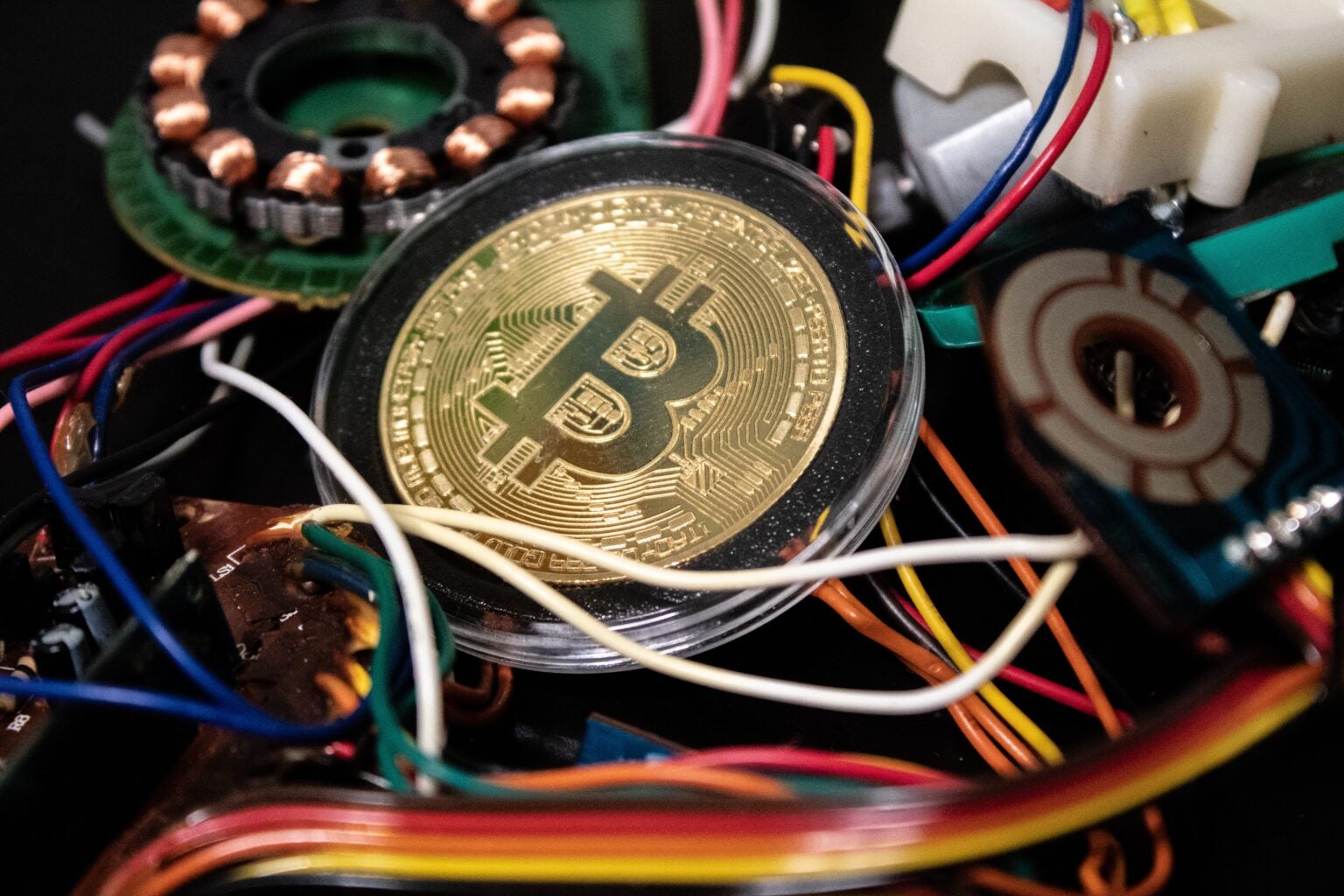 How do cryptocurrencies work?. Brian Wangenheim / Unsplash
.
.
Click the link below for the article:
.
__________________________________________
January 8, 2022
Mohenjo
Business, Human Interest
amazon, business, Business News, current-events, Future, Hotels, human-rights, medicine, mental-health, research, Science, Science News, technology, Technology News, travel, vacation

Click the link below the picture
.
Article Titles Included In This Single Post :
(these are not missed news articles, do not use back arrow
for selections–they resume 1/10/2022)
-
-
- Supreme Court to hear challenges to Biden vaccine mandates
- Democrats hail Biden for calling out Trump
- The best protection against Omicron? Boost with Pfizer or Moderna, study says
- More than 90 million people, 37 states on alert for hazardous weather
- Three men convicted of murdering Ahmaud Arbery to be sentenced Friday
- Unable to get COVID tests, Americans go to work, get on flights
- Rudy Gobert, the first NBA player known to have COVID, has tested positive again
- Most expensive home in America lists for $295 million, may head to auction
- WWII soldier’s letter to mom delivered 76 years after it was sent
- ‘And Just Like That’ cast & staff agreed Chris Noth should be removed from series, source says
- Ex-NFL QB offers Oklahoma star $1M NIL deal to transfer to small school
- James Corden reveals COVID diagnosis, says show will be off for ‘next few days’
.

© Jim Wilson/The New York TimesYour Daily AM Roundup
.
.
Click the link below for the articles:
.
__________________________________________
January 8, 2022
Mohenjo
Business, Crime, Food For Thought, Human Interest, Political, Technical
amazon, business, Business News, current-events, Future, Hotels, human-rights, medicine, mental-health, research, Science, Science News, technology, Technology News, travel, vacation

Click the link below the picture
.
The three men convicted of killing Ahmaud Arbery have been sentenced.
Travis McMichael, 35, was sentenced to life without possible parole. He delivered the deadly shot and was convicted on all nine charges: malice murder, four counts of felony murder, aggravated assault with a shotgun, aggravated assault with a pickup truck, false imprisonment and criminal intent to commit a felony.
McMichael’s father, Gregory McMichael, 65, was also sentenced to life without the possiblilty of parole. The former Georgia police officer was found not guilty of malice murder but was convicted on the remaining charges, including the felony murder counts.
The McMichaels’ neighbor, William “Roddie” Bryan, 53, was sentenced to life with the possibility of parole. He was found guilty of three of the felony murder counts as well as charges of aggravated assault with his pickup truck, false imprisonment and criminal intent to commit a felony.
“On February 23, 2020, almost two years ago, a resident of Glynn County, a graduate of Brunswick High, a son, a brother, a young man with dreams was gunned down in this community,” said Judge Timothy Walmsley before delivering the sentences. “As we understand it, he left us home apparently to go for a run. And he ended up running for his life.”
He took a minute-long moment of silence during his remarks to demonstrate “only a fraction of the time” that Arbery was running from the three men who were chasing him for five minutes.
A Georgia jury in November, after deliberating for about 11 hours, convicted the three white men of chasing and fatally shooting Arbery, a 25-year-old Black man who was out on a Sunday jog in February 2020.
.
 .
.
.
Click the link below for the article:
.
__________________________________________
January 8, 2022
Mohenjo
Arts, Business, Food For Thought, Human Interest, Technical
amazon, business, Business News, current-events, Future, Hotels, human-rights, medicine, mental-health, research, Science, Science News, technology, Technology News, travel, vacation

Click the link below the picture
.
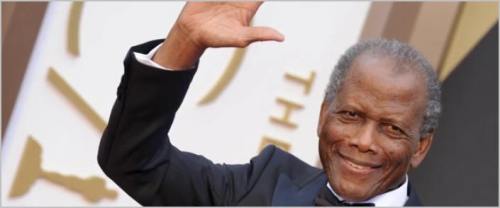
Sidney Poitier, the Oscar-winning actor who brought quiet dignity to his characters on screen and helped break down the color barrier in Hollywood, has died. He was 94 years old.
Poitier’s death was confirmed by two Bahamian ministers. Deputy Prime Minister Chester Cooper told ABC News he was “conflicted with great sadness and a sense of celebration when I learned of the passing of Sir Sidney Poitier.”
MORE: Hollywood pays tribute to late Sidney Poitier: Oprah, Tyler Perry, Viola Davis, and more
“Sadness that he would no longer be here to tell him how much he means to us, but a celebration that he did so much to show the world that those from the humblest beginnings can change the world and that we gave him his flowers while he was with us,” he said.
Minister of Foreign Affairs Fred Mitchell also told ABC News, “We’ve lost a great Bahamian and I’ve lost a personal friend.”
Poitier became the first Black man to win an Academy Award for best actor in 1964 for his role in “Lilies of the Field.” He was perhaps best known for his role as a Black doctor engaged to a white woman in 1967’s “Guess Who’s Coming to Dinner,” in which he starred opposite Katharine Hepburn and Spencer Tracy.
.
.
.
Click the link below for the article:
.
__________________________________________
Older Entries
Newer Entries

