January 18, 2022
Mohenjo
Business, Food For Thought, Human Interest, Science, Technical
amazon, business, Business News, current-events, Future, Hotels, human-rights, medicine, mental-health, research, Science, Science News, technology, Technology News, travel, vacation

Click the link below the picture
.
Every cloud backup service we tested is a pain to use for one reason or another, but we still recommend using one. A good backup system starts with a local backup but should end with a subscription to an online backup service. After years of testing, we think Backblaze is the easiest to use and the best cloud backup service for most people.
Offering unlimited online storage for one computer for $70 a year, Backblaze is the most affordable backup service we tested. It’s easy to use on both Windows and Mac. With the software installed and the settings at their defaults, uploads start immediately and include the most commonly used folders that need backing up. Backblaze keeps file versions around for 30 days—less than we’d like—but it offers paid upgrades to adjust that retention period if you want to keep your backups available for longer. Backblaze supports external drives connected to your computer and has a good combination of online support tools. But its implementation of private encryption keys sacrifices some security for usability, and its restoration process is way too slow.
.
 Photo: Rozette Rago
.
.
Click the link below for the article:
.
__________________________________________
January 17, 2022
Mohenjo
Business, Enthralling, Human Interest, Photographs
amazon, business, Business News, current-events, Future, Hotels, human-rights, medicine, mental-health, research, Science, Science News, technology, Technology News, travel, vacation

Click the link below the picture
.
Maceió, formerly sometimes Anglicised as Macaio, is the capital and the largest city of the coastal state of Alagoas, Brazil. The name “Maceió” is an Indigenous term for a spring. Most maceiós flow to the sea, but some get trapped and form lakes (“lagoas”, in Portuguese).
There are numerous maceiós and lakes in this part of Brazil; because of this, the city was named Maceió, and the state, Alagoas. The new Zumbi dos Palmares International Airport connects Maceió with many Brazilian cities and also operates some international flights. The city is home to the Federal University of Alagoas.
The name “Maceió” has origin in the term tupi maçayó or maçaio-k, which means “what it covers the swamp”. The Aurélio Dictionary says that the term “maceió” means a temporary and cyclic lagoon that is located at the edge of the sea at the mouth of a watercourse small enough to be interrupted by a silicate bar until the high tide opens the way temporarily cyclically related to the season, river flow, lunar seasons, etc.
Nineteenth-century shipping reports, which reported on ships bringing cotton from Maceió, spelt it as Macaio.
The city began in an old sugar mill and plantation complex around the 19th century. Its development started with the arrival of ships taking wood from Jaraguá bay.
With the installation of the sugar mills, Maceió started to export sugar, then tobacco, coconut, leather, and some spices. Prosperity made it possible for the settlement to become a village on December 5, 1815. Thanks to its continued growth, Maceió became the capital of the Alagoas state on December 9, 1839.
Maceió is also a port city and due to its port development about 200 years ago it changed from a village into a city.
The city is located between the Mundaú Lagoon and the Atlantic Ocean, with a tropical climate with average temperature of 25 °C (77 °F). As of 2010, its metropolitan area had a total population of 1,156,287 inhabitants. Wikipedia
.
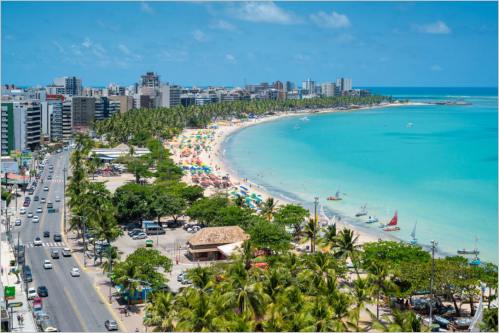 An image from Maceió
.
.
Click the link below for images:
.
__________________________________________
January 17, 2022
Mohenjo
Business, Food For Thought, Human Interest, Science, Technical
amazon, business, Business News, current-events, Future, Hotels, human-rights, medicine, mental-health, research, Science, Science News, technology, Technology News, travel, vacation

Click the link below the picture
.
Kevin Cowley remembers many things about April 15, 1989. He had taken the bus to the Hillsborough soccer stadium in Sheffield, England, to watch the semifinal championship game between Nottingham Forest and Liverpool. He was 17. It was a beautiful, sunny afternoon. The fans filled the stands.
He remembers being pressed between people so tightly that he couldn’t get his hands out of his pockets. He remembers the crash of the safety barrier collapsing behind him when his team nearly scored and the crowd surged.
Hundreds of people fell, toppled like dominoes by those pinned in next to them. Cowley was pulled under. He remembers waking up among the dead and dying, crushed beneath the weight of bodies. He remembers the smell of urine and sweat, the sound of men crying. He remembers locking eyes with the man struggling next to him, then standing on him to save himself. He still wonders if that man was one of the 94 people who died that day.
These memories have tormented Cowley his whole adult life. For 30 years he suffered from flashbacks and insomnia. He had trouble working but was too ashamed to talk to his wife. He blocked out the worst of it by drinking. In 2004 one doctor referred him to a trainee therapist, but it didn’t help, and he dropped out after a couple of sessions.
But two years ago he spotted a poster advertising therapy over the internet, and he decided to give it another go. After dozens of regular sessions in which he and his therapist talked via text message, Cowley, now 49, is, at last, recovering from severe post-traumatic stress disorder. “It’s amazing how a few words can change a life,” says Andrew Blackwell, chief scientific officer at Ieso, the UK-based mental health clinic treating Cowley.
.
Karolin Schnoor
.
.
Click the link below for the article:
.
__________________________________________
January 17, 2022
Mohenjo
Business, Food For Thought, Human Interest, Science, Technical
amazon, business, Business News, current-events, Future, Hotels, human-rights, medicine, mental-health, research, Science, Science News, technology, Technology News, travel, vacation

Click the link below the picture
.
What happens after you die doesn’t need to be a mystery. At least when it comes to your email, that is.
As we move through life there are few things that we truly take with us. A family heirloom, perhaps. Your loved ones, if you’re lucky. And, more and more frequently, one of those things happens to be an email account steadily filling up with personal correspondence, bills, medical records, and embarrassing moments from your past.
And thanks to the modern wonder of cloud computing, that collection will likely long outlast you. Unless you set your entire Google account to self-destruct after your death — which, thanks to Google’s Inactive Account Manager, you can do.
Why you should enable Inactive Account Manager
Take a moment to think about the contents of your email account. Likely spanning from the quotidian and mundane to the extremely revealing, as the years progress your email account will accumulate evidence of the life you’ve lived.
Which can be extremely useful. It’s also extremely personal. Once you’re gone, is there really a reason for this compendium of deeply revealing data to sit for who knows how long on Google’s servers?
.

Let it burn. Credit: Xanya69 / Getty Images
.
.
Click the link below for the article:
.
__________________________________________
January 16, 2022
Mohenjo
Business, Food For Thought, Human Interest, Science, Technical
amazon, business, Business News, current-events, Future, Hotels, human-rights, medicine, mental-health, research, Science, Science News, technology, Technology News, travel, vacation

Click the link below the picture
.
Hello from low-earth orbit! I have spent hundreds of hours working here in virtual reality. Even as I write this to you, I have Facebook’s Oculus strapped to my face and am in an aptly named app called Immersed. It puts me in this orbiting spaceship where there’s just me, the computer screen in front of me, and—let me look out the window—Ecuador.
I’m not sure where Facebook’s Metaverse begins or ends; perhaps I am in it right now. But I am primarily a writer of English text and computer code, a solitary profession that rarely requires real-time meetings like those in the Metaverse demos. When I was a kid, I wrote homework essays on a manual typewriter. What I do now is not much different, except I don’t need to use that white correction tape stuff to erase typos—and I’m in space.
Working from home certainly feels isolating to all of us who do so, but when working from space I’m a thousand kilometers from the next human.
I wasn’t thinking about such things when I got this VR headset. I just wanted to be more comfortable and relaxed while working. Sitting at a desk is the opposite of relaxed. Working on the couch feels better at first, but using a laptop always involves contortions wherein either the screen is too close or the keyboard is too far. Wouldn’t it be great if I could have a screen floating before me at just the right position?
VR desktops like Immersed put you in an environment like this spaceship, or a mountain lodge, or a serene forest shrine, and project your computer’s screen before you. Stretch your screen to massive proportions if you’d like. If you want a standing desk, just stand up and take a few seconds to flick your monitors to the right height.
.
 Photograph: pixdeluxe/Getty Images
.
.
Click the link below for the article:
.
__________________________________________
January 16, 2022
Mohenjo
Business, Food For Thought, Human Interest, Science, Technical
amazon, business, Business News, current-events, Future, Hotels, human-rights, medicine, mental-health, research, Science, Science News, technology, Technology News, travel, vacation

Click the link below the picture
.
The narrow stretch that separates Quay Tower from a thatch of bamboo and oaks in Brooklyn Bridge Park doesn’t look like much, especially in winter. Unless you’re a bird.
To a bird, the copper-colored building’s glass is a mirror, reflecting the thick grove of trees and suggesting that the wilderness continues across the road. To a bird, that can be a deadly mistake.
“You see that reflection? To a bird that looks like a tree, that is a tree, and they will go right for the tree,” says Catherine Quayle, social media director at the Wild Bird Fund.
The surprising uptake of birding as a pandemic hobby, along with social media and data collection tools like eBird and dBird, has created new visibility for bird collisions with glass, which kill as many as 1 billion birds in the U.S. per year. At the same time, a new generation of urban parks has given birds more places to roost in highly populated areas. But something else has followed these parks as well: real estate capital. The vogue for urban parks creates more economic impetus to build shiny buildings with big windows opposite those urban wetlands, glades, and groves.
.
 Illustrator: Cathryn Virginia
.
.
Click the link below for the article:
.
__________________________________________
January 15, 2022
Mohenjo
Business, Enthralling, Human Interest, Photographs
amazon, business, Business News, current-events, Future, Hotels, human-rights, medicine, mental-health, research, Science, Science News, technology, Technology News, travel, vacation
Click the link below the picture
.
The Columbia River Gorge is a canyon of the Columbia River in the Pacific Northwest of the United States. Up to 4,000 feet (1,200 m) deep, the canyon stretches for over eighty miles (130 km) as the river winds westward through the Cascade Range, forming the boundary between the state of Washington to the north and Oregon to the south. Extending roughly from the confluence of the Columbia with the Deschutes River (and the towns of Roosevelt, Washington, and Arlington, Oregon) in the east down to the eastern reaches of the Portland metropolitan area, the water gap furnishes the only navigable route through the Cascades and the only water connection between the Columbia Plateau and the Pacific Ocean. It is thus the route of Interstate 84, U.S. Route 30, Washington State Route 14, and railroad tracks on both sides.
A popular recreational destination, the gorge holds federally protected status as the Columbia Gorge National Scenic Area and is managed by the Columbia River Gorge Commission and the U.S. Forest Service.
The Columbia River, Klamath River in northern California, Pit River in northern California, and Fraser River in southern British Columbia are the only four rivers connecting the watersheds on the east side of the Cascade Range to the Pacific Ocean. Each river has created a gorge through the Cascades. The Columbia River Gorge marks the state line between Oregon and Washington, and its wide range of elevation and precipitation makes it an extremely diverse and dynamic place. Ranging from 4,000 feet (1,200 m) to sea level, and transitioning from 100 inches (2,500 mm) of precipitation to only 10 inches (250 mm) in 80 miles (130 km), the gorge creates a diverse collection of ecosystems, from the temperate rain forest on the western end—with an average annual precipitation of 75 to 100 inches (1,900 to 2,500 mm)—to the eastern grasslands with average annual precipitation between 10 and 15 inches (250 and 380 mm), to a transitional dry woodland between Hood River and The Dalles.[citation needed] Isolated micro-habitats have allowed for many species of endemic plants and animals to prosper, including at least 13 endemic wildflowers.
The gorge transitions between temperate rainforest to dry grasslands in only 80 miles (130 km), hosting a dramatic change in scenery while driving along Interstate 84. In the western, temperate rainforest areas, forests are marked by bigleaf maples, Douglas fir, and western hemlock, all covered in epiphytes. In the transition zone (between Hood River and The Dalles), vegetation turns to Oregon white oak, ponderosa pine, and cottonwood. At the eastern end, the forests make way for expansive grasslands, with occasional pockets of lodgepole and ponderosa pine. Wikipedia
.
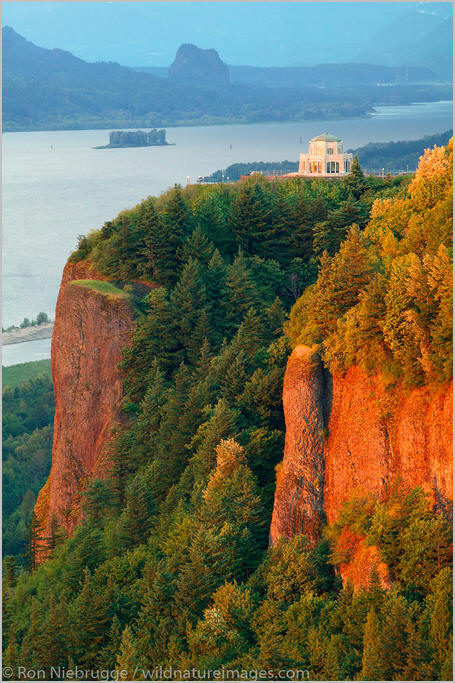 An image from Columbia River Gorge
.
.
Click the link below for images:
.
__________________________________________
January 15, 2022
Mohenjo
Business, Food For Thought, Human Interest, Science, Technical
amazon, business, Business News, current-events, Future, Hotels, human-rights, medicine, mental-health, research, Science, Science News, technology, Technology News, travel, vacation

Click the link below the picture
.
First, it was Facebook, and then it was Twitter. In 2019, Twitter admitted that it allowed marketers to access the phone numbers that users had registered with the site. Many had given their numbers to enable two-factor authentication (2FA)—that process where a website sends you a text message to verify it’s really you who’s logging in. Users didn’t realize they were also allowing marketers to verify who they are in order to build better advertising profiles incorporating Twitter user data. (Twitter says this was an inadvertent mistake and that it has closed the hole.)
That’s especially scary because our phone numbers have become powerful tools to identify and track us, not just for companies but for anyone who wants to look up our personal information stored in a myriad of public records such as court filings, voter registration, real estate transactions, and marriage records.
Twitter’s admission is a nasty case of déjà vu since Facebook admitted to misusing phone numbers for ad targeting about a year before this article was written in 2019. “For a lot of people, [text-message authentication] is a totally reasonable protection that you should feel comfortable using,” says Gennie Gebhart, a researcher on consumer privacy and security at the Electronic Frontier Foundation. “But Facebook was irresponsible, and now we can’t have nice things.”
.
 Photo by Yagi Studio/Getty Images
.
.
Click the link below for the article:
.
__________________________________________
January 15, 2022
Mohenjo
Business, Food For Thought, Human Interest, Science, Technical
amazon, business, Business News, current-events, Future, Hotels, human-rights, medicine, mental-health, research, Science, Science News, technology, Technology News, travel, vacation

Click the link below the picture
.
SOME YEARS AGO, I WENT through a divorce and lived with my sister’s family for a time. They went to bed early, which left me with the run of a big house in Toronto. This meant the run of the Netflix.
I had never used Netflix before. I have always been a late adopter, perhaps the last adopter—less Luddite, say, than laggard. In any case, I didn’t use the platform well. Instead of scrolling through the seemingly endless rows of tiles organized into categories—“Trending Now,” “True Crime,” “Reality TV”—I cued up reruns of the sitcom Community. I even rejected Netflix’s suggestions supposedly customized just for me (“Because you watched Community . . .”). I wanted comfort food, not a buffet addressed to catholic tastes.
The sheer volume of stuff on offer—which only seems to intensify during Hollywood’s awards season—can paralyze your mind. But Netflix charges a flat fee, so you can be cavalier about your choices. The platform abets sampling and second thoughts. You can leave things half-finished on your plate—or you can binge. It’s all you can eat. It’s all good.
But the constant press of incoming material means you can tear through an entire season of something, sincerely enjoy it, and barely recall an episode a week later. Streamed content, as forceful and ephemeral as wind, demands about as much mental space as it does shelf space.
.
 Illustration by Tung Chau
.
.
Click the link below for the article:
.
__________________________________________
January 14, 2022
Mohenjo
Business, Food For Thought, Human Interest, Science, Technical
amazon, business, Business News, current-events, Future, Hotels, human-rights, medicine, mental-health, research, Science, Science News, technology, Technology News, travel, vacation

.
Rulers must be healers, and good rulers will be so; they must study to unite their subjects, and not to widen the differences that are among them. Those only are fit for government that are of a meek, quiet, healing, spirit. They must also heal the wounds that are given to any of the interests of their people, by suitable applications. Matthew Henry Commentary
.
__________________________________________
Older Entries
Newer Entries

