January 28, 2022
Mohenjo
Business, Food For Thought, Human Interest, Science, Technical
amazon, business, Business News, current-events, Future, Hotels, human-rights, medicine, mental-health, research, Science, Science News, technology, Technology News, travel, vacation

Click the link below the picture
.
Very few people can resist smiling at a newborn baby – signaling positive emotions, such as joy and interest. Of course, this is especially true for new parents. One study found that new mothers looked at their 16-hour-old babies 80% of the time and smiled at them 34% of the time.
Sometimes newborn babies even smile back, creating a magical moment for the parents that is often ruined by someone pointing out that the smile can’t be real. Even textbooks tend to regard neonatal smiling as a reflex rather than an actual expression of joy and happiness. But is this really the case?
Up to the second half of the 20th century, the behavior of newborns was considered mostly reflexive. Scientists assumed that newborns had a limited ability to feel and express emotions, and did not have enough social experience to interact with their caregivers.
.
 Kristen Prahl/Shutterstock
.
.
Click the link below for the article:
.
__________________________________________
January 28, 2022
Mohenjo
Business, Food For Thought, Human Interest, Medical, Overlooked Past Article, Science, Technical
amazon, business, Business News, current-events, Future, Hotels, human-rights, medicine, mental-health, research, Science, Science News, technology, Technology News, travel, vacation

Click the link below the picture
.
As marijuana goes mainstream in the U.S., people are asking new questions about weed. What makes some marijuana especially potent, for example, and how can marijuana be regulated to make sure legal weed doesn’t send them on a bad trip?
.

.
.
Click the link below for the article (click – ‘Watch on Utube’ under age restriction to play ‘Reactions’ video in article):
.
__________________________________________
January 27, 2022
Mohenjo
Business, Enthralling, Human Interest, Photographs
amazon, business, Business News, current-events, Future, Hotels, human-rights, medicine, mental-health, research, Science, Science News, technology, Technology News, travel, vacation

Click the link below the picture
.
Bieszczady National Park is the third-largest national park in Poland, located in Subcarpathian Voivodeship in the extreme southeast corner of the country. In 2021, the national park became a UNESCO World Heritage Site (as an extension to the Ancient and Primeval Beech Forests of the Carpathians and Other Regions of Europe).
The park was created in 1973. At the time it covered only 59.55 square kilometers (22.99 sq mi), but over the years it was enlarged four times. The last enlargements took place in 1996 (when the park incorporated the former villages of Bukowiec, Beniowa, and Carynskie) and in 1999 (when the former villages of Dzwiniacz, Tarnawa, and Sokoliki were added).
It occupies 292.02 square kilometers (112.75 sq mi), covering the highest areas of the Polish part of the Bieszczady Mountains. In 1992 the park and its surrounding areas became part of the UNESCO East Carpathian Biosphere Reserve, which has a total area of 2,132.11 square kilometers (823.21 sq mi) and includes parts in Slovakia and (since 1998) Ukraine.
Forests cover about 80% of Bieszczady National Park. The woods are mainly natural; in some cases, it can be said that they have preserved their pristine character. The highest peak in the park, Tarnica, is 1,346 meters (4,416 ft) above sea level.
Animal life is abundant with several species of endangered animals thriving in the area, among them brown bears, grey wolf, European wildcat, wild boar, European beavers, European otter, and European lynx as well as deer (such as moose) and European bison (over 500 live in the area). The park contains interesting bird species, including eagles and owls, and is home to the largest Polish population of Aesculapian snakes.
The park is sparsely populated (less than 1 person per km2), which means that animals can roam freely. The region is very popular among tourists, but there are not many facilities. Around 70% of the park is regarded as strict preserve, which means that the use of trails is restricted. The park’s authorities promote walking trips.
.
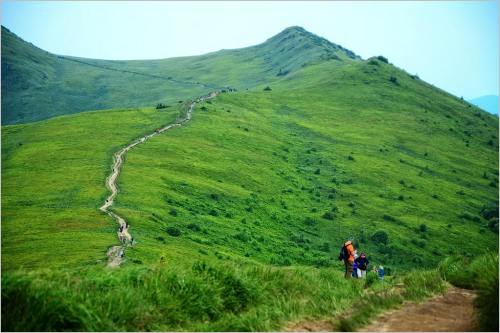 An image from Bieszczady National Park Poland
.
.
Click the link below for images:
.
__________________________________________
January 27, 2022
Mohenjo
Business, Food For Thought, Human Interest, Science, Technical
amazon, business, Business News, current-events, Future, Hotels, human-rights, medicine, mental-health, research, Science, Science News, technology, Technology News, travel, vacation

Click the link below the picture
.
“I had a parent tell me to f*** off last week,” Cori Berg said. She directs the Hope Day School, a church-affiliated early childhood program in Dallas.
The unhappy mother took her two children out of Berg’s center after each of their classrooms were closed for quarantines, saying she’d hire a nanny. Wanting to return, she emailed, called and finally showed up in the middle of the day. Just as Berg had warned her, her spots were taken.
The mother, according to Berg, threw a fit before coming back and apologizing. “She was like a toddler — she was jumping up and down.”
The people who take care of and educate children under 5 years old — both parents and providers — are in a special kind of hell right now. These children are too young to be vaccinated, and it’s difficult for them to wear masks consistently. Many child care directors, like Berg, are still following 10- or 14-day quarantines, closing entire classrooms after a single positive test, which has caused nonstop disruptions given the current record numbers of COVID-19 cases. Recently, Berg’s infant room had “double-decker” quarantines: closed for two weeks, back for one day, then closed for another two weeks.
.
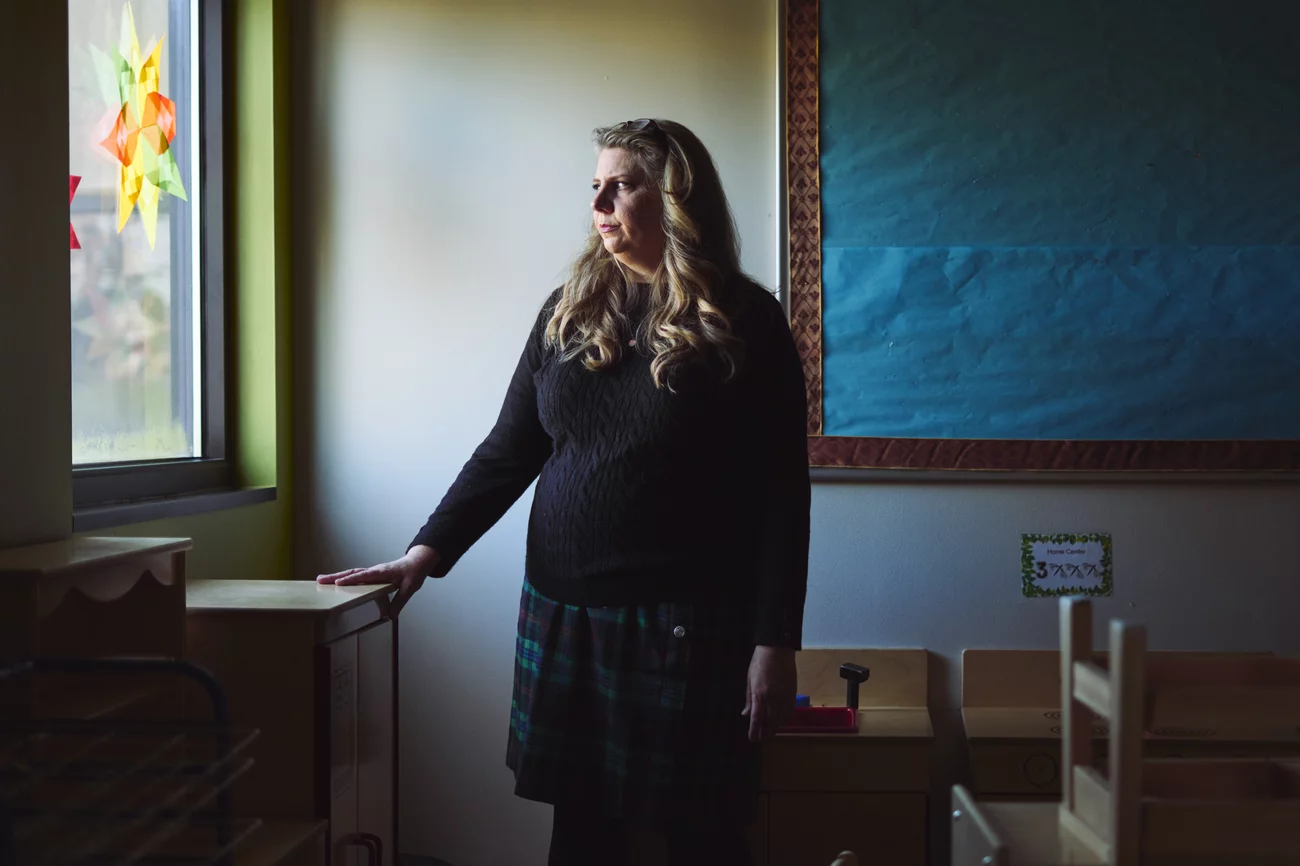
Cori Berg is executive director of the Hope Day School early childhood program in Dallas.Cooper Neill for NPR
.
.
Click the link below for the article:
.
__________________________________________
January 27, 2022
Mohenjo
Business, Food For Thought, Human Interest, Overlooked Past Article, Photographs, Science, Technical
amazon, business, Business News, current-events, Future, Hotels, human-rights, medicine, mental-health, research, Science, Science News, technology, Technology News, travel, vacation
Click the link below the picture
.
Due to its low light pollution, remote and idyllic landscapes, and a whole sub-population of people with a passion for astronomy, Hawaii may have been the Western Hemisphere’s sweetest spot for observing the “blood moon.”
The state, which is home to the famed Mauna Kea observatories on the Big Island of Hawaii and the Institute for Astronomy at the University of Hawaii on Oahu, is affectionately known as “Earth’s connecting point to the rest of the Universe.” Moreover, given Hawaii’s history with expert navigators, “knowledge of the night sky is an integral part of [Hawaii’s] culture and history,” according to the institute’s outreach coordinator and astronomer Dr. Roy Gal.
The time difference helps too. While most stargazers across North and South America had to set their alarms in order to catch the stellar sight, astronomy enthusiasts and several staffers from the institute and the observatories enjoyed the eclipse starting at about 8 p.m. HST on April 14.
“Mauna Kea is one of, if not, the most spiritually connected places I have ever set foot on,” photographer Andrew Richard Hara told HuffPost. “The ability to witness the entirety of the Milky Way with your bare eyes is something not only incredible but also humbling to acknowledge how interconnected we are with the Earth, atmosphere, and the space above.”
.
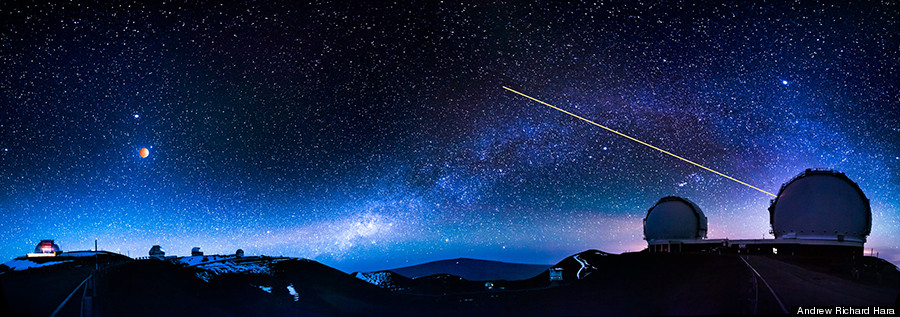 Photographer Andrew Richard Hara‘s composite of the eclipse alongside the W. M. Keck Observatory at the summit of Mauna Kea on the Big Island of Hawaii. At right, Keck’s Laser Guide Star Adaptive Optics system in action.
.
.
Click the link below for the article:
.
__________________________________________
January 26, 2022
Mohenjo
Business, Enthralling, Human Interest, Photographs
amazon, business, Business News, current-events, Future, Hotels, human-rights, medicine, mental-health, research, Science, Science News, technology, Technology News, travel, vacation
Click the link below the picture
.
Cambodia, officially the Kingdom of Cambodia, is a country located in the southern portion of the Indochinese Peninsula in Southeast Asia. It is 181,035 square kilometers (69,898 square miles) in area, bordered by Thailand to the northwest, Laos to the north, Vietnam to the east, the Gulf of Thailand to the southwest, and maritime borders with Thailand, Malaysia, and Indonesia. Phnom Penh is the nation’s capital and largest city.
The sovereign state of Cambodia has a population of over 15 million. Buddhism is enshrined in the constitution as the official state religion and is practiced by more than 97% of the population. Cambodia’s minority groups include Vietnamese, Chinese, Chams, and 30 hill tribes. The capital and largest city is Phnom Penh, the political, economic, and cultural center of Cambodia. The kingdom is an elective constitutional monarchy with a monarch, currently Norodom Sihamoni, chosen by the Royal Council of the Throne as head of state. The head of government is the Prime Minister, currently Hun Sen, the longest-serving non-royal leader in Southeast Asia, who has ruled since 1985.
The region now known as Cambodia has been inhabited since prehistoric times. In 802 AD, Jayavarman II declared himself king, uniting the warring Khmer princes of Chenla under the name “Kambuja”. This marked the beginning of the Khmer Empire, which flourished for over 600 years. The Indianised kingdom facilitated the spread of first Hinduism and then Buddhism to much of Southeast Asia and undertook many religious infrastructural projects throughout the region. Angkor Wat is the most famous of these structures and is designated as a World Heritage Site. In the fifteenth century, Cambodia experienced a decline of power, while its neighbors Vietnam and Thailand grew stronger. In 1863, Cambodia became a protectorate of France and later was incorporated into French Indochina. The country was under Japanese occupation during the Second World War before French control was restored.
Cambodia gained independence from France in 1953 and was led by King-turned politician Norodom Sihanouk. Despite Cambodia’s neutrality in the Vietnam War, the war extended into the country in 1965 with North Vietnam’s expansion of the Ho Chi Minh Trail and the establishment of the Sihanouk Trail. This led to the US bombing of Cambodia from 1969 until 1973. Following the 1970 coup which installed the right-wing pro-US Khmer Republic, the deposed King Sihanouk gave his support to his former enemies, the Khmer Rouge led by Pol Pot. With the support of the monarchy and North Vietnam, the Khmer Rouge emerged as a major power, taking Phnom Penh in 1975. The Khmer Rouge ruled the country and carried out the Cambodian genocide from 1975 until 1979 when they were ousted in the Cambodian–Vietnamese War. The Vietnamese-occupied People’s Republic of Kampuchea became the de facto government, with attempts to rebuild the country after the genocide mired by limited international recognition and ongoing conflict.
Following the 1991 Paris Peace Accords which formally ended the war with Vietnam, Cambodia was governed briefly by a United Nations mission (1992–93). The UN withdrew after holding elections in which around 90 percent of the registered voters cast ballots. The 1997 coup d’état consolidated power under Prime Minister Hun Sen and the Cambodian People’s Party, who remain in power. Wikipedia
.
 An image of a Cambodian Beach Resort
.
.
Click the link below for images:
.
__________________________________________
January 26, 2022
Mohenjo
Business, Food For Thought, Human Interest, Science, Technical
amazon, business, Business News, current-events, Future, Hotels, human-rights, medicine, mental-health, research, Science, Science News, technology, Technology News, travel, vacation

Click the link below the picture
.
Ask people what they think they’ll look like in 25 years, and chances are they’ll mention how their parents looked at that age. And while genetics certainly play a part, research shows there’s more to the story. Only about 30% of what we see as aging is inherited, explains John Rowe, M.D., Julius B. Richmond Professor of Health Policy and Aging at Columbia Mailman School of Public Health.
When you look specifically at things above the neck — like cognitive function, vision, and hearing — that number goes up to about 50%. “People feel there’s some intrinsic clock playing out a program in their body that they don’t have influence over,” says Dr. Rowe. “It’s just not true.”
Yes, good news: We have real control over how our bodies age. Aging is happening on a cellular level at every moment, so for long and healthy life, it’s vital to stay on top of the changes within your body and your mind. For a better understanding of these shifts through every decade, we talked to the experts.
.

.
.
Click the link below for the article:
.
__________________________________________
January 26, 2022
Mohenjo
Business, Food For Thought, Human Interest, Overlooked Past Article, Science, Technical
amazon, business, Business News, current-events, Future, Hotels, human-rights, medicine, mental-health, research, Science, Science News, technology, Technology News, travel, vacation

Click the link below the picture
.
It turns out the hole in the now-famous ozone layer above the South Pole isn’t the only hole in the atmosphere. Researchers recently discovered, to their considerable surprise, that the atmosphere above part of the western tropical Pacific Ocean is nearly devoid of one of the key chemicals that scrubs pollutants from the air.
This newfound hole occurs naturally over thousands of kilometers in one of the most remote places on the planet (which accounts for its having gone unnoticed until now) and one of the main spots where the air is sent up to the stratosphere. The stratosphere is the layer of Earth’s atmosphere above the troposphere, the layer where humans live and in which most weather occurs. Having air shooting up to this layer without first being “washed” of all the junk that humans and nature put into the atmosphere has uncertain implications for the health of the planet’s protective ozone layer and its overall climate.
In tropical thunderstorms over the West Pacific, air masses and the chemical substances they contain are quickly hurled upward to the edge of the stratosphere. On the way, hydroxyl (OH) molecules “scrub” these substances from the air before it reaches the stratosphere, where they would be able to spread around the globe and would last for longer than in the lower reaches of the atmosphere. Except in a region of the tropical Pacific, a hole in this OH “shield” has been discovered.
“I first suspected a series of false measurements and had to convince myself that the measurements were correct,” Rex told Climate Central in an email.
But the probes were right: There was barely any ozone throughout this huge chunk of the atmosphere. Without any ozone, there weren’t any hydroxyl radicals, a molecule made up of an oxygen and hydrogen atom (designated as OH) that is highly reactive in the atmosphere. This reactivity makes it an excellent “detergent” for cleaning from the air many of the thousands of other chemical compounds released by humans, other animals, microbes, and plants. For this reason, the layer of OH that exists elsewhere in the troposphere is known as the “OH shield.”
.
 This post originally appeared on Climate Central
.
.
Click the link below for the article:
.
__________________________________________
January 25, 2022
Mohenjo
Business, Enthralling, Human Interest, Photographs
amazon, business, Business News, current-events, Future, Hotels, human-rights, medicine, mental-health, research, Science, Science News, technology, Technology News, travel, vacation
Click the link below the picture
.
Giovanni Antonio Canal (18 October 1697 – 19 April 1768), commonly known as Canaletto, was an Italian painter from the Republic of Venice, considered an important member of the 18th-century Venetian school.
Painter of city views or vedute, of Venice, Rome, and London, he also painted imaginary views (referred to as capricci), although the demarcation in his works between the real and the imaginary is never quite clearcut. He was further an important printmaker using the etching technique. In the period from 1746 to 1756, he worked in England where he painted many views of London and other sites including Warwick Castle and Alnwick Castle. He was highly successful in England, thanks to the British merchant and connoisseur Joseph “Consul” Smith, whose large collection of Canaletto’s works was sold to King George III in 1762.
He was born in Venice as the son of the painter Bernardo Canal, hence his mononym Canaletto (“little Canal”), and Artemisia Barbieri. Canaletto served an apprenticeship with his father and his brother of a theatrical scene painter. During his time in Rome, he worked with his father producing the scenery for two operas by the composer Alessandro Scarlatti, Tito Sempronio Greco, and Turno Aricino which were performed at the Teatro Catranica during the carnival season of 1720.
Canaletto was inspired by the Roman vedutista Giovanni Paolo Pannini and started painting the daily life of the city and its people.
After returning from Rome in 1719, he began painting in his topographical style. His first known signed and dated work is Architectural Capriccio (1723, Milan, in a private collection). Studying with the older Luca Carlevarijs, a well-regarded painter of urban cityscapes, he rapidly became his master’s equal.
In 1725, the painter Alessandro Marchesini, who was also the buyer for the Lucchese art collector Stefano Conti, had inquired about buying two more ‘views of Venice’, when the agent urged him to consider instead the work of “Antonio Canale… it is like Carlevaris, but you can see the sun shining in it.” Wikipedia
.
 An image of a Canaletto Venice Painting
.
.
Click the link below for images:
.
__________________________________________
January 25, 2022
Mohenjo
Business, Food For Thought, Human Interest, Science, Technical
amazon, business, Business News, current-events, Future, Hotels, human-rights, medicine, mental-health, research, Science, Science News, technology, Technology News, travel, vacation

Click the link below the picture
.
Last May, I compared the COVID-19 pandemic to a grueling marathon. I’ve come to see that was not quite right: when you’re out running, no matter how hard it is, you know you’re done after 26.2 miles. But since the pandemic began two years ago, the finish line keeps moving. Now the ultra-contagious Omicron variant is raging across the country. Hospitals and schools are overwhelmed—and you might be feeling absolutely fried even if you’re not a nurse or a teacher.
For some ideas for how to think about this latest phase of the pandemic, I went to the latest research in psychology, neuroscience, and sociology, as well as traditional teachings and age-old wisdom. This is the thinking behind groundedness, and idea I developed for my book The Practice of Groundedness, an instruction manual for developing the internal strength and fortitude to sustain you through ups and downs. If resilience is about bouncing back, groundedness is about holding your ground, about not getting knocked down during hardships and challenges.
If there ever was a time to prioritize these values, this winter sure seems to be it. The following principles might help serve as a guide for what (knock wood) will hopefully be the last long winter of this pandemic.
.
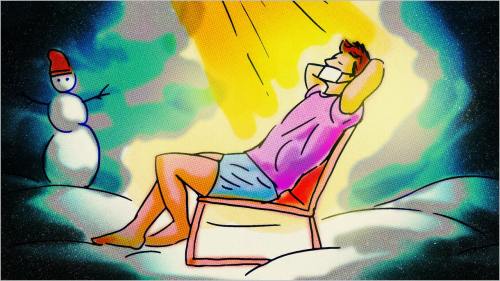 Illustration by Rob Vargas
.
.
Click the link below for the article:
.
__________________________________________
Older Entries
Newer Entries