February 26, 2022
Mohenjo
Business, Food For Thought, Human Interest, Medical, Science, Technical
amazon, business, Business News, current-events, Future, Hotels, human-rights, medicine, mental-health, research, Science, Science News, technology, Technology News, travel, vacation

Click the link below the picture
.
Having sex and getting high are two fun things to do separately — but they’re even more fun to do at the same time. There are real-deal psychological and physiological benefits of a quick toke — or nibble or spray — before climbing into bed.
If you’re in the right headspace for it, sex with a head full of cannabis is great. It’s been shown that cannabis can act as an aphrodisiac, strengthening orgasms in women and boosting libido. “Sometimes when couples smoke marijuana, they take more time to have a fuller sensual experience and slow down, which would allow more time for vasocongestion (blood flow to genitals) and myotonia (muscular tension),” sex therapist Ian Kerner previously told Mic. He said weed can cause couples to feel “relaxed, comfortable and sexy, [which may] lead to a higher quality of orgasm.”
It’s all in your head: When it comes to sex and biology, men tend to obsess over erectile dysfunction. Drugs like Viagra and Cialis can fix the physiological symptoms, but the root problem is often psychological: stress and anxiety. “The mentality for men is that they just need a pill and that will solve all the psychological issues, but that doesn’t work,” Dr. Jordan Tishler, a cannabis therapeutics physician for Inhale MD, told Mic. “Whatever the psychological causes of the dysfunction or inability to make intimate contact, women are more willing to discuss above-the-neck issues than men.”
Cannabis, unless taken in excessive doses, is known to help curb stress and anxiety. Why and how it affects the brain isn’t talked about as much.
Your body actually makes cannabinoids in a part of your brain and nervous system called the endocannabinoid system, which helps regulate our stress and anxiety levels. THC, marijuana’s champion psychoactive ingredient, is chemically similar to a brain chemical called anandamide — better known as our body’s natural marijuana — that makes us less anxious.
.
 Hmmm…
Hmmm…
.
.
Click the link below for the article:
.
__________________________________________
February 25, 2022
Mohenjo
Business, Enthralling, Human Interest, Photographs
amazon, business, Business News, current-events, Future, Hotels, human-rights, medicine, mental-health, research, Science, Science News, technology, Technology News, travel, vacation

Click the link below the picture
.
Greece, officially the Hellenic Republic, is a country located in Southeastern Europe. Its population is approximately 10.7 million as of 2021; Athens is its largest and capital city, followed by Thessaloniki. Situated on the southern tip of the Balkans, Greece is located at the crossroads of Europe, Asia, and Africa. It shares land borders with Albania to the northwest, North Macedonia and Bulgaria to the north, and Turkey to the northeast. The Aegean Sea lies to the east of the mainland, the Ionian Sea to the west, the Cretan Sea, and the Mediterranean Sea to the south. Greece has the longest coastline on the Mediterranean Basin and the 11th longest coastline in the world at 13,676 km (8,498 mi) in length, featuring many islands, of which 227 are inhabited. Eighty percent of Greece is mountainous, with Mount Olympus being the highest peak at 2,918 meters (9,573 ft). The country consists of nine traditional geographic regions: Macedonia, Central Greece, the Peloponnese, Thessaly, Epirus, the Aegean Islands (including the Dodecanese and Cyclades), Thrace, Crete, and the Ionian Islands.
Greece is considered the cradle of Western civilization, being the birthplace of democracy, Western philosophy, Western literature, historiography, political science, major scientific and mathematical principles, theatre, and the Olympic Games. From the eighth century BC, the Greeks were organized into various independent city-states, known as poleis (singular polis), which spanned the Mediterranean and the Black Sea. Philip II of Macedon united most of present-day Greece in the fourth century BC, with his son Alexander the Great rapidly conquering much of the ancient world, from the eastern Mediterranean to India. The subsequent Hellenistic period saw the height of Greek culture and influence in antiquity. Greece was annexed by Rome in the second century BC, becoming an integral part of the Roman Empire and its continuation, the Byzantine Empire, which was culturally and linguistically predominantly Greek. The Greek Orthodox Church, which emerged in the first century AD, helped shape modern Greek identity and transmitted Greek traditions to the wider Orthodox world. After falling under Ottoman rule in the mid-15th century, Greece emerged as a modern nation-state in 1830 following a war of independence. The country’s rich historical legacy is reflected in part by its 18 UNESCO World Heritage Sites.
Greece is a unitary parliamentary republic, and a developed country, with an advanced high-income economy, and a high quality of life, ranking simultaneously very high in the Human Development Index. Its economy is the largest in the Balkans, where it is an important regional investor. A founding member of the United Nations, Greece was the tenth member to join the European Communities (precursor to the European Union) and has been part of the Eurozone since 2001. It is also a member of numerous other international institutions, including the Council of Europe, the North Atlantic Treaty Organization (NATO), the Organisation for Economic Co-operation and Development (OECD), the World Trade Organization (WTO), the Organization for Security and Co-operation in Europe (OSCE), and the Organisation internationale de la Francophonie (OIF). Greece’s unique cultural heritage, large tourism industry, prominent shipping sector and geostrategic importance classify it as a middle power. Wikipedia
.
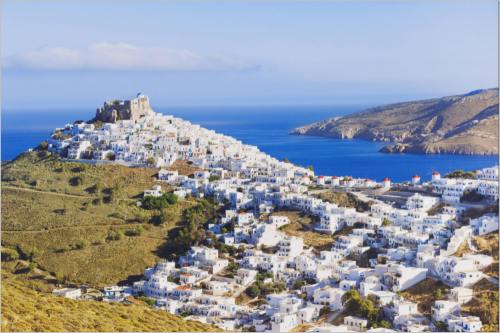 An image from Greece
.
.
Click the link below for images:
.
__________________________________________
February 25, 2022
Mohenjo
Business, Food For Thought, Human Interest, Overlooked Past Article, Science, Technical
amazon, business, Business News, current-events, Future, Hotels, human-rights, medicine, mental-health, research, Science, Science News, technology, Technology News, travel, vacation

Click the link below the picture
.
As racial unrest sweeps across major college campuses, and African-American students demand more equitable treatment, college administrators need look no farther than their own admissions offices to find one root of the problem.
The nation’s flagship public universities — large, taxpayer-funded institutions whose declared mission is to educate residents of their states — enroll far smaller proportions of black students than other colleges, and the number appears to be declining, according to federal records and college enrollment data analyzed by The Hechinger Report and The Huffington Post.
On average, just 5 percent of students at the nation’s flagship public universities are black. As recently as a decade ago, that figure was higher, although changing methods of counting racial categories makes a precise comparison difficult.
Even here at the University of Virginia, which prides itself on the diversity of its campus, just 8 percent of students are black. Just 5 percent are black Virginians, in a state where 22 percent of public high school graduates are African-American. (Low-income students are also underrepresented at top schools).
.
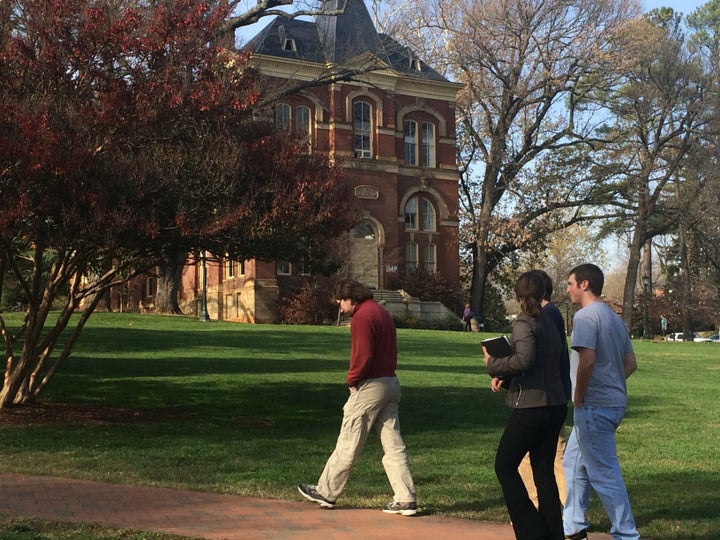 Meredith Kolodner / The Hechinger Report
.
.
Click the link below for the article:
.
__________________________________________
February 25, 2022
Mohenjo
Business, Food For Thought, Human Interest, Overlooked Past Article, Science, Technical
amazon, business, Business News, current-events, Future, Hotels, human-rights, medicine, mental-health, research, Science, Science News, technology, Technology News, travel, vacation
Click the link below the picture
.
Scientists at the University of New South Wales in Australia have made a stellar and rare discovery: The closest habitable planet to Earth is located 14 light-years away, which is eight light-years closer than scientists previously thought. The discovery is the result of a study from UNSW researchers, who found the planet located as part of a cluster of three others, all of which orbit the red dwarf star Wolf 1061. The new world is more than four times the size of Earth; researchers have named it Wolf 1061c.
“It is a particularly exciting find because all three planets are of low enough mass to be potentially rocky and have a solid surface, and the middle planet, Wolf 1061c, sits within the ‘Goldilocks’ zone where it might be possible for liquid water – and maybe even life — to exist,” said the UNSW study’s lead researcher Duncan Wright. “It is fascinating to look out at the vastness of space and think a star so very close to us — a near neighbor — could host a habitable planet.”
Prior to UNSW scientists’ discovery, the closest known habitable planet to Earth was Gliese 667Cc, according to the study, and is a planet four and a half times the size of earth that orbits another red dwarf star located 22 light-years away.
“The close proximity of the planets around Wolf 1061 means there is a good chance these planets may pass across the face of the star,” said Rob Wittenmyer, a member of the study’s research team at UNSW. “If they do, then it may be possible to study the atmospheres of these planets in the future to see whether they would be conducive to life.”
.
 Planet X
.
.
Click the link below for the article:
.
__________________________________________
February 24, 2022
Mohenjo
Business, Enthralling, Human Interest, Photographs
amazon, business, Business News, current-events, Future, Hotels, human-rights, medicine, mental-health, research, Science, Science News, technology, Technology News, travel, vacation
Click the link below the picture
.
Montrouis is a coastal communal section in Haiti, located in the department of Artibonite, south of Saint-Marc. Montrouis is one of the most important beach tourism destinations in Haiti, with several well-renowned hotels and resorts, including the Moulin-sur-Mer. The town is located on the Côtes-des-Arcadins, one of Haiti’s longest stretches of pure white sand beaches. It is also an exceptional place for sailing and fishing. Wikipedia
.
 An image from Montrouis, Haiti
.
.
Click the link below for images:
.
__________________________________________
February 24, 2022
Mohenjo
Arts, Business, Food For Thought, Human Interest, Science, Technical
amazon, business, Business News, current-events, Future, Hotels, human-rights, medicine, mental-health, research, Science, Science News, technology, Technology News, travel, vacation

Click the link below the picture
.
Creating music in 21st-century Hollywood, as a composer for an Emmy-winning cable series put it, “feels like an underground, a real pimp situation.” He talked about long hours, low pay, and working under a martinet “lead composer”—his boss—who delegated the actual work of writing and recording. “One time he had a meltdown because the director was coming to hear what he had come up with and he didn’t have anything to play him,” the composer went on, “because my computer had all the music on it and it was on the fritz!” He laughed—c’est la guerre. But the irritation and dismay were palpable. Another Hollywood composer summed up the widespread feeling among the men and women who do the day-to-day work of bending melody, harmony, and rhythm to match pictures on a movie or television screen: “There’s no contract, there’s no union. You’re completely beholden to working with someone who’s completely unethical or not.”
“The ultimate prerequisite of a composer’s life,” said Henry Mancini, “is being able to make a living doing what you truly love to do: create music.” Mancini, who scored such films as Breakfast at Tiffany’s, The Pink Panther, and Victor/Victoria, winning four Oscars along the way, belongs to an all-time pantheon of film composers that includes Bernard Herrmann, John Williams, and, more recently, Hans Zimmer. We don’t talk about film composers much, but their work is essential to the cinematic experience. Try to imagine Psycho without Herrmann’s stabbing violins or Inception without Zimmer’s gut-rattling BRAAAM. As the director James Cameron once put it, “The score is the heart and soul of a film.”
.
 Illustration by Jorge Arévalo.
.
.
Click the link below for the article:
.
__________________________________________
February 24, 2022
Mohenjo
Business, Food For Thought, Human Interest, Overlooked Past Article, Science, Technical
amazon, business, Business News, current-events, Future, Hotels, human-rights, medicine, mental-health, research, Science, Science News, technology, Technology News, travel, vacation
Click the link below the picture
.
For everyone whoever answered “Astronaut!” to the “What Are You Going to Be When You Grow Up?” question, now is the time to make that dream come true: NASA is “looking for the best candidates to work in the best job on or off the planet,” according to a Dec. 14 job post. Until Feb. 18, 2016, all qualifying U.S. citizens may apply to join the National Aeronautics and Space Administration’s next class of astronauts on a red planet adventure.
“NASA is on an ambitious journey to Mars and we’re looking for talented men and women from diverse backgrounds and every walk of life to help get us there,” said Charles Bolden, NASA Administrator and real, live (former) astronaut, according to the job listing. “Today, we opened the application process for our next class of astronauts, extraordinary Americans who will take the next giant leap in exploration.
“The mission: According to Bolden, “this group will launch to space from U.S. soil on American-made spacecraft and blaze the trail on our journey to the Red Planet,” specifically, onboard Orion and two commercial crew space vehicles.
“NASA astronauts will again launch to the International Space Station from Florida’s Space Coast on American-made commercial spacecraft — Boeing’s CST-100 Starliner and the SpaceX Crew Dragon. These spacecraft will allow NASA to add a seventh crew member to each station mission, effectively doubling the amount of time astronauts will be able to devote to research in space, expanding scientific knowledge and demonstrating new technologies,” Bolden said in the listing.
.
 The Stars
.
.
Click the link below for the article:
.
__________________________________________
February 24, 2022
Mohenjo
Business, Food For Thought, Human Interest, Science, Technical
amazon, business, Business News, current-events, Future, Hotels, human-rights, medicine, mental-health, research, Science, Science News, technology, Technology News, travel, vacation

Isaiah 5:20
New Living Translation
20 What sorrow for those who say
that evil is good and good is evil,
that dark is light and light is dark,
that bitter is sweet and sweet is bitter.
.
__________________________________________
February 23, 2022
Mohenjo
Business, Enthralling, Human Interest, Photographs
amazon, business, Business News, current-events, Future, Hotels, human-rights, medicine, mental-health, research, Science, Science News, technology, Technology News, travel, vacation
Click the link below the picture
.
Phnom Penh is the capital and most populous city of Cambodia. It has been the national capital since the French protectorate of Cambodia and has grown to become the nation’s economic, industrial, and cultural center.
Phnom Penh was founded in 1434 to succeed Angkor Thom as the capital of the Khmer nation but was abandoned several times before being reestablished in 1865 by King Norodom. The city formerly functioned as a processing center, with textiles, pharmaceuticals, machine manufacturing, and rice milling. Its chief assets, however, were cultural. Institutions of higher learning included the Royal University of Phnom Penh (established in 1960 as Royal Khmer University), with schools of engineering, fine arts, technology, and agricultural sciences, the latter at Chamkar Daung, a suburb. Also located in Phnom Penh were the Royal University of Agronomic Sciences and the Agricultural School of Prek Leap.
Once known as the “Pearl of Asia”, it was considered one of the loveliest French-built cities in Indochina in the 1920s. Phnom Penh, along with Siem Reap and Sihanoukville, are significant global and domestic tourist destinations for Cambodia. Founded in 1372, the city is noted for its historical architecture and attractions. It became the national capital in 1434 following the fall of Angkor and remained so until 1497. It regained its capital status during the French colonial era in 1865. There are a number of surviving colonial-era buildings scattered along the grand boulevards.
On the banks of the Tonlé Sap, Mekong, and Bassac Rivers, Phnom Penh is home to more than 2 million people, approximately 14% of the Cambodian population. The Greater Phnom Penh area includes the nearby Ta Khmau city and some districts of Kandal province.
Phnom Penh (lit. ‘Penh’s Hill’) takes its name from the present Wat Phnom (lit. ‘Hill Temple’) or from the former Funan Kingdom, an ancient kingdom that existed from 1st to 6th century AD in Southeast Asia and the forerunner of the current Cambodian monarchy. Legend has it that in 1372, a wealthy widow named Penh found a Koki tree floating down the Tonlé Sap river after a storm. Inside the tree were four bronze Buddha statues and a stone statue of Vishnu. Penh ordered villagers to raise the height of the hill northeast of her house and used the Koki wood to build a temple on the hill to house the four Buddha statues, and a shrine for the Vishnu image slightly lower down. The temple became known as Wat Phnom Daun Penh, which is now known as Wat Phnom, a small hill 27 meters (89 ft) in height.
.
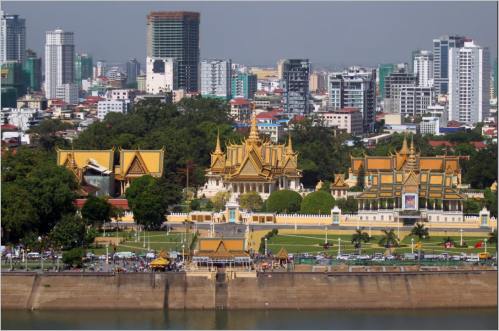 An image from Phnom Penh
.
.
Click the link below for images:
.
__________________________________________
February 23, 2022
Mohenjo
Business, Food For Thought, Human Interest, Overlooked Past Article, Science, Technical
amazon, business, Business News, current-events, Future, Hotels, human-rights, medicine, mental-health, research, Science, Science News, technology, Technology News, travel, vacation
Click the link below the picture
.
An intact 2,300-year-old Etruscan tomb recently discovered in Italy may help shed light on an ancient civilization that flourished centuries before the rise of the Roman Empire.
The tomb, found in a field near Città della Pieve, about 30 miles southwest of Perugia, had been partially buried in a landslide, according to local news outlet Perugia Today.
Inside, archaeologists have found a number of artifacts including urns and a marble head, as well as two sarcophagi:
A worker had been plowing the field above the tomb in October when the machine jammed, leading to the spectacular find, according to Italian news outlet Umbria24, which says the tomb is at the end of a corridor 40 feet deep.
“It was a totally unexpected discovery,” Clarita Natalini of the archaeological superintendency of Umbria told Discovery News. “The area is away from the sites visited by tomb robbers and indeed the burial is undisturbed.”
.
 2,300-year-old Etruscan tomb
.
.
Click the link below for the article:
.
__________________________________________
Older Entries
Newer Entries

