March 21, 2022
Mohenjo
Business, Food For Thought, Human Interest, Science, sports, Technical
amazon, business, Business News, current-events, Future, Hotels, human-rights, medicine, mental-health, research, Science, Science News, technology, Technology News, travel, vacation

Click the link below the picture
.
Tiger Woods’ children, Sam and Charlie, looked grown-up but still adorable as they supported their dad as he was given a major honor.
Tiger Woods, 46, celebrated with his entire family on Wednesday, March 9 as he was inducted into the World Golf Hall of Fame ahead of the Players Championship. Joining his for his honorary moment was his mom, Kultida Woods, 78, his longtime girlfriend, Erica Herman, 37, plus his two children, daughter Sam,14, and son Charlie,13.
.
 Gerald Herbert/AP/Shutterstock
.
.
Click the link below for the article:
.
__________________________________________
March 20, 2022
Mohenjo
Arts, Business, Food For Thought, Human Interest, Science, Technical
amazon, business, Business News, current-events, Future, Hotels, human-rights, medicine, mental-health, research, Science, Science News, technology, Technology News, travel, vacation
Click the link below the picture
.
THE 94TH ANNUAL OSCAR NODS ARE IN FOR 2022
.
 .
.
.
Click the link below for the article:
.
__________________________________________
March 20, 2022
Mohenjo
Business, Food For Thought, Human Interest, Medical, Political, Science, Technical
amazon, business, Business News, current-events, Future, Hotels, human-rights, medicine, mental-health, research, Science, Science News, technology, Technology News, travel, vacation

Click the link below the picture
.
The mood is squarely risk-off, with stocks down and crude and other commodities higher — but off much stronger levels from earlier — after U.S. officials raised the possibility of Russian oil sanctions. That’s as the world faces an ever-worsening humanitarian crisis in Ukraine, where the Russian invasion has reached day 12 and more than a million people have fled the fighting.
Against the backdrop of unpredictable and dangerous geopolitical upheaval, here is some wartime investing advice from Berkshire Hathaway’s BRK.A, -1.05% Warren Buffett, from an interview in 2014, the last time Russia invaded Ukraine.
“The one thing you can be quite sure of is if we went into some very major war, the value of money would go down — that’s happened in virtually every war that I’m aware of. The last thing you’d want to do is hold money during a war,” he said.
Buffett bought his first stock in 1942, when “macro factors were not looking good,” but insisted investors would frankly “be a lot better owning productive assets over the next 50 years” than pieces of paper.
.
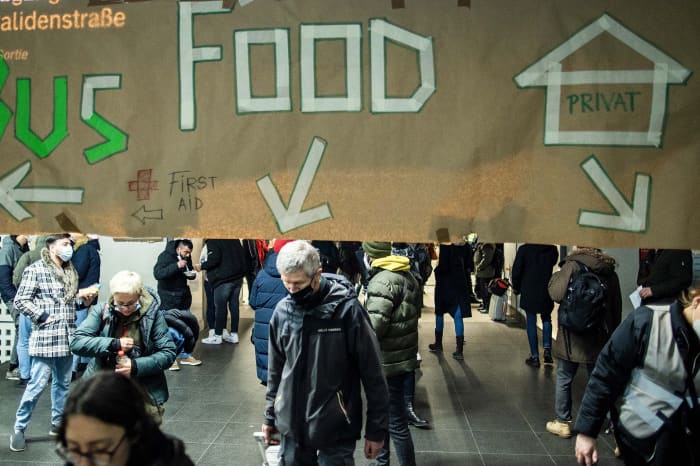 A sign gives directions for people fleeing war-torn Ukraine, after they arrived on a train from Poland at the Hauptbahnhof main railway station on March 6, 2022, in Berlin, Germany. Carsten Koall/Getty Images
.
.
Click the link below for the article:
.
__________________________________________
March 20, 2022
Mohenjo
Business, Crime, Food For Thought, Human Interest, Political, Science, Technical
amazon, business, Business News, current-events, Future, Hotels, human-rights, medicine, mental-health, research, Science, Science News, technology, Technology News, travel, vacation

Click the link below the picture
.
Come November, 81-year-old Paul Gatling will get to do something that many Americans take for granted —he’ll get to vote for a presidential candidate.
Brooklyn District Attorney Ken Thompson vacated Gatling’s 1964 murder conviction on Monday and restored his rights, including his right to vote.
“I want my name cleared,” Gatling told NBC News before Thompson made it official. “Most of all, I just want to vote before I die.”
The delighted Gatling said his only regret is that President Obama won’t be on the ballot.
“That’s a big deal for me,” Gatling said. “I couldn’t vote for the first black president.”
But Gatling declined to say who he would vote for in November.
Thompson said full justice for Gatling was a long time coming.
.
 Paul Gatling, who spent nine years in prison for a 1963 murder in which he was wrongly convicted, at his home in Hampton, Va., April 30, 2016.COURTNEY MANION / The New York Times via Redux
.
.
Click the link below for the article:
.
__________________________________________
March 19, 2022
Mohenjo
Business, Enthralling, Human Interest, Photographs
amazon, business, Business News, current-events, Future, Hotels, human-rights, medicine, mental-health, research, Science, Science News, technology, Technology News, travel, vacation

Click the link below the picture
.
Wulingyuan is a scenic and historical site in the Wulingyuan District of South Central China’s Hunan Province. It was inscribed as a UNESCO World Heritage Site in 1992. It is noted for more than 3,000 quartzite sandstone pillars and peaks across most of the site, many over 200 meters (660 ft) in height, along with many ravines and gorges with picturesque streams, pools, lakes, rivers, and waterfalls. It features 40 caves, many with large calcite deposits, and a natural bridge named Tianqiashengkong (meaning ‘bridge across the sky’), which is one of the highest natural bridges in the world. The site also provides habitat for many vulnerable species, including the dhole, Asiatic black bear, and Chinese water deer.
The site is situated in Zhangjiajie City and lies about 270 kilometers (170 mi) to the northwest of Changsha, the capital of Hunan Province. The park covers an area of 690 square kilometers (266 square miles). Wulingyuan forms part of the Wuling Mountain Range. The scenic area consists of four national parks, which are the Zhangjiajie National Forest Park, Suoxi Valley Nature Reserve, Tianzi Mountain Nature Reserve, and the recently added Yangjiajie Scenic Area. Overall there are over 560 attraction sights to view.
The quartzite sandstone pillars and the surrounding regions were formed during the Devonian period (400 to 350 million years ago) from a combination of tectonic uplift and water erosion. The highest area in the park is Huang Shi Zhai (黃石寨). It reaches a height of 3,450 feet (1,050 m) and is accessible via cable car or a set of stairs. Wikipedia
.
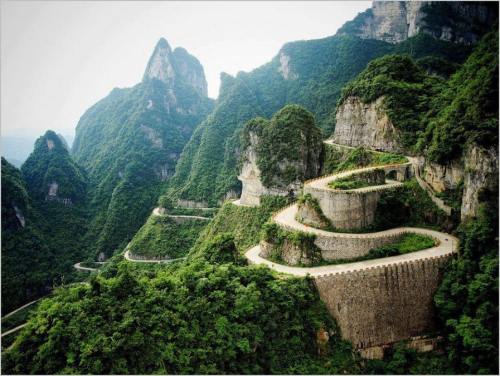 An image from Wulingyuan
.
.
Click the link below for images:
.
__________________________________________
March 19, 2022
Mohenjo
Business, Food For Thought, Human Interest, Political, Science, Technical
amazon, business, Business News, current-events, Future, Hotels, human-rights, medicine, mental-health, research, Science, Science News, technology, Technology News, travel, vacation

Click the link below the picture
.
Banks are in the business of making money, and a lot of it — even if that means charging you to deal with money that’s yours.
From ATM fees to overdraft fees to maintenance fees, banks have all sorts of ways of extracting funds out of consumers. You go to an out-of-network ATM for cash and wind up paying a few extra dollars. You don’t have a ton of money in your checking account and notice your bank is charging you each month just to hold onto your (dwindling) funds. Maybe you screw up, accidentally try to spend money that isn’t in your account, and you get slapped with a $35 overdraft fee. Or you don’t have a bank account, need to cash a check, and the place where you do it winds up keeping a cut.
The whole thing can feel a little gross. Sure, banks are private businesses beholden to shareholders. At the same time, it’s hard not to look at the ways big and small they’re scooping up extra cash and think wait, what? Banks made $279.1 billion in 2021, up $132 billion from the year before.
“One might want to question whether the amount of fees that are being charged are necessary to cover the costs, given those levels of profit margins,” said Brian Shearer, senior adviser to the director at the Consumer Financial Protection Bureau (CFPB), which recently launched an initiative to look into what it describes as “junk fees” from banks and financial institutions. “One, they add up and they really can have a substantial impact on consumers’ pocketbooks, and, two, we’re concerned that they distort the competitive process and have hindered overall competitive forces in banking.” The concern is that consumers aren’t able to effectively comparison shop because of practices such as drip pricing or hidden pricing that hide actual costs. Basically, if you’re looking for a new bank and on the back end there are all sorts of fees you don’t notice, you might not make the best choice for yourself — and banks won’t have to compete as hard for your business.
.
/cdn.vox-cdn.com/uploads/chorus_image/image/70603156/480659782.0.jpg) Out-of-network ATM charges can make it pricey to withdraw your own money.Patrick T. Fallon/Bloomberg via Getty Images
Out-of-network ATM charges can make it pricey to withdraw your own money.Patrick T. Fallon/Bloomberg via Getty Images
.
.
Click the link below for the article:
.
__________________________________________
March 19, 2022
Mohenjo
Business, Food For Thought, Human Interest, Science, Technical
amazon, business, Business News, current-events, Future, Hotels, human-rights, medicine, mental-health, research, Science, Science News, technology, Technology News, travel, vacation

Click the link below the picture
.
When something feels off, but isn’t exactly life-threatening and not entirely weird, what is it? Creepy. Researchers at Knox College — in the first empirical study of creepiness — have now discovered the parameters for what makes someone likely to be perceived as creepy. The study surveyed 1,341 people, who were an average age of 29, Slate reported. The survey had participants rate how creepy 44 different behaviors and habits were.
As it turns out — and as everyone has probably encountered at some point in time — creepiness is felt when someone interacts with something that’s “outside the norm, like a person with idiosyncratic behavioral patterns, unusual physical characteristics, or a tendency to over-or underemote,” according to Slate. The person doesn’t know if they should interpret the interaction as a threat, and thus is creeped out. “Atypical expressions” could be one reason, according to a neurologist who wrote a column for Psychology Today, why many people describe Republican presidential candidate Texas Sen. Ted Cruz as creepy.
Behaviors considered creepy according to the survey were akin to the creepy uncle trope, like constantly licking their lips or bringing up the same topic (usually sex) over and over in conversation.
The creepiest features were having greasy hair, unclean clothes, and a “peculiar smile,” according to Slate.
.

.
.
Click the link below for the article:
.
__________________________________________
March 18, 2022
Mohenjo
Business, Enthralling, Human Interest, Photographs
amazon, business, Business News, current-events, Future, Hotels, human-rights, medicine, mental-health, research, Science, Science News, technology, Technology News, travel, vacation
Click the link below the picture
.
Croatia, officially the Republic of Croatia is a country at the crossroads of Central and Southeast Europe. It shares a coastline along the Adriatic Sea and borders Slovenia to the northwest, Hungary to the northeast, Serbia to the east, Bosnia and Herzegovina and Montenegro to the southeast, and shares a maritime border with Italy to the west and southwest. Croatia’s capital and largest city, Zagreb, forms one of the country’s primary subdivisions, with twenty counties. The country spans an area of 56,594 square kilometers (21,851 square miles), with a population of nearly 3.9 million.
The Croats arrived in the 6th century and organized the territory into two duchies by the 9th century. Croatia was first internationally recognized as independent on 7 June 879 during the reign of Duke Branimir. Tomislav became the first king by 925, elevating Croatia to the status of a kingdom. During the succession crisis after the Trpimirović dynasty ended, Croatia entered a personal union with Hungary in 1102. In 1527, faced with Ottoman conquest, the Croatian Parliament elected Ferdinand I of Austria to the Croatian throne. In October 1918, the State of Slovenes, Croats, and Serbs, independent from Austria-Hungary, was proclaimed in Zagreb, and in December 1918, merged into the Kingdom of Yugoslavia. Following the Axis invasion of Yugoslavia in April 1941, most of Croatia was incorporated into a Nazi-installed puppet state, the Independent State of Croatia, which committed genocide against Serbs, Jews, and Roma. A resistance movement led to the creation of the Socialist Republic of Croatia, which after the war became a founding member and constituent of the Socialist Federal Republic of Yugoslavia. On 25 June 1991, Croatia declared independence, and the War of Independence was fought for four years following the declaration.
A sovereign state, Croatia is a republic governed under a parliamentary system. It is a member of the European Union, the United Nations, the Council of Europe, NATO, the World Trade Organization, and a founding member of the Union for the Mediterranean. An active participant in United Nations peacekeeping, Croatia has contributed troops to the International Security Assistance Force and took a nonpermanent seat on the United Nations Security Council for the 2008–2009 term. Since 2000, the Croatian government has invested in infrastructure, especially transport routes and facilities along the Pan-European corridors.
Croatia is classified by the World Bank as a high-income economy and ranks very high on the Human Development Index. Service, industrial sectors, and agriculture dominate the economy, respectively. Tourism is a significant source of revenue, with Croatia ranked among the 20 most popular tourist destinations. The state controls a part of the economy, with substantial government expenditure. The European Union is Croatia’s most important trading partner. Croatia provides social security, universal health care, and tuition-free primary and secondary education while supporting culture through public institutions and corporate investments in media and publishing. Wikipedia
.
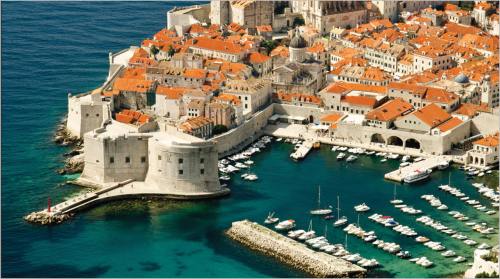 An image from Croatia
.
.
Click the link below for images:
.
__________________________________________
March 18, 2022
Mohenjo
Business, Food For Thought, Human Interest, Science, Technical
amazon, business, Business News, current-events, Future, Hotels, human-rights, medicine, mental-health, research, Science, Science News, technology, Technology News, travel, vacation

Click the link below the picture
.
Russia’s aggression against Ukraine has rocked the petroleum market, and Americans already see this reflected in rising gas prices at the pump. AAA reports that the national gas price average of $4.27 a gallon for regular fuel is 75 cents higher than a month ago and $1.39 higher than a year ago; it’s also only 6 cents lower the highest price in American history.
Motorists will need to be mindful that commuting and road trips will cost more in the foreseeable future. Car shoppers should keep this in mind, prioritizing fuel economy in making their choice.
Now is as good a time as ever to fine-tune your driving strategies and techniques to maximize your fuel economy and ease the squeeze on your wallet.
Consumer Reports experts pulled together this series of test-proven tips to help drivers save money.
.
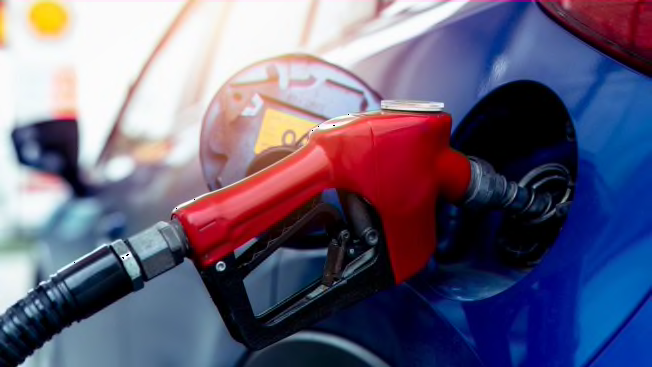 Photo: iStock
.
.
Click the link below for the article:
.
__________________________________________
March 18, 2022
Mohenjo
Business, Food For Thought, Human Interest, Overlooked Past Article, Science, Technical
amazon, business, Business News, current-events, Future, Hotels, human-rights, medicine, mental-health, research, Science, Science News, technology, Technology News, travel, vacation
Click the link below the picture
.
Millennials love ordering food — at least according to this 2014 study. In the study, which stacked results from millennials alongside their baby boomer predecessors, millennials ranked “ease” and “convenience” as the main reasons behind their incessant Seamless orders.
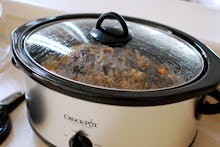
However, if you’re looking for ease and convenience, you really can’t go wrong with a crockpot slow cooker. Prep all your ingredients, dump them into your crockpot, set the timer, and return a few hours later to a dinner ready for consumption. Here are five effortless recipes you can make in your crockpot. (Pro-tip: You can even eat right out of if you’re feeling particularly lazy about dishes – no judgment.)
.
 Effortless
.
.
Click the link below for the article:
.
__________________________________________
Older Entries
Newer Entries

