March 17, 2022
Mohenjo
Business, Enthralling, Human Interest, Photographs
amazon, business, Business News, current-events, Future, Hotels, human-rights, medicine, mental-health, research, Science, Science News, technology, Technology News, travel, vacation

Click the link below the picture
.
Grand Teton National Park is an American national park in northwestern Wyoming. At approximately 310,000 acres (1,300 km2), the park includes the major peaks of the 40-mile-long (64 km) Teton Range as well as most of the northern sections of the valley known as Jackson Hole. Grand Teton National Park is only 10 miles (16 km) south of Yellowstone National Park, to which it is connected by the National Park Service–managed John D. Rockefeller Jr. Memorial Parkway. Along with surrounding national forests, these three protected areas constitute the almost 18-million-acre (73,000-square-kilometer) Greater Yellowstone Ecosystem, one of the world’s largest intact mid-latitude temperate ecosystems.
The human history of the Grand Teton region dates back at least 11,000 years when the first nomadic hunter-gatherer Paleo-Indians began migrating into the region during warmer months pursuing food and supplies. In the early 19th century, the first white explorers encountered the eastern Shoshone natives. Between 1810 and 1840, the region attracted fur trading companies that vied for control of the lucrative beaver pelt trade. U.S. Government expeditions to the region commenced in the mid-19th century as an offshoot of exploration in Yellowstone, with the first permanent white settlers in Jackson Hole arriving in the 1880s.
Efforts to preserve the region as a national park began in the late 19th century, and in 1929 Grand Teton National Park was established, protecting the Teton Range’s major peaks. The valley of Jackson Hole remained in private ownership until the 1930s when conservationists led by John D. Rockefeller Jr. began purchasing land in Jackson Hole to be added to the existing national park. Against public opinion and with repeated Congressional efforts to repeal the measures, much of Jackson Hole was set aside for protection as Jackson Hole National Monument in 1943. The monument was abolished in 1950 and most of the monument land was added to Grand Teton National Park.
Grand Teton National Park is named for Grand Teton, the tallest mountain in the Teton Range. The naming of the mountains is attributed to early 19th-century French-speaking trappers—les trois tétons (the three teats) was later anglicized and shortened to Tetons. At 13,775 feet (4,199 m), Grand Teton abruptly rises more than 7,000 feet (2,100 m) above Jackson Hole, almost 850 feet (260 m) higher than Mount Owen, the second-highest summit in the range. The park has numerous lakes, including 15-mile-long (24 km) Jackson Lake as well as streams of varying length and the upper main stem of the Snake River. Though in a state of recession, a dozen small glaciers persist at the higher elevations near the highest peaks in the range. Some of the rocks in the park are the oldest found in any American national park and have been dated at nearly 2.7 billion years.
Grand Teton National Park is an almost pristine ecosystem and the same species of flora and fauna that have existed since prehistoric times can still be found there. More than 1,000 species of vascular plants, dozens of species of mammals, 300 species of birds, more than a dozen fish species, and a few species of reptiles and amphibians inhabit the park. Due to various changes in the ecosystem, some of them human-induced, efforts have been made to provide enhanced protection to some species of native fish and the increasingly threatened whitebark pine.
Grand Teton National Park is a popular destination for mountaineering, hiking, fishing, and other forms of recreation. There are more than 1,000 drive-in campsites and over 200 miles (320 km) of hiking trails that provide access to backcountry camping areas. Noted for world-renowned trout fishing, the park is one of the few places to catch Snake River fine-spotted cutthroat trout. Grand Teton has several National Park Service–run visitor centers, and privately operated concessions for motels, lodges, gas stations, and marinas. Wikipedia
.
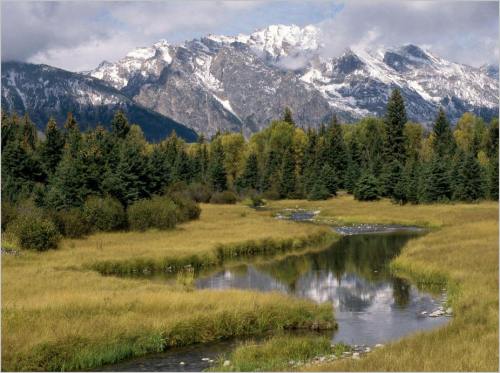 An image from Grand Teton National Park, Wyoming
.
.
Click the link below for images:
.
__________________________________________
March 17, 2022
Mohenjo
Business, Food For Thought, Human Interest, Science, Technical
amazon, business, Business News, current-events, Future, Hotels, human-rights, medicine, mental-health, research, Science, Science News, technology, Technology News, travel, vacation

Click the link below the picture
.
For homeowners and renters lucky enough to have backyards, these outdoor spaces have become more important than ever in recent months. So it should come as no surprise that many residents are sprucing up their patios, decks, and backyards to make them comfortable oases for relaxing and spending quality time with loved ones.
But with so many choices in terms of furniture, accessories, and other outdoor elements, it can be overwhelming to decide what exactly to splurge on—especially if you’re working with a blank slate or a tight budget.
We turned to three home experts for their advice on what purchases are always worth the extra money for making your backyard the best it can be.
.
 Credit: View Stock / Getty Images.
.
.
Click the link below for the article:
.
__________________________________________
March 17, 2022
Mohenjo
Business, Food For Thought, Human Interest, Medical, Science, Technical
amazon, business, Business News, current-events, Future, Hotels, human-rights, medicine, mental-health, research, Science, Science News, technology, Technology News, travel, vacation

Click the link below the picture
.
Drink more water” seems to be the all-encompassing solution to life. People swear it can ease sickness, eradicates exhaustion, clears pimples, helps you lose weight, etc. Hydration sustains life — scientists search far and wide for planets that have H2O. But there is such a thing as drinking too much water, and it can kill you.
First, it’s important to know that every substance has a lethal limit. Water’s lethal limit is way higher than, say, alcohol or hard drugs — but it does exist. It’s 90 milliliters per kilogram, according to a study on rats, Gizmodo reported. In other words, assuming the same effect on humans, it’s highly inadvisable for a 150-pound person to drink six liters (approximately 1.6 gallons) of water at once. In fact, based on the study, if 100 people did that, 50 of them would die.
The condition is called hyponatremia — it means water intoxication. Under normal circumstances, if you drink more than enough water to hydrate your body, you’ll just pee the rest out. But if you drink a lethal amount of water, osmosis will transfer the extra H2O to your cells, causing them to swell — and if the water reaches your brain cells, your brain drowns.
“You should drink only when you need to, when you are actually thirsty,” said Dr. James Winger, a family medicine professor at Loyola University Medical Center, according to the New York Times. “Thirst is a very reliable indicator,” he added.
So who’s died from hyponatremia? Mostly athletes and people on drugs. The condition became more relevant when marathon runners started dying from it a couple decades ago, according to the Times. They were mostly slower runners who didn’t sweat much and therefore overcompensated by drinking too much water in their attempts to stay well hydrated.
.
 Drown Your Brain
.
.
Click the link below for the article:
.
__________________________________________
March 16, 2022
Mohenjo
Business, Enthralling, Human Interest, Photographs
amazon, business, Business News, current-events, Future, Hotels, human-rights, medicine, mental-health, research, Science, Science News, technology, Technology News, travel, vacation
Click the link below the picture
.
Malaysia is a country in Southeast Asia. The federal constitutional monarchy consists of thirteen states and three federal territories, separated by the South China Sea into two regions, Peninsular Malaysia and Borneo’s East Malaysia. Peninsular Malaysia shares a land and maritime border with Thailand and maritime borders with Singapore, Vietnam, and Indonesia. East Malaysia shares land and maritime borders with Brunei and Indonesia and a maritime border with the Philippines and Vietnam. Kuala Lumpur is the national capital, largest city, and the seat of the legislative branch of the federal government. The nearby planned capital of Putrajaya is the administrative capital; which represents the seat of both the executive branch (Cabinet, federal ministries, and agencies) and the judicial branch of the federal government. With a population of over 32 million, Malaysia is the world’s 44th-most populous country. The southernmost point of continental Eurasia is in Tanjung Piai. In the tropics, Malaysia is one of 17 megadiverse countries, home to a number of endemic species.
Malaysia has its origins in the Malay kingdoms which, from the 18th century, became subject to the British Empire, along with the British Straits Settlements protectorate. Peninsular Malaysia was unified as the Malayan Union in 1946. Malaya was restructured as the Federation of Malaya in 1948 and achieved independence on 31 August 1957. The independent Malaya united with the then British crown colonies of North Borneo, Sarawak, and Singapore on 16 September 1963 to become Malaysia. In August 1965, Singapore was expelled from the federation and became a separate independent country.
The country is multi-ethnic and multi-cultural, which has a significant effect on its politics. About half the population is ethnically Malay, with minorities of Chinese, Indians, and indigenous peoples. The country’s official language is Malaysian, a standard form of the Malay language. English remains an active second language. While recognizing Islam as the country’s established religion, the constitution grants freedom of religion to non-Muslims. The government is modeled on the Westminster parliamentary system and the legal system is based on common law. The head of state is an elected monarch, chosen from among the nine state sultans every five years. The head of government is the Prime Minister.
After independence, the Malaysian GDP grew at an average of 6.5% per annum for almost 50 years. The economy has traditionally been fuelled by its natural resources but is expanding in the sectors of science, tourism, commerce, and medical tourism. Malaysia has a newly industrialized market economy, ranked third largest in Southeast Asia and 33rd-largest in the world. It is a founding member of ASEAN, EAS, OIC, and a member of APEC, the Commonwealth, and the Non-Aligned Movement. Wikipedia
.
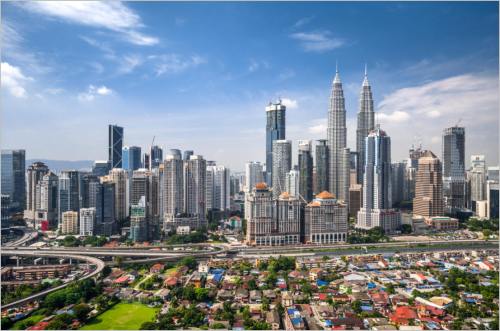 An image from Malaysia
.
.
Click the link below for images:
.
__________________________________________
March 16, 2022
Mohenjo
Business, Food For Thought, Human Interest, Medical, Overlooked Past Article, Science, Technical
amazon, business, Business News, current-events, Future, Hotels, human-rights, medicine, mental-health, research, Science, Science News, technology, Technology News, travel, vacation
Click the link below the picture
.
A pig heart has been beating away in the body of a confused baboon for 945 days — and it could be the key to saving human lives with animal parts.
Xenotransplantation, the process of transferring an organ from one species to another, is nothing new. But a study published Tuesday in Nature Communications showed that thanks to a regime of immunosuppressive therapy drugs, five genetically modified pig hearts put into different baboons stayed alive — beating and growing, but not replacing the functioning baboon’s heart.
One of them lasted 945 days — almost twice as long as the previous record. Before this report, the longest a heart survived was just 500 days.
“This has the potential to really move the field forward,” Dr. Richard Pierson, a professor of surgery at the University of Maryland School of Medicine and one of the study’s co-authors, said in a statement. “This new approach clearly made a difference. We obviously have a lot more work to do, but I’m confident that eventually, this will be useful to human patients.”
It’s exciting but potentially dangerous: Experts say xenotransplantation could be used to support human life. In current experiments, a pig heart just hangs out in a baboon’s belly. But making that pig heart shoulder all the baboon’s cardiovascular functioning is a hell of a lot more demanding. Plus, the baboons are on drugs that make them horrible at fighting disease. So while their immune systems don’t fight the invading organ, they also stink at fighting sickness, meaning the baboons could be at risk of illness.
.
 Pig Heart
.
.
Click the link below for the article:
.
__________________________________________
March 16, 2022
Mohenjo
Business, Food For Thought, Human Interest, Science, Technical
amazon, business, Business News, current-events, Future, Hotels, human-rights, medicine, mental-health, research, Science, Science News, technology, Technology News, travel, vacation

Click the link below the picture
.
It was a life of difficulty. Born into slavery, at one point his master broke his leg, leaving him disabled. Eventually freed, he spent the next 25 years pursuing his calling – only for his career to be outlawed by the dictator in charge. He fled abroad, an exile and in poverty.
These sketchy biographical details are almost all that we know of the life of the philosopher Epictetus, born around AD55. While some of them are contested – we can’t be sure if he was born a slave, or simply became a slave young – it’s clear that he didn’t have it easy. Nor was his world one that was placid and predictable, either: if he came to Rome from his birthplace in modern-day Turkey sometime around AD65, as some believe, then he would have had a turbulent childhood. He may have witnessed both the fire that torched two-thirds of the city and lived through a single year so politically turbulent it saw four different emperors, two murdered and one who killed himself.
And yet Epictetus had everything he needed. After all, he said – according, at least, to a student who painstakingly wrote down his teachings – that “it is not events that disturb people, it is their judgments concerning them”.
.
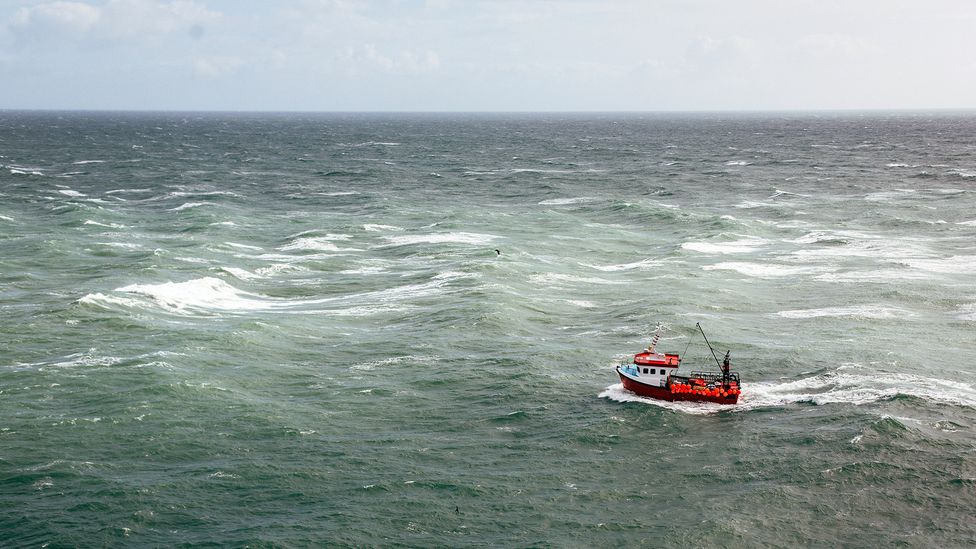 For many people, the world is in a state of upheaval that can feel difficult to cope with, but can the teachings of the Stoics help in these troubling times?
.
.
Click the link below for the article:
.
__________________________________________
March 15, 2022
Mohenjo
Business, Food For Thought, Human Interest, Medical, Political, Science, Technical
amazon, business, Business News, current-events, Future, Hotels, human-rights, medicine, mental-health, research, Science, Science News, technology, Technology News, travel, vacation

Click the link below the picture
.
We are surrounded by toxic chemicals every day – around 80,000 worth, according to the Environmental Protection Agency (EPA). From the pesticides on the foods we eat to the latest tech gadgets and hottest new beauty products, chemicals are everywhere.
Unfortunately, these chemicals, such as bisphenol A (BPA), formaldehyde, phthalates, and toxic flame retardants, are easily absorbed into our bodies and have been linked to obesity, infertility, asthma, heart disease, and even cancer. Toxic chemicals are especially troubling for kids, as their bodies are much smaller and are still developing.
In fact, a recent study in the journal Environmental Health Perspectives found that exposure to chemicals like flame retardants found in furniture and stain-resistant items may cause breast cancer. What’s more, many of these chemicals have never been tested for their safety in humans, and experts agree strong legislation is needed.
.
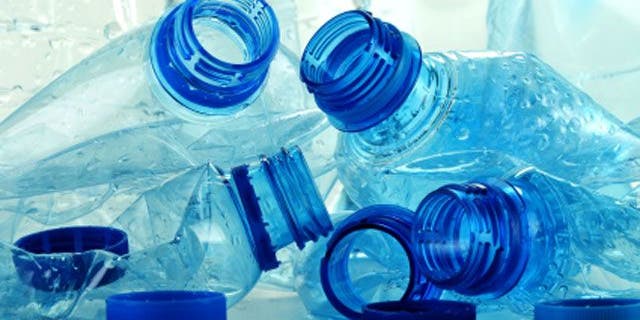
.
.
Click the link below for the article:
.
__________________________________________
March 15, 2022
Mohenjo
Business, Enthralling, Human Interest, Photographs
amazon, business, Business News, current-events, Future, Hotels, human-rights, medicine, mental-health, research, Science, Science News, technology, Technology News, travel, vacation
Click the link below the picture
.
Perućica is one of the last remaining primeval forests in Europe. It is located in Republika Srpska, Bosnia, and Herzegovina, near the border with Montenegro. It is part of the Sutjeska National Park.
Perućica Forest Reserve is 6 kilometers (3.7 mi) long, 1–3 kilometers (0.62–1.86 mi) wide, and has an area of 1,400 hectares (3,500 acres). It is a UNESCO-recognized site. The forest has many trees that are 300 years old, and the primeval forest’s vintage is stated to be 20,000 years. In some stretches, the forest growth is almost impenetrable, and the forest can only be explored in the company of rangers.
.
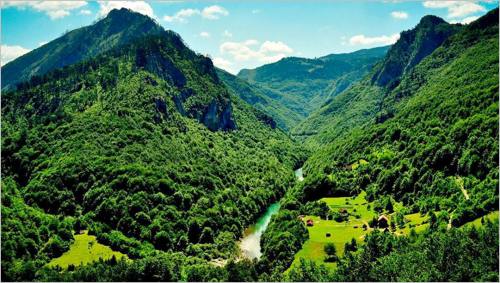 An image from Perucica Forest Bosnia And Herzegovina
.
.
Click the link below for images:
.
__________________________________________
March 15, 2022
Mohenjo
Business, Food For Thought, Human Interest, Medical, Political, Science, Technical
amazon, business, Business News, current-events, Future, Hotels, human-rights, medicine, mental-health, research, Science, Science News, technology, Technology News, travel, vacation

Click the link below the picture
.
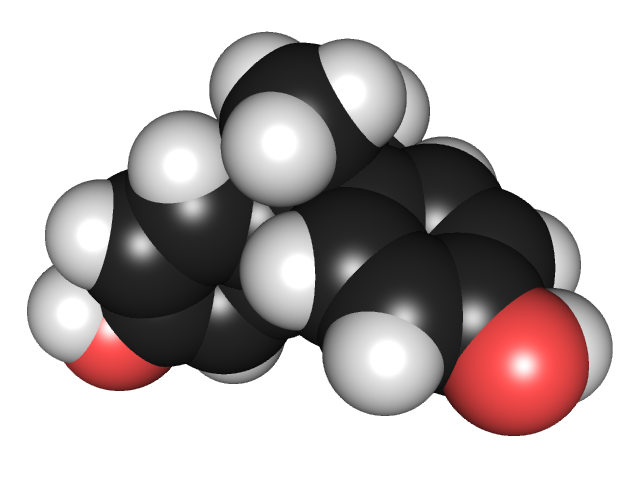
BPA stands for bisphenol A, an industrial chemical that has been used to make certain plastics and resins since the 1950s.
BPA is found in polycarbonate plastics and epoxy resins. Polycarbonate plastics are often used in containers that store food and beverages, such as water bottles. They may also be used in other consumer goods.
Epoxy resins are used to coat the inside of metal products, such as food cans, bottle tops, and water supply lines. Some dental sealants and composites also may contain BPA.
Some research has shown that BPA can seep into food or beverages from containers that are made with BPA. Exposure to BPA is a concern because of the possible health effects on the brain and prostate gland of fetuses, infants, and children. It can also affect children’s behavior. Additional research suggests a possible link between BPA and increased blood pressure, type 2 diabetes, and cardiovascular disease.
.
Bisphenol A

.
.
Click the link below for the article:
https://www.mayoclinic.org/healthy-lifestyle/nutrition-and-healthy-eating/expert-answers/bpa/faq-20058331
Addendum Wikipedia – Bisphenol A
Bisphenol A (BPA) is a chemical compound and one of the simplest and best-known bisphenols. It is produced by the condensation of phenol and acetone, with an estimated 4 million tonnes of produced worldwide in 2015. It is a colorless solid which is soluble in organic solvents, but poorly soluble in water (0.344 wt % at 83 °C).
BPA and its derivatives have many uses, most of which are centered around plastics. Its largest single application is as a co-monomer in the production of polycarbonates and, to a much lesser extent, polysulfones. Its epoxide derivative BADGE (also called DGEBA) is the starting material for most epoxy resins. Low levels of unpolymerised BPA and BADGE are also used in PVC plastisols, as an auxiliary antioxidant and acid scavenger respectively. A common, if minor, use is as a stabilizer in thermal paper. It is not a plasticizer, although it is often wrongly labeled as such.
BPA is a xenoestrogen, exhibiting estrogen-mimicking, hormone-like properties. Although the effect is very weak, the pervasiveness of BPA-containing materials raises concerns. Many of these materials are non-obvious but commonly encountered; such as coatings for the inside of food cans, clothing, shop receipts, and dental fillings. Since 2008, several governments have investigated its safety, which prompted some retailers to withdraw polycarbonate products. Since then, BPA-free plastics have been manufactured using alternative bisphenols such as bisphenol S and bisphenol F, but there is controversy around whether these are actually safer.
Bisphenol A was reported in 1891 by the Russian chemist Aleksandr Dianin.
In 1934 workers at I.G. Farbenindustrie reported the coupling of BPA and epichlorohydrin. Over the following decade, coatings and resins derived from similar materials were described by workers at the companies of DeTrey Freres in Switzerland and DeVoe and Raynolds in the US. This early work underpinned the development of epoxy resins, which in turn motivated production of BPA. The utilization of BPA further expanded with discoveries at Bayer and General Electric on polycarbonate plastics. These plastics first appeared in 1958, being produced by Mobay and General Electric, and Bayer.
Click the link below for the Wikipedia article If desired:
.
__________________________________________
March 15, 2022
Mohenjo
Business, Food For Thought, Human Interest, Science, Technical
amazon, business, Business News, current-events, Future, Hotels, human-rights, medicine, mental-health, research, Science, Science News, technology, Technology News, travel, vacation

Click the link below the picture
.
Great managers know how to coach, engage and motivate their teams. But the job isn’t easy. The way we work is rapidly changing. Responsibilities are constantly shifting. Workers want to upgrade their skills.
As a managing vice president at Gartner, a global advisory firm, I oversee research and products for learning. To better understand what the best managers do to develop employees in today’s busy work environment, we surveyed 5,000 managers from around the world in different functions.
.

Pictured: (l-r) Rainn Wilson as Dwight Schrute and Steve Carell as Michael Scott in an episode of “The Office.”
Justin Lubin | NBCU Photo Bank
.
.
Click the link below for the article:
.
__________________________________________
Older Entries
Newer Entries

